The Vouleftiko: Greece's First Parliament Building
On Syntagma Square in Nafplio stands the Vouleftiko, the mosque-turned-parliament where the first national assembly of the modern Greek state met. This guide covers its history, what to look for, and how it fits a day in the Old Town.
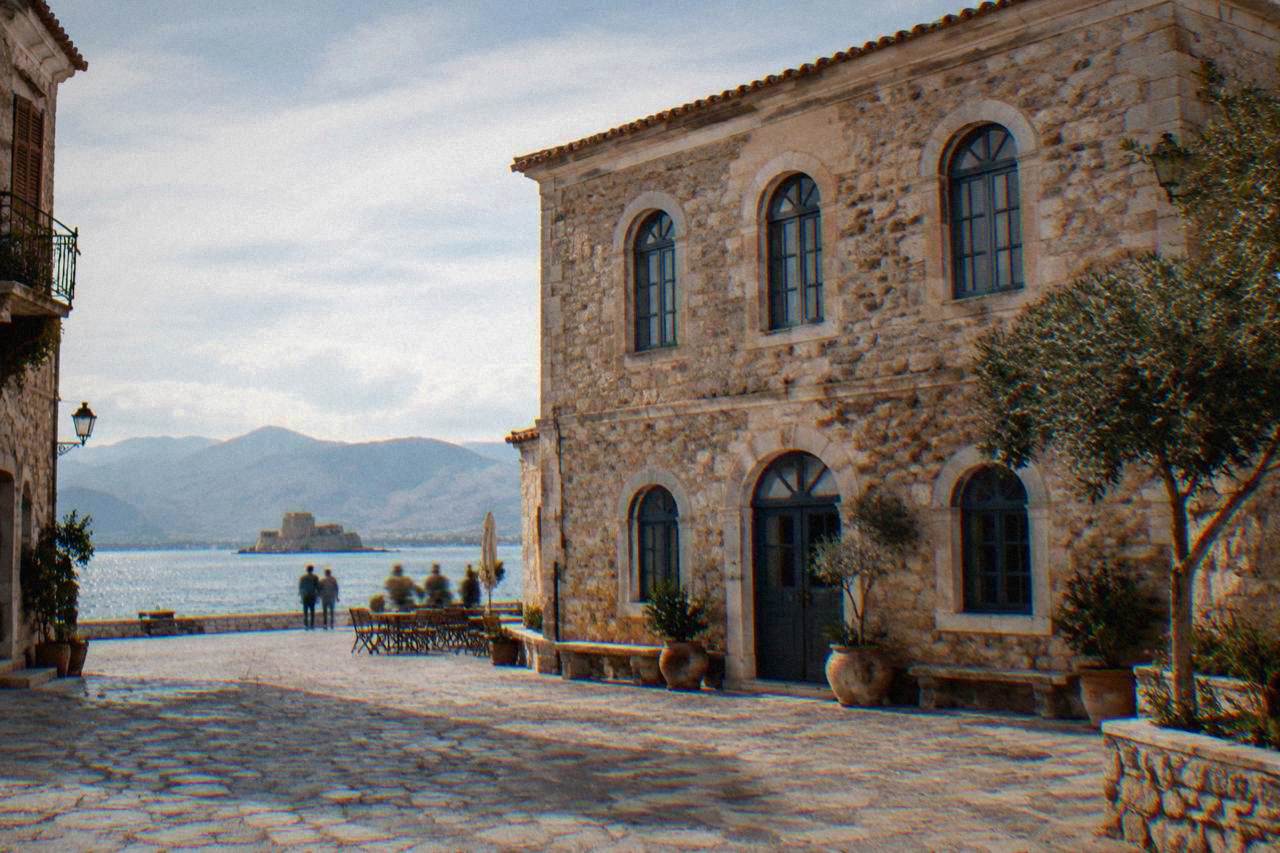
Short answer
The Vouleftiko in Nafplio is a former Ottoman mosque on Syntagma Square that hosted the first Greek parliament sessions from 1825, while Nafplio was the capital of Greece from 1827 to 1834. It stands at the centre of the Old Town, steps from the Archaeological Museum and the Church of Agios Spyridon.
The Vouleftiko in Nafplio is the one building in the Old Town where the story of the modern Greek state can be told in a single stop. It began as a mosque, became the meeting place of the first Greek parliament from 1825 according to historical reporting, and later served as a school and a courthouse before settling into its present role on Syntagma Square. Nafplio itself was the capital of Greece from 1827 to 1834, the municipality's own wording, and the Vouleftiko is the most visible survivor of those years at the heart of the town. This page from the Nafplio Travel Guide covers the building's history, what to look for when you stand in front of it, and how to fold it into a walk around the square and the lanes beyond.
What Is The Vouleftiko In Nafplio?
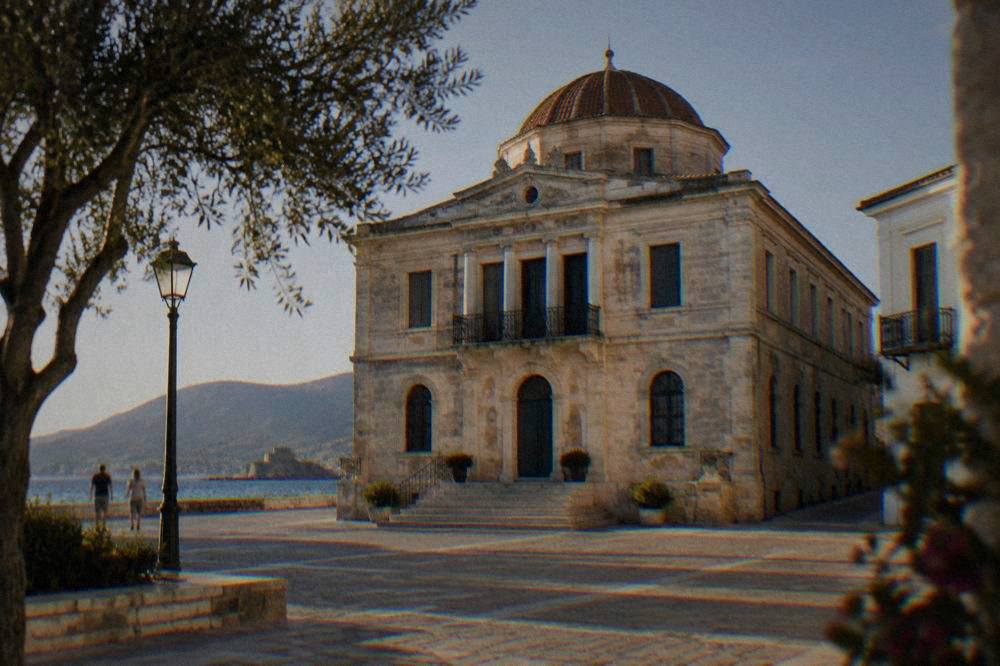
The Vouleftiko is a former mosque on Syntagma Square in Nafplio that served as the meeting place of the first Greek parliament from 1825, during the years when Nafplio was the capital of Greece from 1827 to 1834. Its name comes from the Greek word for parliament, Vouli, and the building is one of the few surviving structures directly tied to the revolutionary government of the modern Greek state.
The building's political role is reported in historical accounts of the town rather than printed on a Ministry ticket page, so treat the details as reported history rather than a museum label. The mosque that became the Vouleftiko was built during the second Ottoman period, and later accounts attribute it to Aga Pasha, which is why older documents call it the Aga Pasha mosque or the Trianon mosque. After Greek independence it was remodeled by the architect Theodoros Vallianos, per the historical record, and converted to parliamentary use.
What makes the building worth a deliberate stop is that it anchors the political geography of the square. Within a few minutes' walk stand the Archaeological Museum of Nafplio, in the old Venetian arsenal, the Church of Agios Spyridon where Governor Ioannis Kapodistrias was killed in September 1831, and the old Trianon building. Syntagma Square was the ceremonial and administrative centre of a capital city, and the Vouleftiko was its chamber. For the wider political story, the companion page on why Nafplio was the first capital of Greece carries the narrative in full.
The building's afterlife matters too. Reported accounts say it later served as a school, a prison and a courthouse, hosting trials connected to the post-independence political conflicts. That layered use, mosque to parliament to courthouse, is common in Nafplio, where almost every large building on the square changed hands between empires and governments. The overview of things to do in Nafplio places the Vouleftiko among the stops that reward a second look rather than a glance.
Where Is The Vouleftiko And How Do You Reach It In Nafplio?
The Vouleftiko stands directly on Syntagma Square, the central square of the Nafplio Old Town, roughly in the line between the Archaeological Museum and the lanes that climb toward Psaromachalas. No bus, taxi or car is needed: the Old Town is compact and pedestrian-scaled, and every major sight in it sits within a short walk of the square, which is the recognised centre of town.
If you arrive from the harbour, walk inland from the waterfront along any of the lanes that lead uphill from the port area, and the square opens up within a few minutes. If you arrive by car, note that the Old Town is largely closed to visitor parking, and reported local guidance points visitors to the free lots along the Akti Miaouli waterfront, from which the square is a short walk. Parking rates and rules change, so check the signage when you arrive.
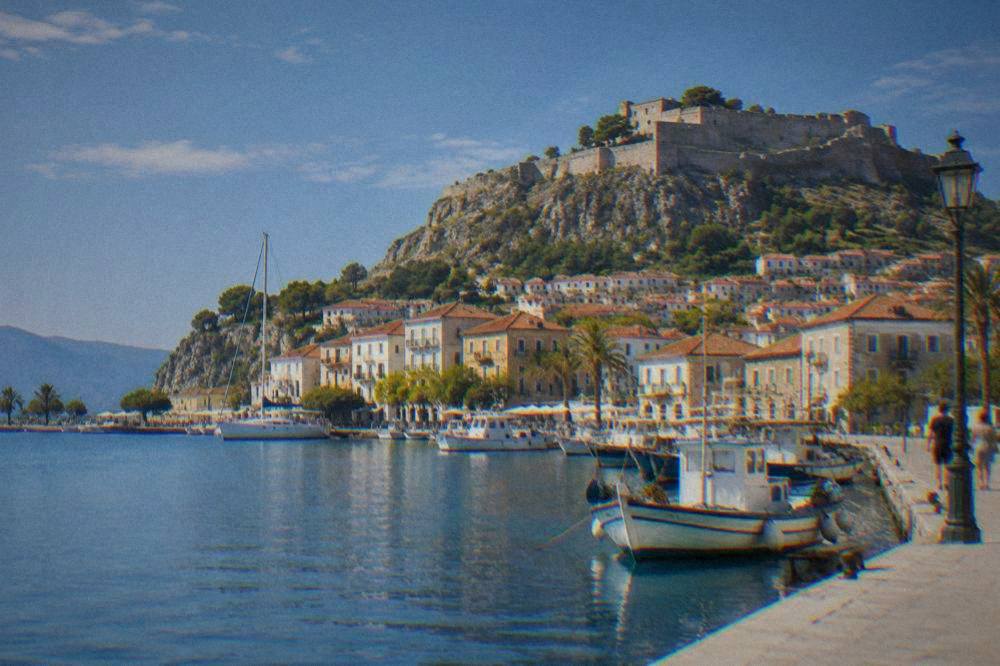
The walk from the harbour side also passes Bourtzi viewpoints, the nafplio lighthouse area and the base of Akronafplia, so a single approach route can string together several sights. The terrain is gently uphill from the seafront to the square, then steeper beyond it toward Palamidi. The stairway to Palamidi Fortress, about 850 steps (not the legendary 999), starts further east, so treat the fortress as a separate outing rather than an extension of this walk.
For orientation, the table below gives the walking-scale geography of the Old Town sights around the Vouleftiko. Distances between Old Town sights are short; the figures for day-trip destinations come from computed driving routes and are shown separately later in this page.
| Sight | Relation to the Vouleftiko |
|---|---|
| Syntagma Square | The square the building fronts, the centre of the Old Town |
| Archaeological Museum of Nafplio | In the former Venetian arsenal on the same square |
| Church of Agios Spyridon | A short walk east, site of the September 1831 assassination of Kapodistrias |
| Trianon | Another former mosque building on the square |
| Akronafplia | The old acropolis above the harbour, uphill to the south-west |
| Land Gate | The historic western entrance to the Old Town |
A guided walk is one way to absorb this geography without pacing it out on a map, and the Nafplio walking tour options cover the square and its buildings in a single circuit.
What Can You See At The Vouleftiko And The Square Around It?
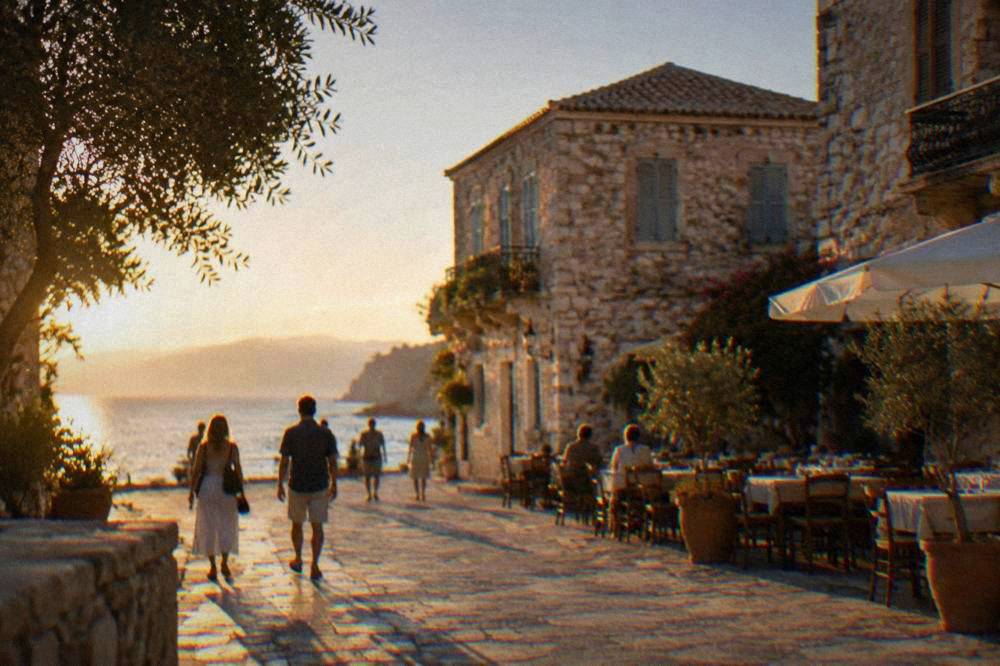
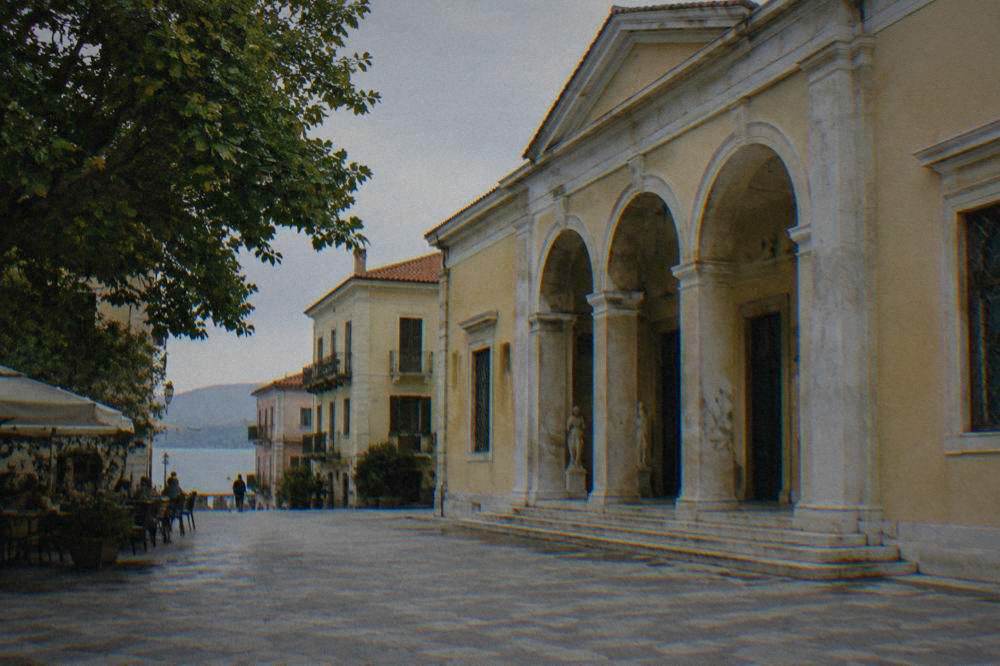
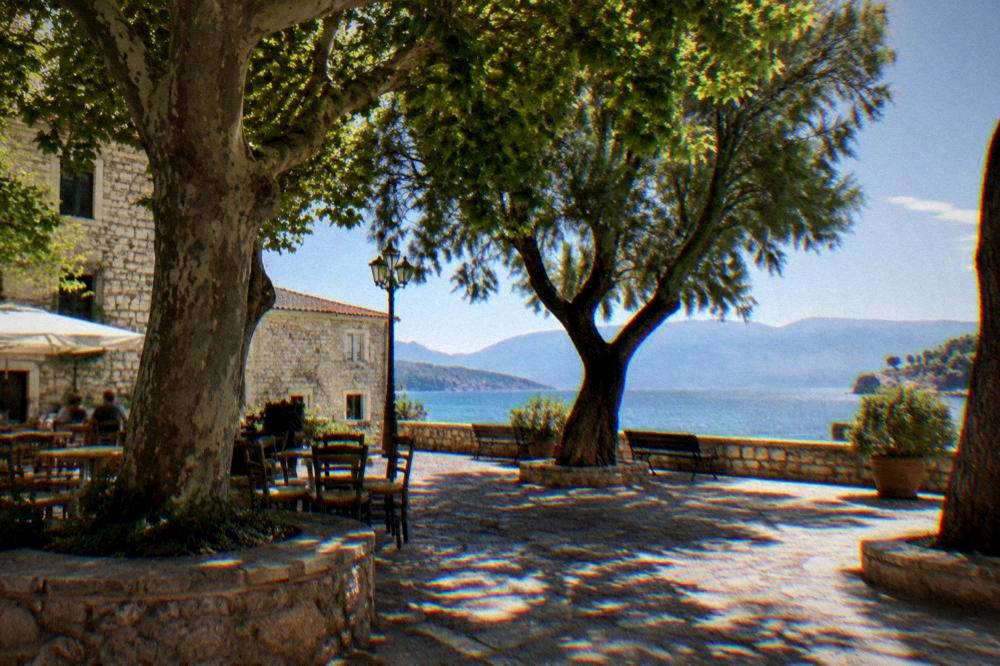
The Vouleftiko is best treated as an architectural stop on Syntagma Square: a stone former mosque with a domed form and arched openings, viewed from outside in the course of a walk, while the square around it holds the Archaeological Museum of Nafplio, the Trianon, cafes under the plane trees, and the lanes toward the Church of Agios Spyridon. Reported accounts describe the interior's parliamentary past rather than a furnished chamber, so the square as a whole is the attraction.
The Archaeological Museum is the one enclosed sight on the square with published 2026 figures: the Ministry of Culture's visiting page lists 10 euro full and 5 euro reduced, open 08:30 to 15:30 all year and closed every Tuesday. That closing day is worth planning around, since a Tuesday visit to the square leaves the museum shut and only the outdoor sights available.
Around the square, the stories accumulate quickly. The Church of Agios Spyridon is where Kapodistrias, the first governor of Greece, was killed in September 1831, a fact recorded by the town's own historical sources. The Kolokotronis statue, the Lion of Bavaria in nearby Pronoia, and the Land Gate round out the independence-era circuit, each with its own companion page on this site.
| Sight near the Vouleftiko | 2026 ticket | Hours | Closed |
|---|---|---|---|
| Archaeological Museum of Nafplio | 10 euro full, 5 euro reduced | 08:30-15:30 all year | Tuesdays |
| Palamidi Fortress | 20 euro full, 10 euro reduced | Winter 08:30-15:30; April 08:00-19:00; from 2 May 08:00-20:00 | 1 Jan, 25 Mar, 1 May, Easter Sunday, 25-26 Dec |
| Bourtzi | 7 euro full, 5 euro reduced | Seasonal, daily hours from 09:00 | 1 Jan, Easter Sunday, 25 Dec |
| Vouleftiko and Syntagma Square outdoor sights | Free, as public space | Always viewable from outside | Not applicable |
The reduced Palamidi ticket is sold only from 1 October to 31 May, per the Ministry of Culture's own visiting page, and the same rule applies at Mycenae and Epidaurus. Greek state sites are also free on set days each year: 6 March, 18 April, 18 May, the last weekend of September, the first and third Sunday of each month from November to March, and 28 October.
If you would rather have the square's stories delivered than deciphered from plaques, the private walk with a local guide is the tour this site features for exactly this route.
Between the square and the harbour the lanes of the Old Town hold the bulk of Nafplio's charm, and the romantic side of Nafplio pages build on the same evening light over the square.
Why Did Greece's First Parliament Meet In Nafplio?
Greece's first parliament met in Nafplio because the town was the capital of Greece from 1827 to 1834, chosen in 1827 as the seat of the new state while the war of independence was still being fought, and the Vouleftiko, a large existing mosque building on what became Syntagma Square, offered the biggest covered space suited to a chamber. Kapodistrias arrived in January 1828 and governed from the town until 1831.
The capital question is answered on the town's own terms: the municipality's history sources and the Greek National Tourism Organisation describe Nafplio as the first capital of the modern Greek state, with the capital moving to Athens in 1834 after King Otto arrived in February 1833. Reported accounts add that a provisional government had used the town as a seat in the early 1820s, though no exact year is printed for that earlier status.
The sequence of events that made the Vouleftiko a parliament building is worth laying out in order, because the compressed timeline is easy to muddle.
| Year | Event in Nafplio |
|---|---|
| 1825 | First Greek parliament sessions held in the Vouleftiko, per historical reports |
| 1827 | Nafplio chosen as capital of Greece |
| 1828 | Kapodistrias arrives in January and governs from Nafplio |
| 1829 | Government House built |
| 1831 | Kapodistrias killed in September outside the Church of Agios Spyridon |
| 1833 | King Otto arrives in February |
| 1834 | The capital moves to Athens |
After the parliament years, reported accounts describe the building's use as a school and later as a courthouse, and it is this judicial phase that connects it to the political conflicts that followed independence. The fuller political narrative, including the constitutional story, sits on the history of Nafplio page. What the Vouleftiko adds to that story is physical evidence: a building you can stand in front of, in the town where the decisions were taken.
What Was The Building Before It Was A Parliament?
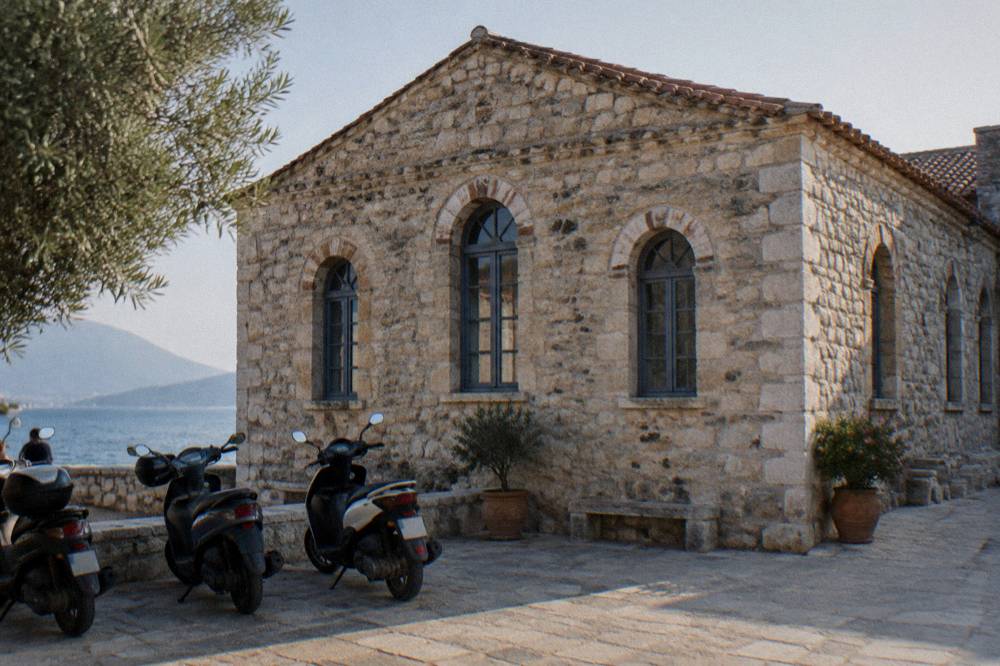
Before it was a parliament, the Vouleftiko was a mosque: reported accounts date the building to the second Ottoman period and attribute it to Aga Pasha, whose name stuck to it as the Aga Pasha mosque or Trianon mosque. Nafplio's Ottoman periods ran from 1540 to 1686 and again from 1715 to 1822, bracketed by Venetian rule from 1389 to 1540 and 1686 to 1715.
That imperial alternation explains the whole square. Venetian arsenals, Ottoman mosques and Greek state buildings stand within a stone's throw of one another, and the Vouleftiko is the clearest case of a building re-purposed rather than replaced. After independence the architect Theodoros Vallianos remodeled it for parliamentary use, per the historical record, and later state use followed.
The pattern repeats across the town. The Archaeological Museum occupies the Venetian arsenal. The Trianon, another former mosque, stands on the same square. Akronafplia above the harbour carries walls from antiquity through Frankish, Venetian and Ottoman phases. A visitor who understands that Nafplio changed rulers four times across its history will read the Old Town's architecture as a sequence rather than a jumble.
| Period | Ruler of Nafplio | Years |
|---|---|---|
| First Venetian period | Republic of Venice | 1389 to 1540 |
| First Ottoman period | Ottoman Empire | 1540 to 1686 |
| Second Venetian period | Republic of Venice | 1686 to 1715 |
| Second Ottoman period | Ottoman Empire | 1715 to 1822 |
| Greek state | Capital of Greece | 1827 to 1834 |
The years 1389 and the 1686 to 1715 span come from the regional culture authority's own monument pages; the remaining period boundaries are reported in historical accounts and are consistent across sources. For depth on the fortress that dominates every view from the square, the Palamidi Fortress page covers the 1822 capture and the 216 m height above the Old Town.
How Much Time Should You Give The Vouleftiko And Syntagma Square In Nafplio?
Plan on thirty to sixty minutes for the Vouleftiko and Syntagma Square as an outdoor stop, half a day if you add the Archaeological Museum and the Church of Agios Spyridon, and a full day if you extend to Akronafplia, Bourtzi and Palamidi Fortress. The square is the natural midpoint of any Old Town walk, so the time it takes depends almost entirely on how many of the surrounding interiors you enter.
A morning plan works well in summer because the Ministry's summer hours run long: from 2 May the major state sites stay open to 20:00, so an early start is about heat and light rather than closing times. Winter hours are much shorter, 08:30 to 15:30 at Palamidi, and the Archaeological Museum keeps 08:30 to 15:30 all year, so from November to March the enclosed sights need to come first in the day.
The climate picture for planning comes from the HNMS Argos station, 1980 to 2010, an inland station about 10 km north-west of the town. July has the highest mean daily high at 34.0 C and August sits close behind at 33.7 C; June's mean rainfall of 8.9 mm is the lowest monthly figure, while November's 82.5 mm is the highest. The waterfront can differ slightly from these inland readings.
| Month | Mean daily high C | Mean daily low C | Rain mm |
|---|---|---|---|
| January | 14.6 | 3.0 | 66.5 |
| April | 21.3 | 6.7 | 33.7 |
| July | 34.0 | 16.7 | 9.1 |
| October | 24.7 | 11.5 | 44.3 |
| November | 19.2 | 7.7 | 82.5 |
Figures from the HNMS Argos station, 1980 to 2010. For a month-by-month view, see the site's page on the best time to visit Nafplio.
If the square has earned a longer stop, a cooking class is the indoor counterpoint to a morning of history, and a food-led afternoon pairs naturally with the market lanes around the Old Town.
What Else Should You Pair With The Vouleftiko On A Nafplio Day?
Pair the Vouleftiko with the Archaeological Museum on the same square, the Church of Agios Spyridon a short walk east, Akronafplia and the Arvanitia path above the harbour, and, with more time, Palamidi Fortress and Bourtzi. Beyond the town, Mycenae is about a 32-minute drive and Epidaurus theatre about 41 minutes from Syntagma Square, both computed driving times, so a half-day excursion can follow a morning in the Old Town.
The classic one-day shape is square first, harbour second, fortress last, because the Palamidi stairway is best descended in the cooler part of the day. Bourtzi, the fortified islet in the harbour, is open to visitors by boat, with tickets at 7 euro full and 5 euro reduced per the Ministry's listing; the boat fare is not published, so confirm it at the harbour before committing. The Bourtzi page carries the seasonal hours in full.
For the out-of-town pairings, the drive times below are computed over the road network from Syntagma Square, free-flow conditions, and rounded. Athens is about 141 km and 127 minutes away, which is what makes Nafplio work both as a base and as a day trip from the capital, a comparison covered on the Nafplio day trip from Athens pages.
| Destination | Drive time from Syntagma Square |
|---|---|
| Tiryns | About 9 minutes |
| Argos | About 18 minutes |
| Tolo | About 17 minutes |
| Mycenae | About 32 minutes |
| Epidaurus theatre | About 41 minutes |
| Ancient Nemea | About 46 minutes |
| Ancient Corinth | About 61 minutes |
| Corinth Canal | About 72 minutes |
Mycenae and Tiryns together, and Epidaurus alone, are UNESCO World Heritage sites, inscribed in 1999 and 1988 respectively. Both Mycenae and Epidaurus charge 20 euro full and 10 euro reduced in 2026, with the reduced ticket sold only from 1 October to 31 May. The Mycenae day trip and Argos pages carry those sites in detail, and the Mycenae and Epidaurus tours round-up compares the guided options.
Within the square itself, the smaller collections reward a spare hour: the Peloponnesian Folklore Foundation museum, the war museum and the komboloi museum each sit a few lanes away, and the kolokotronis statue completes the independence-era set near the land gate.
Is The Vouleftiko Worth Visiting With A Guide In Nafplio?
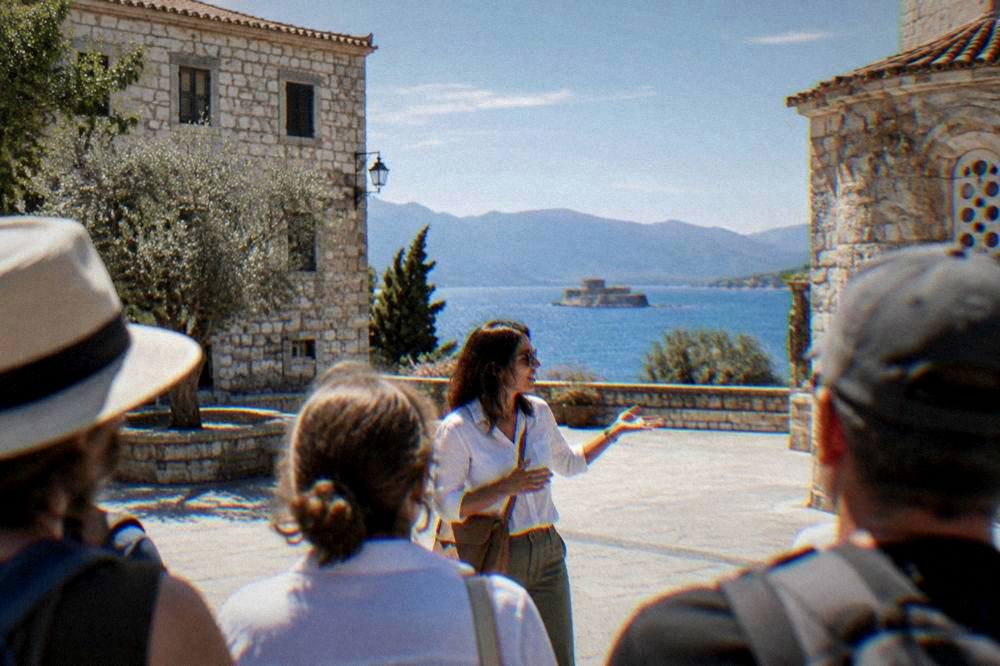
A guide adds real value at the Vouleftiko because the building's significance is almost entirely narrative: from the street it is a handsome former mosque, and only the reported history of the 1825 parliament sessions, the Vallianos remodel and the later courtroom years turns it into the centrepiece of the square. A local guide also threads it to the Agios Spyridon assassination site and the museum in one coherent telling.
The tour this site features for the Old Town is the Secrets of Nafplio private walking tour, which covers the square, the lanes and the stories behind them with a local guide. Its price and rating render on its own listing page rather than being typed here, and availability changes with the season, so the live listing is the place to check before you plan around it.
For visitors who prefer to move at their own pace, the square is freely viewable and every fact on this page can be carried on a phone. For visitors who want the compressed version, the private walk is the efficient route. Whichever you choose, the pairing works: history in the morning, harbour in the afternoon, and the square again in the evening light, which is when Syntagma Square and the Vouleftiko look their best.
Common Questions About The Vouleftiko In Nafplio
What Is The Vouleftiko In Nafplio?
The Vouleftiko is a former Ottoman mosque on Syntagma Square in Nafplio that became the meeting place of the first Greek parliament, with sessions held there from 1825 according to reported history, while Nafplio was the capital of Greece from 1827 to 1834.
Can You Go Inside The Vouleftiko?
The building is best treated as an exterior stop on a walk of Syntagma Square; reported accounts describe its parliamentary and courtroom past rather than a furnished public chamber. The Archaeological Museum of Nafplio on the same square is the enclosed sight with published hours, 08:30 to 15:30 all year, closed Tuesdays.
How Old Is The Vouleftiko Building?
Reported accounts date the mosque to the second Ottoman period and attribute it to Aga Pasha, which is why older documents also call it the Aga Pasha mosque or the Trianon mosque. It was remodeled for parliamentary use by the architect Theodoros Vallianos after Greek independence.
Why Was The First Greek Parliament In Nafplio?
Nafplio was chosen capital of Greece in 1827 and remained the capital until 1834, and the Vouleftiko offered a large existing building suited to a chamber on the town's central square. Kapodistrias arrived in January 1828 and governed from the town until his death in September 1831.
How Much Does It Cost To See The Vouleftiko?
Nothing: the building and Syntagma Square are public space, viewable from outside at any time. The nearby Archaeological Museum of Nafplio charges 10 euro full and 5 euro reduced, and Greek state sites are free on 6 March, 18 April, 18 May, the last weekend of September, the first and third Sundays from November to March, and 28 October.
How Long Should I Spend At Syntagma Square In Nafplio?
Allow thirty to sixty minutes for the square and the Vouleftiko as an outdoor stop, half a day with the museum and the Church of Agios Spyridon, and a full day if you extend to Akronafplia, Bourtzi and Palamidi Fortress.