Agios Spyridon: The Church Where Kapodistrias Was Shot
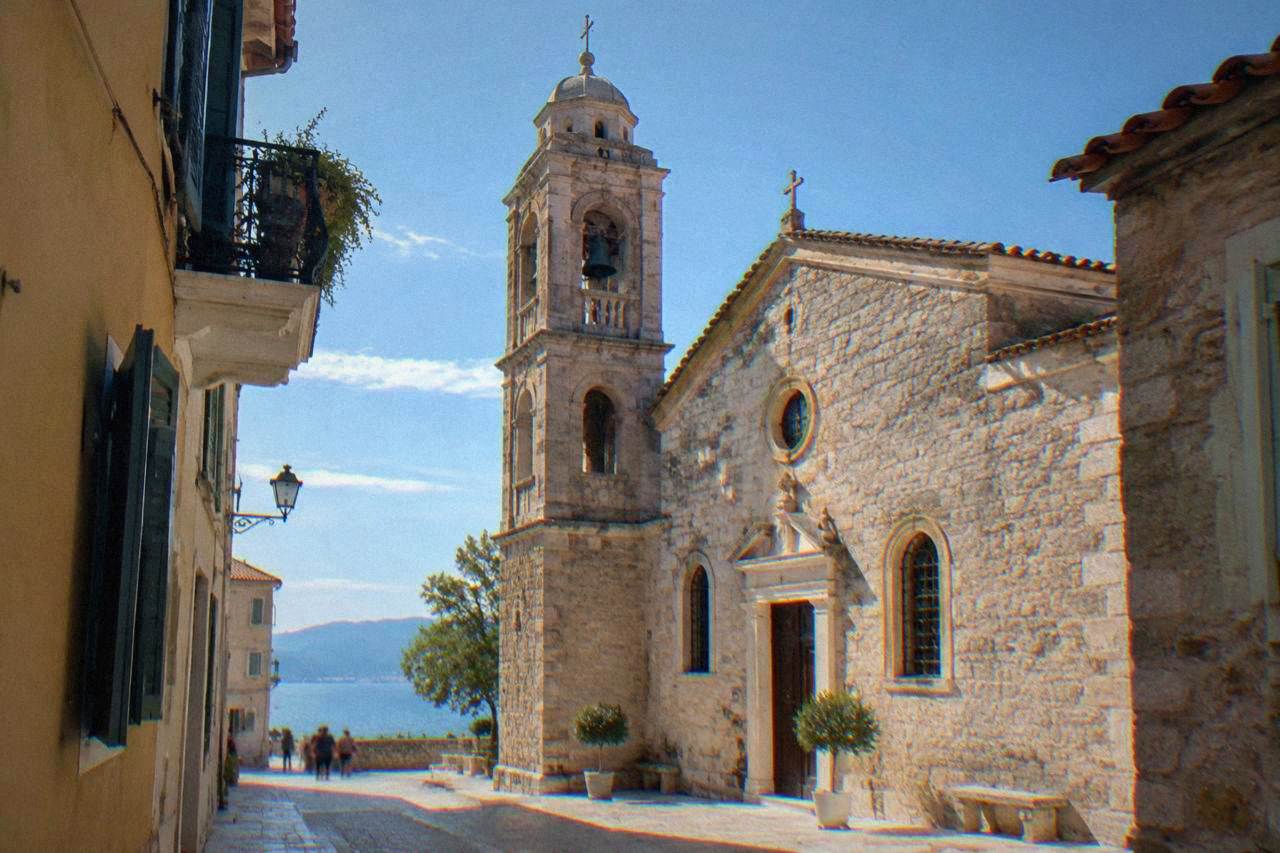
The Church of Agios Spyridon in Nafplio is a small single-nave church in the Old Town whose front step is the spot where Ioannis Kapodistrias, the first governor of Greece, was assassinated in September 1831. It sits a short walk from Syntagma Square and is one of the most consequential small buildings in modern Greek history.
Short answer
The Church of Agios Spyridon in Nafplio is where Ioannis Kapodistrias, the first governor of modern Greece, was assassinated in September 1831. The church stands in the Old Town near Syntagma Square, and its name is inseparable from the town's years as capital of Greece from 1827 to 1834.
The Church of Agios Spyridon in Nafplio, a small coastal town in the Argolid on the Peloponnese of mainland Greece, occupies a modest plot in the Old Town a short walk from Syntagma Square. It would be easy to walk past it. The building itself is small, the street around it is narrow, and the harbour with its fortified islet of Bourtzi draws the eye seaward. But the front step of this church is the spot where Ioannis Kapodistrias, the first governor of modern Greece, was assassinated in September 1831, an event that changed the course of the young Greek state while its capital was still Nafplio. This guide sets out what the sources say about the church, the assassination, and how to fit a visit into a day in a town whose history is told in more detail on the Nafplio Travel Guide homepage.
What Is The Church Of Agios Spyridon In Nafplio?
The Church of Agios Spyridon is a small Orthodox church in the Old Town of Nafplio, dedicated to Saint Spyridon, and it is known above all as the place where Ioannis Kapodistrias, the first governor of Greece, was assassinated in September 1831 as he arrived for a morning service. Nafplio was the capital of Greece from 1827 to 1834, and this church, standing close to Syntagma Square, was the church the governor used during his years in the town. The assassination made the building a fixed point in the story of the modern Greek state.
The church's fame rests on a single morning in September 1831 rather than on architectural grandeur. Kapodistrias had arrived in Nafplio in January 1828, per the historical record collected by the town's own history site, and he governed the new state from the town until his death. Government House, which dates from 1829, was his working base. On the morning he was killed he was entering this church, and the events of that morning are commemorated at the site to this day.
What a visitor sees now is a working parish church in a narrow street, with its bell tower rising over the roofline of the surrounding buildings. The interior functions as a place of worship first and a monument second, so a visit is quiet, brief and respectful rather than a museum experience. The story around it, from the Venetian and Ottoman periods that shaped the town to the capital years, is laid out in the guide to why Nafplio was the first capital of Greece.
Where Is The Church Of Agios Spyridon In Nafplio?
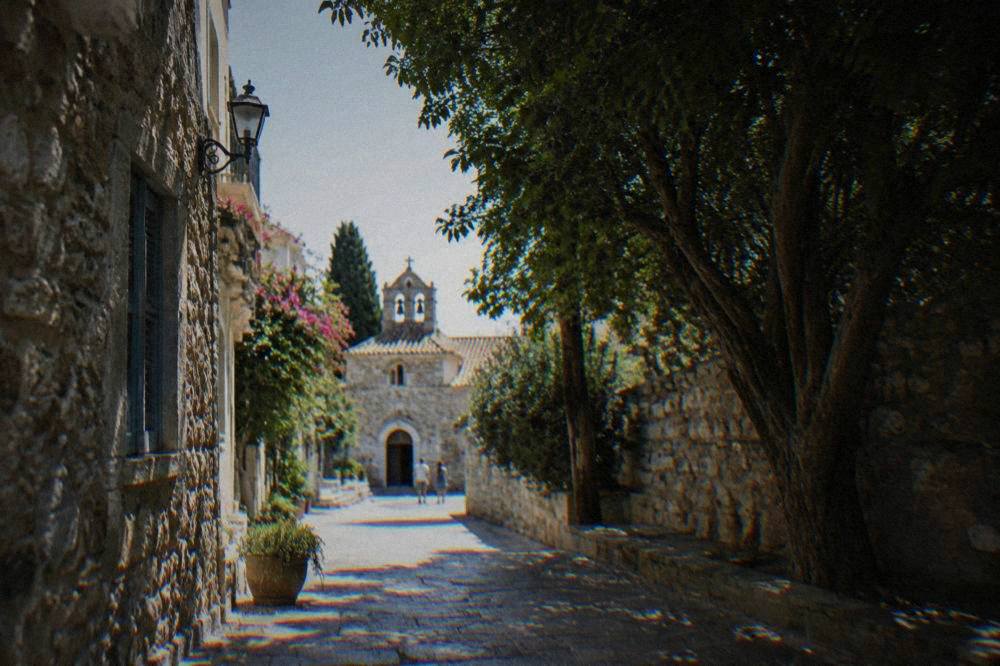
The church stands in the Old Town of Nafplio, a few minutes on foot from Syntagma Square, the central square of the town, in the network of narrow lanes between the square and the harbour. Syntagma Square is the recognised centre of Nafplio, and the church is one of several historic buildings clustered in its immediate orbit, including the Vouleftiko, the former mosque that hosted the first Greek parliament sessions from 1825, reported by the historical record. Everything in the Old Town is walkable, and no transport of any kind is needed to reach the church.
The position matters to the story. In the capital years, from 1827 to 1834, the institutions of the Greek state sat within a few streets of each other: the Vouleftiko on Syntagma Square, Government House from 1829, and the church the governor attended. A walk between them covers the whole operational core of the first Greek government in a few hundred metres. The guide to Syntagma Square maps that cluster in detail, and the first parliament page covers the Vouleftiko building itself.
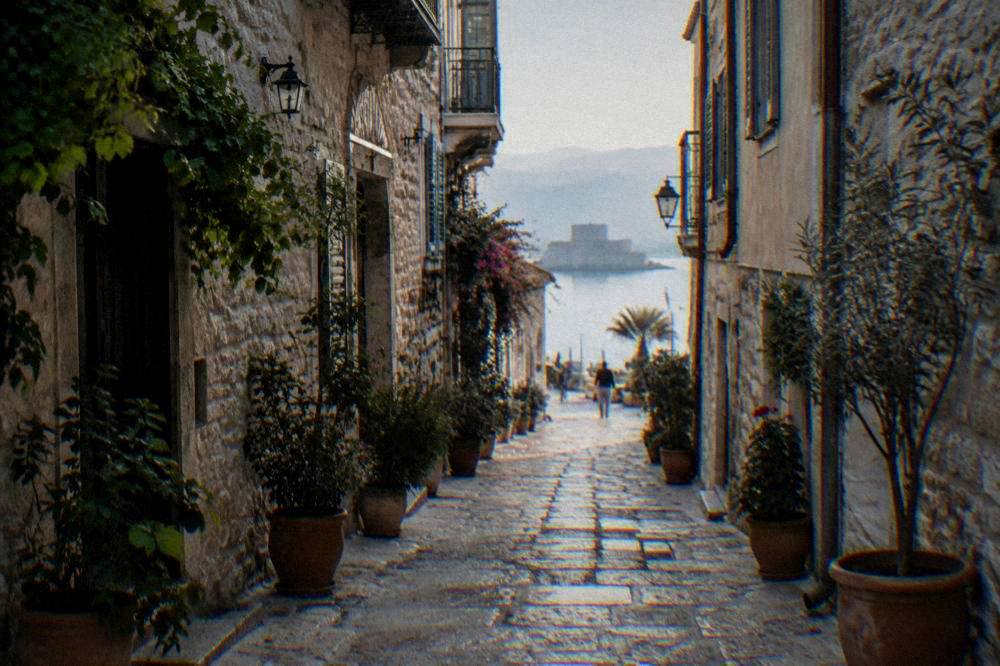
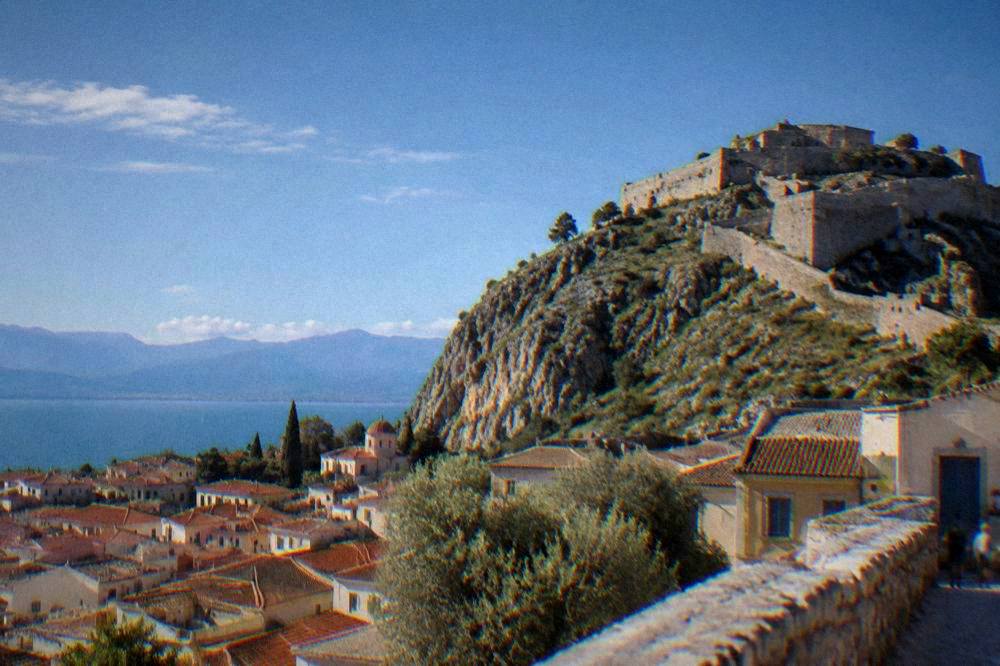
Visitors arriving from the harbour side enter the Old Town from the waterfront and reach the church before the slope up toward Akronafplia and Palamidi Fortress begins. Those coming down from Palamidi, which stands 216 m above the Old Town, pass through the same lanes in reverse. The Old Town area guide covers the streetscape, and a guided circuit such as the city walking tour normally takes in the church alongside the square and the harbour.
Why Is Agios Spyridon Church Famous In Nafplio?
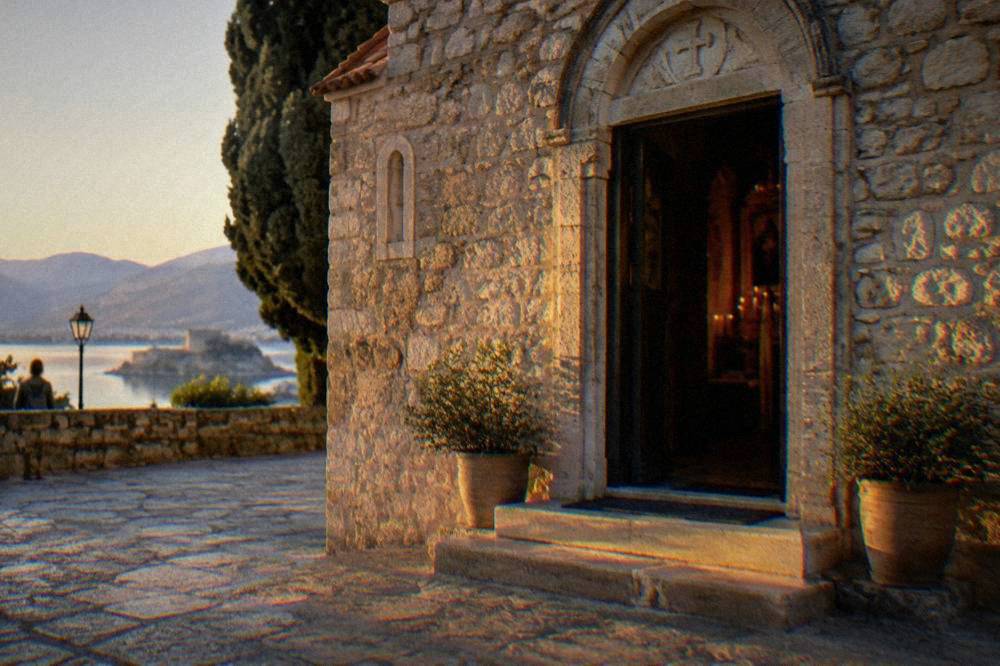
The church is famous because Ioannis Kapodistrias, the first governor of modern Greece, was assassinated outside it in September 1831, killed on the step as he arrived to attend a service, an event the town's history site and national sources record as one of the defining moments of the early Greek state. Nafplio was the capital of Greece at the time, as it had been since 1827, and the murder of the head of state on the doorstep of his own church stunned the new country. The month and the place are fixed in the record; the sources do not agree on finer detail, and this page prints no exact day.
Kapodistrias was a Corfiot count and former Russian foreign minister who accepted the governorship of the fledgling Greek state and landed at Nafplio in January 1828, a landing the record dates to 7 or 8 January, so the month is the safe form. He governed with a centralising hand from Nafplio until 1831, and his administration made real progress in building the machinery of a state: schools, courts, a army organisation and the first Greek university plans. His enemies among the local notables were equally real, and the family behind the assassination belonged to the Maniot aristocracy that resented his curbs on their power.
The consequences ran straight through Nafplio's own story. The capital stayed in the town after his death, and King Otto arrived in February 1833 before the capital moved to Athens in 1834, closing Nafplio's years as the seat of government. The church, meanwhile, became a site of memory. The guide to the Kolokotronis statue picks up another strand of the same era, the rival hero of the revolution who was tried in Nafplio in those years.
Who Was Ioannis Kapodistrias?
Ioannis Kapodistrias was the first governor of modern Greece, a career diplomat born on Corfu who had served as foreign minister of Russia before taking office in the new Greek state, arriving in Nafplio in January 1828 and governing from the town until his assassination in September 1831. He is the figure whose name binds the Church of Agios Spyridon to national history. His years in Nafplio were the years in which the town functioned as a working capital rather than a rebel base.
His record divides opinion to this day. Admirers point to the state-building: a regular army, a nascent administration, schools and the foundations of a legal system, much of it run from buildings within a short walk of this church. Critics point to his authoritarian style, the suspension of freedoms, and the conflicts with the Maniot clans and island shipowners whose money and men had won the revolution. The confrontation with the Mavromichalis family ended on the church step in September 1831.
The straight history, in the short form the sources support:
| Year | Event | Status in the record |
|---|---|---|
| 1828 | Kapodistrias arrives in Nafplio, in January, sources split between 7 and 8 January | Reported |
| 1829 | Government House built in Nafplio | From the town's history site |
| 1831 | Kapodistrias assassinated in September outside the Church of Agios Spyridon | Month and place established |
| 1833 | King Otto arrives in Nafplio in February | Reported |
| 1834 | The capital moves to Athens, ending Nafplio's years as capital from 1827 | Established |
Before that came centuries of Venetian rule from 1389 to 1540 and again from 1686 to 1715, with Ottoman rule between and after, and Greek capture of the town's fortresses in 1822. The history of the first-capital years carries that longer arc.
What Can You See At The Church Of Agios Spyridon Today?
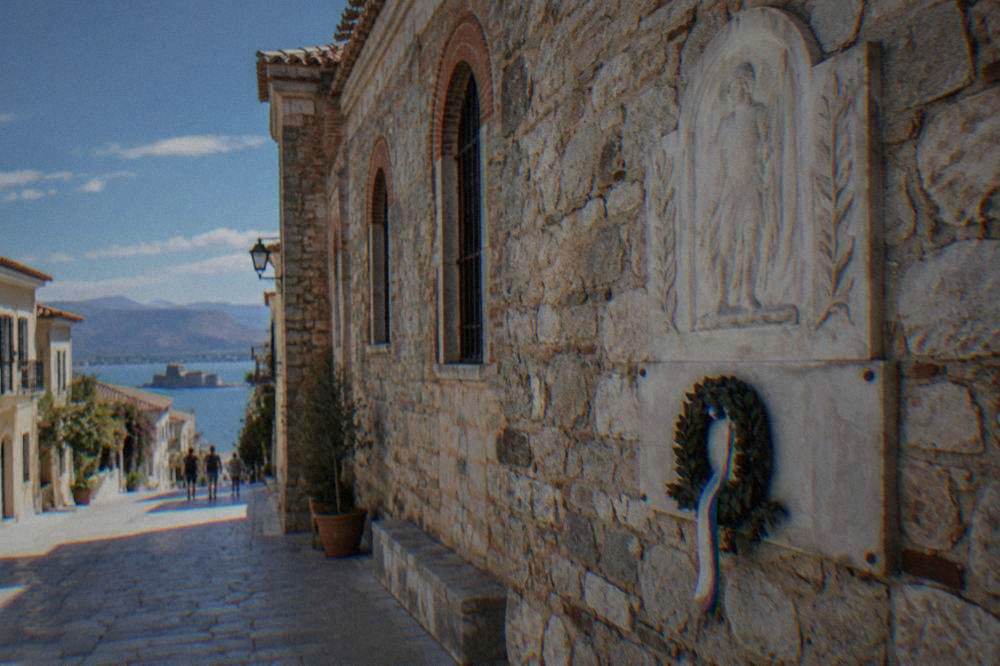
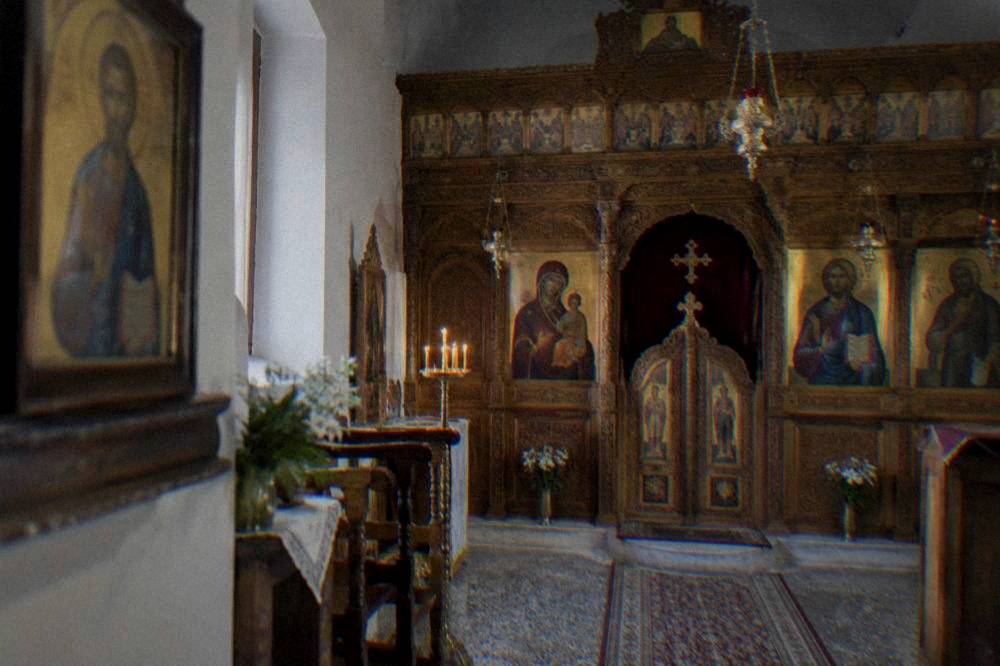
Visitors today see a functioning Orthodox parish church: a single nave, a bell tower over a narrow lane, an ornate interior in the Greek ecclesiastical style, and the entrance area associated with the assassination of September 1831, all within a building you can view in a short visit as part of a walk through the Old Town. The church is not a staffed museum with set hours and a ticket; it is a working place of worship, so access depends on whether it is open, and visitors should confirm locally on the day.**
Accounts of damage to the church fabric from the assassination circulate widely, including stories about marks on the wall or door. Those details are not confirmed in the sources available here, so this page prints none of them; the confirmed facts are the month, the year and the place. The commemoration at the site is the reason the church appears on walking routes of the town.
Inside, the decoration follows Greek Orthodox convention, with a carved templon separating the nave from the sanctuary and icons of Saint Spyridon, a saint venerated across the Ionian islands and the Peloponnese. Photography customs in working Greek churches are conservative: dress modestly and follow the lead of the congregation.
How Do You Visit The Church Of Agios Spyridon In Nafplio?
You visit the Church of Agios Spyridon on foot, as part of a walking circuit of the Nafplio Old Town: start at Syntagma Square, walk the few minutes to the church, then continue to the harbour, the Vouleftiko and the Archaeological Museum, all of which sit within the same compact quarter, with no ticket needed for the church itself and access subject to it being open, so confirm locally on the day. The visit itself is short, and the value of the stop comes from knowing the story before you stand on the step.
A practical sequence for the historic core:
| Stop | What it is | Notes from the sources |
|---|---|---|
| Syntagma Square | Central square, surrounded by historic buildings | The recognised centre of the town |
| Vouleftiko | Former Aga Pasha mosque, first parliament | Hosted sessions from 1825, reported |
| Church of Agios Spyridon | Parish church, site of the 1831 assassination | Working church, no published ticket |
| Archaeological Museum of Nafplio | Museum in the Venetian arsenal | 10 euro full, 5 euro reduced, closed Tuesdays |
| Land Gate | Main surviving gate of the old walls | One of the town's Venetian-era landmarks |
If you would rather ride than walk between the quarters, the town's hop-on hop-off bus covers the wider sweep from the harbour to the beaches, and the Check availability link shows the live listing. The related cycling tour pairs the historic centre with the coastline out toward Arvanitia, a way to cover the church and the water in one loop; the same tour has its own tour page here.
What Else Should You See Near The Church Of Agios Spyridon?
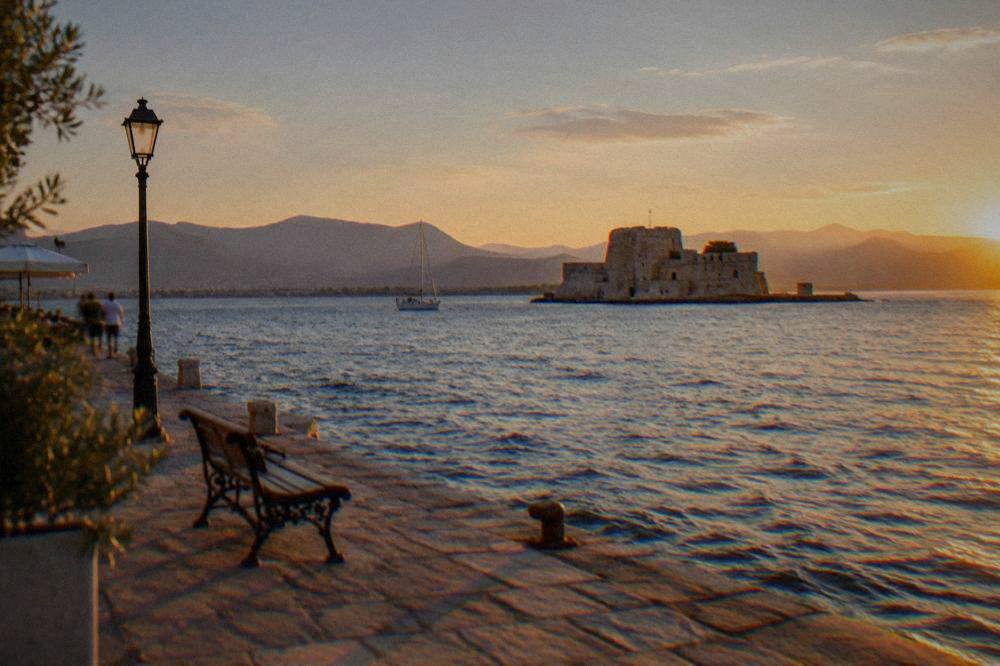
The whole historic core of Nafplio sits around the church: Syntagma Square with the Vouleftiko and the Archaeological Museum within a few minutes' walk, the harbour and Bourtzi a little further, and Palamidi Fortress rising 216 m above the Old Town behind it, with the stairway usually counted at about 850 steps, not the legendary 999. A day built around the church naturally takes in all of these, and the state sites among them have published 2026 tickets and hours that make planning straightforward.
The key sites in ticket and hours form:
| Site | 2026 ticket | Hours summary |
|---|---|---|
| Palamidi Fortress | 20 euro full, 10 euro reduced | From 2 May 2026, 08:00 to 20:00; winter 08:30 to 15:30 |
| Bourtzi | 7 euro full, 5 euro reduced | Daily by boat; July and August to 21:00 |
| Archaeological Museum of Nafplio | 10 euro full, 5 euro reduced | 08:30 to 15:30 all year, closed Tuesdays |
| Mycenae | 20 euro full, 10 euro reduced | Same schedule as Palamidi, per the Ministry of Culture |
| Epidaurus theatre and sanctuary | 20 euro full, 10 euro reduced | Winter 08:00 to 17:00; from 1 March 2026, 08:00 to 18:00 |
Two details save money and time. The reduced ticket at state sites is sold only from 1 October to 31 May. And free-admission days apply across the state sites, including Palamidi and Bourtzi: 6 March, 18 April, 18 May, the last weekend of September, the first and third Sunday of each month from November to March, and 28 October.
How Does The Church Fit Into A Day In Nafplio?
The church fits best as a mid-morning stop on a walking day: Syntagma Square first, then the church and the Vouleftiko, then the harbour and Bourtzi, and finally the climb or drive to Palamidi Fortress, a sequence the one-day itinerary on this site follows and that keeps every stop inside the compact Old Town and waterfront. The whole sequence needs no car inside the town, and the state sites on the route open from 08:30 in winter and 08:00 in the summer season.
The itineraries on this site handle the sequencing in depth, for one day, two days or three days. The principle for this stop is simple: the church takes minutes to see but pays back the reading, so arrive knowing who Kapodistrias was and what his death meant for a capital that was about to move to Athens.
For travellers who want the story told rather than read, a food-and-walk combination works well, since the Old Town's lanes hold the church, the square and the taverna quarter in one loop. The food tour below is the natural pairing, and the trio listing further up covers the cycling and bus options for the same day.
Can You Combine The Church With Day Trips From Nafplio?
Yes: the Church of Agios Spyridon sits at the centre of a day-trip web that reaches Mycenae in about 32 minutes by car, the theatre of Epidaurus in about 41, Tiryns in about 9 and Argos in about 18, all computed from Syntagma Square, so a morning at the church and a afternoon at a UNESCO site is a realistic single day. Mycenae with Tiryns, and Epidaurus, are UNESCO World Heritage sites, inscribed in 1999 and 1988 respectively, and the capital-era story that ended at this church began, in a sense, with the Mycenaean world up the road.
Drive times from Syntagma Square, computed over OSM routing in free-flow conditions:
| Destination | About, drive time from Syntagma Square |
|---|---|
| Tiryns | 9 minutes |
| Argos | 18 minutes |
| Tolo | 17 minutes |
| Mycenae | 32 minutes |
| Epidaurus theatre | 41 minutes |
| Ancient Corinth | 61 minutes |
| Corinth Canal | 72 minutes |
The historic pairing is a good one. A day that starts at the church, the spot where the first governor of the modern state died, and continues at Mycenae, the citadel of the Bronze Age world that Greek identity claimed as its own, covers three and a half thousand years in a 32-minute drive. The Mycenae and Epidaurus tours page lists the guided options for that pairing, and the Palamidi Fortress guide covers the town's own great monument.
What Is The Best Time Of Day To Visit The Church Of Agios Spyridon?
Mid-morning is the practical choice: the Old Town lanes are quiet, the light reaches the church facade, and the sequence from Syntagma Square through the church to the harbour matches the 08:30 winter and 08:00 summer openings of the state sites around it, while the afternoon is better reserved for Palamidi Fortress or a boat to Bourtzi. The church is a working parish church, so the day of the week matters more than the hour, and access depends on it being open; confirm locally on the day.
The seasons differ sharply. Summer in the Argolid is hot, with a mean daily high of 34.0 C in July at the HNMS Argos station, 1980 to 2010, an inland station about 10 km north-west of the town, so an early or late circuit of the Old Town and a midday museum slot is the comfortable pattern. Spring and autumn are milder, with mean highs of 21.3 C in April and 24.7 C in October at the same station, and November is the rainier shoulder month at 82.5 mm, so a flexible indoor stop such as the Archaeological Museum is a useful backup then.
Monthly means, HNMS Argos station, 1980 to 2010:
| Month | Mean high C | Mean low C | Rain mm |
|---|---|---|---|
| March | 17.4 | 4.3 | 52.2 |
| April | 21.3 | 6.7 | 33.7 |
| May | 26.5 | 10.5 | 18.7 |
| June | 31.4 | 14.0 | 8.9 |
| July | 34.0 | 16.7 | 9.1 |
| August | 33.7 | 16.8 | 13.0 |
| September | 29.7 | 14.2 | 20.3 |
| October | 24.7 | 11.5 | 44.3 |
Common Questions About The Church Of Agios Spyridon In Nafplio
Is the Church of Agios Spyridon in Nafplio open to visitors?
It is a working Orthodox parish church, so access depends on it being open at the time of your visit. There is no published ticket for the church itself; confirm locally on the day. The surrounding Old Town streets are public and the exterior can be seen at any time.
Who was killed at the Church of Agios Spyridon?
Ioannis Kapodistrias, the first governor of modern Greece, was assassinated outside the church in September 1831 as he arrived for a service. He had landed at Nafplio in January 1828 and governed the new state from the town, which was the capital of Greece from 1827 to 1834.
How far is the Church of Agios Spyridon from Syntagma Square?
The church stands in the Old Town a few minutes on foot from Syntagma Square, within the same compact quarter as the Vouleftiko, the Archaeological Museum of Nafplio and the harbour. No transport is needed to reach it.
Can you see the spot where Kapodistrias was shot?
The entrance area of the church, on the step by the door, is the place associated with the assassination of September 1831.
Do you need a ticket for the Church of Agios Spyridon?
The nearby state sites do have 2026 tickets, per the Ministry of Culture: Palamidi at 20 euro full and 10 euro reduced, Bourtzi at 7 and 5, and the Archaeological Museum of Nafplio at 10 and 5.
Is the church included on guided tours of Nafplio?
Walking tours of the Old Town normally pass the church alongside Syntagma Square, the Vouleftiko and the harbour, and cycling and food tours of the town cover the same quarter. Check the operator's live listing for the current route before booking.
The Church of Agios Spyridon is a small building with a large place in Greek history, and a visit of a few minutes, framed by the square, the parliament building and the fortress above, explains more about why Nafplio mattered than any single museum case can.

Before you go, the pick for this guide:
City Walk, 1 Hour 30 Minutes
Guided city walk of Nafplio, 1 hour 30 minutes
★ 5.0 · 29 reviews · From $91
Check availability →