Why Was Nafplio The First Capital Of Greece?
Nafplio was the capital of Greece from 1827 to 1834. Here is why the new state chose it, what Kapodistrias and Otto did there, and what survives from the capital years.
Nafplio, a coastal town of about 14,500 residents on the Argolic Gulf in the Argolid, was the capital of Greece from 1827 to 1834, and the municipality's own history pages call it the first capital of the modern Greek state. The question of why a small port rather than Athens carried that role has a concrete answer: after years of war, Nafplio was one of the few towns in the new state that was fortified, supplied by sea and firmly in Greek hands. Almost everything a visitor walks past in the Old Town today, from the Vouleftiko on Syntagma Square to the Church of Agios Spyridon, was a stage for that seven-year experiment in government.
The story divides neatly into three parts: why the town was chosen, what the capital years actually looked like, and why the whole arrangement was packed up for Athens in 1834. Each part is still visible in the streets, if you know what you are looking at.
Why Was Nafplio The First Capital Of Greece?
Nafplio became the capital because it was the strongest fortified position the young Greek state controlled: Palamidi Fortress had been taken by Greek forces in 1822, Akronafplia and the harbour defences held, and the town could be supplied and, if needed, evacuated by sea. The municipality's history records Nafplio as capital of Greece from 1827 to 1834, and the state's first governor, Ioannis Kapodistrias, arrived there in January 1828 to govern until 1831.
The war against Ottoman rule was still smouldering when the choice was made, and the Greek-held interior offered few towns with walls, a port and a garrison all at once. Nafplio had all three. A provisional-government seat in the town is reported for the early 1820s, though no exact year should be trusted for that arrangement; the formal designation belongs to 1827, and the "capital from 1829" date that circulates on older pages is simply wrong.
The fortress itself explains the decision. The Venetians built Palamidi in the years around 1711 to 1714, the Ottomans took it in 1715, and Greek forces under Staikos Staikopoulos stormed it on the night of 29 to 30 November 1822. Once Palamidi fell, the town below it became the anchor of Greek control in the Argolid, close to Argos, Tiryns, Mycenae and the fertile plain around them.
What Made Nafplio Defensible Enough For A Government?
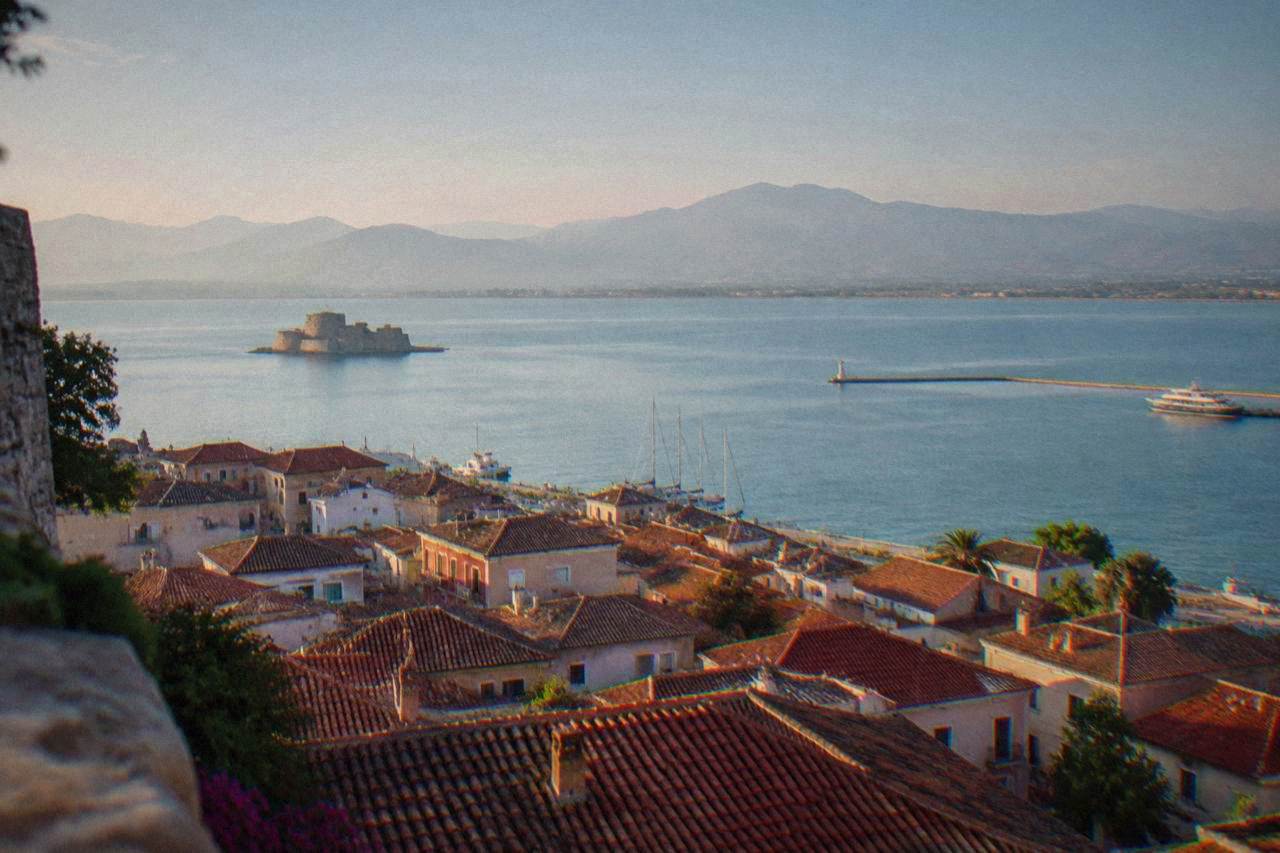
Three layers of fortification protected the capital: Bourtzi, the fortified islet begun in June 1471 to command the harbour entrance; Akronafplia, the old acropolis on the rock above the Old Town with walls going back to the late 4th century BC; and Palamidi Fortress, standing 216 m above the roofs, built by the Venetians and stormed by the Greeks in 1822. A fleet could anchor behind Bourtzi while the government sat under Palamidi's guns.
That defensive stack was the product of Nafplio's long history as a prize. Venetian rule ran from 1389 to 1540 and again from 1686 to 1715; Ottoman rule filled the gaps, from 1540 to 1686 and from 1715 to 1822. Each power rebuilt the walls it had captured, which is why a single view from the harbour takes in Venetian, Ottoman-era and ancient masonry at once. A town that had changed hands that often was, by 1827, the most practised fortress town in the new state.
The harbour mattered as much as the walls. A government at war needs revenue, arms and communication, and sea links were safer than roads through contested country. The Nafplio Travel Guide covers the waterfront in detail elsewhere, but the short version is that the capital years ran on the port: officials, mail and money all arrived by boat.
| Period | Power ruling Nafplio | What survives from it |
|---|---|---|
| From 1389 to 1540 | Venetian (first period) | Akronafplia fortifications, early harbour works |
| From 1540 to 1686 | Ottoman (first period) | Old Town fabric, Psaromachalas quarter layout |
| From 1686 to 1715 | Venetian (second period) | Palamidi Fortress, Bourtzi remodel |
| From 1715 to 1822 | Ottoman (second period) | Later walls, the Land Gate area |
| From 1827 to 1834 | Capital of Greece | Vouleftiko, Government House, capital-era public buildings |
Seeing those layers in person is the fastest way to understand the capital decision, and a guided walk is the efficient format for it. The city walking tour of Nafplio pairs Syntagma Square and the capital-era buildings with the Bourtzi boat trip, and the sites sit within easy walking distance of one another; the full details and live pricing are on the operator's listing.
What Survives From Nafplio's Capital Years Today?
The clearest survivors are the Vouleftiko on Syntagma Square, the former Aga Pasha mosque that hosted the first Greek parliament sessions from 1825; Government House, which dates from 1829; and the Church of Agios Spyridon, outside which Governor Kapodistrias was assassinated in September 1831. All three stand within a few minutes' walk of the square, alongside the Archaeological Museum and theVenetian arsenal around it.
The Vouleftiko is the most evocative stop. A mosque converted to house the legislature, it put the new state's parliament inside an Ottoman-era building in a Venetian-planned town: the whole layered history of Nafplio in one room. The story of that building and the square around it is told in the guide to Syntagma Square and in more depth in the history of Nafplio.
The Church of Agios Spyridon carries the darker chapter. Kapodistrias, the state's first governor, had arrived in January 1828, and his reforms made him enemies as well as admirers. He was shot outside the church in September 1831; the month and place are documented, and no more precise detail should be repeated. The church itself, in the Old Town lanes, remains a working parish church. Visitors planning their route can start from the first parliament building and the Church of Agios Spyridon pages.
| Capital-era sight | Its role 1827 to 1834 | Notes for visitors |
|---|---|---|
| Vouleftiko, Syntagma Square | First Greek parliament sessions, from 1825 | Standing building on the square |
| Government House | Built 1829, seat of the administration | Exterior visible in the Old Town |
| Church of Agios Spyridon | Kapodistrias assassinated outside it, September 1831 | Working church in the lanes |
| Palamidi Fortress | Garrison above the capital; taken by the Greeks in 1822 | 2026 ticket 20 euro full, 10 euro reduced |
| Akronafplia | Upper citadel above the harbour | Free to walk; uneven paths |
For anyone structuring a visit around these buildings, a walking tour does the routing work: the related tour below covers the capital-era core, with Bourtzi included by boat.
Can the capital story be walked in a single loop? Yes. Syntagma Square, the Vouleftiko, Government House and Agios Spyridon all sit in the compact Old Town, and the climb to Palamidi adds the garrison view that made the whole arrangement possible. Whether that loop fits one day or deserves two is covered in how many days you need in Nafplio.
When And Why Did The Capital Move To Athens?
The capital moved to Athens in 1834, after King Otto arrived in Nafplio in February 1833 and his government concluded that a modern monarchy should sit in the historic centre of the ancient Greek world rather than a provincial fortress town. Athens carried unmatched symbolic weight, and by 1834 the war was over enough for defence to matter less than prestige.
The handover was not a collapse. The Bavarian administration that came with Otto left its own mark on Nafplio, including the Lion of Bavaria, carved from 1840 to 1841 by Christian Heinrich Siegel as a copy of Thorvaldsen's Lion of Lucerne, in memory of Bavarian soldiers who died in the town. The sculpture rests in the Pronoia district and is one of the quietest rewards of walking past the Old Town's edge.
What the capital years left behind is a townscape built for a government: squares sized for assemblies, arsenals large enough for a navy ministry, and a parliament building still facing the main square. When people ask what Nafplio is famous for, the capital period is the honest headline, ahead of the beaches and the day trips to Mycenae and Epidaurus, both UNESCO World Heritage sites along with Tiryns.
The town's post-capital life has been kind to its fabric. No state institution needed to demolish and rebuild at scale, so the Old Town that a visitor walks now is recognisably the town Kapodistrias governed. That continuity is a large part of why the question is Nafplio worth visiting gets such a short answer.
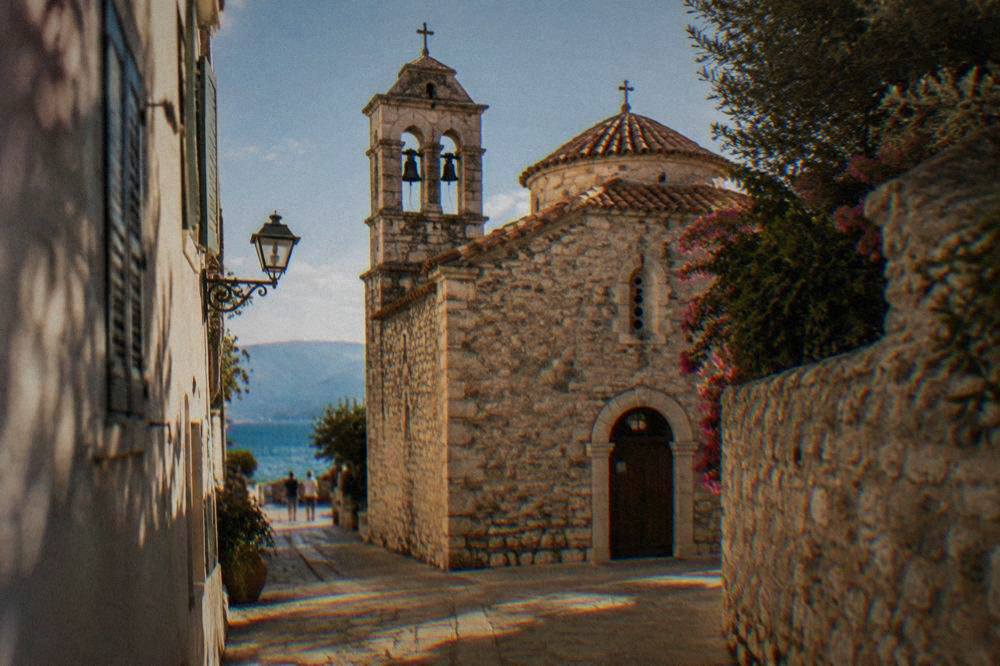
A second look at the streets rewards the same knowledge. The lanes around Psaromachalas and the Land Gate were the working harbour quarter of the capital years, and the view from Akronafplia down to Bourtzi is the same harbour picture the first government's officials would have known, minus the yachts.
For travellers who want the fuller picture with a guide alongside, this walking option covers the capital-era core of the town:
The wider region completes the story. The new state's first capital sat inside a landscape of ancient power: Mycenae about 32 minutes' drive away, Tiryns about 12, Argos about 18, the theatre of Epidaurus about 41. The old world and the new government shared one small corner of the Argolid, which is a reasonable summary of why the choice made sense in 1827.
Common Questions About Nafplio As The First Capital Of Greece
Why Was Nafplio The First Capital Of Greece?
Because it was the strongest fortified harbour the young Greek state held: Palamidi had been taken in 1822, the town could be supplied by sea, and it anchored Greek control of the Argolid. It served as capital of Greece from 1827 to 1834.
How long was Nafplio the capital of Greece?
From 1827 to 1834. The version that appears on some older pages, "1829 to 1834", is incorrect; the municipality's own history gives 1827 as the year the town was chosen, and the capital moved to Athens in 1834.
Where was Kapodistrias assassinated?
Ioannis Kapodistrias, the first governor of Greece, was assassinated in September 1831 outside the Church of Agios Spyridon in Nafplio's Old Town. He had arrived in the town in January 1828 and governed from there until his death.
Can you see buildings from the capital period in Nafplio today?
Yes. The Vouleftiko on Syntagma Square housed the first Greek parliament sessions from 1825, Government House dates from 1829, and the Church of Agios Spyridon still stands in the lanes where the assassination took place. All are within a short walk of the square.
Is Palamidi Fortress connected to the capital story?
Directly. Greek forces took Palamidi in November 1822, and the fortress at 216 m above the Old Town is what made Nafplio defensible enough to host a government five years later. The 2026 full ticket costs 20 euro, reduced 10 euro from 1 October to 31 May.