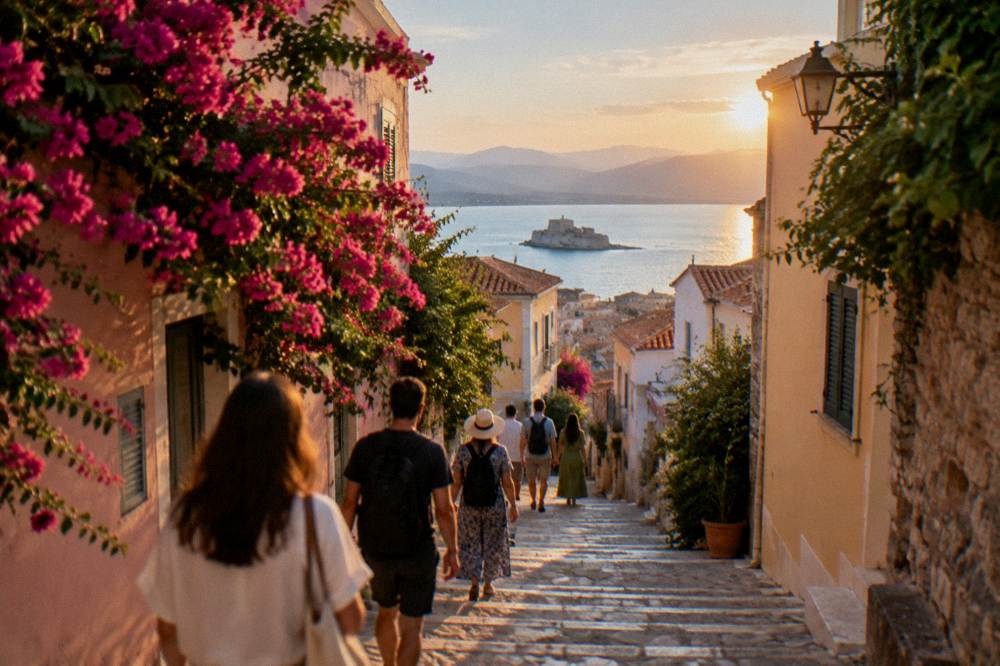
Akronafplia: The Old Acropolis Above The Harbour
Akronafplia is the old acropolis of Nafplio, a fortified rock directly above the harbour where the Argolid meets the Argolic Gulf. Its walls span polygonal masonry from at least the end of the 4th century BC through Frankish, Venetian and Ottoman rule, and its seaward flank carries the Arvanitia Promenade, a paved coastal walk of about one kilometre.
Short answer
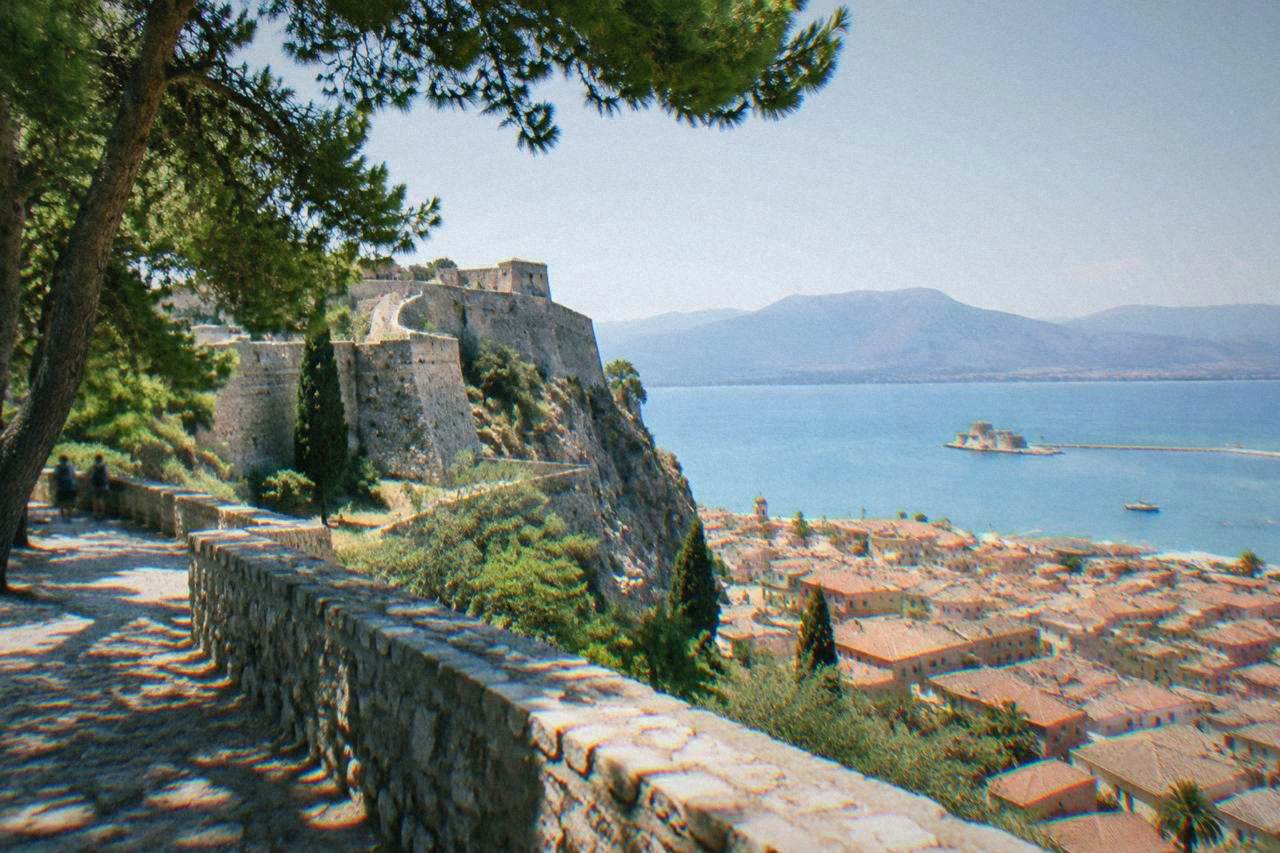
Akronafplia is the original fortified hill of Nafplio, the town's first acropolis, standing directly above the harbour in the Argolid on the Peloponnese. Admission to the open paths is free, the walls date in part from at least the end of the 4th century BC, and the seaward side drops to the Arvanitia Promenade.
Akronafplia is the old acropolis of Nafplio, the fortified peninsula of rock that rises directly above the town's harbour on the Argolic Gulf, in the Argolid region of the Peloponnese in southern Greece. It is the original nucleus of the town, older than the famous baroque Palamidi Fortress that looms above it and the small fortified islet of Bourtzi that sits offshore. The Ephorate of Antiquities of Argolida describes its surviving polygonal walls as dating from at least the end of the 4th century BC, with a Frankish period from about 1210 to 1389 layered above them. Today the rock is open to walk: no ticket gate, no printed admission, just walls, pines, gun platforms and one of the most direct sea views in the town. This guide covers what the rock is, what its layers of history mean, how to reach it, what to combine it with, and how to see its walls from the water.
What Is Akronafplia In Nafplio?
Akronafplia is the old acropolis of Nafplio: the original fortified settlement on the rocky peninsula that juts into the Argolic Gulf directly above the modern harbour, in the Argolid on the Peloponnese of mainland Greece. It is not a single castle but an accumulated fortress whose walls carry building phases from at least the end of the 4th century BC through Frankish, Venetian and Ottoman rule, and it stands immediately west of the Old Town, below the larger Palamidi Fortress.
The name simply describes the place: the acropolis ("akro") of Nafplio. Before Palamidi Fortress existed, this rock was the town's entire defence, and the settlement that became Nafplio grew in the sheltered ground beneath it. The Ephorate of Antiquities of Argolida, the regional authority that looks after the monument, notes that the Franks divided the castle into two sections in the years around 1210, a Frankish castle and a "Romeiko", Greek, castle, and that the Venetians later expanded the fortifications again, most intensively during their second period of rule from 1686 to 1715.
The rock has three historical castle levels, and traces of each survive. Some parts were badly damaged or demolished in later periods, so what a walker sees today is a sequence of fragments rather than one intact citadel: stretches of ancient polygonal masonry, Venetian curtain walls with carefully cut quoins, Ottoman additions, and the concrete scars of a hotel development on the summit, a building long since abandoned. The layers are the point. Few places in Greece let a casual visitor read two and a half thousand years of fortification in a single afternoon walk.
How Old Are The Walls Of Akronafplia?
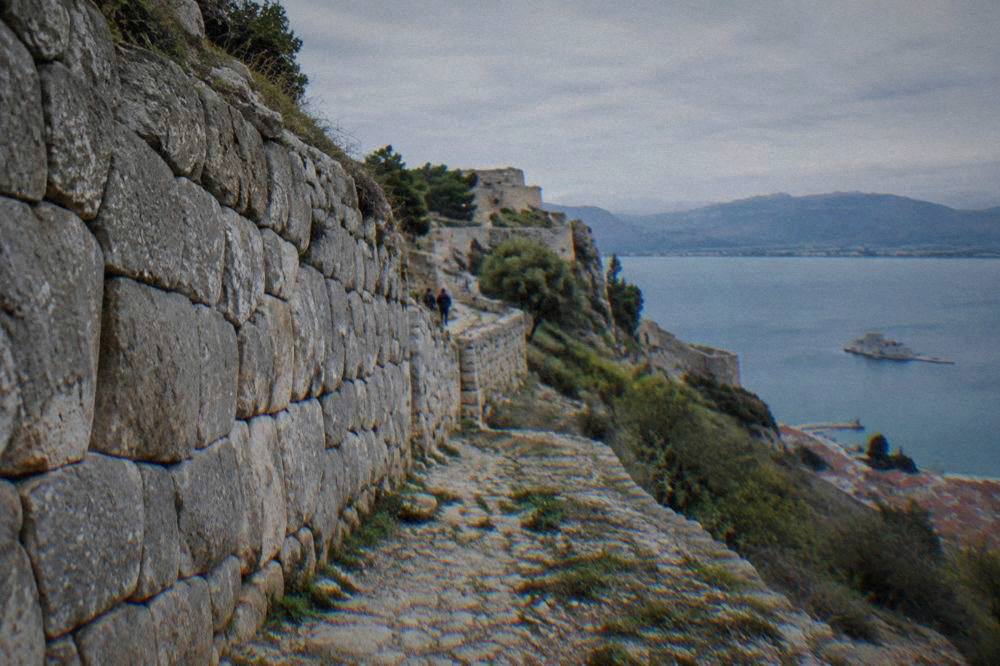
The oldest visible walls on the Akronafplia rock in Nafplio are polygonal in style and date from at least the end of the 4th century BC, according to the Ephorate of Antiquities of Argolida. Above them sit Frankish works from about 1210, Venetian fortifications from the periods 1389 to 1540 and 1686 to 1715, and Ottoman additions between those Venetian spells, with the fortress surrendering to Greek forces in December 1822, after the fall of Palamidi.
The sequence matters because it maps the whole political history of the north-eastern Peloponnese onto one rock. The ancient walls belong to a world where Nafplio was a minor fortified port of the Argolid. The Frankish division of the castle around 1210 belongs to the crusader lordships that split the Peloponnese after the Fourth Crusade. The first Venetian period, from 1389, made Nafplio a naval station the Serenissima cared enough about to keep for a century and a half.
| Period | Ruler | Dates | What survives on the rock |
|---|---|---|---|
| Ancient phase | Greek (Argolid) | At least the late 4th century BC | Polygonal masonry walls |
| Frankish phase | Frankish lords | About 1210 to 1389 | Castle split into Frankish and Greek sections |
| First Venetian period | Venice | 1389 to 1540 | Major fortification and expansion |
| First Ottoman period | Ottoman Empire | 1540 to 1686 | Additions and repairs |
| Second Venetian period | Venice ("Kingdom of Morea") | 1686 to 1715 | Extensive rebuilding of the defences |
| Second Ottoman period | Ottoman Empire | 1715 to 1822 | Garrison works |
| Greek state | Greece | December 1822 onward | Surrender after Palamidi's capture |
The end of the story is the birth of modern Greece. When Greek forces under Staikos Staikopoulos took Palamidi Fortress on the night of 29 to 30 November 1822, the Ottoman garrison's position on Akronafplia became untenable, and the old acropolis surrendered the following month. Within a few years Nafplio was the capital of Greece, from 1827 to 1834, and the new state's first governors worked in the town sheltered by this rock. The wider story is covered in the site's guide to the history of Nafplio collection, and the neighbouring fortresses each get their own treatment on the pages for Palamidi Fortress and Bourtzi.
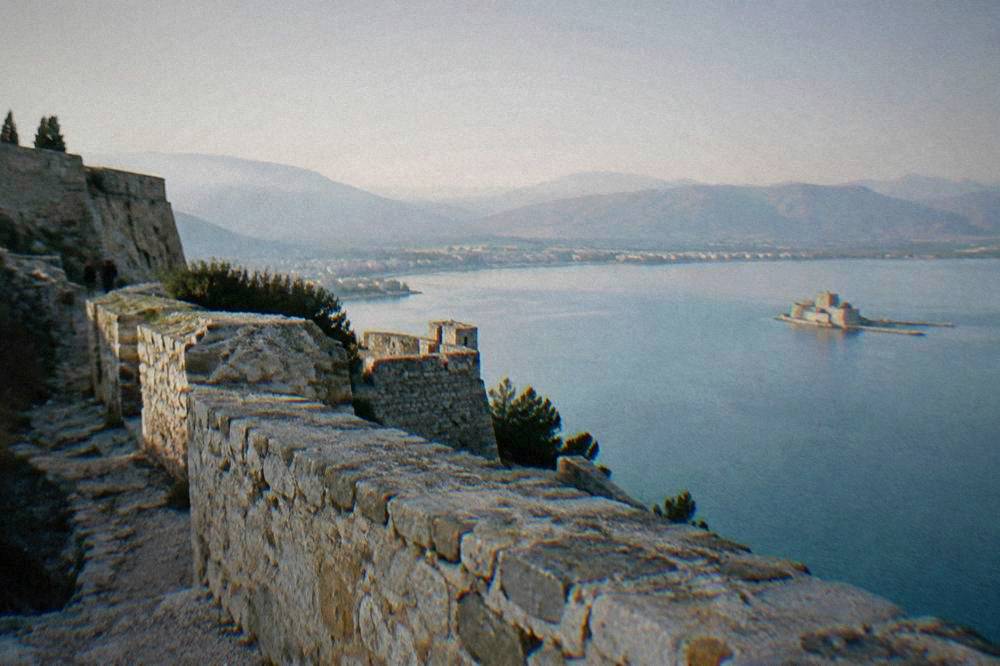
The best way to feel the difference between the town's fortresses is to compare them directly, because all three are visible from the harbour in a single glance.
| Fortress | Position | Core period | Admission in 2026 |
|---|---|---|---|
| Akronafplia | Rocky peninsula above the harbour | Ancient to Ottoman, late 4th century BC onward | Open paths, no ticket listed |
| Palamidi Fortress | Hilltop 216 m above the Old Town | Venetian, 1711 to 1714 core | 20 euro full, 10 euro reduced |
| Bourtzi | Fortified islet in the harbour | Begun June 1471 | 7 euro full, 5 euro reduced, boat access |
How Do You Get Up To Akronafplia?
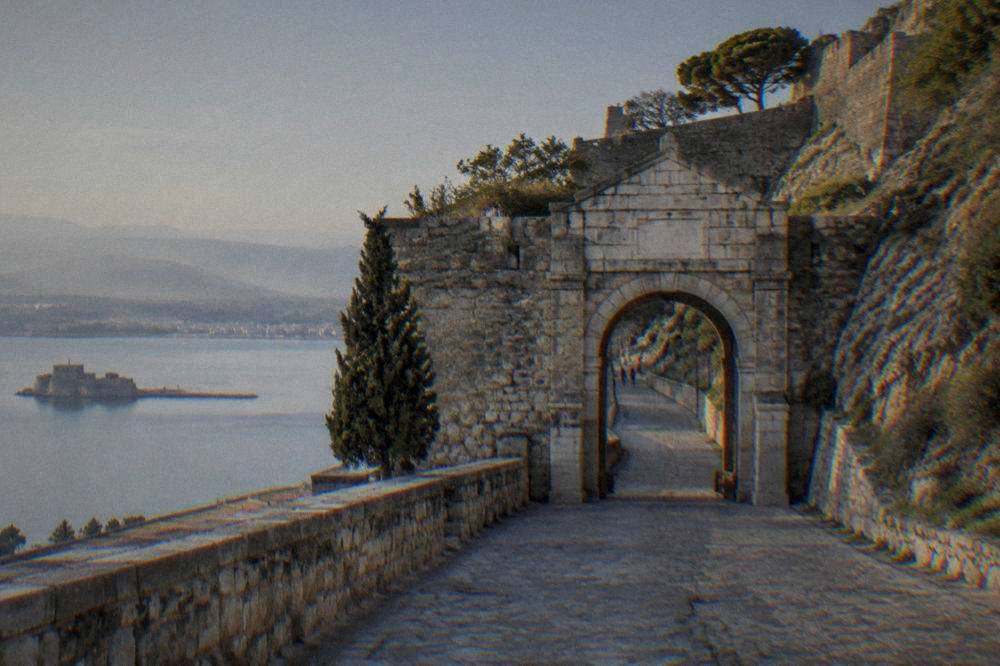
There is no ticket booth and no single gate: Akronafplia in Nafplio is reached on foot from the Old Town, either by the steps and lanes that climb from the western end of the harbour near the Land Gate, or along the Arvanitia Promenade, a paved coastal path of about one kilometre that runs from the harbour lighthouse around the seaward base of the rock to Arvanitia beach on the southern side.
The classic approach starts from the harbour. From the harbour and waterfront the path heads west past the Nafplio lighthouse, then climbs. Some routes thread up through the rock on old stone stairs and vaulted passages, others take the longer road that serves the summit; the paths are uneven in places, with loose stone and unlit stretches, so a torch helps after dark and solid shoes help at all times.
The second, gentler option is the promenade itself. Local guide sites describe the Arvanitia Promenade as roughly one kilometre of paved walkway carved along the seaward face of the Akronafplia rock, closed to traffic, connecting the lighthouse end of the harbour to Arvanitia square and beach. This route gives the walls, the sea cliffs and the Argolic Gulf without any serious climb, and it is the way most walkers actually experience the fortress today. The reported stabilisation works on the Arvanitia path in recent years mean a short section can occasionally be closed: check locally on arrival.
A third route connects the two fortresses. Walkers coming down from Palamidi can descend toward the Psaromachalas quarter, the old fishing neighbourhood under the rock, and pick up the promenade from there, making a natural circuit: fortress, old town, waterfront, promenade. That loop suits the site's two days in Nafplio plan exactly, and the climbing portion pairs well with the town's guided walking tours if finding the hidden stairways unaided sounds unappealing.
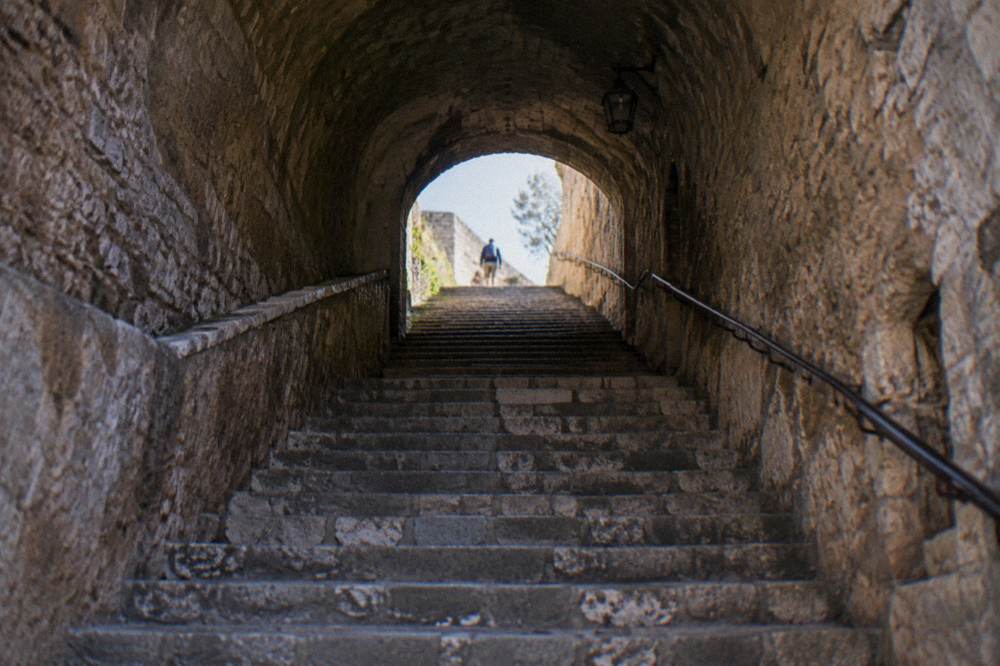
What Can You See From The Top Of Akronafplia?
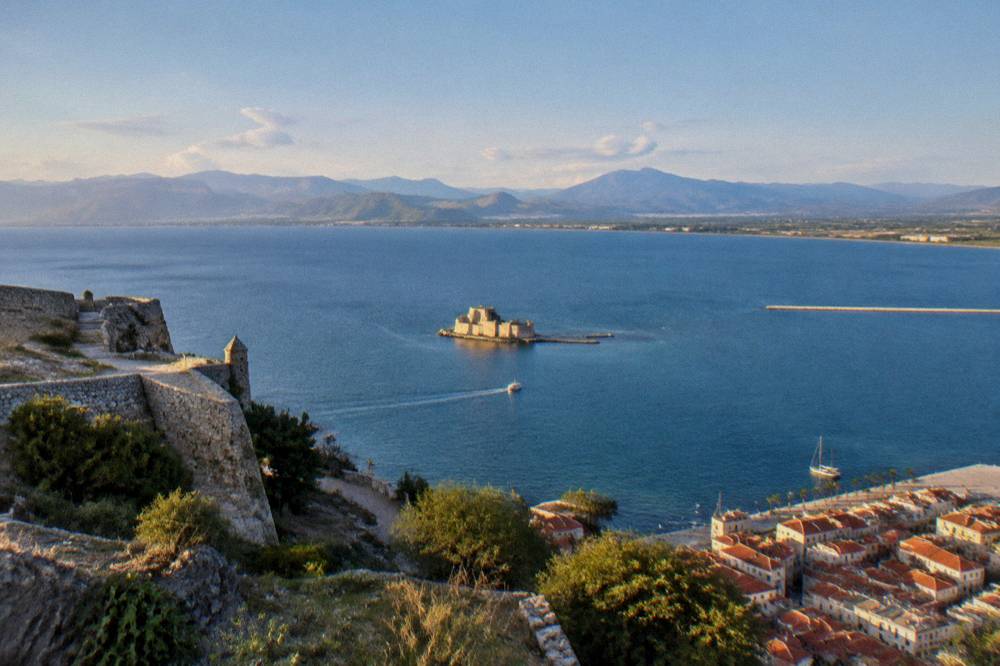
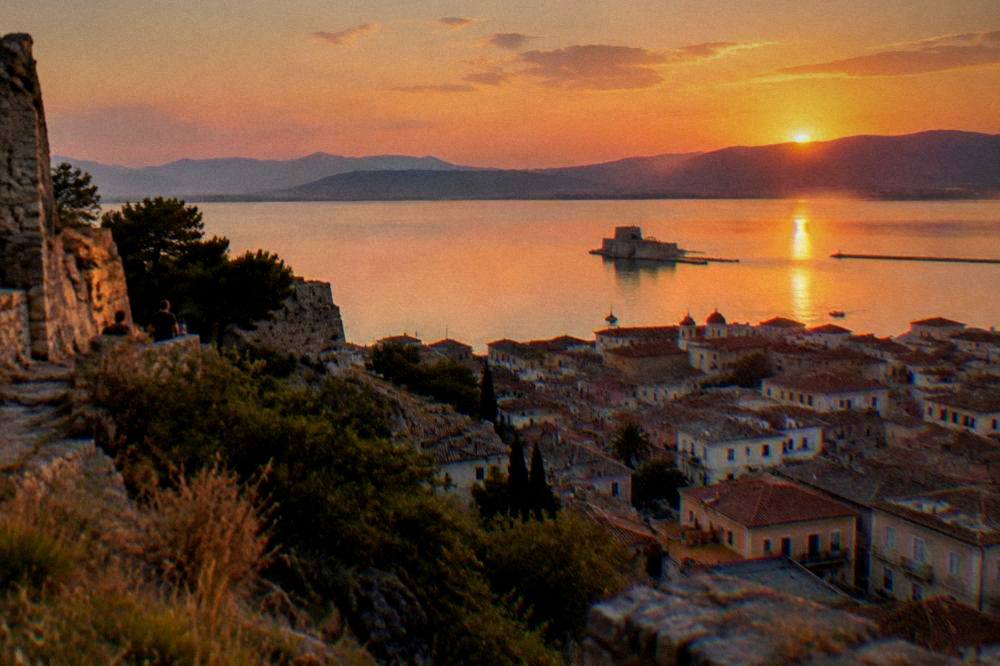
From the upper levels of Akronafplia the view sweeps the whole of Nafplio and its setting: the red roofs of the Old Town immediately below, the harbour and Bourtzi islet directly ahead, the Argolic Gulf stretching south, Palamidi Fortress crowning the hill behind, and on clear days the coast toward Tolo and the hills of the Argolid beyond. The gun platforms and bastions face seaward, because that, not the landward side, is where the fortress did its work for two thousand years.
Photographers should note the geometry. Morning light falls on the eastern, harbour-facing walls; late afternoon warms the western side above Arvanitia and lights up the Gulf. Sunset from the seaward bastions, looking down the coast, is the classic shot of Bourtzi with the water behind it. The site's Nafplio photography companion notes the best light windows in detail for anyone planning seriously around pictures.
The walls themselves deserve close attention, and they reward slow looking. The ancient polygonal courses are identifiable by their irregular, interlocking blocks fitted without mortar, a technique associated with serious Greek fortification from the late 4th century BC onward. The Venetian work is recognisable by contrast: regular ashlar, straight courses, angled bastions designed for cannon. Walking a single stretch of curtain wall, a visitor can move from one technique to the other within a few paces.
On the summit the remains of the hotel stand as an odd coda. The Greek National Tourism Organisation leased the site in the 1930s, the same era in which Bourtzi was run as a hotel, and the concrete structure was later abandoned. It is a strange ruin, but it explains why the summit is more open than the fortified lower levels. The eastern castle level below retains more of its original enclosed character, with gates, ramps and cistern traces.
What Is The Arvanitia Walk Below Akronafplia?
The Arvanitia Promenade is a paved, traffic-free coastal path of about one kilometre that runs around the seaward foot of the Akronafplia rock in Nafplio, from the harbour lighthouse to Arvanitia square and beach on the southern side. Arvanitia beach itself is a Blue Flag pebble beach, organised in summer with showers, changing rooms and sunbed rental, according to local guide listings.
The promenade is the town's daily promenade in the original sense: the evening walk. It delivers the walls of Akronafplia from below, cliff drops to the sea on one side, and at its far end the beach, cafés in season and the start of the longer route toward Karathona. Local sources place Karathona beach about three to four kilometres from the centre, reachable on foot via the continuing coastal path or by a short drive. The beach detail is reported by local guide sites: confirm facilities on arrival, since seasonal operations vary.
For structure, here is what the walk and its extensions involve, using the figures the local listings give.
| Segment | Length or character | Notes |
|---|---|---|
| Harbour lighthouse to Arvanitia square | About 1 km paved path | Traffic-free, runs under the Akronafplia walls |
| Arvanitia beach | Pebble beach, sandy seabed | Blue Flag, organised in summer, reported by local listings |
| Arvanitia to Karathona | Continuing coastal route | Karathona reported about 3 to 4 km from the centre |
| Summit climb from the Land Gate side | Stone stairs and lanes | Uneven in places, unlit after dark |
Swimmers should know the character of the water: Arvanitia is deep quickly, with ladders rather than a gradual shelf, which is exactly why it is popular with locals for a morning dip. The north side of the rock, facing the harbour, has no beach at all; the promenade there is purely a walk. The Pronoia district sits on the slope opposite, and the Lion of Bavaria, carved 1840 to 1841 by Christian Heinrich Siegel, lies just inland from the Arvanitia end, an easy two-minute detour that most walkers pass without realising what it commemorates: Bavarian soldiers of King Otto's escort who died in the typhus epidemic that struck the new capital.
How Does Akronafplia Compare With Palamidi Fortress?
Palamidi Fortress is the bigger, later and ticketed of Nafplio's two hill fortresses: built by the Venetians between 1711 and 1714, standing 216 m above the Old Town, and charging 20 euro full and 10 euro reduced in 2026, while Akronafplia is the older, free and more atmospheric rock directly above the harbour. The two are a ten-minute walk apart at their nearest points and complement each other rather than compete.
Palamidi is the monumental statement: eight bastions, a famous stairway usually counted at about 850 steps (not the legendary 999), and views that take in the whole Argolic plain. Its 2026 hours follow the standard state-site schedule, from winter opening of 08:30 to 15:30 up to summer opening of 08:00 to 20:00 from 2 May. Akronafplia gives a different experience: smaller, quieter, free, layered with far older masonry, and closer to the water. The full comparison, including the hour-by-hour schedule and the step legend, is on the Palamidi Fortress page.
| Akronafplia | Palamidi Fortress | |
|---|---|---|
| Built | Phases from late 4th century BC onward | Core 1711 to 1714 |
| Height | Rock directly above the harbour | 216 m above the Old Town |
| Admission 2026 | No ticket listed for the paths | 20 euro full, 10 euro reduced |
| Signature feature | Polygonal walls, Arvanitia Promenade | About 850 steps, eight bastions |
| Best for | Layered history, sea walk, sunset | Scale, views, the classic climb |
A practical note on time: Palamidi rewards an early start, before the midday heat, while Akronafplia and the promenade work best in the late afternoon and evening. On the HNMS Argos station record, 1980 to 2010, the mean daily high in July is 34.0 C, and even September averages 29.7 C, so the shaded, breezy seaward side of the old acropolis is the saner place to be at midday in summer. The town's full climate breakdown, with every month's means and rainfall, is in the site's weather guide, and the figures there are the same HNMS Argos station, 1980 to 2010, series used here.
Can You See Akronafplia From The Water?
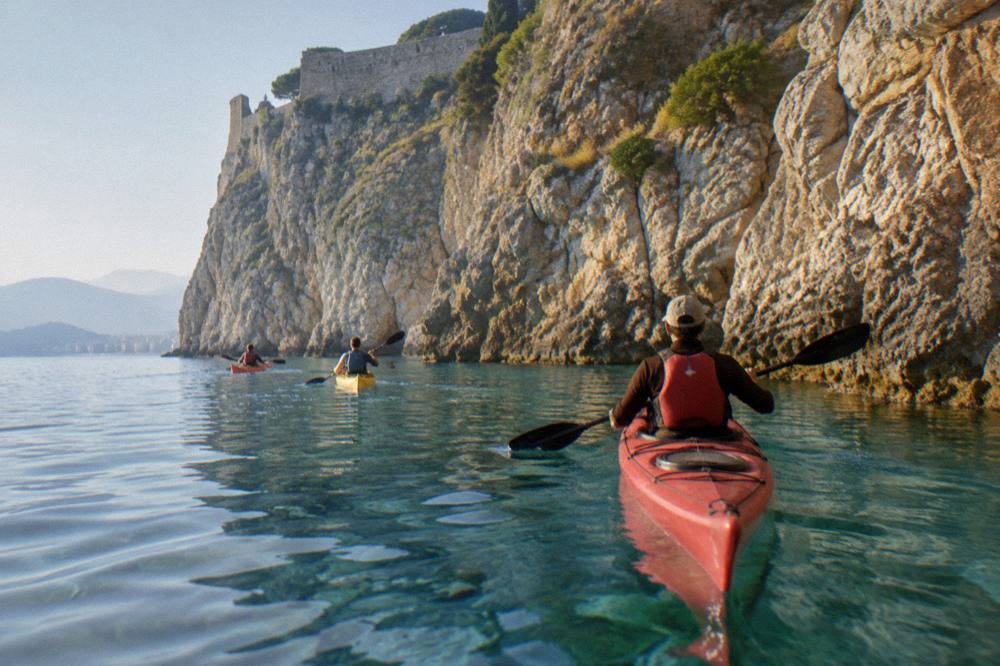
Yes, and from the water is arguably the best angle of all: the sea kayak tours that leave from Nafplio's harbour paddle directly beneath the walls of Akronafplia and around the base of Bourtzi, giving the only view that shows the fortress's seaward cliffs, gun ports and the Arvanitia Promenade in a single frame. Several operators run this route, and it is one of the town's signature activities.
The site's featured tour for this page is the sea kayak medieval castles trip, which circles the Akronafplia rock past the fortress walls with a licensed guide, with swimming and snorkelling stops on the coast beyond. For a visitor deciding between a walking morning and a paddling one, the two experiences answer different questions: the walk explains the walls, the water shows their scale. Details and current pricing are on the operator's live listing.
Not everyone wants to kayak, and there are gentler water options. The town's short sailing and catamaran cruises leave from the same harbour and pass the rock on their way out toward the Gulf. For the full menu, from kayaks to day sails, see the site's boat trips guide on the Nafplio Travel Guide homepage listings, which is kept organised by type and departure point.
What Should You Combine With Akronafplia In One Day?
A single day built around Akronafplia naturally fills itself: the morning for Palamidi Fortress before the heat, late morning for the Old Town lanes and Syntagma Square, lunch by the harbour, and late afternoon for the Arvanitia Promenade and sunset from the seaward bastions. All of it is walkable, none of the free parts needs booking, and the whole circuit stays within the town itself.
The Old Town at the foot of the rock is small and dense with sights. Syntagma Square holds the Vouleftiko, the mosque building that hosted the first Greek parliament from 1825, and the Archaeological Museum of Nafplio in the old Venetian arsenal, open 08:30 to 15:30 all year and closed Tuesdays, admission 10 euro full and 5 euro reduced. The Land Gate, the Venetian entrance to the town, stands at the western end, right where the Akronafplia climb begins, so the two pair naturally.
| Time of day | Plan | Why in that slot |
|---|---|---|
| Morning | Palamidi Fortress climb | Cooler hours, open from 08:00 in season |
| Late morning | Syntagma Square, museums | Shade and indoor stops |
| Midday | Lunch in the Old Town | Heat break, per HNMS means of 34.0 C in July |
| Afternoon | Land Gate and the Akronafplia climb | Walls in afternoon light |
| Evening | Arvanitia Promenade and sunset | The classic walk, cooler air |
Visitors with a car or a taste for antiquity can stretch further. Mycenae is a drive of about 32 minutes from Syntagma Square, the theatre at Epidaurus about 41, Tiryns only about 12, and the trio forms the standard Argolid circuit. The site's pages for Mycenae and the surrounding day trips give the full breakdown, including the 2026 ticket prices of 20 euro full and 10 euro reduced at both Mycenae and Epidaurus. For those without a car, guided day trips cover the same ground, and the pick below is the popular shared option.
Is Akronafplia Suitable For Children And Older Visitors?
The Arvanitia Promenade below Akronafplia is paved, traffic-free and suitable for children, prams in the dry season and older walkers, while the climb to the upper castle levels involves uneven stone stairs, loose surfaces and unlit passages that suit sure-footed visitors only.
Families usually do best with the circuit approach: the promenade for everyone, the summit climb for whichever adults and teenagers want it, and the beach at Arvanitia as the reward that keeps children moving. The swimming is from rocks and ladders rather than a shallow shelf, so confident swimmers only, and the summer organisation, showers, changing rooms and sunbeds, reported by local listings, makes the beach end practical for a half day.
Older visitors should treat the fortress as a series of options rather than a single objective. The harbour-side path to the lighthouse is flat and short. The promenade adds gentle undulation and superb walls-from-below views without any climb. The upper rock is the only demanding part, and skipping it costs little: the best photographic angle on the fortress, from the water or from the far side of the harbour, does not require standing on it. The site's where to stay in Nafplio notes help with picking a base that keeps everything on this page within a short walk.
What Else Is Near Akronafplia?
Within a five-minute walk of the Akronafplia paths sit the Land Gate, the Psaromachalas fishing quarter, the harbour lighthouse, the Nafplio Archaeological Museum and the whole of the Old Town; the Church of Agios Spyridon, outside which Governor Kapodistrias was assassinated in September 1831, stands a few streets east; and Bourtzi lies a short boat ride across the harbour. Pronoia, with the Lion of Bavaria, rises on the inland side.
The density is the argument for basing a stay in the Old Town: virtually everything in the town's historic core sits within a kilometre of the rock. The Psaromachalas quarter, climbed on the western stairs, is the old fishermen's neighbourhood, a warren of whitewashed lanes that the fortress itineraries pass through without naming. The Old Town page maps the quarters and the Syntagma Square page covers the central square's buildings, including the Vouleftiko and the Trianon.
Common Questions About Akronafplia In Nafplio
Is Akronafplia free to visit?
No admission price or ticket is listed for the open paths and walls of Akronafplia; the rock is reached on foot from the Old Town or the Arvanitia Promenade. Check locally on arrival, since sections can occasionally close for path works.
How do you get to Akronafplia?
On foot: stairs and lanes climb from the western end of Nafplio harbour near the Land Gate, and the paved Arvanitia Promenade of about one kilometre runs around the seaward base of the rock from the lighthouse to Arvanitia beach.
How old is Akronafplia?
The Ephorate of Antiquities of Argolida dates the surviving polygonal walls to at least the end of the 4th century BC, with Frankish works from about 1210 and Venetian fortifications from 1389 to 1540 and 1686 to 1715 layered above.
Can you walk from Akronafplia to Palamidi Fortress?
Yes, the two fortresses are connected by lanes and stairs through the Psaromachalas quarter and the town, a short walk at their nearest points. Palamidi admission in 2026 is 20 euro full and 10 euro reduced.
When is the best time of day to visit Akronafplia?
Late afternoon into sunset, when the heat has dropped, the seaward walls are in warm light and the Arvanitia Promenade is at its best. On the HNMS Argos station record, 1980 to 2010, July's mean daily high is 34.0 C, so midday climbing is best avoided in summer.
Akronafplia is the layer beneath the postcard Nafplio: the reason the harbour, the Old Town and the whole town exist where they do. Walk it slowly, read its walls in order, and finish on the promenade as the sun drops over the Argolic Gulf.