Karathona: The Long Sandy Beach South Of Town
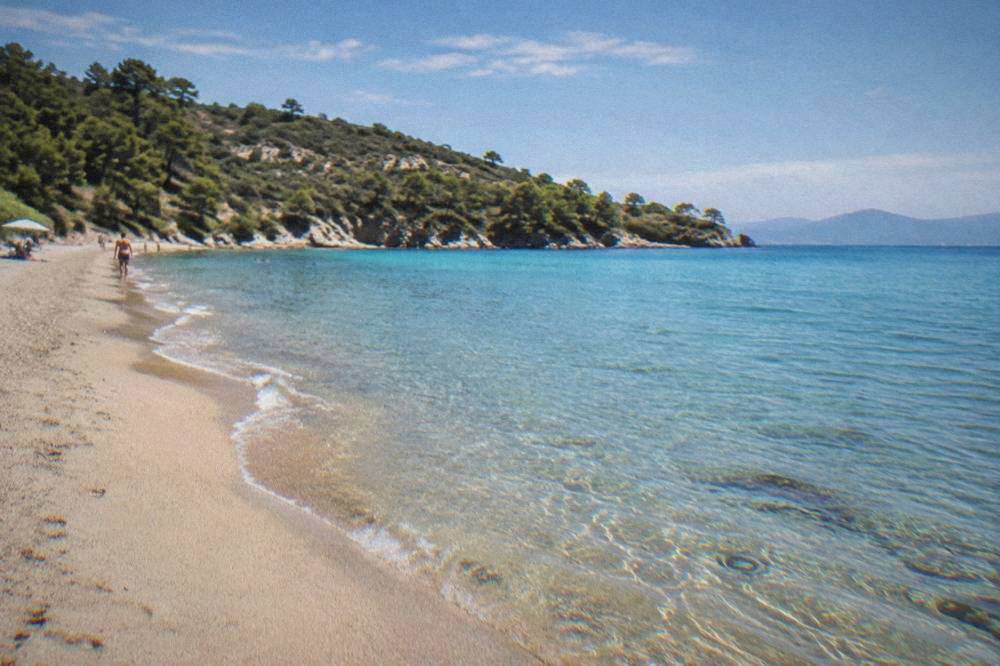
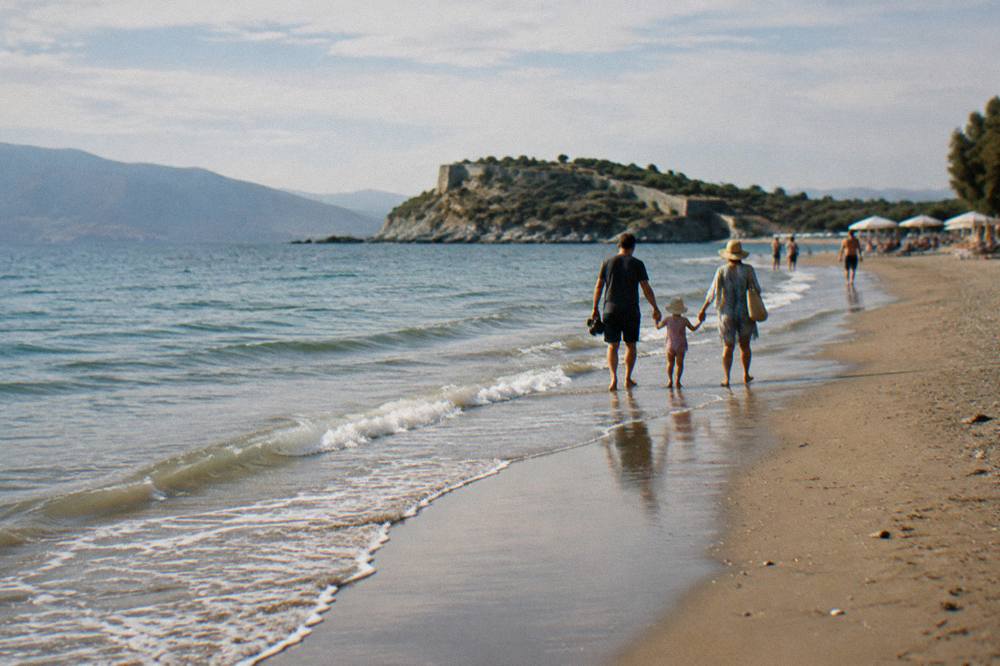
Karathona is the long sandy beach on Nafplio's south side, the one stretch of sand within walking distance of the Old Town. Local guides report it at about 3 to 5 km from the centre, reachable on foot in roughly 30 to 45 minutes along the coast road below Palamidi Fortress, and it is the answer to the question every sandy-beach traveller asks about this part of the Argolid.
Short answer
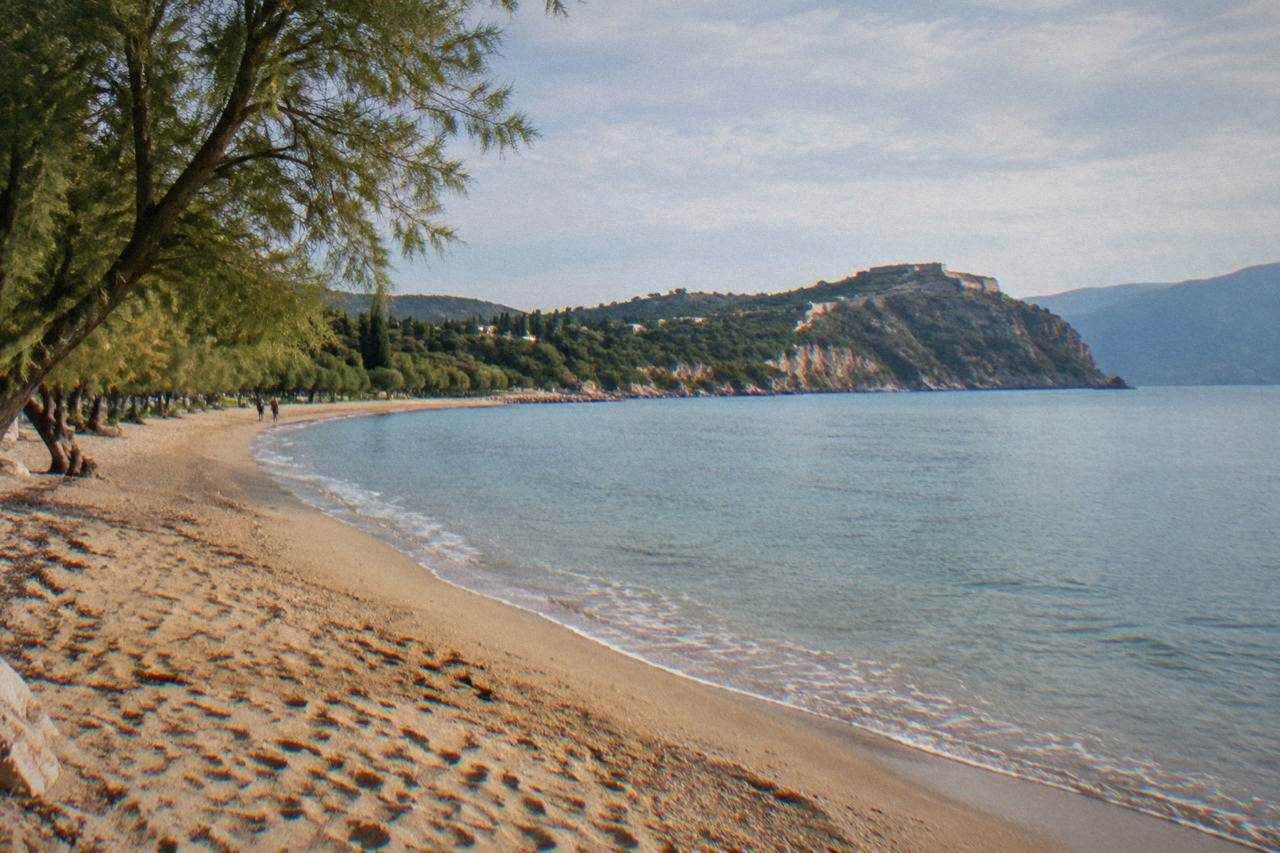
Karathona is a long sandy beach about 3 to 5 km south of Nafplio's Old Town, reported at around 30 to 45 minutes on foot along 25 Martiou street, the coast road that runs below Palamidi Fortress and the Arvanitia side. It is the nearest real stretch of sand to the town itself, while Arvanitia, the pebble beach on the Akronafplia side, is closer but not sandy.
Karathona is the long sandy beach on the southern side of Nafplio, the small coastal town in the Argolid on the Peloponnese's north-east coast, on the Argolic Gulf. Where Arvanitia, the pebble beach pressed against the rocks below Akronafplia, gives the Old Town its quick swim, Karathona is the wide arc of sand that local guides describe as the town's proper beach, reached along 25 Martiou street, the coast road that leaves the harbour side and runs under the walls of Palamidi Fortress. Secondary sources report the distance at about 3 to 5 km from the Old Town, roughly 30 to 45 minutes on foot, and a short drive the same way.
Where Is Karathona Beach In Nafplio?
Karathona beach sits on the south-east edge of Nafplio, at the end of 25 Martiou street, the coast road that follows the foot of the Palamidi hill out of town, and secondary sources report it at about 3 to 5 km from the Old Town, around 30 to 45 minutes on foot. The beach is a long sandy curve on the Argolic Gulf, facing open water toward the south-east.
It belongs to the same shoreline world as Arvanitia and the Akronafplia promenade, but it is the sand stretch, not the pebble one.
The geography matters for planning. Nafplio's Old Town clusters around Syntagma Square and the harbour, with Akronafplia, the old acropolis, rising above the water and Palamidi Fortress standing 216 m above the town behind it. The Arvanitia promenade, a paved coastal path reported at about 1 km long, wraps around the Akronafplia headland from the harbour lighthouse to Arvanitia square. Karathona lies beyond that, continuing along the same southern shore, and the reported walking route follows 25 Martiou street, the road that locals and guides name for this trip. The bus is an alternative in season: local reporting notes a seasonal summer beach service toward Karathona on the KTEL Argolida network, with frequency not detailed, so check the current timetable before relying on it.
What the sources do not settle is worth knowing before you set out. The comparable case is Arvanitia, which the city's own guide site describes as Blue Flag and organised in summer, with cafes, showers and sunbed rental, but that description attaches to Arvanitia and cannot be transferred to Karathona as fact.
For context on the wider town, the things to do in Nafplio round-up covers the sights, and the Nafplio beaches guide compares every stretch of coast around the town.
How Do You Get To Karathona Beach From Nafplio Old Town?
The reported walking route follows 25 Martiou street from the harbour side along the foot of the Palamidi hill, about 3 to 5 km and roughly 30 to 45 minutes on foot, and the same road carries cars and, in summer, a seasonal KTEL beach service with no detailed timetable. There is no train anywhere near this coast: no passenger rail serves Nafplio in 2026, and older guides that say otherwise are out of date.
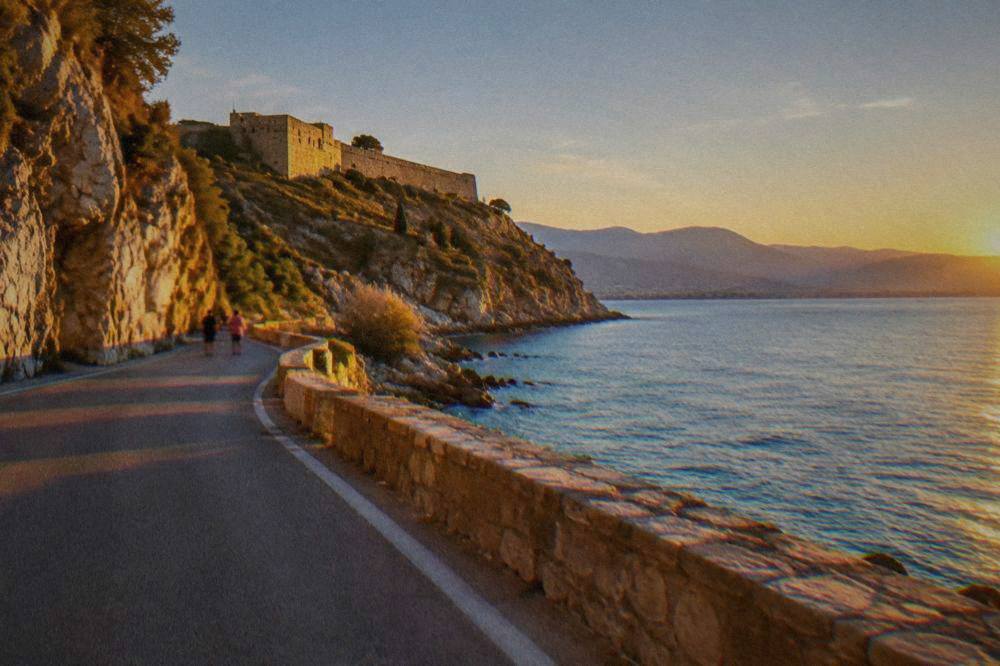
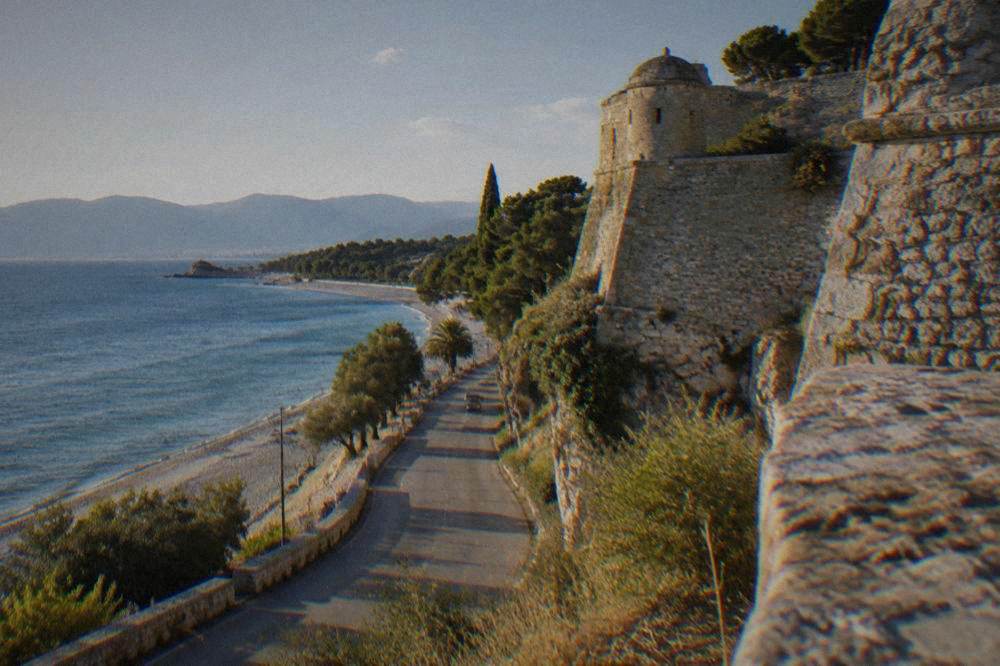
On foot, the walk has two personalities. The first part overlaps with the Arvanitia promenade approach, the paved path around Akronafplia reported at about 1 km, one of the town's signature strolls, described in detail on the Arvanitia area page. Beyond Arvanitia the route continues on the road, with the walls of Palamidi Fortress above and the gulf below, and it is this stretch that accounts for the bulk of the reported 30 to 45 minutes. Anyone combining the promenade and the road walk should treat the whole outing as a proper walk, not a stroll, in summer heat.
The alternative to walking is the road. Karathona sits on the same southern corridor that leads on toward Tolo, the sandy beach resort about 11 km and 17 minutes by road from Syntagma Square, and Asini, about 17 minutes the same way, so a car day can chain them: the Tolo guide and the Asini guide cover both. Local reporting puts the seasonal KTEL beach bus toward Karathona in the summer network only, with no published frequency, so confirm the current schedule on the operator's site or at the bus station near Plateia Niketara before planning around it.
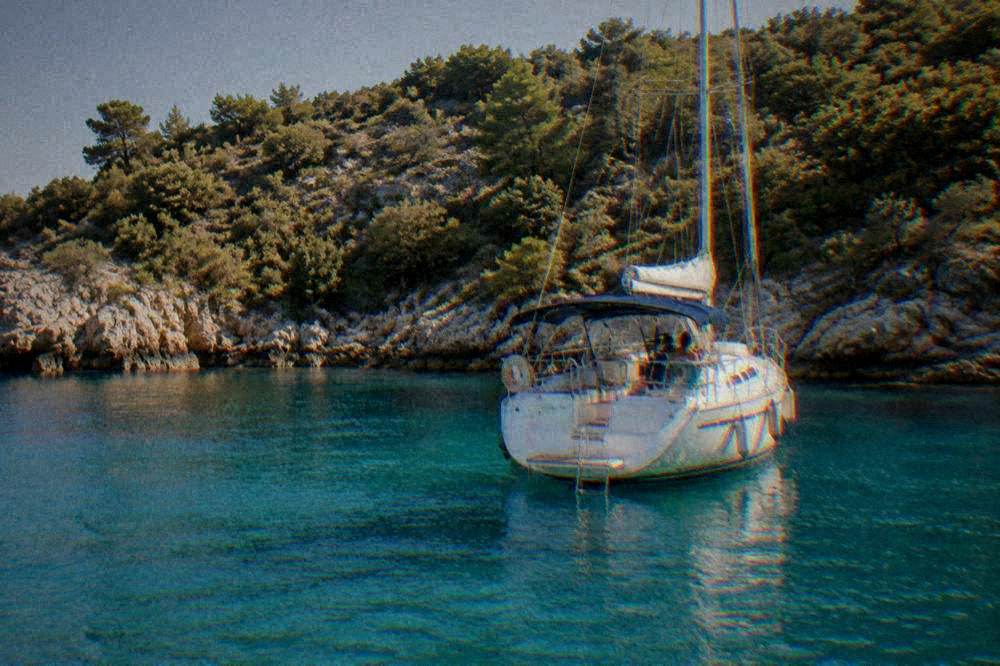
For anyone who would rather see this coast from the water than walk it, a sailing half-day out of the harbour is the natural pairing: Check availability for the all-inclusive cruise, which serves a meal and drinks on board and is described on its tour page listing partner pages elsewhere on this site.
Is Karathona Good For Swimming Compared With Arvanitia?
Karathona is the sand option and Arvanitia is the pebble option, and that is the honest core of the comparison: the city's own guide site describes Arvanitia as pebble and rocky with a sandy seabed, ladders into the water and Blue Flag status, while Karathona is described in secondary sources simply as a long sandy beach.
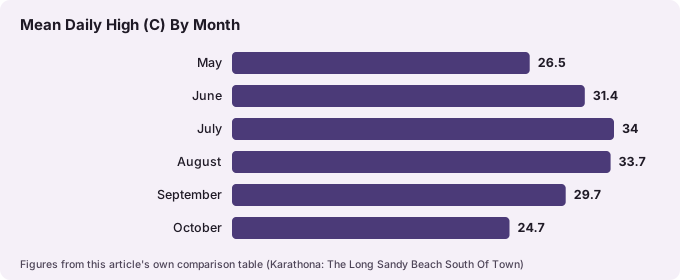
Swimming season is best planned from the climate record. The HNMS Argos station, 1980 to 2010, an inland station about 10 km north-west of town, gives the pattern: mean daily highs of 26.5 C in May, 31.4 C in June, 34.0 C in July and 33.7 C in August, easing to 29.7 C in September and 24.7 C in October. Rain days tell the same story from the other side: 6.2 in May, 3.0 in June, 2.1 in July, 2.5 in August and 5.0 in September.
The choice between the two beaches is really a choice of convenience against comfort. Arvanitia wins on distance, minutes from the Old Town at the end of the promenade, and on summer organisation: the city guide site reports cafes, a bar and restaurant, changing rooms, showers, restrooms, sunbed and umbrella rental and an outdoor gym there in summer. Karathona wins on sand and space, and on being the last beach before the coast road continues to Tolo.
| Month | Mean Daily High (C) | Mean Daily Low (C) | Rain Days | Rain (mm) |
|---|---|---|---|---|
| May | 26.5 | 10.5 | 6.2 | 18.7 |
| June | 31.4 | 14.0 | 3.0 | 8.9 |
| July | 34.0 | 16.7 | 2.1 | 9.1 |
| August | 33.7 | 16.8 | 2.5 | 13.0 |
| September | 29.7 | 14.2 | 5.0 | 20.3 |
| October | 24.7 | 11.5 | 6.9 | 44.3 |
All figures: HNMS Argos station, 1980 to 2010.
| Beach | Surface | Reported Facilities | Distance From Old Town |
|---|---|---|---|
| Arvanitia | Pebble and rock, sandy seabed | Blue Flag; summer cafes, showers, changing rooms, sunbed rental | Minutes, at the end of the about-1-km promenade |
| Tolo | Sandy resort beach | Resort town amenities, see the Tolo guide | About 11 km, 17 min by road |
Can You Walk From Arvanitia To Karathona?
Yes, the reported walking route from the Old Town to Karathona runs via the Arvanitia side, and the whole outing is commonly given at roughly 30 to 45 minutes on foot over about 3 to 5 km; the paved Arvanitia promenade itself is reported at about 1 km around the Akronafplia headland. One caveat belongs here: stabilisation works were reported on the Arvanitia path in 2025 and continuing into 2026, so check the current path status locally before setting out, as no day-by-day status is published.
The route, as the local guides describe it, is one of the better short walks on this coast. Start at the harbour lighthouse end, follow the paved promenade around Akronafplia with Bourtzi behind you and open gulf to your right, pass Arvanitia square and its beach, and continue on 25 Martiou street as the road climbs gently under the east bastions of Palamidi Fortress, built 1711 to 1714 and captured by the Greeks in 1822. The fortress itself, its about 850 steps, not the legendary 999, and its 2026 ticket of 20 euro full and 10 euro reduced, are covered on the Palamidi Fortress page.
Two planning notes from the facts file. First, do this walk early or late in the hot months: July's mean daily high of 34.0 C on the HNMS Argos record is an inland reading, and the road stretch has limited shade by comparison with the promenade. Second, the works caveat is real but narrow: rockfall and stabilisation works on the path were reported in 2025 and into 2026, and the honest instruction is simply to check locally, at your accommodation or the tourist kiosk by the port, that the promenade section is open on the day. There is no train alternative and no ferry along this coast; the boat options are the harbour cruises, covered below. Other pages covering the same trip are gathered on Nafplio Travel Guide.
The kayak alternative sees the same cliffs from the water, paddling past the medieval castles that the road walk passes above.
What Is There To Do Near Karathona Beyond The Beach?
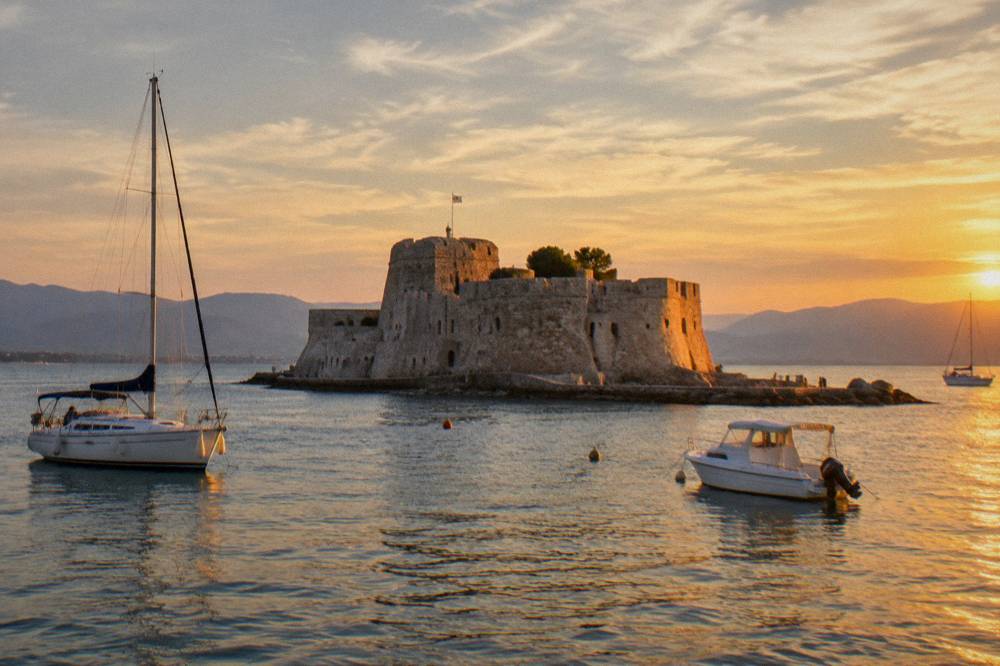
The near-beach list is short and coastal: the walk back along the Palamidi walls, the Arvanitia beach and promenade, and the harbour with Bourtzi, the small fortified islet begun in June 1471, reachable by boat for a fee with a 2026 ticket of 7 euro full and 5 euro reduced.
Everything else worth a morning sits a short drive out along the same southern corridor: Tolo at about 17 minutes by road, Asini at about 17, Ancient Asini's site ticketed at 5 euro full and 3 euro reduced, and Epidaurus farther on at about 41 minutes from Syntagma Square.
The pattern that makes Karathona useful is that it sits at the start of the Argolid's southern day-trip chain. The computed drive times from Syntagma Square, rounded, run like this along that corridor and beyond:
| Destination | Drive Time From Syntagma Square |
|---|---|
| Tolo | About 17 minutes |
| Asini | About 17 minutes |
| Lerna | About 20 minutes |
| Mycenae | About 32 minutes |
| Epidaurus theatre | About 41 minutes |
| Palaia Epidavros | About 47 minutes |
| Nemea town | About 49 minutes |
| Ancient Corinth | About 61 minutes |
Mycenae, with Tiryns a UNESCO World Heritage inscription since 1999, and Epidaurus, inscribed in 1988, both cost 20 euro full and 10 euro reduced in 2026, the reduced ticket sold only from 1 October to 31 May. A common plan is a morning at one of the sites and an afternoon at Karathona, which the drive times above make entirely reasonable. The Mycenae and Epidaurus tours page covers guided versions of the same outing, and the two days in Nafplio itinerary builds the town-and-sites split into a full plan.
Back in town, the evening options cluster around the harbour and the Old Town. The harbour and waterfront page covers the port side, and the Old Town page the lanes inland; the Pronia page covers the district on the east side of town, where the Lion of Bavaria, carved 1840 to 1841 by Christian Heinrich Siegel, stands near the old cemetery.
Should You Stay Near Karathona Or In Nafplio Old Town?
Editorial judgement, stated as such: the Old Town and the harbour side are the better bases for a first visit, because the lodging clusters sit there and the whole town, from Syntagma Square to Arvanitia, is walkable, while Karathona works best as a beach you visit rather than a base you sleep in.
The reasoning is practical. From an Old Town or harbour base, Karathona is a walk, a short drive or the seasonal bus, and in exchange you are minutes from Syntagma Square, the Archaeological Museum of Nafplio, open 08:30 to 15:30 and closed Tuesdays, ticketed at 10 euro full and 5 euro reduced, and the evening life of the lanes. From a Karathona-side base, if you find one through your own booking search, every dinner, sight and departure runs through the same road. Families wanting sand-first days might reasonably weigh a stay toward Tolo instead, the resort town at about 17 minutes by road, and accept the drive into town for the sights; the trade-offs are laid out in the where the coast continues guide on Tolo.
One cost to expect wherever you sleep: the Greek climate resilience fee, collected by the accommodation, higher from April to October than in the winter months.
What Is The Best Time Of Day And Year For Karathona?
July and August are the core beach months on the HNMS Argos station record, 1980 to 2010, with mean daily highs of 34.0 C and 33.7 C and only 2.1 and 2.5 rain days respectively, while May, June and September stay warm with 6.2, 3.0 and 5.0 rain days; on any summer day the early morning and late afternoon beat midday, and no crowd figures or monthly sea temperatures exist to say more.
The record gives an honest shoulder-season picture. May's mean high of 26.5 C and September's 29.7 C are beach-compatible for plenty of travellers, with 18.7 mm and 20.3 mm of rain respectively across the month, and June at 31.4 C with just 8.9 mm sits between the two worlds. October, at a 24.7 C mean high with 44.3 mm of rain, is more of a walking month than a swimming one, and the November figure of 82.5 mm across 9.4 rain days marks where the year turns. Remember these are inland station means about 10 km north-west of the town: the waterfront can differ slightly.
Time of day is common sense with numbers behind it. A 34°C mean high in July makes the reported 30-to-45-minute walk to the beach a morning or evening affair, and the same logic applies to the Palamidi steps, about 850 of them, which pair badly with midday heat. The sun position also matters for photographers: the beach faces the open gulf to the south-east, and the harbour side with Bourtzi photographs well late in the day.
Can You Combine Karathona With A Boat Trip From Nafplio?
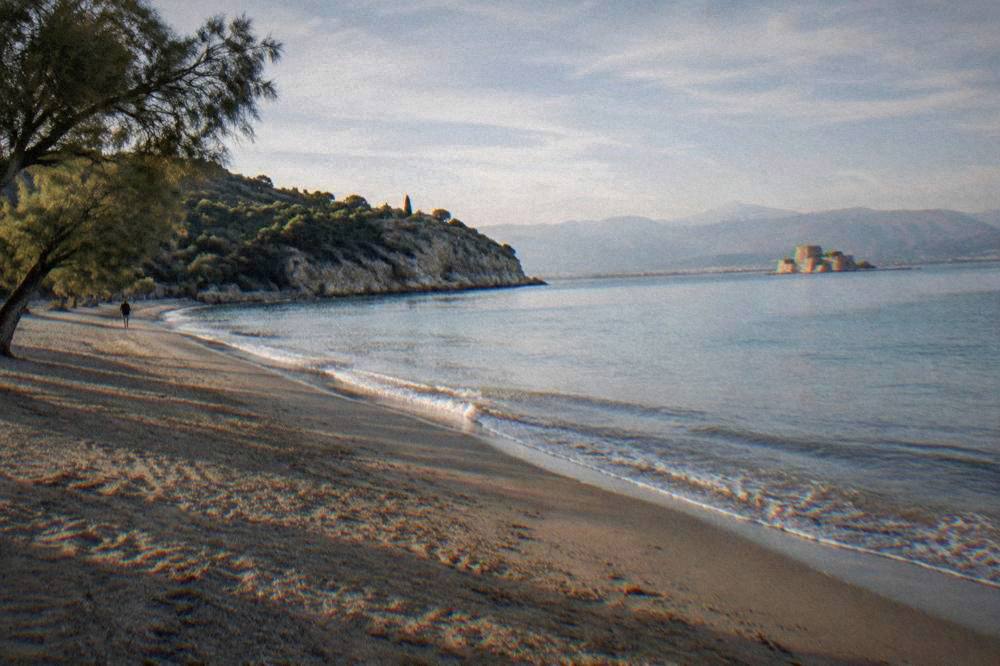
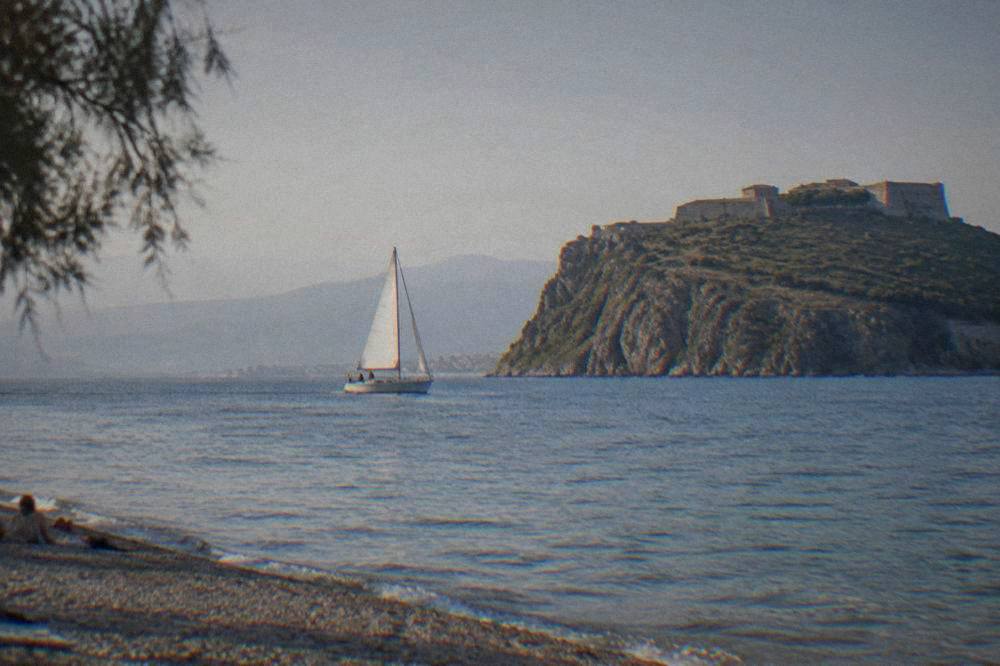
Yes, and it is one of the better pairings on this coast: half-day sailing and catamaran cruises run from Nafplio harbour, serving meals and drinks on board, and they put the Karathona shoreline, the Bourtzi islet and the castle walls in one circuit, while the beach itself gives the same coast at sand level.
No scheduled ferry runs from Nafplio or Tolo to Hydra or Spetses, older guides notwithstanding; the islands are reached by seasonal day cruise or from another port, so a harbour cruise is the only boat day that starts and ends in Nafplio itself.
The harbour cruise fleet is the strongest leisure offering in the roster of tours this site tracks. The related pick for this page is the all-inclusive half-day sail, a small-group cruise with meal, drinks and snorkelling stops, and it earns the spot because it sails the exact water the Karathona walk looks down on. Check availability if the pairing appeals, and read more in the site's things to do in Nafplio overview, which places the cruises among the walks, sites and day trips.
A sensible combined day, assembled from the computed times and the state-site hours: a morning cruise out of the harbour, an afternoon at Karathona once the boat is back, and the evening walk back along the promenade. In summer the state sites run long hours, from 2 May 2026 opening 08:00 to 20:00, so a Mycenae or Epidaurus morning also slots in front of a beach afternoon; the Epidaurus guide and the Palaia Epidavros page cover the two ends of that coast road. The Little Theatre of Epidaurus, for the record, is closed to day visits, so the main theatre and sanctuary are the visitable pair there.
What Should You Know Before You Go To Karathona?
Take these five points: the beach is reported at about 3 to 5 km from the Old Town, roughly 30 to 45 minutes on foot via 25 Martiou street; facilities and prices vary, so confirm on arrival; the Arvanitia path section had reported stabilisation works into 2026, so check its status locally; July and August are the hot, dry season core; and the emergency number in Greece is 112, with the General Hospital of Nafplio at +30 2752 361100.
Money and access, briefly. Greece uses the euro and is a Schengen member. Old Town parking is largely closed to visitors, with free public lots reported on the Akti Miaouli waterfront, which matters if you drive to the beach; the detailed picture is on the site's parking coverage under getting around Nafplio where the sibling list allows, or check the Nafplio beaches guide for the coastal comparison. Do not expect a ferry anywhere on this coast, and do not expect a train: 2026 Nafplio is a bus-and-car town with a harbour full of cruise boats, not a timetabled port.
Finally, the honest framing for expectation-setting. Karathona's appeal in the sources is simple: it is the long sandy beach within reach of a town whose nearest beaches are pebble. It is not billed as anything grander than that, and the site's editorial judgement is that this is enough: sand, calm gulf water, a fortress-wall approach walk, and a resort town 17 minutes down the road when you want more.
Common Questions About Karathona Beach In Nafplio
How far is Karathona beach from Nafplio Old Town?
Secondary sources report about 3 to 5 km, roughly 30 to 45 minutes on foot along 25 Martiou street, the coast road below the Palamidi hill.
Is Karathona a sandy beach?
Yes, it is described in local guides as a long sandy beach, which distinguishes it from Arvanitia, the closer beach on the Akronafplia side, which the city guide site describes as pebble and rock with a sandy seabed and ladders into the water.
Is Karathona or Arvanitia better for swimming?
Editorial judgement: Karathona for sand and space, Arvanitia for convenience and documented summer facilities, including cafes, showers, changing rooms and sunbed rental per the city guide site.
Can you walk from Arvanitia to Karathona?
The reported walking route from the Old Town passes the Arvanitia side: the paved promenade around Akronafplia is about 1 km, and the full walk to Karathona is given at roughly 30 to 45 minutes. Stabilisation works on the path were reported in 2025 and into 2026, so check the current path status locally before setting out.
Is there a bus to Karathona from Nafplio?
Local reporting notes a seasonal summer beach service toward Karathona on the KTEL Argolida network, but the frequency is not detailed, and the service does not run year-round. Check the operator's current timetable or ask at the bus station near Plateia Niketara.
What is the best month to swim at Karathona?
On the HNMS Argos station record, 1980 to 2010, July and August are the hot, dry core, with mean daily highs of 34.0 C and 33.7 C and just 2.1 and 2.5 rain days; June and September are close behind at 31.4 C and 29.7 C. No monthly sea temperature is published on this site, so judge the water on arrival.
The long and short of it: Karathona is the sand answer to a pebble-town question, a 30-to-45-minute walk or short drive from the Old Town, best from June through September, and best combined with either the fortress walk above it or a harbour cruise in front of it.