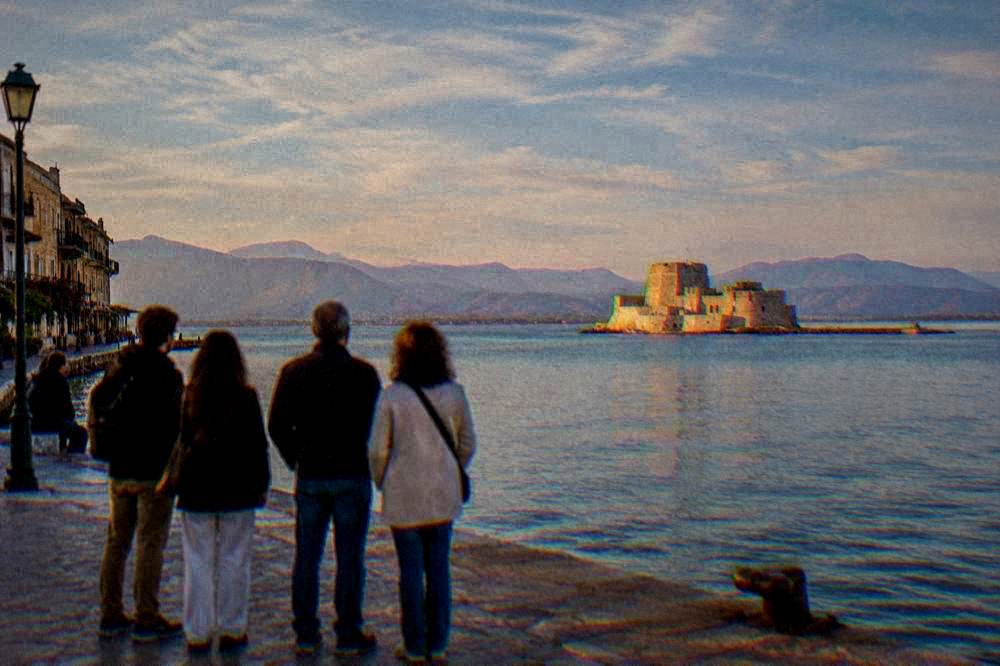
Pronia: The Residential Hill East Of The Old Town
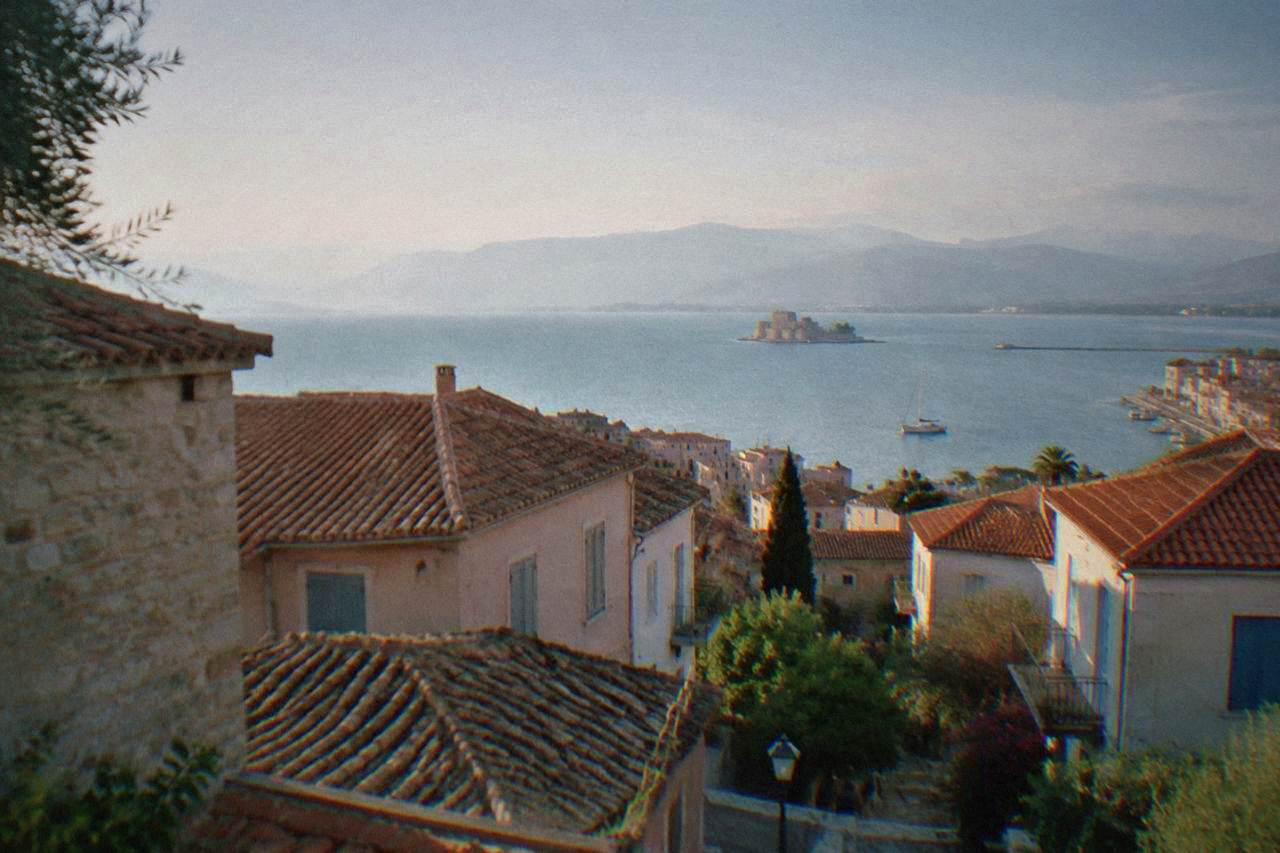
Pronia is the residential quarter on the hill directly east of Nafplio's Old Town, a district of schools, squares and family houses that grew up outside the walls and keeps the Lion of Bavaria among its streets.
Short answer
Pronia is the hillside residential district east of Nafplio's Old Town, reached on foot from Syntagma Square, known for the Lion of Bavaria carved 1840 to 1841, the Church of Agioi Pandes cemetery it stands beside, and a local, non-tourist pace.
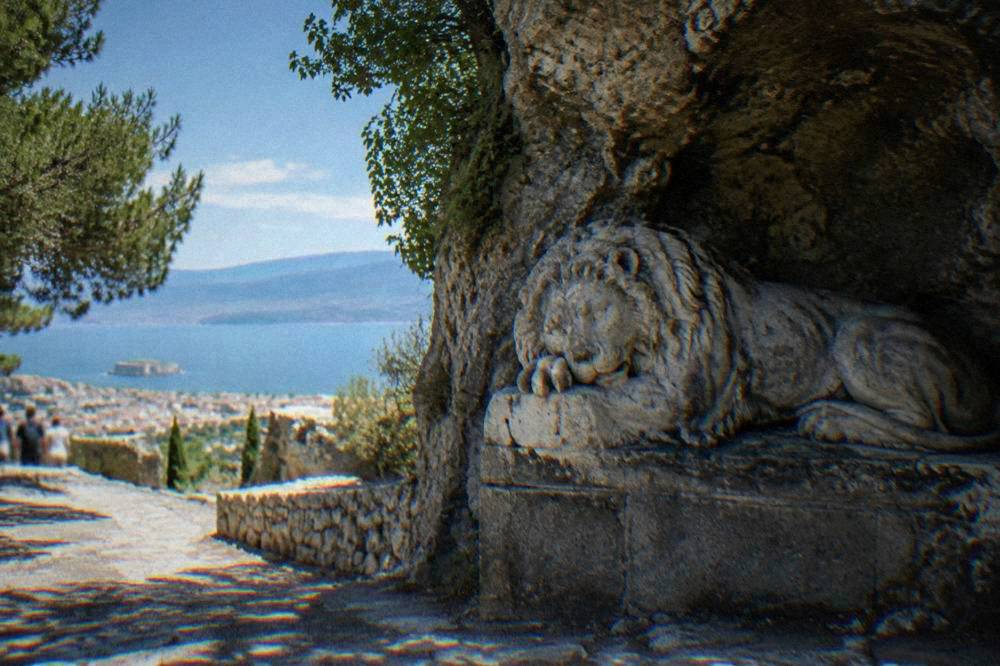
Pronia is the residential district on the hill immediately east of Nafplio's Old Town, in the Argolid on the Peloponnese of mainland Greece, and it is where the town stops performing for visitors and simply lives. The district sits above and behind the harbour, between the fortified rock of Akronafplia and the slopes that climb toward Palamidi Fortress, and its streets hold schools, bakery windows, apartment blocks beside old stone houses, and one genuinely moving monument: the Lion of Bavaria, carved between 1840 and 1841 in memory of Bavarian soldiers who died in Nafplio. The Argolisculture listing for the monument records that the sculptor was Christian Heinrich Siegel, that the work is a copy of Thorvaldsen's Lion of Lucerne, and that it was donated by Ludwig I of Bavaria.
This page from the Nafplio Travel Guide covers what Pronia is, what there is to see there, how it fits a visit to Nafplio, and where it sits in relation to the Old Town, Palamidi and the day-trip country beyond. Nafplio itself was the capital of Greece from 1827 to 1834, a fact the municipality states plainly, and Pronia is one of the districts that grew as the young state's administrators, soldiers and builders settled around the crowded walled town. It remains a working quarter rather than a sight-seeing one, which is exactly the reason to spend an hour or two in it.
What Is Pronia In Nafplio?
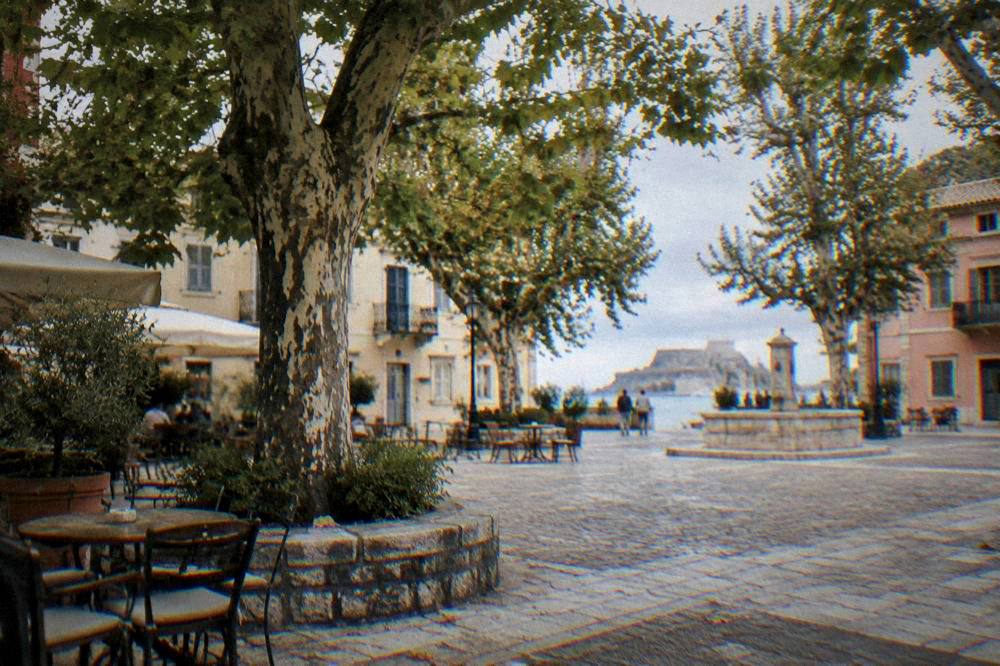
Pronia is the residential hill district immediately east of Nafplio's Old Town, named as one of the town's named areas in the site's own place data, and it is best understood as the neighbourhood that grew outside the walls when Nafplio was the capital of Greece from 1827 to 1834. It has no ticket booth, no opening hours and no monument complex. What it offers instead is the texture of a Greek provincial town: stone houses with iron balconies, plane-tree squares, the sound of school bells, and the Lion of Bavaria sleeping in a hollow near the Agioi Pandes cemetery, per the Argolisculture listing.
The name appears in older guidebooks and maps as "Pronia" and in modern Greek usage as a word meaning providence or care, but the spelling rule on this site keeps one Latin form in running text. The district boundaries are not fenced or signposted. In practice, walkers leave the Old Town around the Land Gate or the eastern edge of the harbour and find themselves climbing gently into Pronia's streets, with the rock of Akronafplia on one side and the long shoulder of Palamidi above.
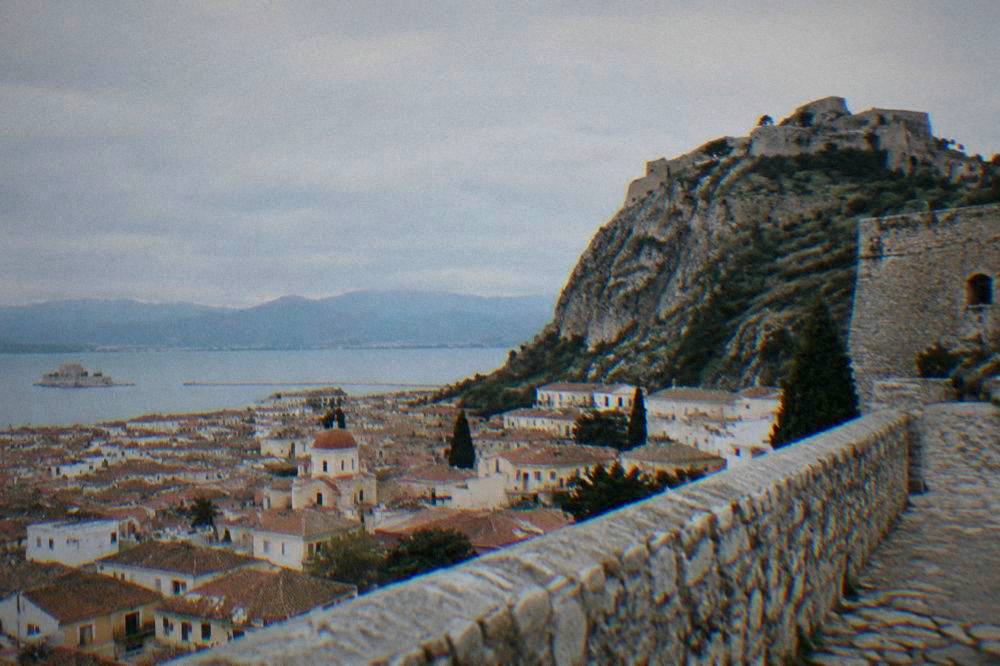
Its position is its practical selling point. Pronia sits between the two biggest physical presences in Nafplio, the fortified peninsula of Akronafplia and the 216-metre bulk of Palamidi Fortress, which the Ministry of Culture's visiting page describes standing above the town. A room in Pronia puts the harbour, the Syntagma Square museums and the Arvanitia path all within one continuous walk, without the strict parking limits of the Old Town core, which is largely closed to visitor parking, with free lots reported on the Akti Miaouli waterfront (reported by cityofnafplio.net; confirm locally).
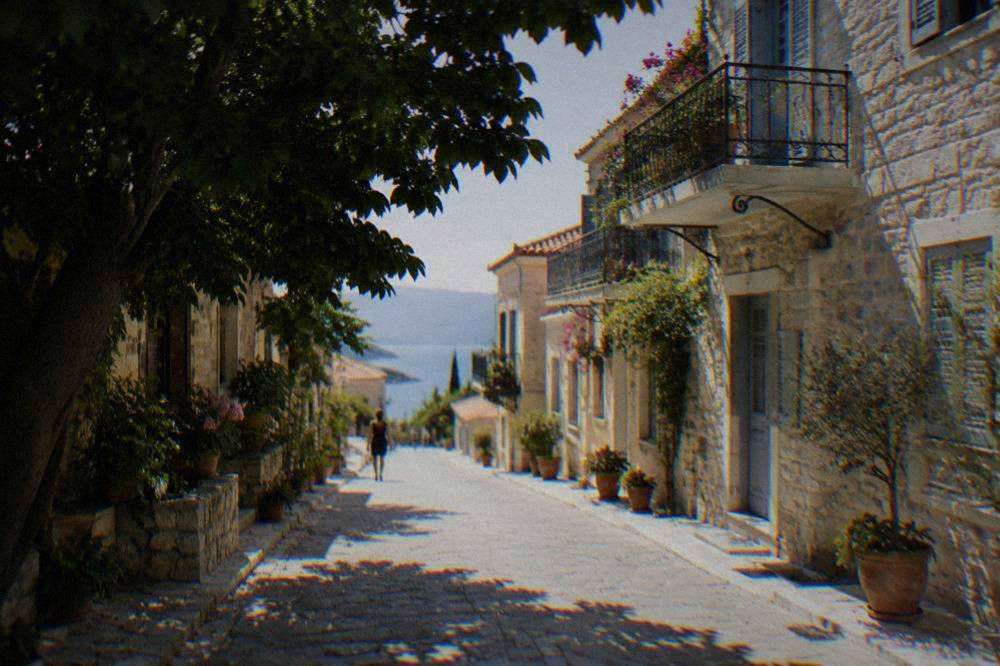
For orientation, the named areas of Nafplio, as the site's place data lists them, are the Old Town with Syntagma Square, Akronafplia, the harbour, Psaromachalas, the fishermen's quarter under the walls, Arvanitia and Karathona along the shore, and Pronia on the eastern hill. Each has its own character, and the Old Town page covers the lanes and museums of the historic core in detail.
What Is There To See Around Pronia In Nafplio?
The single named sight in Pronia is the Lion of Bavaria, carved from 1840 to 1841 by Christian Heinrich Siegel as a copy of Thorvaldsen's Lion of Lucerne and donated by Ludwig I of Bavaria for the Bavarian soldiers of King Otto's escort who died of typhus in Nafplio, according to the Argolisculture monument listing. Beyond the lion, the district's sights are contextual: the views back over the Old Town rooftops, the nearness of Palamidi Fortress with its 2026 ticket of 20 euro full and 10 euro reduced, and the Church of Agioi Pandes cemetery that gives the lion its setting. Allow a slow hour.
The lion rewards the walk for reasons the listing makes clear. It is a reclining, sorrowing beast cut directly into the living rock, commissioned for soldiers who died in the typhus epidemic that struck the young royal court's Bavarian contingent. King Otto arrived in Nafplio in February 1833, and the capital moved to Athens in December 1834, so the monument commemorates a garrison town at the exact moment it stopped being the capital. The sculpture sits in Pronia near the Agioi Pandes cemetery, which is how walkers find it: uphill from the Land Gate, following the cemetery signs rather than any grand promenade.
Around the lion, Pronia's other pleasures are unplanned. The streets above the district climb toward the eastern bastions of Palamidi, and the fortress itself, with its stairway usually counted at about 850 steps, not the legendary 999, is described on the Palamidi Fortress page. Walking down from Pronia instead of up from the town is one way to meet the fortress without the famous stair climb, though the slope is steep and the surface is worn stone in places. No step-free access at any sight is claimed anywhere on this site.
Three further stops sit at Pronia's edges rather than inside it. The Kolokotronis statue and the Archaeological Museum anchor the town end of the walk, both covered on their own pages, and the harbour and waterfront with Bourtzi in the middle of it lies a few streets west. A private walk with a local guide, Check availability, reaches exactly these layers, the lanes, the lion and the fortress slopes, with a guide who lives with the district's stories; the related tour page on this site, Secrets of Nafplio: Private Walking Tour, describes what the walk covers.
| Sight at Pronia's edge | What it is | 2026 admission |
|---|---|---|
| Lion of Bavaria | Rock-cut memorial lion carved 1840 to 1841, near the Agioi Pandes cemetery | Free |
| Palamidi Fortress | Venetian fortress 216 m above the town, about 850 steps up | 20 EUR full, 10 EUR reduced |
| Akronafplia | Old acropolis rock above the harbour, walls from at least the late 4th century BC | Free to walk |
| Archaeological Museum of Nafplio | Venetian arsenal building, 08:30 to 15:30, closed Tuesday | 10 EUR full, 5 EUR reduced |
Is Pronia A Good Place To Stay In Nafplio?
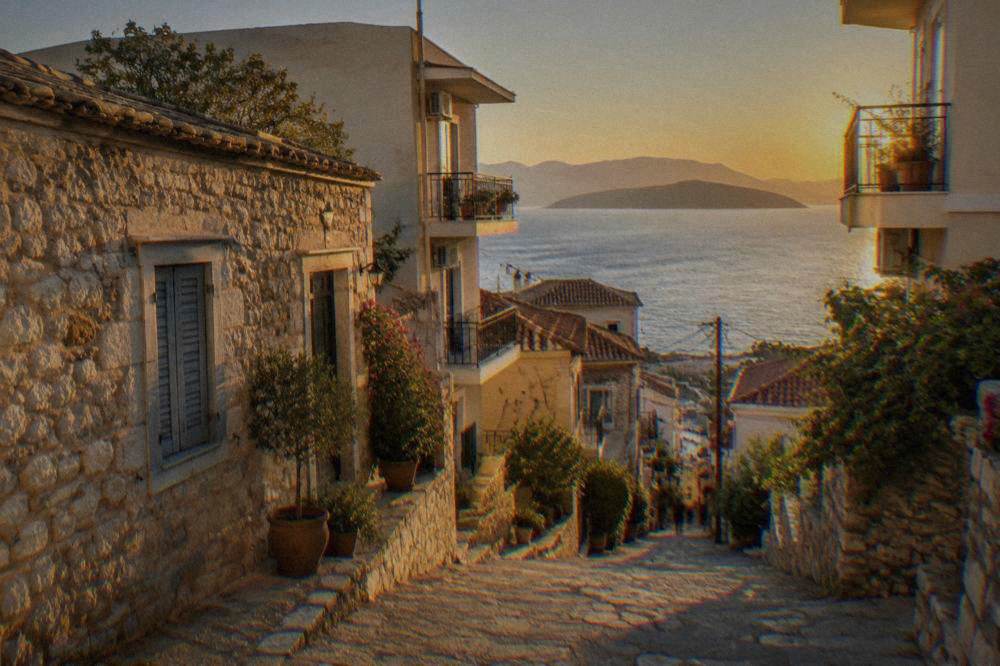
As an editorial judgement, not a ranking, Pronia suits travellers who want a quieter, more local base within walking reach of the Old Town, and it trades Old Town atmosphere for space, light and easier parking, because the Old Town is largely closed to visitor parking while free lots are reported on the Akti Miaouli waterfront. The trade-off is real, though, and it comes from the geography.**
Pronia sits alongside those clusters as the residential hill, and its practical advantages follow from that: it is outside the pedestrianised core, so arriving by car is simpler, and it looks down over the rooftops rather than being buried among them. Its disadvantage is the same fact. There is no waterfront table two lanes from the door.
One cost every visitor to Greece meets is the climate resilience fee, a national charge collected by the accommodation, higher from April to October. Print no rate from this page; the accommodation collects it and states it at booking.
For a two-day plan that pairs a Pronia or Old Town base with the fortress, the museums and a boat day, see the Two Days In Nafplio itinerary. The wider where-to-stay comparison, including the harbour side and the Arvanitia end of town, is worth reading before booking anything, because Nafplio's districts are small and the differences between them are differences of mood rather than distance.
How Do You Walk From Pronia To The Old Town And Palamidi?
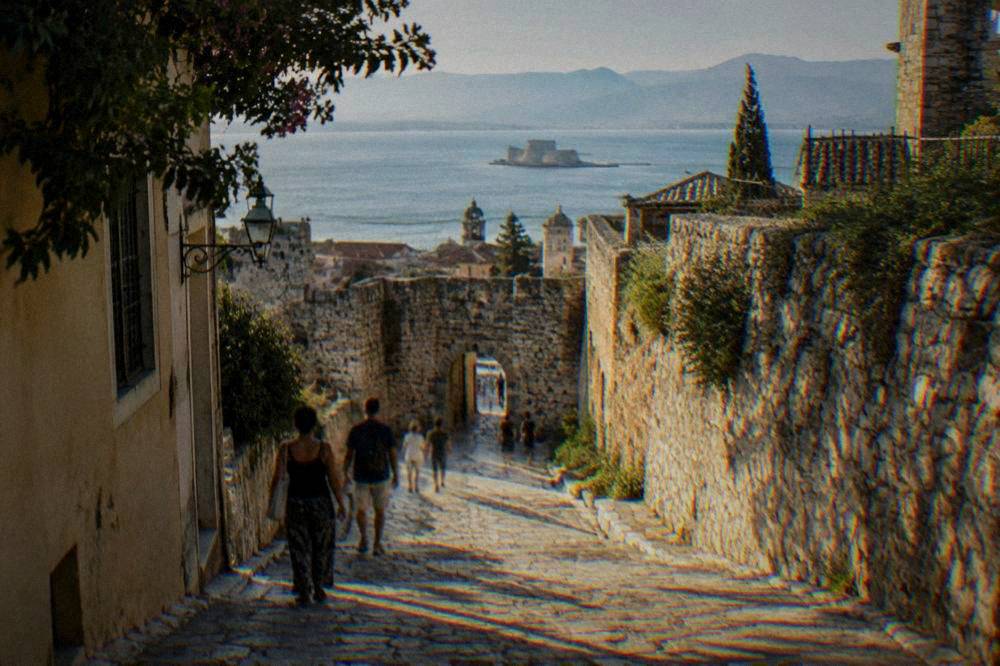
The walk from central Pronia down into the Old Town is a short, continuous descent of sloping streets toward the Land Gate and Syntagma Square, and from there the Palamidi stairway begins at the eastern edge of town, but this site prints no minute count between areas because no walking time sits in its sources. What the sources do give is the shape of the ground: Palamidi stands 216 m above the Old Town per the Ministry of Culture's page, and the fortress stairway is usually counted at 857 carved steps, which this site rounds to about 850 steps, not the legendary 999 that older guides still print.
The route down from Pronia passes the Lion of Bavaria hollow if you angle toward the Agioi Pandes cemetery, then meets the Land Gate, the monumental western-facing entrance the Venetians left and the Ottomans kept. Inside the gate the Old Town lanes begin, running toward Syntagma Square, the Vouleftiko, the first parliament building, and the Church of Agios Spyridon, outside which Governor Ioannis Kapodistrias was assassinated in September 1831. Kapodistrias had arrived in Nafplio in January 1828 and governed the young state from the town until that morning.
Going up rather than down, the Palamidi end of Pronia connects to the fortress road. The Ministry of Culture's 2026 visiting hours for Palamidi are worth carrying, because they change month by month and a late afternoon climb only works in the months with late closing.
| Period (2026) | Palamidi opening hours |
|---|---|
| Winter season | 08:30 to 15:30 |
| April | 08:00 to 19:00 |
| From 2 May | 08:00 to 20:00 |
| 1 to 15 September | 08:00 to 19:30 |
| 16 to 30 September | 08:00 to 19:00 |
| 1 to 15 October | 08:00 to 18:30 |
| 16 to 31 October | 08:00 to 18:00 |
The fortress closes on 1 January, 25 March, 1 May, Easter Sunday and 25 and 26 December, and opens at 12:00 to 17:00 on Good Friday. State sites, Palamidi included, are free on 6 March, 18 April, 18 May, the last weekend of September, the first and third Sunday of each month from November to March, and 28 October.
For travellers without a car, the same walking network continues along the shore. The Arvanitia promenade, a paved coastal path of about 1 km reported by cityofnafplio.net, runs from the harbour lighthouse around the Akronafplia rock to Arvanitia beach and on toward Karathona, and the Arvanitia page covers it in full. Mycenae and Epidaurus, both 20 euro full and 10 euro reduced in 2026, are the classic trips beyond the town, and the Mycenae and Epidaurus tours page lists the options.
What Is The Weather Like In Pronia And Nafplio?
Pronia shares Nafplio's climate, recorded at the HNMS Argos station 1980 to 2010, an inland station about 10 km north-west of the town, where July has the highest mean daily high at 34.0 C, February the lowest mean daily low at 2.9 C, and November the highest monthly rainfall at 82.5 mm against June's 8.9 mm. The hill position changes the feel slightly, more breeze and more exposure on the upper streets, but the printed figures are station figures, and the waterfront can differ a little from them. No sunshine-hour or sea-temperature figure appears anywhere on this site.
What the table means for a Pronia stay is simple. From May through September the district's terraces and upper streets are warm to hot and reliably dry, with rain days per month running from 6.2 in May down to 2.1 in July and back to 5.0 in September. In winter the same streets are quiet and green, but rain days climb to 10.3 in January and 12.2 in December, and nights fall to a mean of 3.0 C in January. The Nafplio in winter and rain guide covers the low season in detail.
| Month | Mean high C | Mean low C | Rain mm | Rain days |
|---|---|---|---|---|
| January | 14.6 | 3.0 | 66.5 | 10.3 |
| February | 14.7 | 2.9 | 52.5 | 10.1 |
| March | 17.4 | 4.3 | 52.2 | 9.7 |
| April | 21.3 | 6.7 | 33.7 | 8.6 |
| May | 26.5 | 10.5 | 18.7 | 6.2 |
| June | 31.4 | 14.0 | 8.9 | 3.0 |
| July | 34.0 | 16.7 | 9.1 | 2.1 |
| August | 33.7 | 16.8 | 13.0 | 2.5 |
| September | 29.7 | 14.2 | 20.3 | 5.0 |
| October | 24.7 | 11.5 | 44.3 | 6.9 |
| November | 19.2 | 7.7 | 82.5 | 9.4 |
| December | 15.5 | 4.8 | 69.7 | 12.2 |
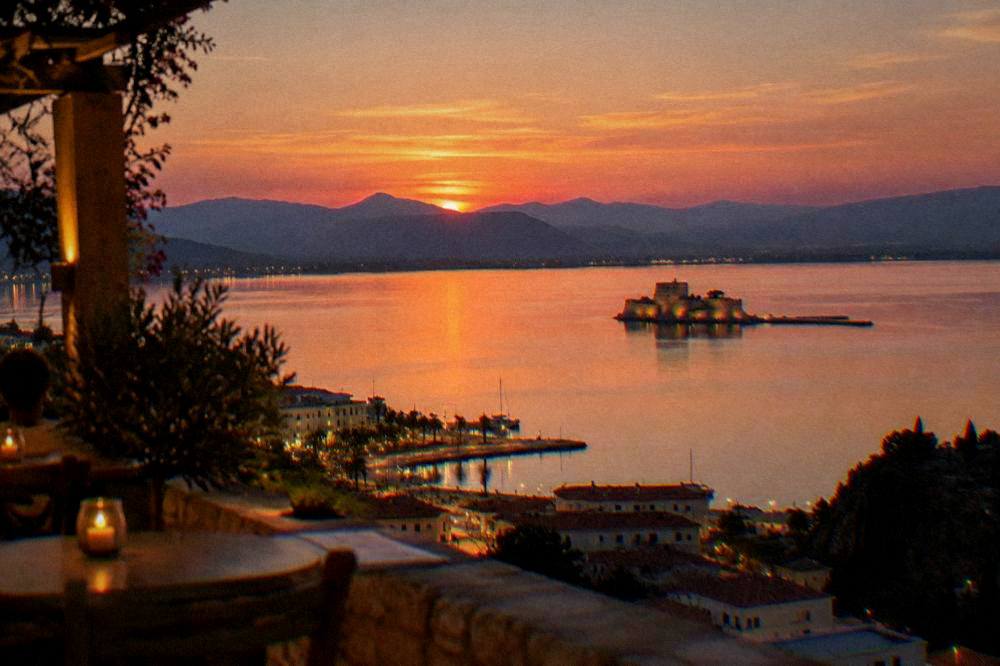
The best-value months for a walking-heavy stay, on these numbers, are May, late September and October, when mean highs sit between 24.7 C and 26.5 C and rain days stay under seven. July and August are the months for the terrace and the beach, with Karathona and Arvanitia on the shore below the district.
How Does Pronia Fit A Day Trip Plan From Nafplio?
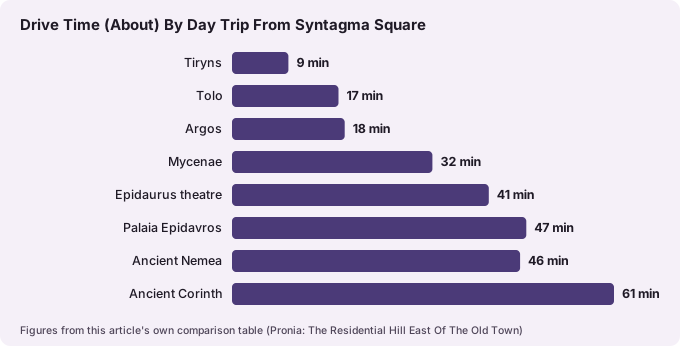
Pronia works as the quiet morning or evening bookend to Nafplio's day trips, because the district sits on the eastern side of town closest to the roads out toward Mycenae, about 32 minutes by road from Syntagma Square, Epidaurus theatre at about 41 minutes, and Tiryns at about 9 minutes, all computed over routing data. The figures below are drive times from Syntagma Square, and Pronia's hill position adds only a short descent to the start of them. For a fuller plan, the One Day In Nafplio and Three Days In Nafplio itineraries sequence the town and its surroundings.
| Day trip from Syntagma Square | Drive time (about) |
|---|---|
| Tiryns | 9 minutes |
| Tolo | 17 minutes |
| Argos | 18 minutes |
| Mycenae | 32 minutes |
| Epidaurus theatre | 41 minutes |
| Palaia Epidavros | 47 minutes |
| Ancient Nemea | 46 minutes |
| Ancient Corinth | 61 minutes |
| Corinth Canal | 72 minutes |
Mycenae and Epidaurus, the two flagship sites, each cost 20 euro full and 10 euro reduced in 2026, and Mycenae's ticket covers the site, the museum and the Treasury of Atreus, while Epidaurus's covers the theatre, the sanctuary and the museum. Both are UNESCO World Heritage listings, Epidaurus inscribed in 1988 and Mycenae with Tiryns in 1999. A guided option such as the tour above, whose page on this site describes what it includes, handles the tickets and the driving; the Mycenae page covers the site itself.
Two transport corrections matter when planning from Pronia. There is no passenger train to Nafplio in 2026, per hellenictrain.gr's network information, older guides still say otherwise and they are out of date, and there is no scheduled public ferry from Nafplio or Tolo to Hydra or Spetses; the islands are reached by seasonal day cruise or from another port. The bus station sits near the edge of the old town on Siggrou street, with reported KTEL fares of about 15.70 euro one way to Athens (Kifissos), reported on the operator's fares page and worth confirming before you travel, and local lines of about 2.20 euro to Tolo and Argos.
Where Do You Eat And Park Around Pronia?
No restaurant, taverna, bakery or shop name in or around Pronia is printed, and the practical answer is that the district's food life is local and unlisted while the Old Town and harbour carry the documented eating scene, covered on the where-to-eat page, and parking is freest on the Akti Miaouli waterfront lots, reported by cityofnafplio.net. Confirm both locally, because the lots fill early in peak season and the report is the only source for them.
The parking geography matters more here than in the Old Town. The Old Town core is largely closed to visitor parking, with permit zones for residents, so drivers staying in or near Pronia generally use the waterfront lots and walk in. No parking tariff, meter rate or toll figure is printed on this site. The Parking In Nafplio guide gathers the whole picture in one place, and the car-rental and getting-around pages cover driving in from Athens, about 141 km by road.
Eating is where a food-focused guided walk earns its place, since the guides know which unlisted counters matter. A food tour is one of this page's featured picks, and the related tour page describes what it covers.
Common Questions About Pronia In Nafplio
What is Pronia in Nafplio?
Pronia is the residential hill district immediately east of the Old Town, one of Nafplio's named areas, best known for the Lion of Bavaria carved 1840 to 1841 near the Agioi Pandes cemetery. It has no ticketed sights and is visited for its streets, views and local pace.
Is Pronia worth visiting in Nafplio?
Yes, as an hour's walk rather than a half-day destination. The Lion of Bavaria is the reason to go, and the climb through the district gives views over the rooftops toward the Argolic Gulf and up to Palamidi Fortress.
Is Pronia a good area to stay in Nafplio?
As editorial judgement, Pronia suits travellers who want a quieter, more local base with easier car access than the pedestrianised Old Town, trading waterfront atmosphere for space and light.
Where is the Lion of Bavaria in Nafplio?
In Pronia, near the Agioi Pandes cemetery uphill from the Land Gate. The Argolisculture listing records it was carved from 1840 to 1841 by Christian Heinrich Siegel, a copy of Thorvaldsen's Lion of Lucerne, donated by Ludwig I of Bavaria for Bavarian soldiers who died in Nafplio.
How far is Pronia from Nafplio's Old Town?
Pronia begins directly east of the Old Town, across the line of the Land Gate, and the walk between them is a continuous gentle descent on sloping streets. This site prints no walking time between the two areas, and Palamidi Fortress stands 216 m above the Old Town beyond them.
Can you walk from Pronia to Palamidi Fortress?
Yes, the district's upper streets connect toward the fortress road and bastions. The famous stairway from town is usually counted at about 850 steps, not the legendary 999, and the fortress is steep and worn underfoot, so sturdy shoes matter more than speed.
Pronia completes the picture of Nafplio that the fortress and the harbour start: a hill of ordinary streets carrying one extraordinary carving, a short walk from everything and a world away in mood. Pair it with the morning light on Syntagma Square, the stairway or the road up Palamidi, and an evening along the waterfront, and the first capital of Greece shows both of its faces in a single day.