Nafplio In The Rain: An Indoor Day
Rain in Nafplio does not close the town. The museums, the fortress and the covered lanes of the Old Town all keep winter hours, and the climate record says exactly how often the rain actually falls.
Short answer
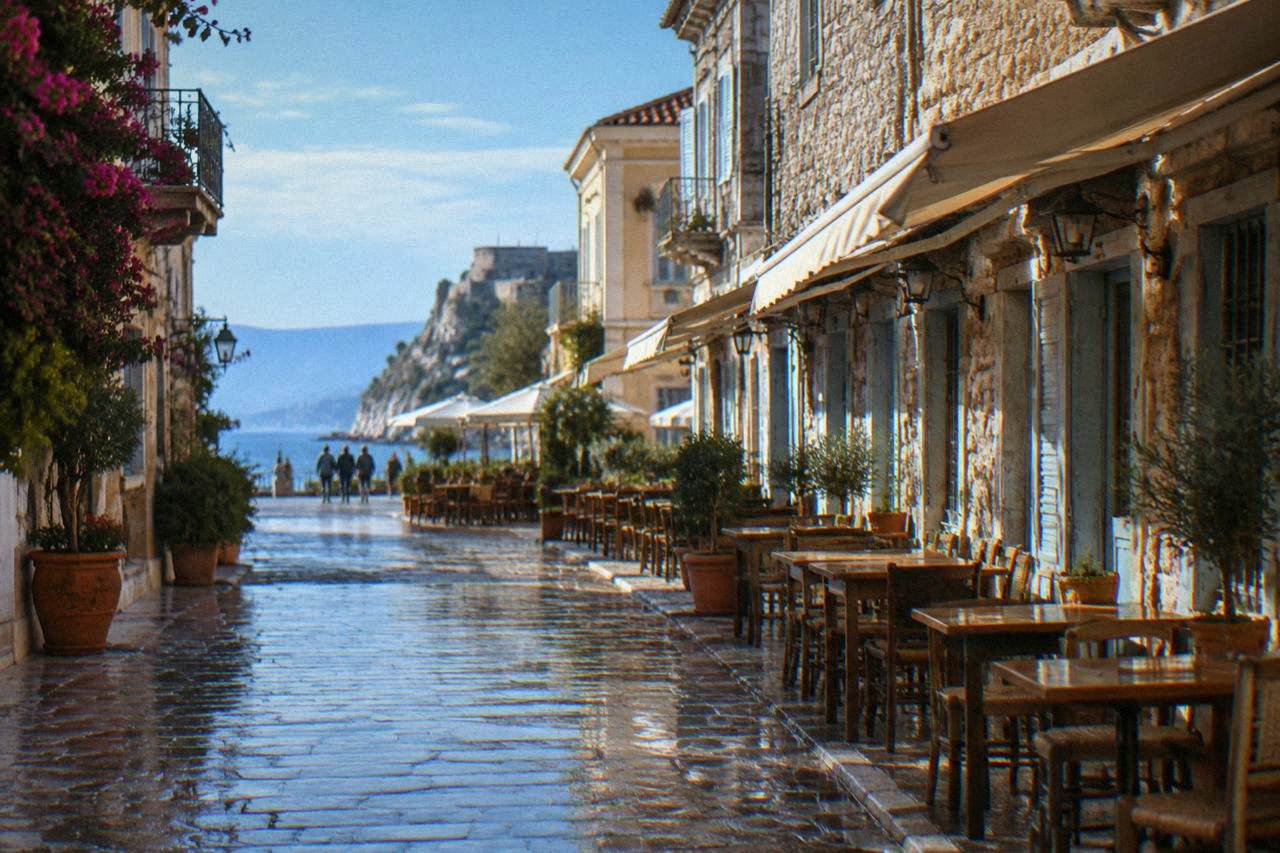
Nafplio gets about 471 mm of rain a year, with November the rainiest month at 82.5 mm on the HNMS Argos station record, and its indoor options, two museums, Bourtzi by boat and Palamidi, stay open through winter with shorter hours.
Rain falls often on Nafplio, the small coastal town in the Argolid on the Peloponnese's Argolic Gulf, from November through March, and the town keeps working through the wet days. The HNMS Argos station, 1980 to 2010, the nearest official record and an inland station about 10 km north-west of Syntagma Square so the waterfront can differ slightly, counts 9.4 rain days in November and 12.2 in December against 2.1 in July. That is the whole problem and the whole opportunity: a wet day here is a normal winter day, and the town is built for it, with arcaded lanes around Syntagma Square, two museums that hold entire afternoons, and fortress walls that look better under a grey sky than a blue one.
This plan is written around what the sources actually say. The Ministry of Culture's visiting pages give the winter hours and the 2026 tickets for every state site named below, and the climate table comes from one station only. What follows is a full day, from the first shower to the last, with the dry fallback at each step.
How Much Rain Does Nafplio Actually Get?
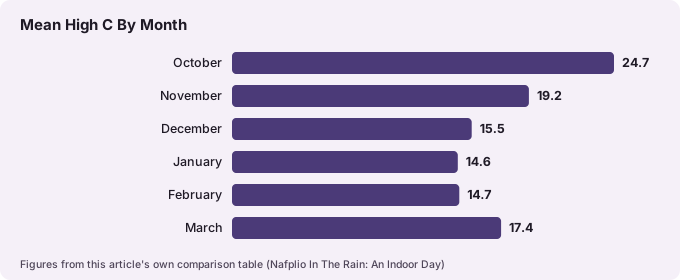
Nafplio receives about 471 mm of rain across the year, and the rain is concentrated hard into late autumn and winter: November averages 82.5 mm over 9.4 rain days and December 69.7 mm over 12.2, while June averages 8.9 mm and July 9.1 mm over roughly two rain days each, all per the HNMS Argos station, 1980 to 2010. The same record puts the January mean daily maximum at 14.6 C and the mean minimum at 3.0 C, so a winter rain day is cool rather than bitter.
The station is inland, about 10 km north-west of town, and the waterfront can differ slightly. What the table gives is the shape of the year rather than a forecast. October already carries 44.3 mm over 6.9 rain days, and March still has 52.2 mm over 9.7, so the wet season is long: roughly October to April, with a shoulder on either side.
| Month | Mean high C | Mean low C | Rain mm | Rain days |
|---|---|---|---|---|
| October | 24.7 | 11.5 | 44.3 | 6.9 |
| November | 19.2 | 7.7 | 82.5 | 9.4 |
| December | 15.5 | 4.8 | 69.7 | 12.2 |
| January | 14.6 | 3.0 | 66.5 | 10.3 |
| February | 14.7 | 2.9 | 52.5 | 10.1 |
| March | 17.4 | 4.3 | 52.2 | 9.7 |
Read that as a probability, not a promise. Twelve rain days in December still leaves time without rain, and a rain day is rarely an all-day rain. The practical version: pack for rain in any month from October to April, and plan the day so that the indoor options sit next to the outdoor ones rather than across town. The Old Town makes that easy, because its two museums, its square and its harbour front are all within a few minutes' walk of one another. A fuller month-by-month breakdown sits on the Nafplio weather page.
What Stays Open In Nafplio On A Wet Winter Day?
The Archaeological Museum of Nafplio, the Peloponnesian Folklore Foundation museum, Palamidi, Bourtzi and the War Museum are the indoor or partly indoor options, and the state sites run winter hours of 08:30 to 15:30, with the Archaeological Museum open 08:30 to 15:30 all year but closed every Tuesday. Bourtzi keeps its own winter timetable, 09:00 to 17:00 in November and December, with access by boat from the harbour for a fee that is not on the official page, so confirm the boat fare at the jetty.
The ticket side is straightforward and often misquoted on older pages. Palamidi is 20 euro full and 10 euro reduced in 2026, and the reduced ticket is sold only from 1 October to 31 May, which makes a winter visit the cheaper one. Bourtzi is 7 and 5. The Archaeological Museum is 10 and 5. Mycenae and Epidaurus, the two big day trips, are each 20 and 10 on the same winter-reduced pattern.
| Site | Full ticket | Reduced ticket | Winter hours |
|---|---|---|---|
| Palamidi | 20 EUR | 10 EUR | 08:30 to 15:30 |
| Bourtzi | 7 EUR | 5 EUR | 09:00 to 17:00 (Nov-Dec) |
| Archaeological Museum of Nafplio | 10 EUR | 5 EUR | 08:30 to 15:30, closed Tuesday |
| Argos Ancient Agora and Theatre | 10 EUR | 5 EUR | 08:30 to 15:30 |
| Asini | 5 EUR | 3 EUR | winter schedule |
The Ministry of Culture's visiting pages list free-admission days that fall inside the wet season, and they are the cheapest rainy-day trick in Greece: the first and third Sunday of each month from November to March, plus 6 March and 28 October. A Sunday rain day can therefore cost nothing at Palamidi or the Argolid sites. The Palamidi guide and the Bourtzi guide carry the full seasonal hour tables.
Two corrections worth one sentence each, because they circulate widely. Palamidi's stairway is usually counted at about 850 steps, not the legendary 999. And the reduced ticket window really is 1 October to 31 May only; in summer the full price is the only price.
A guided walk is the most rain-tolerant way to cover the outdoor part of the day, because the Old Town's lanes and arcades give cover between stops and a guide simply reorders the route around the showers. The Nafplion City Walking Tour pairs the lanes with a Bourtzi boat leg, and Check availability shows the operator's live listing.
A Rainy Morning In The Old Town: The Hour-By-Hour Plan
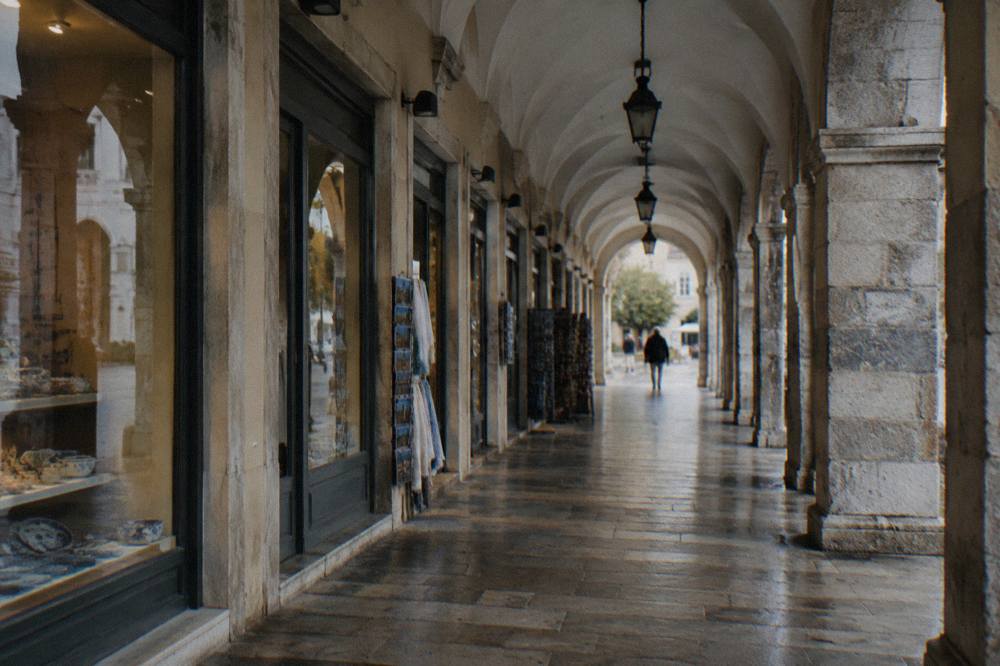
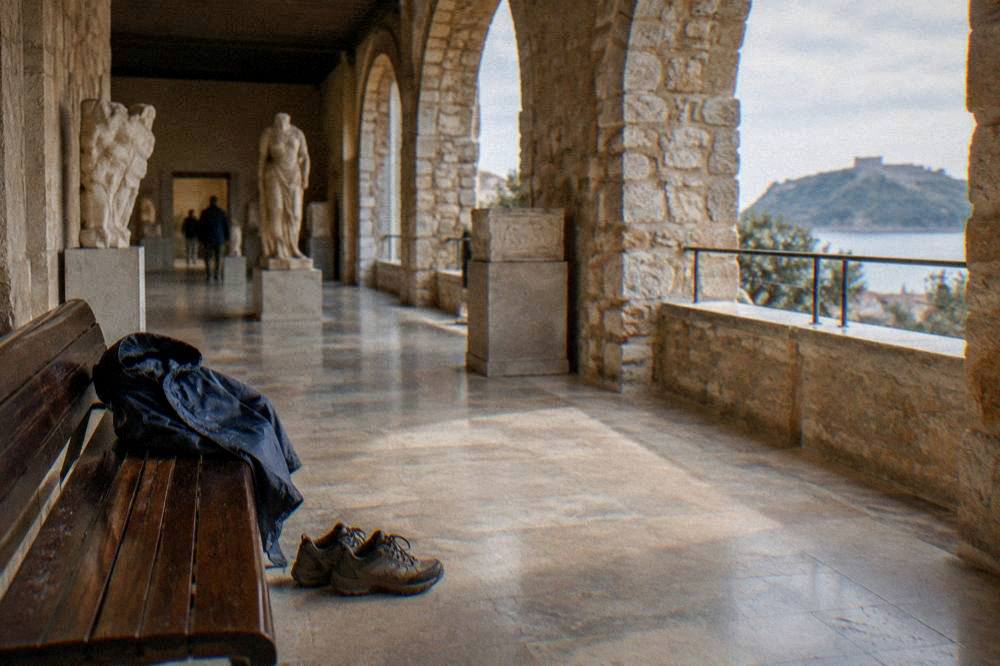
Start at 09:00 under the arcades of Syntagma Square, where the Vouleftiko and the Venetian-era buildings give continuous cover, spend 10:00 to 12:00 inside the Archaeological Museum of Nafplio at 10 euro full or 5 reduced, and hold lunch for the square, which puts you indoors whenever the next shower arrives. If the museum is shut, it closes on Tuesdays, swap in the Peloponnesian Folklore Foundation museum, which holds the town's other major collection.
The morning works because the distances are trivial. Syntagma Square is the centre of the Old Town, the Archaeological Museum sits on the square itself in the old Venetian arsenal, and the harbour front with Bourtzi's jetty is a short walk downhill. Rain does not strand you anywhere, because every two minutes of walking ends under another awning or arch.
Order the morning by the sky, not the clock. Dry spell first: walk the harbour front to the Bourtzi boat if the water is calm, since the crossing is short and the islet's winter hours run to 17:00. Rain next: the museum, which needs two hours at an unhurried pace. The Syntagma Square guide maps the buildings so the walk between them carries some recognition, and the Old Town guide covers the lanes in detail.
A note on footwear that the sources do support: the lanes are stone and cobbled, and stone under rain is slippery, so the shoes matter more than the umbrella. The rest of the kit is ordinary winter kit. January's mean minimum of 3.0 C tells you a real coat belongs in the bag, and February's 2.9 C says the same.
The Two Museums, And Which One Suits A Wet Afternoon
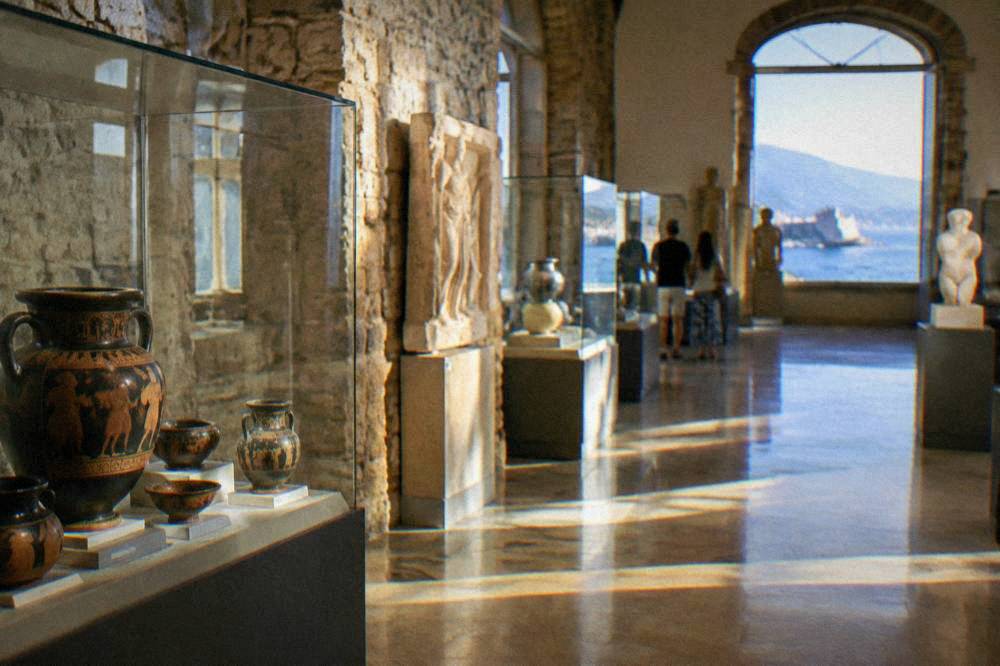
The Archaeological Museum of Nafplio is the anchor indoor stop: 10 euro full, 5 reduced, open 08:30 to 15:30 all year and closed Tuesdays, housed in the Venetian arsenal on Syntagma Square, while the Peloponnesian Folklore Foundation museum is the alternative, holding the town's folk costume and everyday-life collections. Between them they fill a full wet afternoon, and their closing at 15:30 sets the day's real deadline.
The archaeological museum's collection covers the Argolid's long record, from the Franchthi and Asini excavations through Mycenaean Nafplio, which makes it a genuine preparation for a Mycenae day trip rather than a rainy-day consolation. Two hours is a fair allowance. The folklore museum is the different pleasure: costume, textiles and town life, the domestic history of the place that was Greece's capital from 1827 to 1834.
The Tuesday closure is the single planning trap. On a Tuesday rain day, reverse the plan: folklore museum or Bourtzi in the morning, Palamidi in any dry window, and the archaeological museum on any other day of the week. The archaeological museum guide lists what is on show floor by floor.
| Indoor stop | Ticket | Closed | Hours |
|---|---|---|---|
| Archaeological Museum of Nafplio | 10 / 5 EUR | Tuesday | 08:30 to 15:30 |
| Peloponnesian Folklore Foundation museum | check on site | check on site | check on site |
| Bourtzi (partly outdoor crossing) | 7 / 5 EUR | 1 Jan, Easter Sunday, 25 Dec | 09:00 to 17:00 (Nov-Dec) |
That is the one line of caution on this page: state sites publish their figures, private museums keep their own.
Is Palamidi Worth Climbing In Winter Weather?
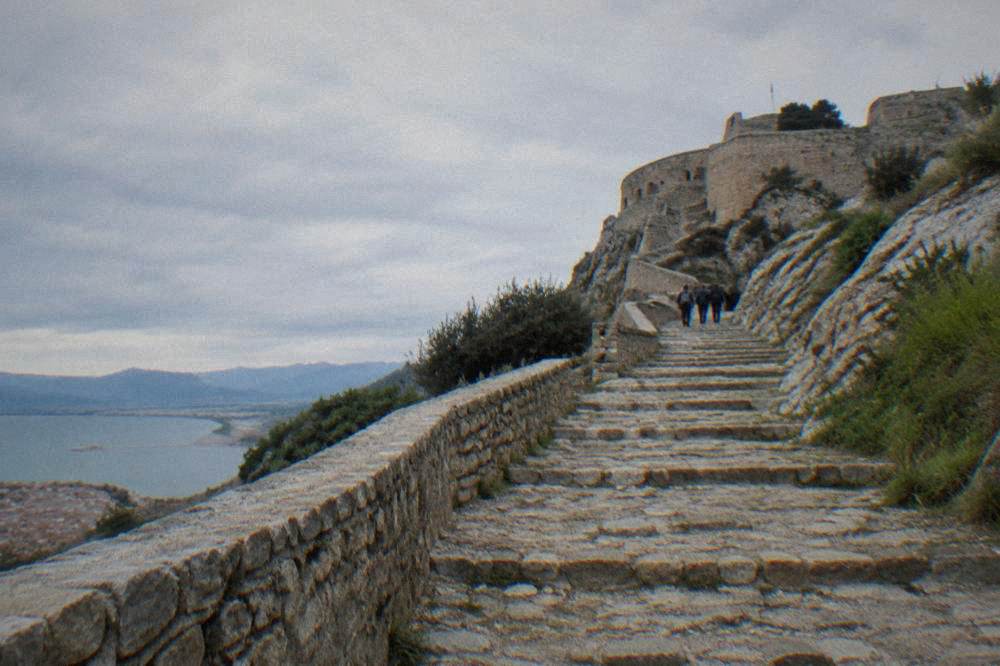
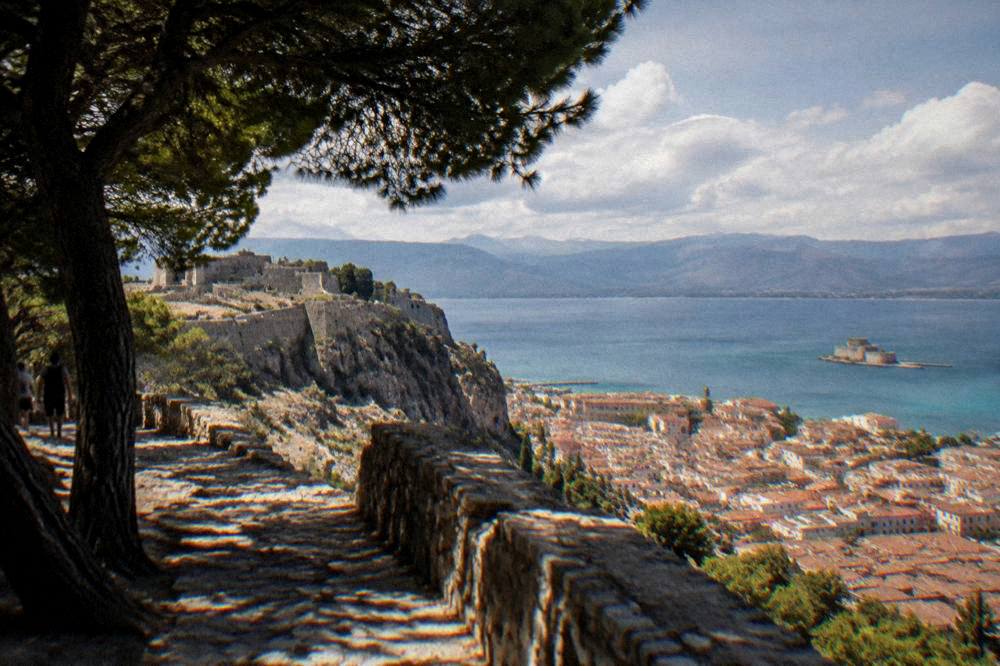
Palamidi is open all winter at 08:30 to 15:30 with the 2026 ticket at 20 euro full and 10 euro reduced, and the reduced price only exists from 1 October to 31 May, so a winter climb is half the summer cost, but the stairway of about 850 steps, not the legendary 999, is exposed stone and becomes a judgement call in active rain. The fortress stands 216 m above the Old Town and holds no cover on the stair itself.
The honest framing is a weather-window decision. In a dry spell, even a short one, winter is arguably the season for Palamidi: the climb is cooler, the ticket is reduced, and the bastions over the Argolic Gulf and the Old Town are the view the town is known for. In active rain, the stones are wet, the parapets are open to the wind, and the museum-first plan is the better one.
The 15:30 winter closing time is the detail that ruins late plans. A 14:00 start leaves under ninety minutes on the hill. Go at opening, or straight after the morning museum run, and treat the afternoon as the indoor half of the day. The Palamidi Fortress guide has the full bastion-by-baston route.
One myth retired in a sentence: the stair is usually counted at 857 steps, and the 999 figure is folklore that older guides still print.
Which Day Trips Survive Bad Weather From Nafplio?
Mycenae and Epidaurus, both 20 euro full and 10 euro reduced in winter, are the rain-friendliest day trips because each pairs outdoor ruins with an indoor museum under the same ticket, and the drive times from Syntagma Square are about 32 minutes to Mycenae and about 41 minutes to the Epidaurus theatre. Tiryns is even closer at about 9 minutes, but its ticket price is not on the state pages, so check before you go.
The logic is simple: a site whose ticket includes a museum gives you a bail-out option at every stop. Mycenae's 20 euro covers the citadel, the site museum and the Treasury of Atreus. Epidaurus's 20 euro covers the theatre, the sanctuary and the museum. When the rain arrives mid-visit, the museum is the second half of the day rather than a separate trip.
| Day trip | Drive from Syntagma Square | Ticket | Indoor element |
|---|---|---|---|
| Mycenae | about 32 min | 20 / 10 EUR | site museum and Treasury of Atreus |
| Epidaurus theatre | about 41 min | 20 / 10 EUR | sanctuary museum |
| Argos agora and theatre | about 18 min | 10 / 5 EUR | Argos museum nearby |
| Tiryns | about 9 min | check locally | none |
| Tolo | about 17 min | n/a | n/a |
Argos at about 18 minutes is the short-notice option, with its combined agora-and-theatre ticket at 10 and 5 euro. The Monemvasia guide and the Olympia guide cover the long ones.
Two corrections that matter on any day-trip planning. There is no passenger train to Nafplio in 2026; older guides still say otherwise, which is out of date. And no scheduled ferry runs from Nafplio or Tolo to Hydra or Spetses; the islands are reached by seasonal day cruise or from another port.
Rainy Evenings In Nafplio: What The Town Offers After Dark
A winter evening in Nafplio centres on the Old Town's lanes and the harbour front, where the off-season town of about 14,500 residents keeps its own pace, and the practical anchors are simple: the climate resilience fee collected by accommodation is higher from April to October so winter stays are cheaper on that line, and the emergency number is 112 with the General Hospital of Nafplio switchboard at +30 2752 361100. The hospital detail is not romantic, but it is the sort of fact a wet-weather guide should carry.
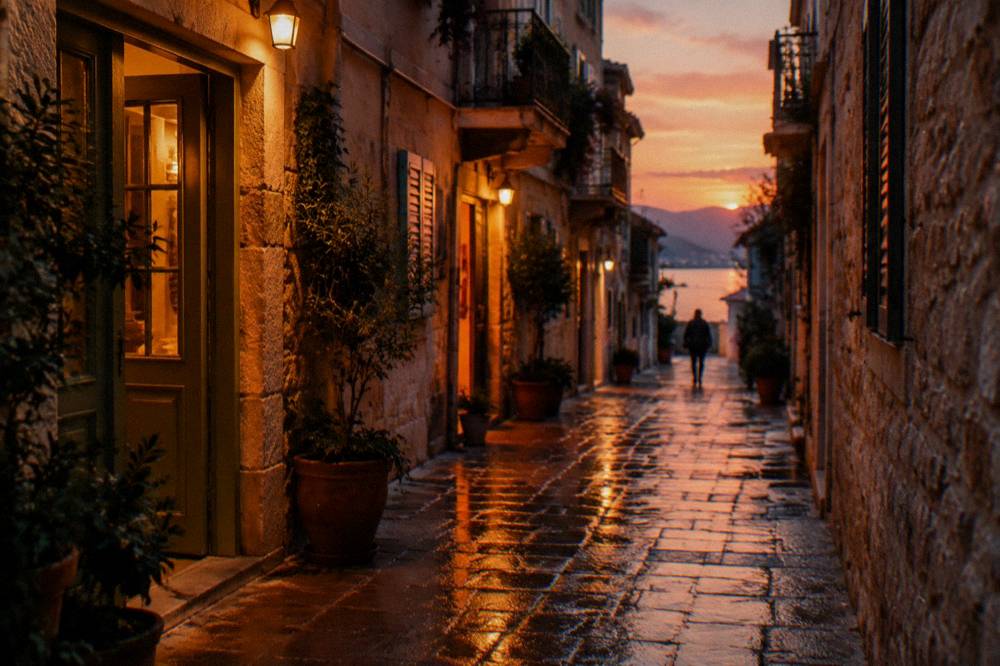
What can be said is structural: the Old Town's lanes put a dozen covered doorways between any two points, the walk from Syntagma Square to the harbour is short, and the off-season town runs on its own calendar rather than a visitor one. Confirm opening times locally on the night.
A cooking class turns a wet evening into the evening's whole event, and the food-and-cooking listings on this site include several that run in the late afternoon and evening. The Nafplio cooking class and wine tastings guide lays them out.
What Should You Pack For Nafplio In Winter?
Pack for a mean daily maximum of 14.6 C in January and a mean minimum of 3.0 C, per the HNMS Argos station, 1980 to 2010, with rain gear rated for 9 to 12 rain days per month from November to March and shoes with real grip for the Old Town's stone lanes. February's mean minimum of 2.9 C and December's 12.2 rain days are the numbers that decide the bag.
The layers write themselves from the table. A proper rain shell rather than a折叠 umbrella, because the harbour front is open to wind off the Argolic Gulf. One warm mid-layer for evenings that drop toward 3°C. Footwear that grips wet cobbles, which matters more here than in a town of asphalt. Nothing in the record suggests deep-cold gear: the winter means sit in the cool-temperate band, and the record prints no snow-day count, so no snow claim is made here.
| Item | Why, from the record |
|---|---|
| Rain shell | 82.5 mm of rain in November, 69.7 mm in December |
| Warm mid-layer | January mean minimum 3.0 C, February 2.9 C |
| Gripping shoes | stone lanes and cobbles around Syntagma Square |
| Small day pack | museum-and-fortress day needs layers on and off |
| Sunglasses | 6.9 rain days in October still leaves the rest dry |
The packing note doubles as a timing note. October, at 24.7 C mean maximum and 44.3 mm of rain, is the month where rain and warmth overlap: pack for both. The best time to visit guide weighs the seasons against each other.
Can You Do Nafplio Without A Car In The Rain?
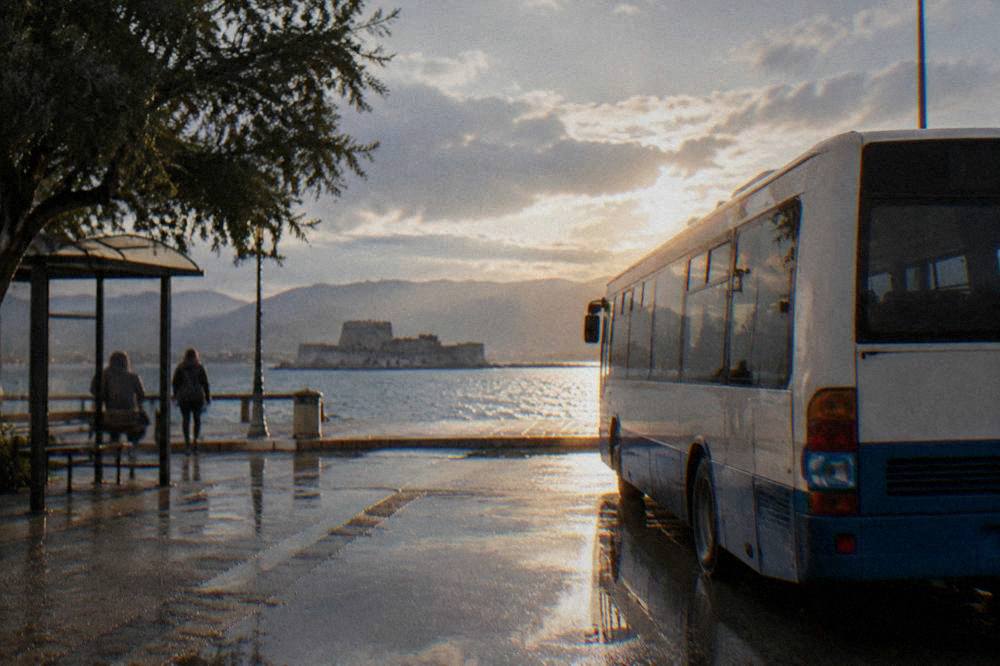
Yes, and the reported KTEL fares make it cheap: about 2.20 euro each way to Tolo or Argos and Tiryns, about 3.50 euro to Mycenae or Epidaurus, though the Mycenae and Epidaurus services are sparse, and about 15.70 euro one way on the Athens to Nafplio coach from the Kifissos terminal, reported by the operator and worth confirming before you travel. In town, nothing needs a vehicle: the Old Town is compact and every stop on this plan is a walk.
The bus detail that shapes a car-free rain day is frequency. Argos and Tiryns services run often on weekdays, while the Mycenae and Epidaurus departures are limited, sometimes a single useful return connection, so a car-free ruins day means checking the day's timetable rather than turning up. The Athens to Nafplio bus guide and the getting around guide carry the routing detail.
Parking, for those who do drive, has its own rainy-day angle: the Old Town is largely closed to visitor parking, and the free lots sit on the Akti Miaouli waterfront, which means a short wet walk into the centre, so the umbrella lives in the door pocket, not the boot. Rates and enforcement details are not in the sources, so check the signage where you park.
For a fuller car-free plan across more than one day, the three days in Nafplio itinerary and the two days in Nafplio itinerary both assume no vehicle for the town itself.
The One-Page Rain Plan, And The Free Days That Beat It
The whole plan compresses to one line: arcades and museum in the morning at 10 euro or 5, Palamidi or Bourtzi in any dry window at 20/10 or 7/5, lanes and an evening class after 15:30, all on foot, with the free-admission Sundays of November to March as the zero-cost version. The Ministry of Culture lists the first and third Sunday of each month from November to March, plus 6 March and 28 October, as free days at the state sites.
That free-day list is the detail a first page of search results rarely surfaces. On a free Sunday, Palamidi, the Argos sites and Asini cost nothing, and a wet Sunday becomes the cheapest day of the year rather than the written-off one. Pair it with the Tuesday closure of the Archaeological Museum and the winter's day almost plans itself.
The last frame is the honest one. Nafplio's winter rain is real, 66.5 mm in January is 66.5 mm, but it falls on a town whose two museums, fortress, islet and arcaded square were built long before weather apps, and whose winter tickets are half the summer price. Bring the shell, book the walk, and let the sky decide the order. More ideas for dry days sit on the things to do in Nafplio page and the Nafplio Travel Guide home.
Common Questions About Nafplio In The Rain
Does it rain a lot in Nafplio?
November averages 82.5 mm over 9.4 rain days and December 69.7 mm over 12.2, against 8.9 mm in June, per the HNMS Argos station, 1980 to 2010, an inland station about 10 km north-west of town. Winter is the rainy season; summer is not.
Is Palamidi open in winter?
Yes. Winter hours are 08:30 to 15:30, and the 2026 ticket is 20 euro full and 10 euro reduced, with the reduced ticket sold only from 1 October to 31 May, per the Ministry of Culture's visiting page.
What is there to do in Nafplio on a rainy day?
The Archaeological Museum of Nafplio, the Peloponnesian Folklore Foundation museum, the arcaded lanes around Syntagma Square, Bourtzi by boat in a calm window, and a cooking class or food experience in the evening. Palamidi works in any dry spell.
Is the Archaeological Museum of Nafplio open every day?
No. It runs 08:30 to 15:30 all year and closes every Tuesday, so a Tuesday rain day needs the folklore museum or Bourtzi instead.
Are Nafplio's museums free on some days?
State sites, including Palamidi and the Argolid sites, are free on the first and third Sunday of each month from November to March, on 6 March and 28 October, and on the other national free-admission days listed by the Ministry of Culture.
Can you visit Mycenae and Epidaurus in bad weather?
Yes, and each 20 euro ticket includes a site museum, which gives an indoor bail-out at both. The drives from Syntagma Square are about 32 minutes to Mycenae and about 41 minutes to the Epidaurus theatre.