Peloponnesian Folklore Foundation Museum: Costumes And Crafts
This guide explains what the museum addresses, how to plan around it and which of the town's sights and tours pair with it.
Short answer
Its tickets and opening hours should be confirmed on the museum's own page before you go.
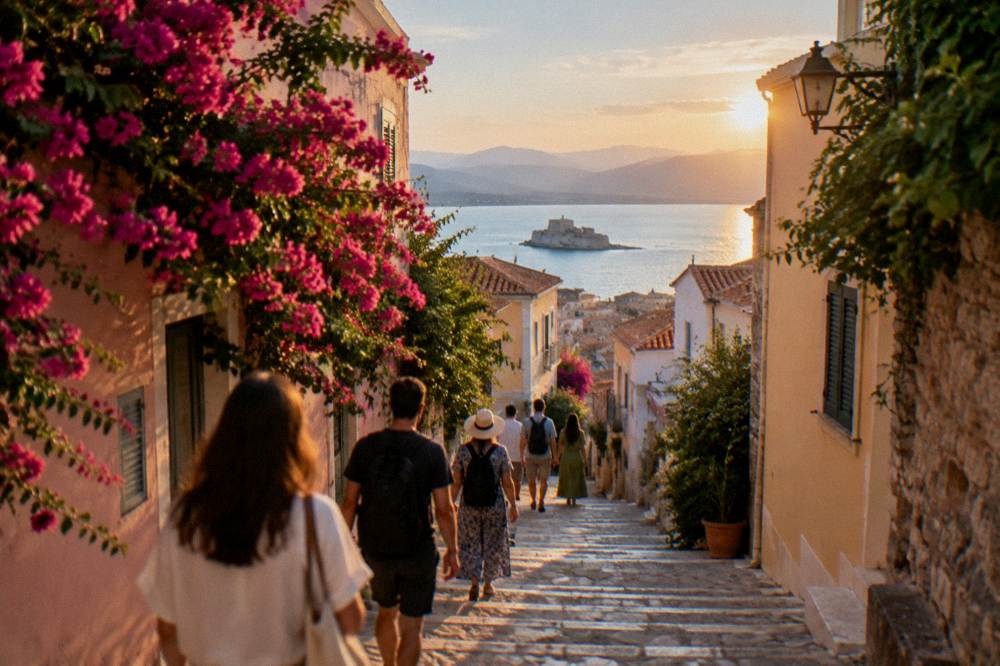
The Peloponnesian Folklore Foundation Museum stands in the Old Town of Nafplio, a coastal town of about 14,500 residents on the Argolic Gulf, in the Argolid region of the north-east Peloponnese of mainland Greece. Where Palamidi Fortress, Akronafplia and Bourtzi tell the fortified story of the town, and the Archaeological Museum holds its ancient material, this museum addresses a different layer: the costume, textile and craft traditions of the Peloponnese, the rural and town life that carried on around the fortresses. Nafplio suits this kind of museum well, because the town was the capital of Greece from 1827 to 1834, and its streets still carry the layout of that era. Check current hours and ticket prices on the museum's own page before you go, and read on for how to fit the visit into a day built around the town's fully documented sights.
What Is The Peloponnesian Folklore Foundation Museum In Nafplio?
The Peloponnesian Folklore Foundation Museum is a costume and craft collection housed in the Old Town of Nafplio, the former capital of Greece, and it documents the everyday material culture of the Peloponnese rather than its antiquities. It is one of several museums within a few minutes of Syntagma Square, the centre of town, and it rounds out a visit otherwise dominated by fortresses and ancient sites.
The museum's subject sits apart from everything else on a Nafplio itinerary. The Ministry of Culture's odysseus pages document the state archaeology in detail: Palamidi Fortress at 216 m above the Old Town, the Archaeological Museum in the Venetian arsenal on Syntagma Square, the sanctuary and theatre at Epidaurus. What those pages do not cover is the folk costume of the Peloponnese, the weaving, the embroidery and the domestic craft that survived alongside the monuments. That is the gap this museum fills, and it is the reason a town of this size carries a museum with a region-wide name rather than a purely local one.
The foundation behind it works at the scale of the whole Peloponnese, which is worth understanding before you arrive. The peninsula holds Mycenae and Tiryns, inscribed together on the UNESCO World Heritage list in 1999, the Sanctuary of Asklepios at Epidaurus, inscribed in 1988, and the medieval towns of Mystras and Monemvasia further south. A folklore collection that spans that territory has a lot to draw on, from the silk traditions around Nemea and Argos to the mountain costume of Arcadia. Treat the museum as the cultural counterweight to a fortress-heavy schedule: one morning of walls and views, one hour of looms and needlework.
Practicalities first, stated plainly: this site's sources do not carry the museum's current ticket price or opening hours, so check the museum's own page before setting out. The museum is small enough that it rarely needs a timed entry, but opening days for small Greek museums shift seasonally, and a two-minute check saves a locked door.
Where Is The Museum And How Do You Reach It From Syntagma Square?
The museum stands in the Old Town of Nafplio, within the web of lanes around Syntagma Square, and the whole of the Old Town is covered on foot. There is no train to Nafplio and no scheduled ferry to the nearby islands; you arrive by the reported KTEL coach from Kifissos in Athens at about 15.70 euro one way, by car, or on an organised day trip, and you walk everywhere after that.
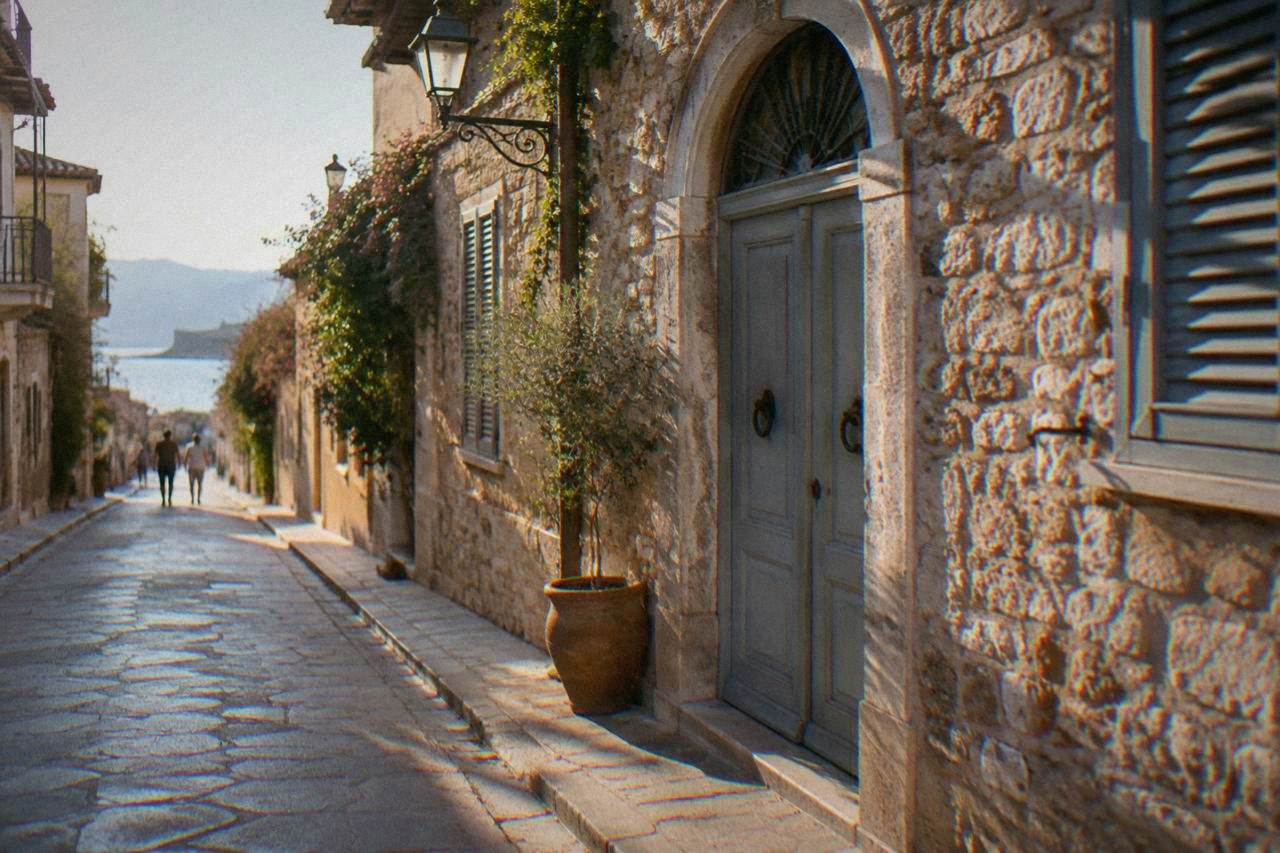
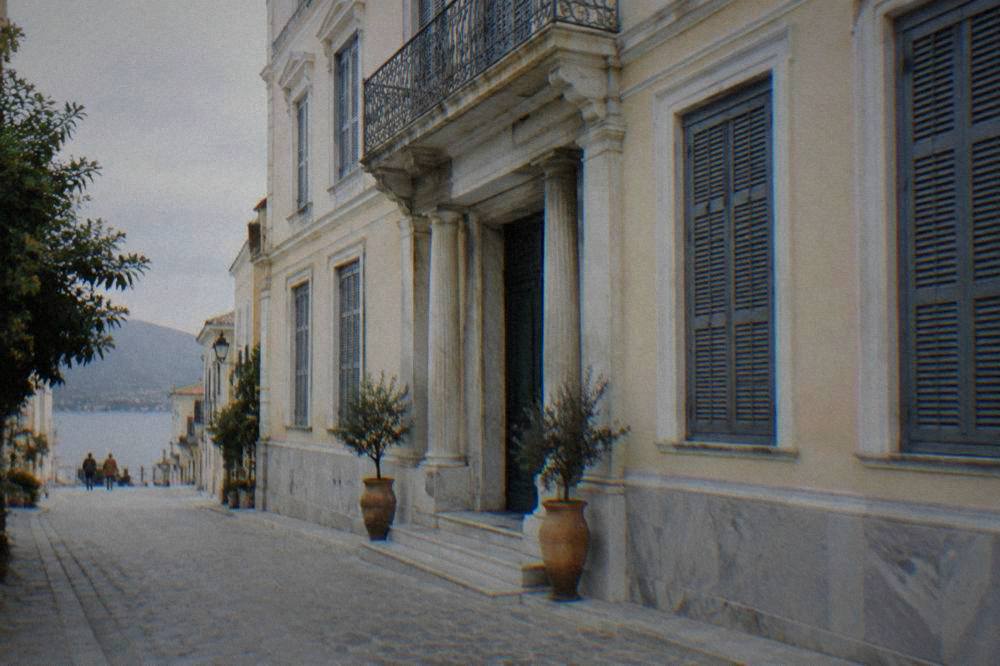
Distances inside the Old Town are trivial. The Archaeological Museum is on Syntagma Square itself, 10 euro full and 5 euro reduced, open 08:30 to 15:30 all year and closed every Tuesday. The Church of Agios Spyridon and the Vouleftiko, the first parliament building, are on the same square. The Land Gate and the harbour are a few minutes downhill, Bourtzi sits in the harbour, and the climb to Palamidi begins at the east edge of town. A visitor based anywhere in the Old Town reaches the folklore museum, and every other sight in this paragraph, without transport of any kind.
Arriving from further out, the reported figures are these: the KTEL coach from Athens runs from the Kifissos terminal and takes about 2 hours 10 minutes, with departures roughly every 1.5 to 2 hours from about 06:00; the fare of 15.70 euro one way comes from a 2026 ministerial decision on the operator's fares page, so confirm it at booking. From the Athens airport there is no direct bus: the X93 express runs to Kifissos and the coach follows. Driving, Syntagma Square in Nafplio is about 141 km from Syntagma in Athens, a little over two hours by road, and the Old Town is largely closed to visitor parking, with free lots reported along the Akti Miaouli waterfront that fill early in peak season.
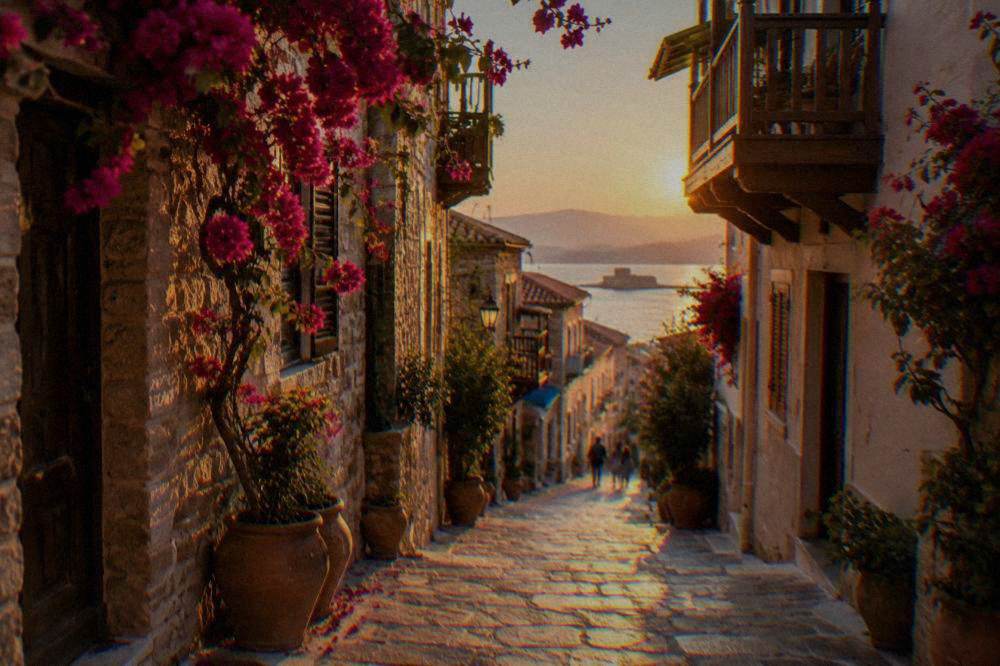
A guided walk makes sense for a first visit, since the Old Town's stories are not signposted. The City Walking Tour of Nafplio covers the lanes and squares around the museum, and pairing a walk with an independent museum hour afterwards is the shape that works well.
What Does The Museum Cover Inside?
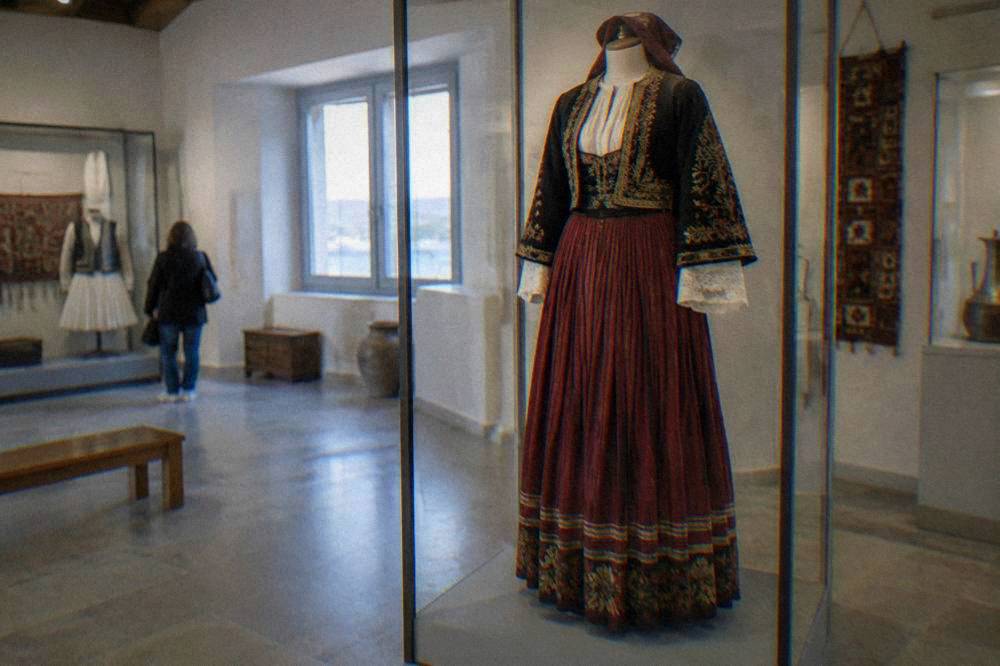
The Peloponnesian Folklore Foundation Museum presents the costume, textile and craft heritage of the Peloponnese, with Nafplio's own urban and court past, the years as capital of Greece from 1827 to 1834, as its backdrop. Expect dress, weaving and domestic craft rather than sculpture and pottery, and expect labels and displays built around regional tradition rather than chronology of antiquity.
The useful frame is contrast. The state museums around it hold Bronze Age gold from Mycenae, the bronze armour plates of the Dendra panoply in the Archaeological Museum's care, and Roman material from the Argolid. The folklore collection holds what people wore and made in the centuries nearer to our own: town dress, rural costume, looms and the cloth they produced, and the small craft objects of a household economy. For a traveller who has already stood in the Lion Gate at Mycenae, this is the other half of the record.
Nafplio itself gives the museum its edge over a purely rural collection. The town was the seat of the provisional government, then the capital from 1827 until the move to Athens in 1834; Ioannis Kapodistrias arrived in January 1828 and governed from here until his assassination in September 1831 outside the Church of Agios Spyridon. A capital town draws officials, soldiers and merchants from across the new state, and their clothing and household goods are precisely the material a folklore foundation collects. The display therefore speaks to the town's capital-era life in a way the fortresses, for all their drama, do not.
Give the interior an unhurried hour and treat the displays as regional rather than local. The Peloponnese stretches from the Corinth Canal to Monemvasia, and craft traditions differ sharply between the Argolid plain, the Nemea vineyards and the Arcadian mountains. Read the labels for the place of origin and you leave with a map of the peninsula in your head, which is exactly the preparation you want for the day trips described further down this page.
How Much Time Should You Give The Museum On A Nafplio Day?
An hour inside the museum, plus the walk to and from Syntagma Square, is the right allowance for a one-day Nafplio plan, leaving the rest of the day for Palamidi Fortress, Bourtzi and the seafront. The town's headline sights are close together and their 2026 hours overlap through the middle of the day, so the museum slots naturally into a late-morning or mid-afternoon gap when the fortress heat or the harbour crowds push you indoors.
Start early at Palamidi Fortress, 20 euro full and 10 euro reduced in 2026, open from 08:00 in the summer schedules, and climb about 850 steps (not the legendary 999) if you come up the stairway from town. Come down into the Old Town, pass Syntagma Square, and use the middle of the day for the folklore museum and the Archaeological Museum, both indoors and both immune to the midday heat that the HNMS Argos station table puts at a mean daily high of 34.0 C in July. Finish with the harbour, the Bourtzi boat (7 euro full, 5 euro reduced) and the Arvanitia promenade, a paved coastal walk of about 1 km below the walls of Akronafplia.
If the day runs longer, the walk from the museum district to the waterfront is flat and short, and Karathona beach lies about 3 to 4 km beyond Arvanitia along the coast road. Families get a calmer version of the same plan in the Nafplio With Kids framing, and anyone with two or three days should read the full Two Days In Nafplio itinerary, which spaces the museums and fortresses across mornings.
Two practical notes on tickets for the state half of that day, both straight from the Ministry of Culture's pages. The reduced 10 euro ticket at Palamidi, Mycenae and Epidaurus is sold only from 1 October to 31 May, so in summer everyone pays full price. And the state free-admission days apply across the state sites: 6 March, 18 April, 18 May, the last weekend of September, every first and third Sunday from 1 November to 31 March, and 28 October. They do not apply to a private foundation museum, but they can make the surrounding day almost free.
Which Other Museums In Nafplio Pair With It?
Nafplio carries at least four museums within walking distance of Syntagma Square, and the pairings that work are the Archaeological Museum for antiquity, the War Museum and the Komboloi Museum for specialist collections, with the folklore museum as the cultural core of the set.
It sits on Syntagma Square in the old Venetian arsenal, and its Tuesday closure is the single most trip-breaking detail in the set, so put it first in the week's plan. What is safe to say is geography: all of them stand in or beside the Old Town, and none needs transport.
| Nafplio museum | Subject | 2026 ticket (Ministry of Culture) | 2026 hours (Ministry of Culture) |
|---|---|---|---|
| Archaeological Museum of Nafplio | Argolid antiquities, Mycenaean finds | 10 EUR full, 5 EUR reduced | 08:30 to 15:30 all year, closed Tuesday |
| Peloponnesian Folklore Foundation Museum | Peloponnesian costume, textiles, craft | Check the museum's own page | Check the museum's own page |
| War Museum | Greek military history, Nafplio branch | Check the museum's own page | Check the museum's own page |
| Komboloi Museum | Worry beads and bead craft | Check the museum's own page | Check the museum's own page |
The state sites slot into the same walking day, and their figures are firm. Palamidi Fortress, 20 euro full and 10 euro reduced, with the long summer opening from 08:00 to 20:00 from 2 May. Bourtzi in the harbour, 7 euro full and 5 euro reduced, reached by boat for a fee that the official pages do not state, so confirm it at the jetty. Admission to the fortress and the island castle is never "free with a museum ticket": there is no combined pass in the Ministry's 2026 listings for Nafplio, whatever older guides say.
For travellers who want a guide rather than a map, a private option with entrance tickets included removes the queue-and-confirm work entirely, and Check availability on the operator's live listing. The same listing covers Mycenae and Epidaurus, the two UNESCO sites within an hour's drive, and pairs naturally with a museum afternoon back in town.
What Else Sits Within A Short Walk Of The Museum?
Everything in the Old Town sits within a short walk of the museum: Syntagma Square with the Vouleftiko and the Archaeological Museum, the Church of Agios Spyridon where Kapodistrias was assassinated in September 1831, the Land Gate, the harbour and Bourtzi, the climb to Akronafplia, and the stairway up to Palamidi Fortress. A visitor on foot can cover the whole set in a day at a relaxed pace.
Syntagma Square is the natural hub. The Vouleftiko, the mosque converted to house the first Greek parliament's sessions from 1825, stands on the square. The Archaeological Museum faces it. The Church of Agios Spyridon, outside which Governor Kapodistrias was shot in September 1831, is a minute away, and the Church of Agios Georgios, which served as the capital's cathedral, is close by in the same quarter. Downhill from the square, the Venetian Land Gate marks the old eastern entrance to the town, and the Three Admirals' Square and the harbour and waterfront lead to the sea.
The waterfront walk deserves the last hour of daylight. From the harbour the paved Arvanitia promenade runs about 1 km below the walls of Akronafplia to Arvanitia beach, a Blue Flag pebble beach organised in summer with sunbeds, showers and a cafe. The walls above carry polygonal masonry from at least the end of the 4th century BC, a reminder that the acropolis of Nafplio is older than every fortress the Venetians piled on top of it. Karathona, the long sandy beach about 3 to 4 km on, extends the same coastline for a swim stop.
Above it all stands Palamidi, 216 m over the Old Town, built by the Venetians in the second Venetian period from 1686 to 1715 to plans by the engineers Giaxich and Lasalle, taken by the Ottomans in 1715 and liberated by the Greeks under Staikos Staikopoulos in 1822. The stairway from town is usually counted at 857 steps; write "about 850" and enjoy the legend of 999 as a legend. In Pronoia, on the other side of town, the Lion of Bavaria, carved from 1840 to 1841 by Christian Heinrich Siegel after Thorvaldsen's Lion of Lucerne, marks the Bavarian soldiers who died here in the typhus epidemic of the young kingdom's first years.
When Is The Best Time Of Year To Visit Nafplio For A Museum Trip?
Late April, May, late September and October give the best balance for a museum-centred Nafplio trip: the state sites run their long summer hours, from 2 May 08:00 to 20:00, the HNMS Argos station table shows mean daily highs of 21.3 C in April and 24.7 C in October, and the reduced 10 euro tickets at Palamidi, Mycenae and Epidaurus are on sale again from 1 October.
The climate record, HNMS Argos station, 1980 to 2010, an inland station about 10 km north-west of town, makes the case numerically. July's mean daily high is 34.0 C with only 2.1 rain days; November carries 82.5 mm of rain over 9.4 rain days; October drops to 44.3 mm and 6.9 days, and May to 18.7 mm and 6.2 days. A museum-heavy plan is the classic answer to a November or winter week, when the fortress is on its short 08:30 to 15:30 winter hours and rain is frequent, while a May or October plan mixes the museums with the beaches.
| Month | Mean daily high (C) | Mean daily low (C) | Rain (mm) | Rain days |
|---|---|---|---|---|
| January | 14.6 | 3.0 | 66.5 | 10.3 |
| February | 14.7 | 2.9 | 52.5 | 10.1 |
| March | 17.4 | 4.3 | 52.2 | 9.7 |
| April | 21.3 | 6.7 | 33.7 | 8.6 |
| May | 26.5 | 10.5 | 18.7 | 6.2 |
| June | 31.4 | 14.0 | 8.9 | 3.0 |
| July | 34.0 | 16.7 | 9.1 | 2.1 |
| August | 33.7 | 16.8 | 13.0 | 2.5 |
| September | 29.7 | 14.2 | 20.3 | 5.0 |
| October | 24.7 | 11.5 | 44.3 | 6.9 |
| November | 19.2 | 7.7 | 82.5 | 9.4 |
| December | 15.5 | 4.8 | 69.7 | 12.2 |
Two scheduling facts sharpen the choice. First, the Epidaurus theatre, the region's performance venue, hosts its annual festival season across summer, and the 2027 programme had not been announced when this page was planned, so check the festival's own site if a performance is part of the trip. Second, Orthodox Easter moves: it fell on 12 April in 2026 and falls on 2 May in 2027, and Holy Week brings choral concerts at the Vouleftiko and processions through the Old Town, a folklore spectacle in its own right and free to watch. Note the state-site closures around it: sites close on 1 January, 25 March, 1 May, Easter Sunday and 25 to 26 December.
How Does The Museum Fit Into A Day Trip From Athens?
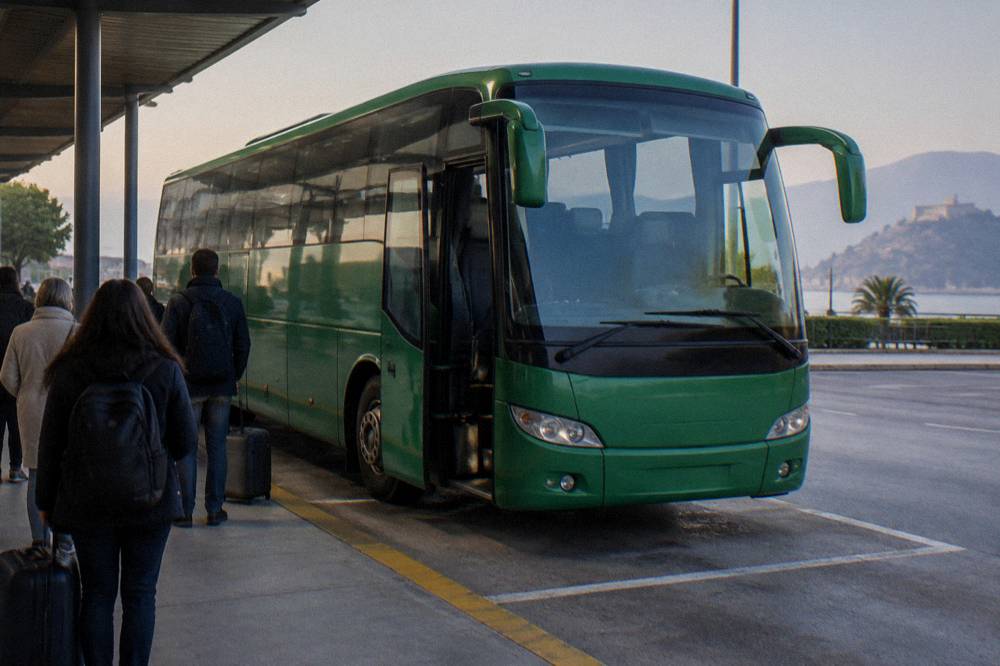
A folklore museum stop fits a Nafplio day trip from Athens as the midday indoor hour between Palamidi in the morning and the harbour in the afternoon, because the coach journey is about 2 hours 10 minutes each way and the Old Town sights cluster within a ten-minute radius of the coach stop on Siggrou street. Day tours that include Nafplio free time cover the same window.
The independent version runs on the reported KTEL figures: about 15.70 euro one way from Kifissos, departures roughly every 1.5 to 2 hours from about 06:00, arriving about 2 hours 10 minutes later. An early coach lands you in Nafplio mid-morning, which is enough for the fortress, the museum, lunch and the harbour before an evening return. The driver of the plan is the fortress's closing time: in winter it shuts at 15:30, so a winter day trip does the fortress first and the museum second, and in summer the order can flip to dodge the midday heat.
| Day trip from Nafplio (Syntagma Square) | Drive time, about (free-flow) |
|---|---|
| Tiryns | 12 min |
| Argos | 18 min |
| Tolo | 17 min |
| Asini | 17 min |
| Mycenae | 32 min |
| Epidaurus theatre | 41 min |
| Palaia Epidavros | 47 min |
| Ancient Nemea | 46 min |
| Ancient Corinth | 61 min |
| Corinth Canal | 72 min |
| Mystras | 124 min |
| Ancient Olympia | 186 min |
| Monemvasia | 219 min |
Organised options remove the timetable work. Day trips from Nafplio itself cover Mycenae and Epidaurus, both 20 euro full and 10 euro reduced for independent entry, and Athens-based day trips stop in Nafplio with free time, which is the window for the museum. The full comparison of those options lives on Mycenae And Epidaurus Tours and the Nafplio Day Trip From Athens page. For the Epidaurus half, entry with an optional audio guide is the flexible choice, and Check availability on the operator's live listing.
One correction to carry with you, because it appears on older pages constantly: there is no train to Nafplio in 2026, the Peloponnese metre-gauge line being out of passenger service, and no scheduled ferry from Nafplio or Tolo to Hydra or Spetses. The islands are reached by seasonal day cruise or from another port. Older guides still say otherwise, and both claims are out of date.
What Should You Budget For A Nafplio Museum And Sights Day?
A day built around the folklore museum and the state sights costs 20 euro for Palamidi full price, 10 euro reduced off-season, 10 euro for the Archaeological Museum full price, and 7 euro for Bourtzi, plus the museum's own ticket at the door and food. Free-admission days on 6 March, 18 April, 18 May, the last September weekend, selected winter Sundays and 28 October wipe out the state-ticket half entirely.
Those are the Ministry of Culture's own 2026 figures, and they are the only ticket prices on this page you can plan to the euro. Add the reported local KTEL fares if you extend beyond town: 2.20 euro to Tolo or Argos and Tiryns, 3.50 euro to Mycenae or Epidaurus, though the Mycenae and Epidaurus direct services are sparse, so check the operator's timetable. The climate resilience fee, a per-room nightly charge collected by your accommodation and higher from April to October, belongs to the lodging side of the budget and is confirmed at booking.
| Item | 2026 cost | Source basis |
|---|---|---|
| Palamidi Fortress, full | 20 EUR | Ministry of Culture |
| Palamidi Fortress, reduced (1 Oct to 31 May) | 10 EUR | Ministry of Culture |
| Archaeological Museum of Nafplio, full | 10 EUR | Ministry of Culture |
| Archaeological Museum, reduced | 5 EUR | Ministry of Culture |
| Bourtzi, full | 7 EUR | Ministry of Culture |
| Bourtzi, reduced | 5 EUR | Ministry of Culture |
| Argos agora and theatre, one ticket | 10 EUR, reduced 5 EUR | Ministry of Culture |
| Asini | 5 EUR, reduced 3 EUR | Ministry of Culture |
| KTEL Athens to Nafplio, one way | About 15.70 EUR, reported | Operator fares page |
| KTEL Nafplio to Tolo | 2.20 EUR, reported | Operator fares page |
Museum passes and bundle claims deserve scepticism. The Ministry's 2026 pages list no combined Nafplio ticket, and the free-admission calendar is the only genuine discount mechanism at the state sites. For anything involving the foundation museum, the War Museum or the Komboloi Museum, the price is whatever the door says on the day, so check each museum's own page before you go and budget a modest cash margin for small Greek museums that do not take cards.
Why Does A Folk Costume Museum Matter In A Town Of Fortresses?
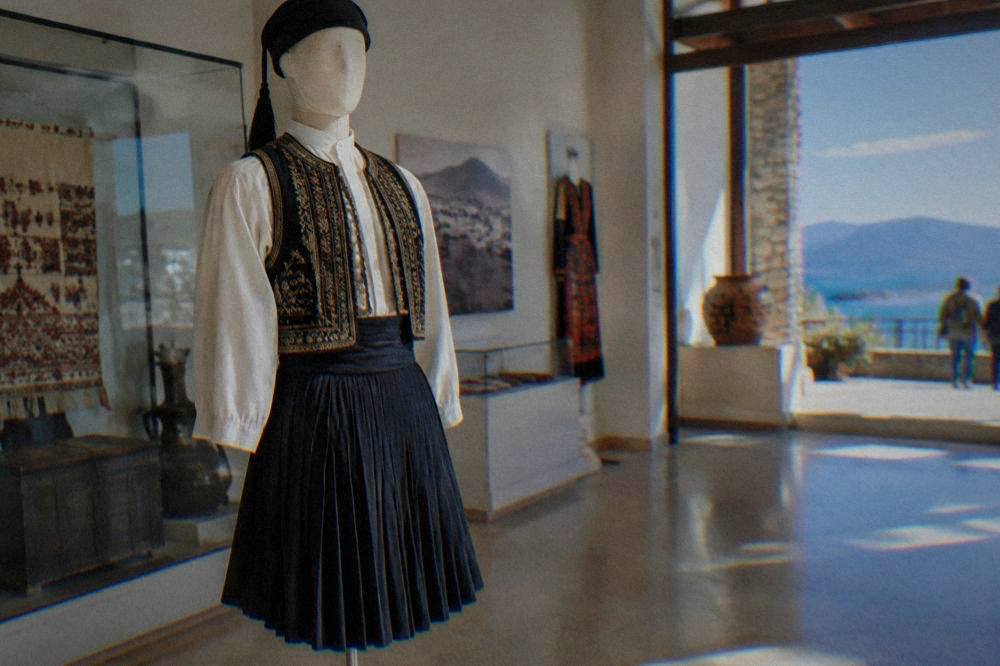
A folk costume museum matters in Nafplio because the town's stone record, three fortresses and a parliament building, documents rulers and armies, while the costume and craft record documents the population that lived under them, and the two together are the actual history of the first capital of Greece from 1827 to 1834. The museum is the only collection in town that tells that second half.
Walk the fortress circuit, Palamidi, Akronafplia, Bourtzi, and you meet Venetian engineers, Ottoman garrisons and the Greek revolution of 1822. The museum answers the question those walls cannot: what did people wear to a wedding in Pronoia in the capital years, what did a Nemea household weave, how did town dress differ from village dress across the Argolid. Costume is a document of status, region and era, and in a town that briefly hosted a royal court, the arrival of King Otto in February 1833 and the departure of the government to Athens in 1834, it is also a political record.
The regional reach rewards the day-tripper most. After a morning among looms and labelled costumes from across the Peloponnese, the drives out of town become a continuation of the display: the Nemea vineyards 46 minutes away, the Argos agora and theatre 18 minutes away, the Mycenae plain 32 minutes away, each with its own craft and costume tradition represented in the cases you have just read. Few museum visits set up the surrounding landscape as directly.
The Nafplio Travel Guide homepage ties the whole set together.
Common Questions About The Peloponnesian Folklore Foundation Museum
How much does the Peloponnesian Folklore Foundation Museum cost?
This site's sources do not carry the museum's current ticket price, so check the museum's own page before you go.
What are the opening hours of the Peloponnesian Folklore Foundation Museum?
The Archaeological Museum next to it on Syntagma Square opens 08:30 to 15:30 all year and closes every Tuesday.
Where is the Peloponnesian Folklore Foundation Museum located?
The museum stands in the Old Town of Nafplio, the coastal town in the Argolid on the Peloponnese that was the capital of Greece from 1827 to 1834. The whole Old Town, including Syntagma Square and the harbour, is covered on foot.
How long does a visit to the museum take?
Allow about an hour inside, which pairs well with an hour at the Archaeological Museum and still leaves most of a day for Palamidi Fortress, Bourtzi and the Arvanitia promenade walk of about 1 km.
Are the Nafplio museums free on the Greek free-admission days?
The state free-admission days, 6 March, 18 April, 18 May, the last weekend of September, the first and third Sundays from November to March, and 28 October, apply to state sites such as Palamidi, Bourtzi, Mycenae and Epidaurus. A private foundation museum sets its own policy, so check with the museum directly.
Can you combine the museum with Mycenae and Epidaurus in one day?
Yes. Mycenae is about 32 minutes by car from Syntagma Square and the Epidaurus theatre about 41 minutes, so a morning at the sites with an afternoon museum hour in town is a standard shape, or an organised Mycenae and Epidaurus day trip with Nafplio free time covers the same ground without the driving.
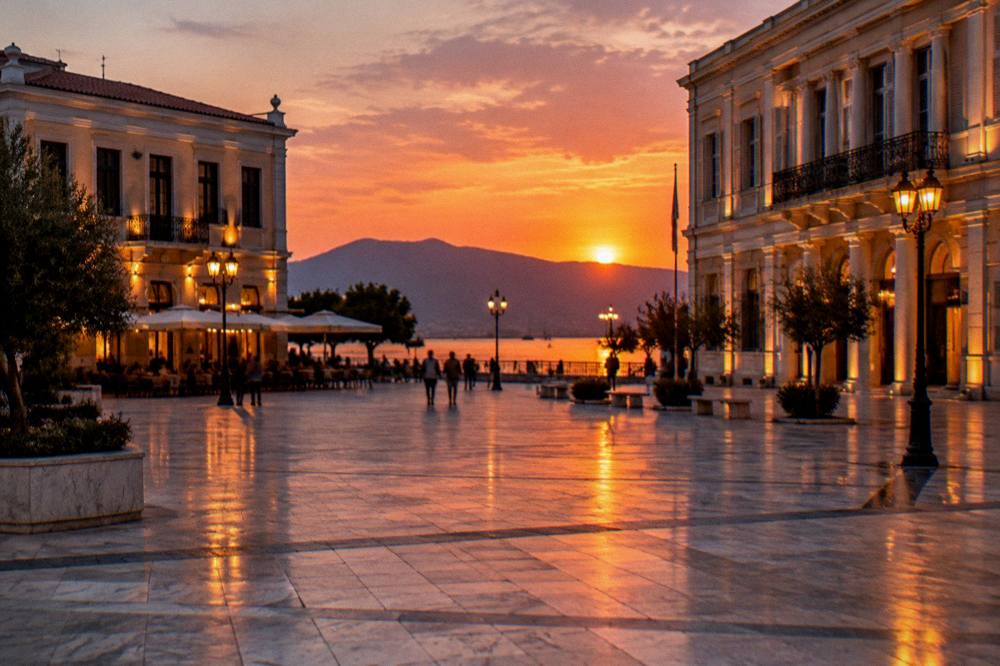
The Peloponnesian Folklore Foundation Museum is the quiet counterweight in a town of loud fortresses: an hour of costume and craft that explains the people who lived under the walls, sitting a few lanes from Syntagma Square and priced at whatever the door says on the day. Check its own page for hours and tickets, build the rest of the day on the Ministry's firm figures for Palamidi, Bourtzi and the Archaeological Museum, and let the museum's regional reach set up the drives to Mycenae, Epidaurus and Nemea that follow.