Komboloi Museum: The Worry Bead Museum Of Nafplio
The Komboloi Museum in Nafplio is a small private museum in the Old Town devoted to the Greek worry bead, the komboloi. Here is what it covers, how to plan a visit, what to confirm locally, and how to fold it into a day in the first capital of modern Greece.
Short answer
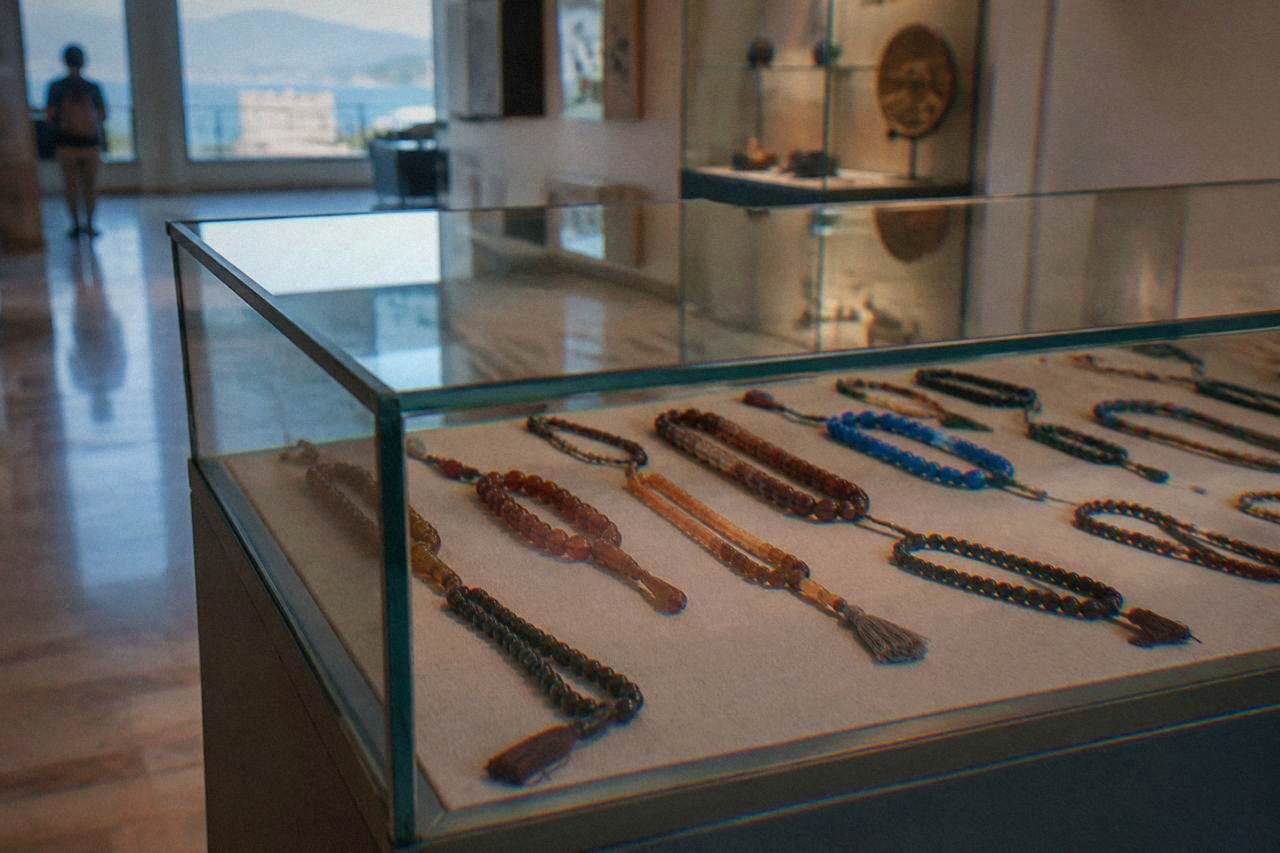
The Komboloi Museum in Nafplio is a small privately-run museum in the Old Town dedicated to Greek worry beads and their history. Opening hours and admission vary, so confirm locally before you go; the visit itself is short and pairs naturally with Syntagma Square and the Archaeological Museum.
Nafplio, a coastal town of about 14,500 residents on the Argolic Gulf in the Argolid, in the north-east Peloponnese of mainland Greece, keeps its reputation partly in its fortresses and partly in its small streets. Among the museums of the Old Town sits one devoted entirely to a single object: the komboloi, the string of worry beads that Greek men have carried, clicked and turned for generations. The Komboloi Museum is modest in scale and, for travellers with an hour between the harbour and Syntagma Square, one of the more curious stops in town. This page from the Nafplio Travel Guide lays out what the museum is about, what to confirm before you arrive, and how to build a day around it.
What Is The Komboloi Museum In Nafplio?
The Komboloi Museum in Nafplio is a small, privately-run museum in the Old Town dedicated to the komboloi, the Greek worry bead string, and to the related bead traditions of the wider region. It collects, displays and explains worry beads of many materials and periods, and it sits in the historic core of the town that was the capital of Greece from 1827 to 1834. It is a specialist collection rather than a state archaeological museum, and that distinction shapes every part of a visit.
The word komboloi refers to the looped string of beads, traditionally without any religious function, that is handled rather than worn. Unlike prayer beads used for counting, the komboloi has no count to keep: it exists to be turned, clicked and fidgeted with, which is why English calls them worry beads. Nafplio, a town of merchants, sailors and retired officers over the last two centuries, has long been associated with the craft and the habit, and the town remains one of the places in Greece where beads are still sold and repaired.
The museum belongs to the same family of small Nafplio institutions as the Peloponnesian Folklore Foundation Museum, which covers the wider material culture of the region. Where the folklore foundation spreads across costume and everyday life, the Komboloi Museum narrows to one object and follows it through materials, ages and uses. That narrowness is its appeal. A visitor who spends twenty minutes in the company of the collection comes out understanding an object seen in every Greek kafeneio.
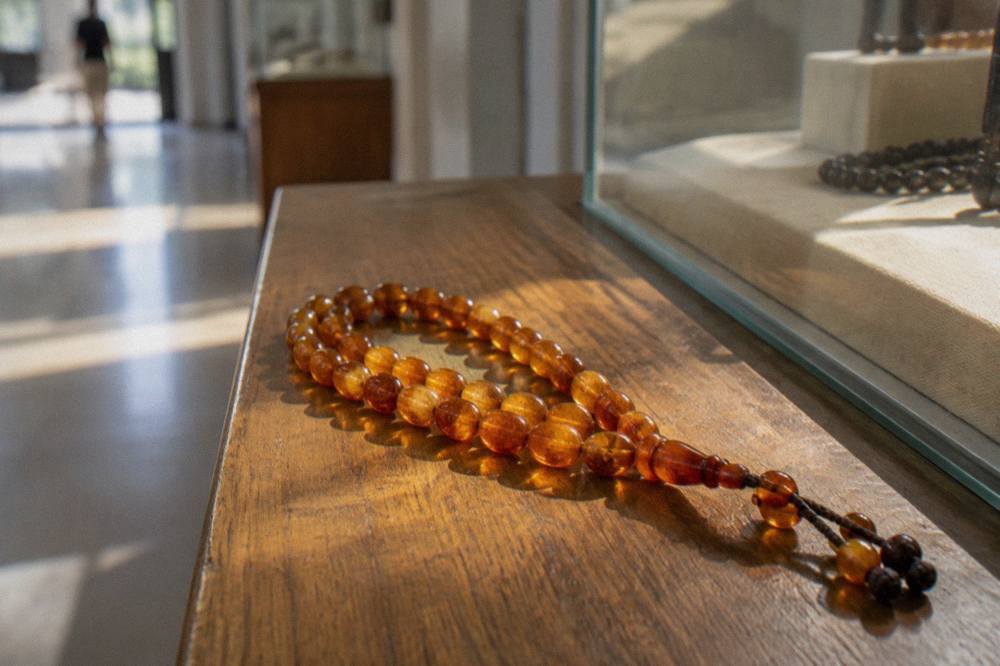
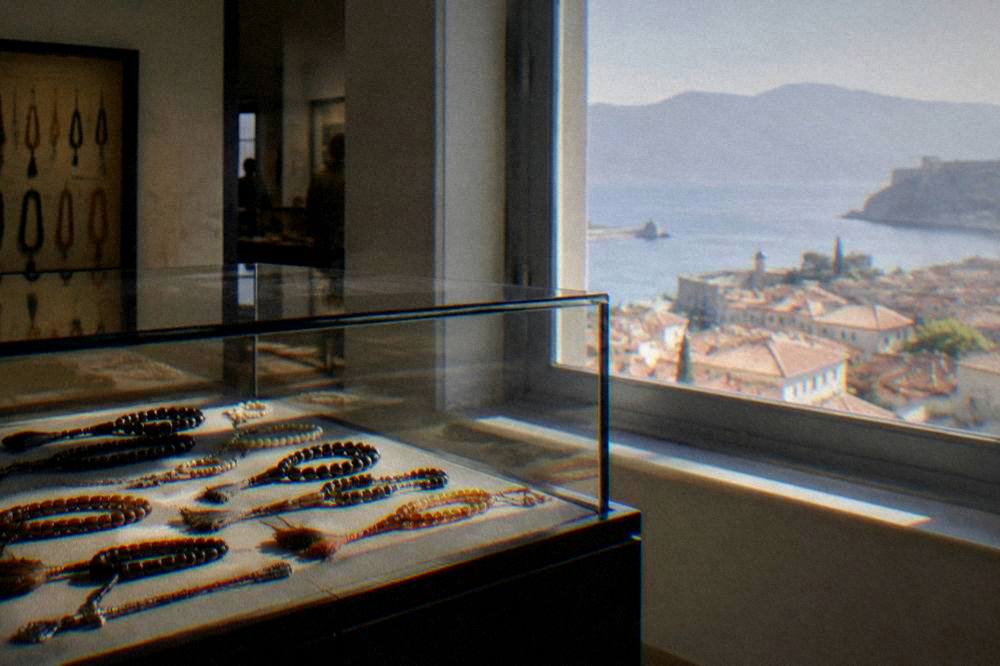
The collection itself spans strings of amber, coral, bone, horn, wood and synthetic resins, together with the tools and raw materials of the bead-maker's trade. Displays group beads by material and by era, and the accompanying text traces how the komboloi travelled into Greek daily life through Ottoman times and stayed there after independence. Nafplio's own history as the first capital of the modern Greek state, from 1827 to 1834, gives the object a local stage: the same streets that hosted the first parliament at the Vouleftiko also hosted the coffee-house culture in which worry beads clicked through every argument.
Where Is The Komboloi Museum In Nafplio And How Do You Reach It?
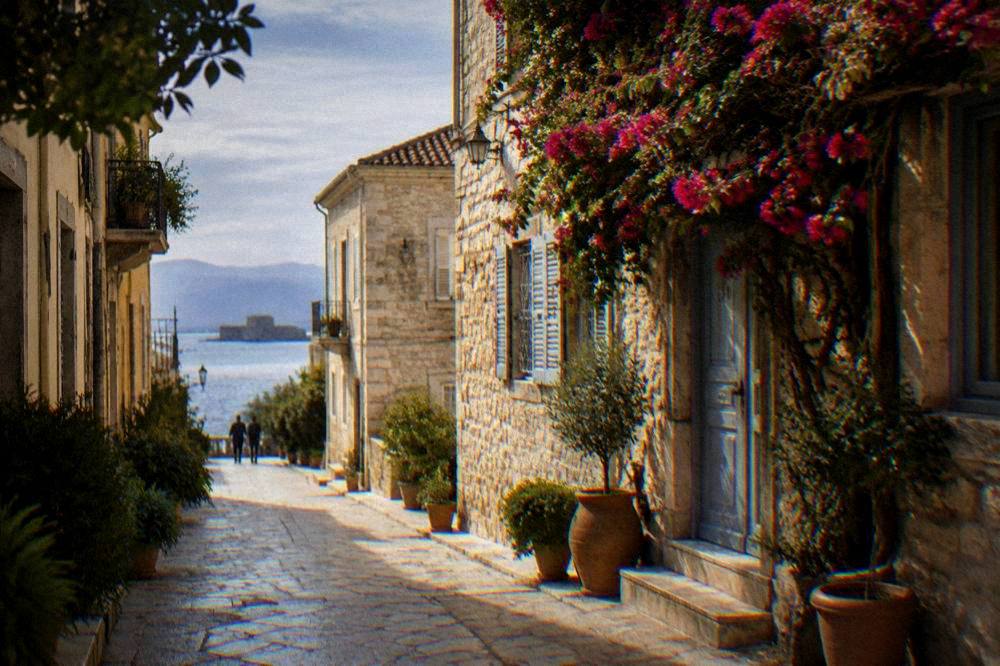
The Komboloi Museum stands inside the Old Town of Nafplio, within a short level walk of Syntagma Square, the town's centre, and of the harbour front below Bourtzi. The Old Town is compact and largely pedestrian in character, so the museum is reached on foot from anywhere in the historic core; from Syntagma Square the walk passes through the streets around the first parliament building and the Archaeological Museum.
Nafplio's geography makes this simple. The town sits on the Argolic Gulf, with the Akronafplia promontory above the harbour, Palamidi Fortress on the heights behind, and the Old Town filling the space between. Syntagma Square is the centre point; around it cluster the Vouleftiko, the Archaeological Museum in the old Venetian arsenal, the Church of Agios Spyridon and the streets where the museums and shops sit. The Komboloi Museum belongs to this inner ring, so a routing that takes in Syntagma Square and the first parliament building will pass it without any detour.
Visitors arriving from further out have two realistic approaches. From the harbour and the waterfront, the route climbs gently from the harbour and waterfront area into the Old Town lanes. From the eastern end of town, drivers should note that the Old Town is largely closed to visitor parking, and the free public lots sit on the Akti Miaouli waterfront, a few minutes' walk from the centre; parking rates and rules change, so check signs on arrival. There is no train to Nafplio in 2026 and no scheduled ferry service from the town, so arrival is by bus (KTEL), by car or on a day trip from Athens.
If the visit is one leg of a wider Argolid plan, the practical split is simple: keep the town museums and the fortresses for the mornings and evenings in Nafplio itself, and give the big archaeological sites their own days. Mycenae is about 32 minutes' drive from Syntagma Square, the theatre at Epidaurus about 41, and both are UNESCO World Heritage sites. A useful first move for a Mycenae day is pre-arranged entry: Check availability for the Mycenae site ticket with optional audio tours, which sits on our Mycenae and Epidaurus tours overview.
What Can You See Inside The Komboloi Museum In Nafplio?
Inside the Komboloi Museum in Nafplio the displays centre on the worry bead itself: strings in amber, coral, bone, horn and wood, arranged by material and period, alongside the maker's tools and the raw bead stock of the trade. The collection follows the komboloi from its origins as an object of leisure and status through its place in Greek coffee-house culture, and it explains the vocabulary of beads, tassels and strings that a visitor otherwise passes without reading.
The appeal of a single-object museum is that it can go deep. A komboloi is read through its material, the size and shape of its beads, the presence or absence of a tassel, and the way the string is finished. Amber has long carried the highest prestige; dark amber and natural resins dominate the classic strings, while fruit woods and olive wood cover the everyday end of the range. The museum's cases let a visitor compare these side by side, which is the one thing a shop counter cannot do.
Alongside the finished strings, the museum shows the craft: the drills, the polishing gear and the trays of loose beads that a repairer draws from when a string breaks. Bead repair is itself a living trade in Nafplio, and several workshops around the Old Town still sell komboloi, prayer beads and the begleri, a shorter two-ended string handled in similar fashion. The museum, in effect, decodes the shop windows of the streets around it, and it does so in the space of a single visit.
What the museum does not offer is the scale of a state institution. There are no excavated antiquities, no cafe garden and no organised education wing of the kind found at the major sites; the Peloponnesian Folklore Foundation Museum, a short walk away, is the place for costume and household collections, while the Archaeological Museum of Nafplio holds the finds of the Argolid from prehistory onward. Treat the three as complementary: the Archaeological Museum for Mycenaean Nafplio, the folklore foundation for regional life, and the Komboloi Museum for the object still in every pocket.
How Much Does The Komboloi Museum In Nafplio Cost?
The admission price and opening hours of the Komboloi Museum in Nafplio are not covered by the sources this guide reports from, so the honest instruction is to check the current price and hours locally before you set out, since small private museums in Greece change both by season. What can be stated plainly is the cost landscape around it: the state Archaeological Museum of Nafplio charges 10 euro full and 5 euro reduced, and is closed every Tuesday.
Private museums in Greek towns operate outside the Ministry of Culture tariff that governs the state sites, so their prices do not appear in the ministry's published schedules and do not follow its free days. The free-admission calendar that applies to Palamidi, Bourtzi, Mycenae and Epidaurus, which includes 6 March, 18 April, 18 May, the last weekend of September, the first and third Sundays from November to March, and 28 October, does not extend to private collections. Budget accordingly: assume a modest ticket, and confirm it on the spot.
| Site | Full ticket | Reduced ticket | Notes |
|---|---|---|---|
| Archaeological Museum of Nafplio | 10 euro | 5 euro | 08:30 to 15:30 all year, closed Tuesdays |
| Palamidi Fortress | 20 euro | 10 euro | Reduced sold only 1 Oct to 31 May |
| Bourtzi | 7 euro | 5 euro | Reached by boat, boat fare paid separately |
| Mycenae (site, museum, Treasury of Atreus) | 20 euro | 10 euro | Reduced sold only 1 Oct to 31 May |
| Epidaurus (theatre, sanctuary, museum) | 20 euro | 10 euro | One ticket covers all three |
| Argos Ancient Agora and Theatre | 10 euro | 5 euro | One combined ticket, 08:30 to 15:30 |
The Komboloi Museum is deliberately absent from that table: no figure for it exists in the sources behind this page, and a blank cell would be worse than none. One line covers it: check the current price on the ticket page before booking. The same caution applies to hours. Small museums in Nafplio commonly open through the day in season and reduce to mornings in winter, but a pattern is not a promise.
Why Do Greeks Carry Worry Beads?
Greeks carry worry beads, the komboloi, as an object of idle handling and sociability rather than devotion: a loop of beads with no count to keep, turned and clicked in coffee houses, on doorsteps and during long conversations. The habit spread through the Ottoman world and was absorbed into Greek daily life, where it became tied to leisure, patience and masculine coffee-house culture, and it survives today as both habit and craft.
The distinction matters and the museum makes it clearly. Prayer bead traditions across the Mediterranean and Asia count repetitions: a fixed number of beads, a fixed cycle. The komboloi has no such count. Its beads are there to be moved, and its value lies in the handling, the sound and the material. A string of amber warmed in the hand, clicked at the tassel, is as much jewellery and fidget as ritual, and its closest cousins in Greek practice are the begleri, a short open string worked between the fingers.
The social history is the second half of the story. In the coffee houses of Ottoman and early-modern Greece, the komboloi accompanied conversation, backgammon and the slow passing of the day; officers, merchants and retirees were its classic carriers, and the object carried connotations of status through its material. Nafplio, a garrison and administrative town that served as capital of Greece from 1827 until the capital moved to Athens in 1834, fits that world exactly. The town's bead shops today sell to that living tradition as much as to visitors.
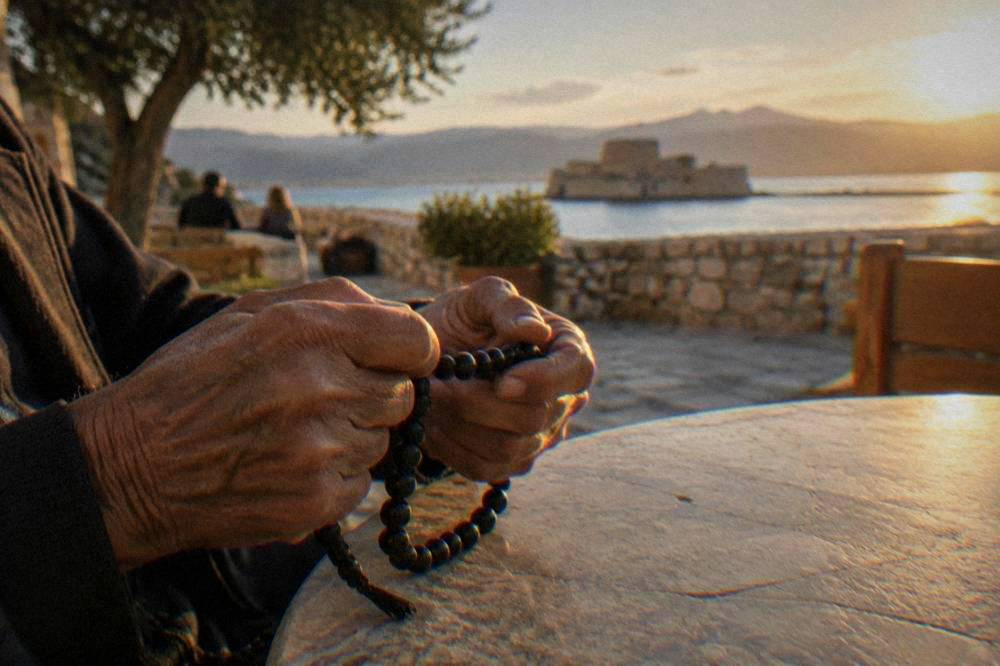
For a visitor, the reward of understanding the object is that the whole town becomes legible. The strings in the shop windows of the Old Town, the beads on cafe tables, the clicks from a bench in Syntagma Square: all of it is the museum's subject carried on outside. Read the collection first and the streets afterwards, and each string declares its material, age and, roughly, its price bracket.
How Should You Plan A Visit To The Komboloi Museum In Nafplio?
Plan the Komboloi Museum in Nafplio as a short stop inside a walking circuit of the Old Town rather than a destination in its own right: pair it with Syntagma Square, the Archaeological Museum and the Vouleftiko in one loop, and reserve the half-days for Palamidi Fortress and the harbour.
A sensible shape for one day in Nafplio runs town-first, fortress-second. Begin at Syntagma Square and the buildings around it: the Vouleftiko, which housed the first Greek parliament from 1825, and the Church of Agios Spyridon, outside which the governor Ioannis Kapodistrias was assassinated in September 1831. Work through the lanes to the Komboloi Museum and the bead shops, then the Archaeological Museum, open 08:30 to 15:30 and closed Tuesdays, which makes a morning arrival the safe choice. The afternoon belongs to the harbour, Bourtzi by boat, or the climb to Palamidi: about 850 steps up the stairway (not the legendary 999), with the fortress open from 08:00 to 20:00 from 2 May 2026.
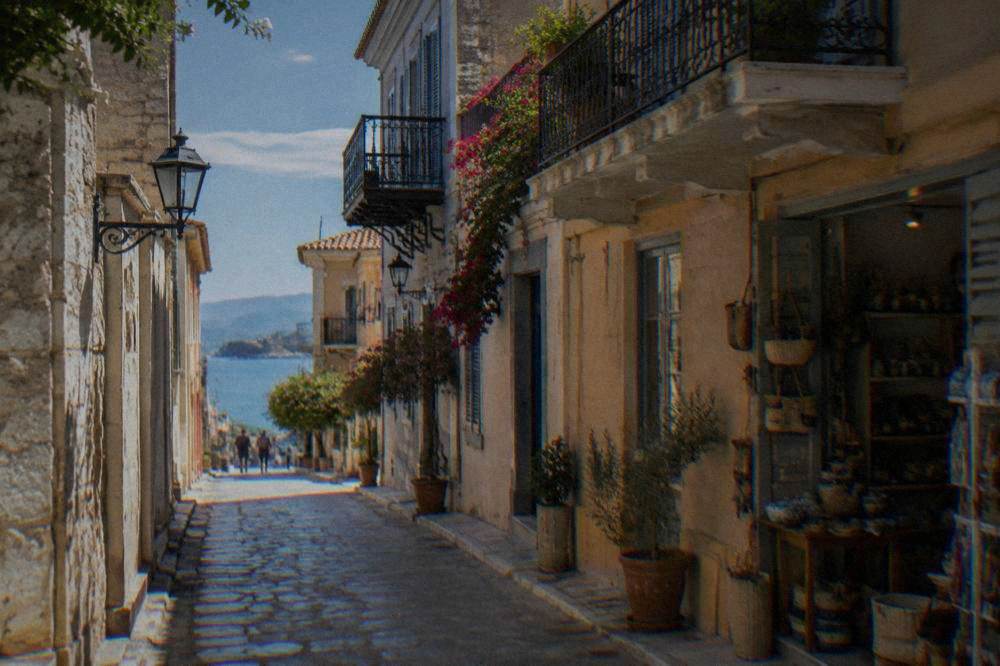
Travellers with two or three days can go further. A second day takes Palamidi Fortress and Akronafplia at a human pace with the Arvanitia walk between them; a third day goes out to the Argolid sites. The drive times below are computed from Syntagma Square, free-flow, and rounded.
| Destination | Drive time from Syntagma Square |
|---|---|
| Tiryns | about 9 minutes |
| Argos | about 18 minutes |
| Tolo | about 17 minutes |
| Mycenae | about 32 minutes |
| Epidaurus theatre | about 41 minutes |
| Palaia Epidavros | about 47 minutes |
| Nemea town | about 49 minutes |
| Ancient Corinth | about 61 minutes |
| Corinth Canal | about 72 minutes |
The town-versus-countryside split is the key planning decision. Mycenae and Epidaurus deserve unhurried half-days each, and both charge 20 euro full and 10 euro reduced in 2026, so a same-day double visit with a museum morning on top becomes expensive in both time and tickets. The calmer pattern keeps the Komboloi Museum for the in-town hours, early morning or the late afternoon lull, and gives the archaeology its own daylight.
What Else Should You See Near The Komboloi Museum In Nafplio?
Within walking distance of the Komboloi Museum in Nafplio sit the Archaeological Museum, the Vouleftiko, the Church of Agios Spyridon, the War Museum and the Peloponnesian Folklore Foundation Museum, together with Syntagma Square itself and the lanes of the Old Town; the harbour, Bourtzi and the Akronafplia promenade extend the same walk to the water. Every one of these sits inside a compact historic core that is crossed on foot.
The museum quarter is genuinely dense. The Archaeological Museum of Nafplio, in the Venetian arsenal on the square, is the anchor, and its Tuesday closure is the single most important scheduling fact in town. The Peloponnesian Folklore Foundation Museum carries the regional collection, and the War Museum covers the town's military history from the revolution onward. Prices and hours for the last two are not covered by the sources here, so confirm each locally. Between them, the Kolokotronis statue and the churches fill the same few streets.
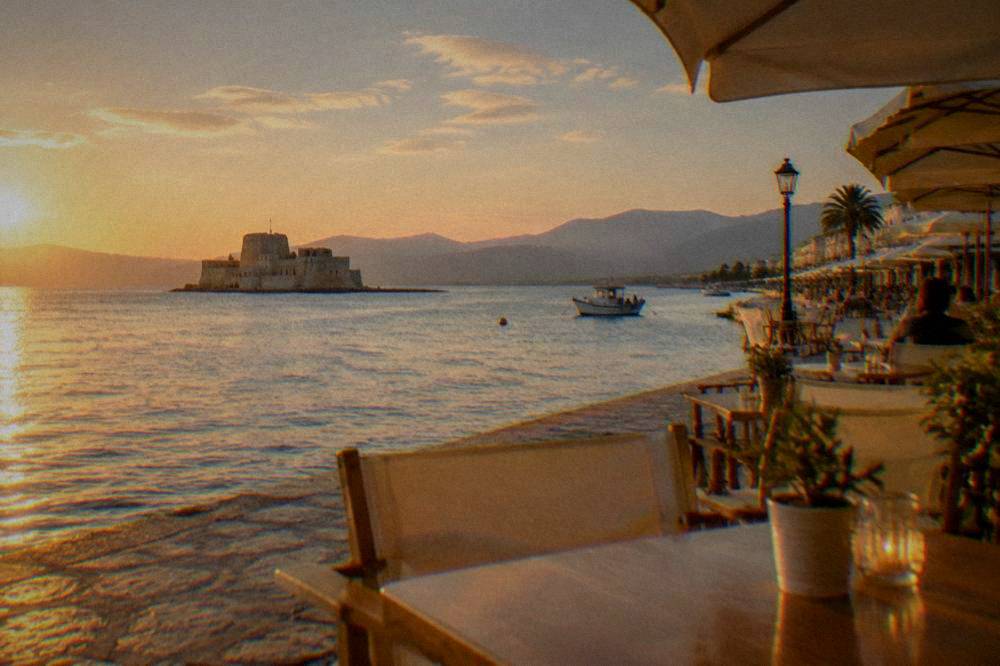
Below the town, the water changes the register. Bourtzi, the fortified islet begun in June 1471 to designs by Antonio Gambello, is open to visitors by boat, admission 7 euro full and 5 euro reduced, with the boat fare paid separately. The Land Gate and the lighthouse mark the eastern edge of the Old Town, and the paved Arvanitia promenade, about 1 km from the harbour end around to Arvanitia, is the standard waterside walk.
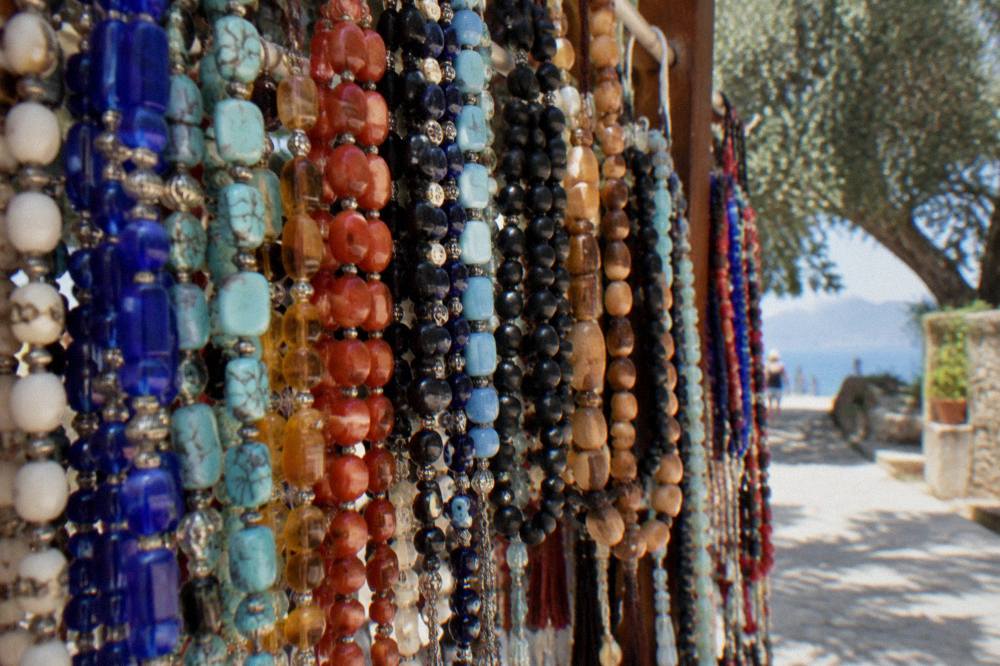
For shoppers, the bead shops of the Old Town are the natural follow-on from the museum, and the wider town is covered in the Nafplio shopping guide. Prices for worry beads are not covered by this site's sources, so treat shop prices as something to compare in person, string by string, which is in any case the traditional way to buy one.
When Is The Best Time Of Year To Visit The Komboloi Museum In Nafplio?
The best time to visit the Komboloi Museum in Nafplio is the shoulder season, April to early June and September to October, when the HNMS Argos station, 1980 to 2010, records mean daily highs of 21.3 C in April rising to 31.4 C in June and falling from 29.7 C in September to 24.7 C in October, with rain still light; midsummer works too, but the museum's value as a shaded midday stop rises with the heat.
The climate record, from the HNMS Argos station about 10 km north-west of town and inland, so the waterfront can differ slightly, gives the shape of the year. July and August post mean daily highs of 34.0 C and 33.7 C with 9.1 and 13.0 mm of rain respectively; November, at 82.5 mm across 9.4 rain days, and December, at 69.7 mm across 12.2 rain days, are the months when indoor stops earn their keep. A small museum is precisely the thing for a Nafplio winter or a rainy November day, and the town has enough of them to fill one.
| Month | Mean daily high (C) | Mean daily low (C) | Rain (mm) | Rain days |
|---|---|---|---|---|
| January | 14.6 | 3.0 | 66.5 | 10.3 |
| April | 21.3 | 6.7 | 33.7 | 8.6 |
| June | 31.4 | 14.0 | 8.9 | 3.0 |
| July | 34.0 | 16.7 | 9.1 | 2.1 |
| September | 29.7 | 14.2 | 20.3 | 5.0 |
| November | 19.2 | 7.7 | 82.5 | 9.4 |
Hours at the state sites stretch in summer, from 08:00 to 20:00 from 2 May 2026, which pushes fortress visits late and leaves the middle of the day open. That gap is the natural slot for museums, bead shops and a long lunch. In winter the state sites run 08:30 to 15:30, the Archaeological Museum keeps 08:30 to 15:30 with its Tuesday closure, and the first and third Sundays from November to March are free at the state sites, a useful coincidence for a low-season circuit.
Is The Komboloi Museum In Nafplio Worth Visiting?
The Komboloi Museum in Nafplio is worth visiting for travellers who enjoy small, focused collections and want to understand an object they will see everywhere in Greece, and it is skippable for those whose interest ends with antiquities. The case for it rests on three things: it decodes the komboloi, it sits inside a walkable museum quarter, and it costs little time; the case against is simply that a visitor indifferent to material culture will get more from a second hour at Mycenae or Epidaurus.
Its special advantage is thematic. Every other museum in town explains Nafplio's past; this one explains Nafplio's present, because the worry bead is not a relic. Walk out of the museum and the object is still in use on the nearest bench, which closes the loop in a way few city museums manage.
It also earns its place as a planning tool. A visitor who has learned to read bead materials in the museum's cases can shop the Old Town's bead sellers with an eye instead of a shrug, and can tell amber from resin, fruit wood from olive wood, and a worked begleri from a counted prayer string. That is a small piece of literacy, but it is the kind that makes a town legible.
For the wider plan, fold it into a one day in Nafplio or the second morning of two days in Nafplio, and let the bigger itineraries carry the fortress and the Argolid. The essentials page for the town as a whole is things to do in Nafplio. And if the bead strings inspire a slower look at the region's craft and produce, the cycling-and-tasting combination below covers the town and its flavours in one guided loop: Check availability for the cycling, sightseeing and tasting tour.
For a day given entirely to the Argolid's headliners, the private Mycenae-only option below is the quiet alternative, with the site's Lion Gate, grave circles and Treasury of Atreus covered by the same 20 euro full ticket that the state schedule sets for 2026.
Common Questions About The Komboloi Museum In Nafplio
Where is the Komboloi Museum in Nafplio?
The museum stands in the Old Town of Nafplio, a short walk from Syntagma Square and the Archaeological Museum. The Old Town is compact and pedestrian in character, so it is reached on foot from anywhere in the historic core, including from the harbour-front parking areas on Akti Miaouli.
How much does the Komboloi Museum in Nafplio cost?
The admission price is not covered by the sources this guide reports from. Check the current price on the ticket page before booking, or confirm locally on arrival; small private museums in Greece set their own tariffs and adjust them by season, and the state-site free days do not apply.
What are the opening hours of the Komboloi Museum in Nafplio?
For planning around it, the nearby Archaeological Museum of Nafplio keeps 08:30 to 15:30 all year and closes every Tuesday, and that Tuesday closure is the key scheduling fact for the museum quarter.
Is the Komboloi Museum in Nafplio suitable for children?
The museum is a single-object collection of small displays, which suits a short visit rather than a long one. Families pairing it with a Nafplio day usually treat it as one stop in a circuit that includes Syntagma Square, the harbour and the boat to Bourtzi, rather than as the day's main event.
Can you buy worry beads in Nafplio?
Yes, bead shops in the Old Town of Nafplio sell komboloi and begleri strings, and bead repair is a living trade in the town. Prices for worry beads are not covered by this site's sources, so compare in person; the museum's displays are a useful primer on materials before you buy.
How long should you spend at the Komboloi Museum in Nafplio?
The museum is a small specialist collection rather than a state institution, so it fits comfortably inside a morning or afternoon circuit of the Old Town alongside Syntagma Square, the Vouleftiko and the Archaeological Museum.
The Komboloi Museum will never compete with a fortress at sunset or with the Lion Gate at Mycenae, and it does not try to. It explains one object, thoroughly, in the town that has carried that object through coffee houses, parliaments and long summer evenings since the capital years that began in 1827. Confirm the hours locally, give it the gap between the Archaeological Museum and the climb to Palamidi, and the worry beads of Nafplio will make sense for the rest of your stay in the Argolid.