The Land Gate: Nafplio's Venetian Entrance
The Land Gate is the stone arch on the landward side of Nafplio's Old Town, the entrance travellers once used when they arrived by road rather than by sea. This page explains what it is, what the sources say about its Venetian background, and how to fit it into a walk through the town.
Short answer
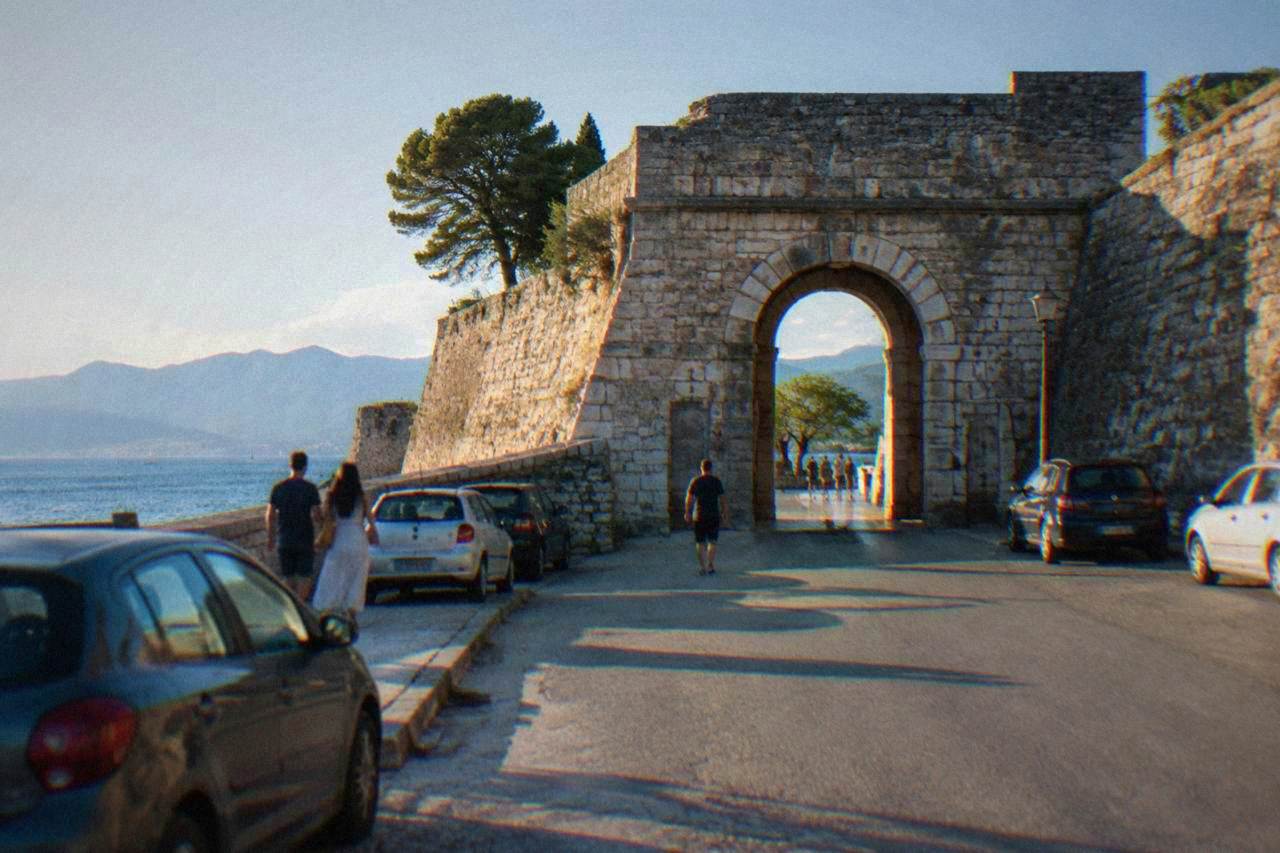
The Land Gate is the historic landward gateway into Nafplio's Old Town, sitting below Palamidi Fortress at the edge of the pedestrian centre. It is a free, always-visible monument you pass on foot, not a ticketed site, and it pairs naturally with Syntagma Square, the Arvanitia side of Akronafplia and the harbour.
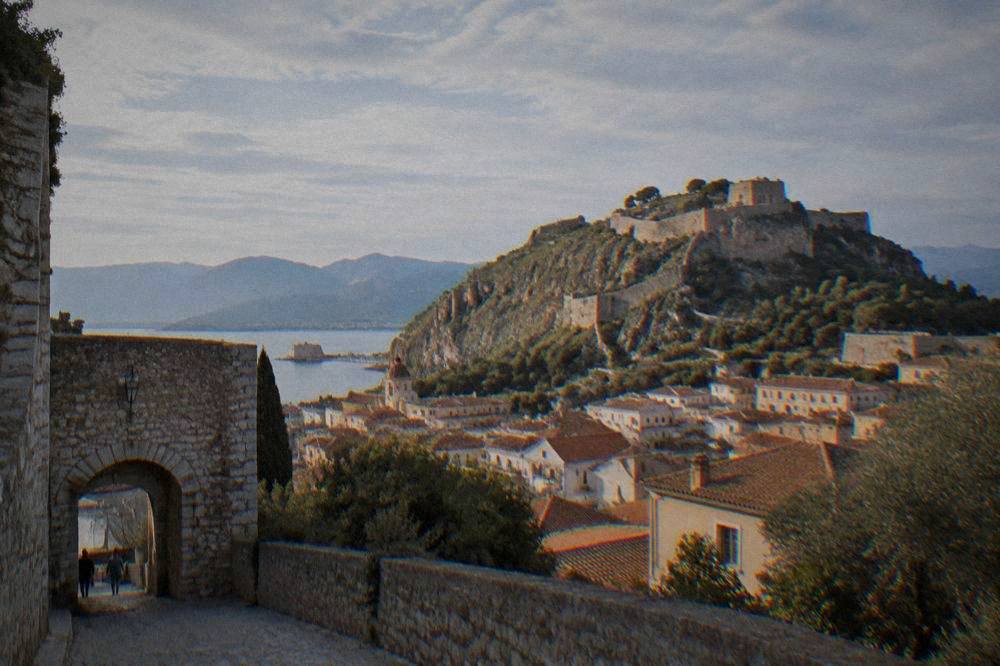
The Land Gate is the stone arch that once closed the landward side of Nafplio, the small coastal town of about 14,500 residents in the Argolid, on the Argolic Gulf in the north-east Peloponnese of mainland Greece. In the centuries when Nafplio was a walled port, anyone arriving on foot or on horseback from Argos, Mycenae or the inland villages came in through this gate, while the sea side of the town faced the harbour and the fortified islet of Bourtzi. Today the gate stands open at the eastern edge of the Old Town, a short walk below Palamidi Fortress, and it is one of those monuments you visit simply by walking past it slowly and reading the wall. This page from the Nafplio Travel Guide editorial desk gathers what the sources say about the gate, what stands around it, and how to place it in a day in Nafplio.
What Is The Land Gate In Nafplio?
The Land Gate is the historic landward entrance to Nafplio's Old Town, the arch in the town wall through which road traffic once passed from the Argolid plain into the walled port, and it stands today as an open, walk-through monument at the eastern edge of the pedestrian centre, below the rock of Akronafplia and the heights of Palamidi Fortress. No ticket is sold, no fence surrounds it, and no hours apply: the sources treat it as a piece of the town fabric rather than a staffed site.
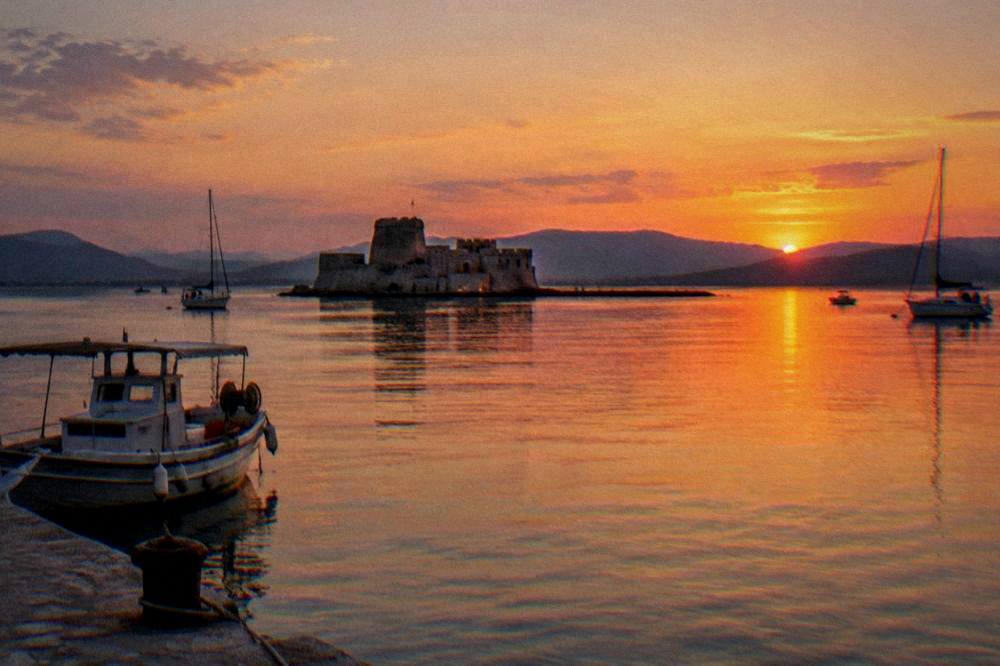
Nafplio's defensive logic explains why the gate exists at all. The town was protected on three sides by the sea and the harbour, where Bourtzi, the small fortified islet begun in June 1471 to designs by Antonio Gambello, covered the anchorage. The vulnerable side was the neck of land connecting the promontory to the Argolid plain, and that is where the wall and its land gate sat, with Palamidi Fortress rising 216 m above it after the Venetians fortified the height in the second Venetian period, from 1686 to 1715, to plans by the engineers Giaxich and Lasalle.
The gate now sits at a busy seam of the modern town. The Old Town inside it is largely closed to visitor parking, and the free public lots reported on the Akti Miaouli waterfront are a short walk away, so the area around the gate works as the natural parking-to-pedestrian transition. Confirm local parking signage on arrival, because the residents-only permit zones inside the walls are strictly enforced.
A sensible first loop takes in the gate, then the lanes toward Syntagma Square, the centre of the Old Town, and back along the harbour and waterfront. The whole circuit is flat, and the gate is a good orientation point: inside is the Old Town, behind you is the road to Argos and Mycenae, above you is Palamidi.
How Old Is The Land Gate In Nafplio?
The gate belongs to Nafplio's Venetian era of fortification: Venetian rule ran from 1389 to 1540 and again from 1686 to 1715, and the second of those periods, the one that also built Palamidi Fortress above the town, is the period the town's defensive walls and gates are associated with, before the Ottomans took the town in 1715 and the Greeks liberated it in 1822. The Ministry of Culture's monument pages for Nafplio's fortresses, not the gate itself, carry these dates, so treat the gate's dating as architectural context rather than a ticketed site's own record.
The timeline that frames the gate is worth knowing before you stand under it, because every power that held Nafplio had to hold this landward neck. The table below sets out the rule periods the sources support.
| Period | Rule | What the sources say |
|---|---|---|
| 1389 to 1540 | First Venetian period | Venetian rule from 1389, walls and harbour defences developed |
| 1540 to 1686 | First Ottoman period | Nafplio passes to Ottoman control |
| 1686 to 1715 | Second Venetian period | Major fortification, Palamidi built 1711 to 1714 to Giaxich and Lasalle plans |
| 1715 to 1822 | Second Ottoman period | Palamidi taken by the Ottomans in 1715 |
| 1822 | Greek capture | Palamidi liberated by the Greeks, Staikos Staikopoulos leading the assault |
| 1827 to 1834 | Capital of Greece | Nafplio the capital until the move to Athens in 1834 |
After 1822 the gate's military job faded fast. Nafplio became the capital of Greece in 1827, Kapodistrias arrived in January 1828, and the town filled with government buildings, the Vouleftiko on Syntagma Square hosting the first Greek parliament sessions from 1825, and Government House from 1829. A capital needs streets more than it needs a locked landward door, and the walls gradually became the backdrop of a civilian town rather than its defence. The history of Nafplio is unusually well documented for a town of this size, and the gate is one of the places where that history is physically standing.
Be wary of one detail you may meet elsewhere: older pages sometimes blur the Venetian and Ottoman phases together. The clean version, per the monument authorities, is the one in the table above.
A guided walk is the efficient way to absorb this, because the gate, the walls and the squares tell one connected story. The City Walking Tour of Nafplio route family covers the Old Town landmarks, and the featured option for this page can be checked here: Check availability.
What Can You See Around The Land Gate In Nafplio?
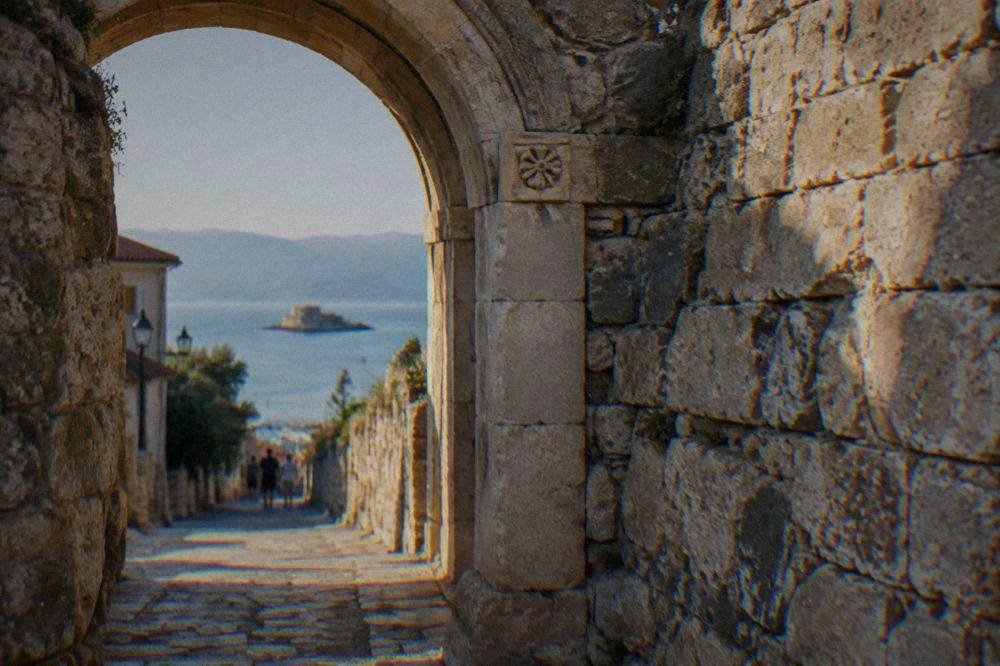
Within a few minutes' walk of the Land Gate you reach Syntagma Square and the Archaeological Museum, the start of the Arvanitia path below Akronafplia, the harbour front with Bourtzi opposite, and the base of the stairway to Palamidi Fortress, so the gate works as a hinge between the Old Town's history and its waterfront.
The table below lists what stands near the gate, with the 2026 admission figures the Ministry of Culture publishes, where it publishes them. The Land Gate itself, like the wall and the Five Brothers Bastion, has no ticket, no listed hours and no staffed desk; the prices below are for the ticketed neighbours only.
| Sight | Position relative to the gate | 2026 admission |
|---|---|---|
| Land Gate itself | The gate | Free, open passage |
| Syntagma Square and the Vouleftiko | Inside the walls, westward walk | Free |
| Archaeological Museum of Nafplio | On Syntagma Square | 10 euro full, 5 euro reduced, closed Tuesdays |
| Palamidi Fortress | Above, reached by stairway or road | 20 euro full, 10 euro reduced off-season |
| Bourtzi | In the harbour, by boat | 7 euro full, 5 euro reduced, boat fee applies |
| Akronafplia and the Arvanitia path | South-west along the rock | No published admission |
Two of those neighbours deserve a word of caution. Palamidi's stairway is usually counted at about 850 steps, not the legendary 999 that circulates on older pages, and the fortress ticket is 20 euro full and 10 euro reduced in 2026, with the reduced ticket sold only from 1 October to 31 May. Bourtzi is open, reached by boat for a fee, and its hours run seasonally; the Bourtzi guide carries the full 2026 hour table.
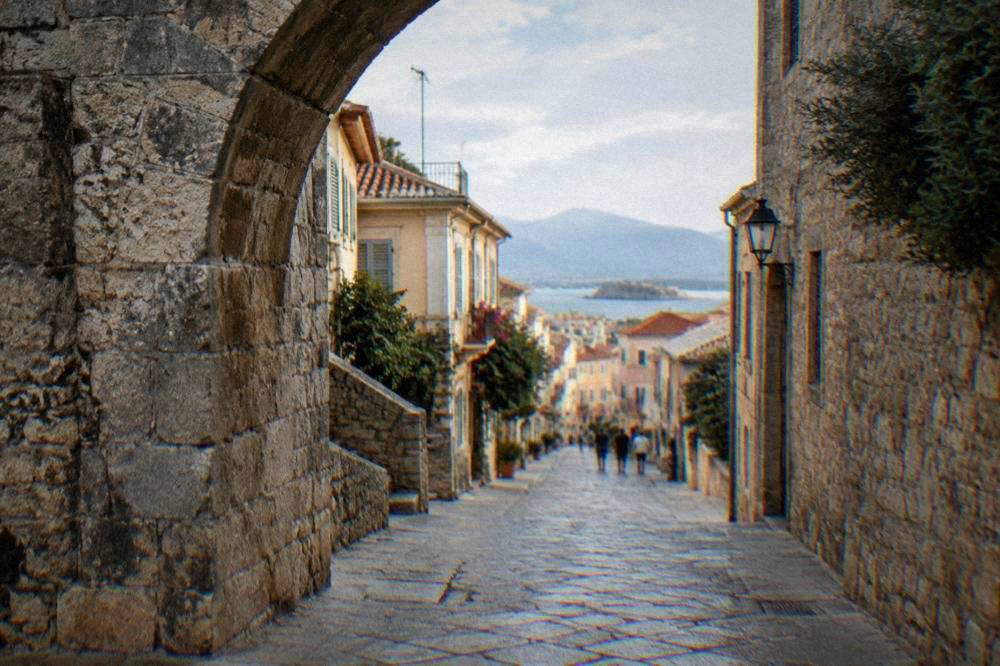
The Old Town lanes between the gate and the square are the part of Nafplio that rewards aimlessness: alley widths set by Venetian and Ottoman building practice, balconies over the street, small squares appearing without warning. Nothing here needs a ticket.
For travellers who prefer a structured version of the same ground, a private option exists too.
Is The Land Gate In Nafplio Free To Visit?
Yes, the Land Gate is free to see and always accessible: it is an open arch in a standing town wall, with no ticket desk, no published hours and no closure dates, and it belongs to the same class of free Nafplio monuments as the walls, the Five Brothers Bastion and the streets of the Old Town themselves. The only costs near it belong to the ticketed neighbours, Palamidi Fortress, Bourtzi and the museums.
Free admission in Nafplio is not only about unstaffed monuments. The Greek state opens its ticketed sites free on fixed days each year, and the 2026 list, confirmed across the Ministry of Culture's monument pages, is worth planning around if your dates allow.
| Free-admission day | What is free |
|---|---|
| 6 March | All state sites, including Palamidi, Bourtzi, Mycenae and Epidaurus |
| 18 April | All state sites |
| 18 May | All state sites |
| Last weekend of September | All state sites, European Heritage Days |
| First and third Sundays, 1 November to 31 March | All state sites |
| 28 October | All state sites |
Note what that table does for the gate's neighbourhood: on those days, Palamidi, Bourtzi and the Archaeological Museum all join the gate in the free column, and a whole walking day in Nafplio costs nothing but shoe leather and lunch. The Archaeological Museum, normally 10 euro full and 5 euro reduced, is closed every Tuesday regardless, so a free Sunday beats a closed Tuesday.
State sites also close on fixed holidays, 1 January, 25 March, 1 May, Easter Sunday and 25 and 26 December, which matters if your walk past the gate is meant to continue into a fortress or museum the same day.
How Do You Get To The Land Gate In Nafplio?
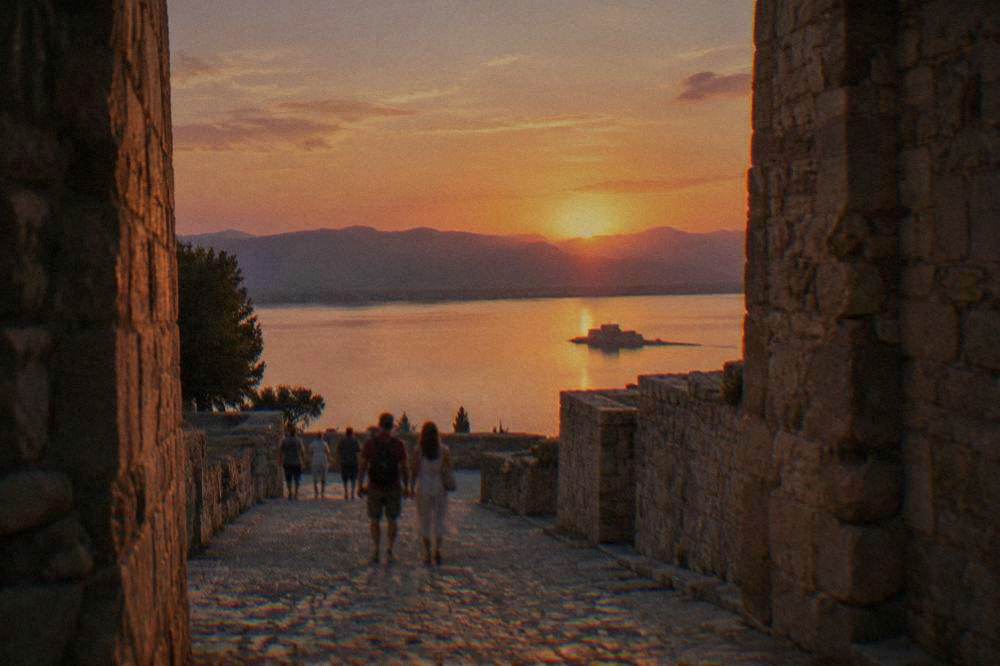
The Land Gate sits at the eastern edge of the Old Town, a level walk of a few minutes from Syntagma Square and from the Akti Miaouli waterfront lots reported as the main free visitor parking, and there is no train to Nafplio in 2026, so you arrive by KTEL bus, by tour transfer or by car, and you reach the gate on foot. The gate's position, between the parking seam and the pedestrian centre, makes it hard to miss rather than hard to find.
Driving in, remember the wall rule: the Old Town inside the gate is largely residents-only for parking, with permit zones enforced, and the free lots along the waterfront are the reported fallback, filling early in peak season.
Arriving by bus, the KTEL Argolida services reach Nafplio from Athens, with the reported one-way fare about 15.70 euro from the Kifissos terminal and a journey of roughly two hours and ten minutes; there is no direct airport bus, so airport arrivals take the X93 line to Kifissos first. Confirm times on the operator's site before travelling, because departures shift seasonally.
Local buses fan out from Nafplio to the Argolid's sights: reported fares are 2.20 euro to Tolo, Argos or Tiryns and 3.50 euro to Mycenae or Epidaurus, with the Mycenae and Epidaurus services reported as sparse, so check the timetable rather than assuming a frequent service. Everything inside the town, the gate included, is walkable.
What Else Is Near The Land Gate? Day-Trip Drive Times From Nafplio
The Land Gate is a morning-or-evening sight inside Nafplio, and the drive times from Syntagma Square make it a natural base for the Argolid: Tiryns about 9 minutes, Argos about 18, Mycenae about 32, the Epidaurus theatre about 41 and the Corinth Canal about 72 minutes, all computed over standard routing in free-flow conditions. The gate faces exactly the road network those times describe, since it was built for traffic coming from that inland plain.
| Destination | Drive time from Syntagma Square |
|---|---|
| Tiryns | About 9 minutes |
| Argos | About 18 minutes |
| Tolo | About 17 minutes |
| Lerna | About 20 minutes |
| Mycenae | About 32 minutes |
| Epidaurus theatre | About 41 minutes |
| Palaia Epidavros | About 47 minutes |
| Ancient Nemea | About 46 minutes |
| Ancient Corinth | About 61 minutes |
| Corinth Canal | About 72 minutes |
Two of those destinations, Mycenae with Tiryns and Epidaurus on its own, are UNESCO World Heritage inscriptions, listed in 1999 and 1988 respectively, and both big sites cost 20 euro full and 10 euro reduced in 2026, the same pricing structure as Palamidi. A combined Nafplio-plus-Argolid week therefore splits cleanly: gate, squares and fortresses on foot in town, and the archaeology out along these roads. The Mycenae day-trip guide covers the inland side; Argos, whose ancient agora and theatre share one 10 euro ticket, is the nearest and easiest add-on.
If you would rather not drive, Epidaurus entry can be arranged ahead.
What Is The Best Walking Route Past The Land Gate In Nafplio?
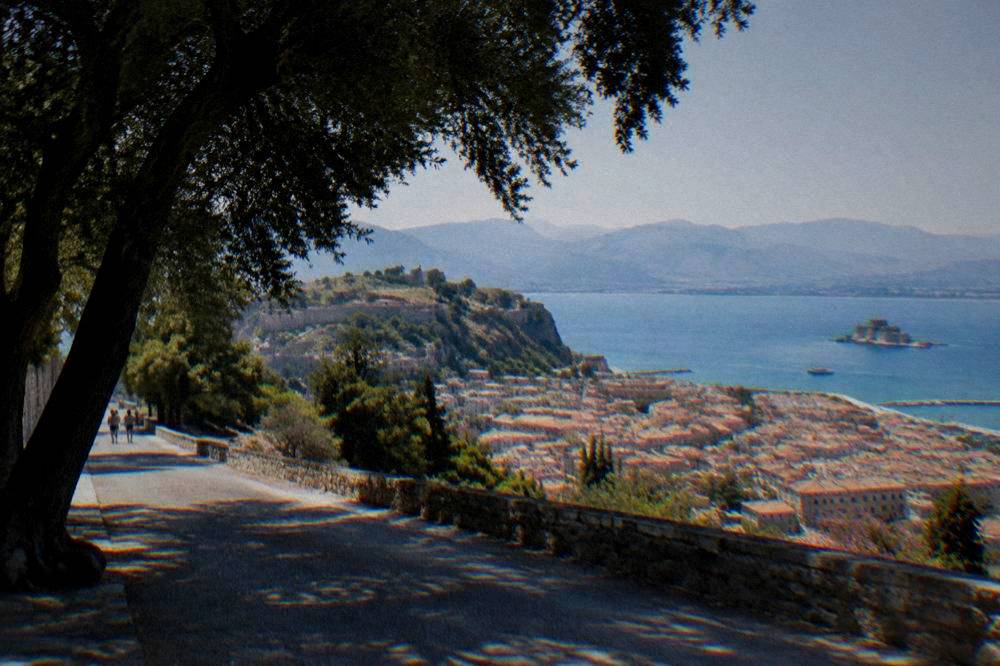
An efficient loop starts at the Akti Miaouli waterfront, passes the Land Gate into the Old Town, runs west to Syntagma Square and the Archaeological Museum, continues to the harbour front facing Bourtzi, and returns below the walls, with the optional extension up to Palamidi Fortress on the stairway of about 850 steps rather than the legendary 999. The whole flat section fits comfortably in a morning; the fortress climb is the part that needs planning and water.
Palamidi's hours reward that planning, because they change through the year and close early in winter. The 2026 table from the Ministry of Culture's monument page:
| Period (2026) | Palamidi hours |
|---|---|
| Winter season | 08:30 to 15:30 |
| April | 08:00 to 19:00 |
| From 2 May | 08:00 to 20:00 |
| 1 to 15 September | 08:00 to 19:30 |
| 16 to 30 September | 08:00 to 19:00 |
| 1 to 15 October | 08:00 to 18:30 |
| 16 to 31 October | 08:00 to 18:00 |
The gate itself asks nothing of you but attention. Morning light falls on the inland side; late afternoon suits the view back toward the wall from outside. Both work, and neither needs a ticket.
Nafplio's climate, from the HNMS Argos station record for 1980 to 2010, an inland station about 10 km north-west of the town, suggests when that walk is comfortable: mean daily highs run 14.6 C in January, 26.5 C in May and 34.0 C in July, with rainfall at its monthly low of 8.9 mm in June against 82.5 mm in November. Late spring and early autumn give the most walking-friendly combination of warmth and rain-free days on those averages.
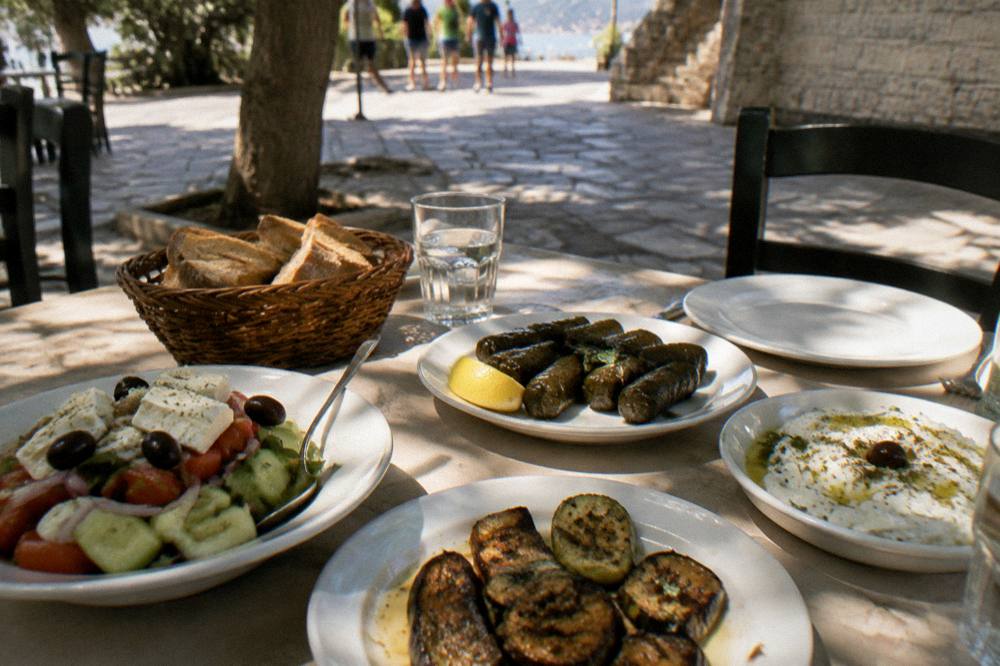
Food stops belong on the same walk, and Nafplio's food traditions are easiest to approach with someone who knows the lanes.
Practical Tips For Visiting The Land Gate In Nafplio
Visit the Land Gate early or late in the day, walk through it rather than driving past it, pair it with the free sights inside the walls, and use the free-admission days if you want the ticketed neighbours free too; the gate needs no booking, no ticket and no more than the few unhurried minutes it takes to read the wall and look up at Palamidi. Everything else in this section is about the surroundings.
A few specifics help. Park on the waterfront rather than testing the residents-only zones inside the walls. Time the fortress for its hours, not its legend: the reduced 10 euro Palamidi ticket exists only from October to May. Do not build a day around the Little Theatre of Epidaurus, since the Ministry lists it closed to day visits, and do not plan a ferry from Nafplio to Hydra or Spetses, because no scheduled public ferry runs; older guides still say so, which is out of date, and the islands are reached by seasonal day cruise or from another port. The emergency number in Greece is 112, and the General Hospital of Nafplio switchboard is +30 2752 361100.
For ideas beyond this one arch, the site's overview of things to do in Nafplio collects the whole town, and the Palamidi Fortress guide covers the climb above the gate in full.
Common Questions About The Land Gate In Nafplio
Is the Land Gate in Nafplio free?
Yes. The gate is an open monument in a standing town wall, with no ticket, no listed hours and no closure dates. The ticketed neighbours are Palamidi Fortress at 20 euro full and 10 euro reduced in 2026, Bourtzi at 7 and 5 euro, and the Archaeological Museum of Nafplio at 10 and 5 euro.
Can you walk through the Land Gate in Nafplio?
Yes, the gate is an open passage on the walking route between the waterfront parking area and the Old Town, and the lanes from it run level toward Syntagma Square.
How old is the Land Gate in Nafplio?
The gate belongs to the town's Venetian fortification era. Venetian rule ran from 1389 to 1540 and again from 1686 to 1715, and the second period, which also built Palamidi Fortress from 1711 to 1714, is the one associated with the walls and gates as they stand.
Where is the Land Gate in Nafplio?
At the eastern, landward edge of the Old Town, below Palamidi Fortress, a few minutes' walk from Syntagma Square and from the Akti Miaouli waterfront lots reported as the main free visitor parking.
Is there parking at the Land Gate in Nafplio?
The Old Town inside the walls is largely residents-only for parking, with enforced permit zones, and the reported free visitor option is the Akti Miaouli waterfront lots, which fill early in peak season.
What is near the Land Gate in Nafplio?
Syntagma Square, the Archaeological Museum of Nafplio, the harbour front with Bourtzi opposite, the Arvanitia path below Akronafplia, and the stairway up to Palamidi Fortress, all within a short walk of the gate.
The Land Gate earns its place on a Nafplio itinerary not by demanding time but by explaining the town: it is the fixed point where the road from the Argolid plain met the walled port that became Greece's first capital, from 1827 to 1834, and every walk from the waterfront into the Old Town still passes through its shadow. Walk through it once with the timeline in mind, then let the squares, the fortress above and the harbour beyond fill in the rest.