Mycenae: Lion Gate, Shaft Graves And Agamemnon's Citadel
Mycenae sits about 32 minutes by road from Syntagma Square in Nafplio, and its citadel, museum and Treasury of Atreus are all covered by one 20 euro ticket in 2026. This page sets out the site's hours, prices, transport options and pairing strategies in plain terms.
Short answer
Mycenae is a UNESCO World Heritage citadel about 25 km and 32 minutes by road from Nafplio. A 2026 ticket costs 20 euro full and 10 euro reduced (reduced only 1 October to 31 May) and covers the site, the museum and the Treasury of Atreus. Summer opening is 08:00 to 20:00 from 2 May.
Mycenae is the most consequential archaeological day trip from Nafplio, the small coastal town in the Argolid on the Peloponnese of mainland Greece that served as the country's capital from 1827 to 1834. The citadel stands inland on a low hill about 25 km and 32 minutes by road from Syntagma Square, and together with Tiryns, 9 minutes further down the plain, it forms the UNESCO World Heritage inscription "Archaeological Sites of Mycenae and Tiryns", added in 1999. The Ministry of Culture's visiting page lists a 2026 ticket of 20 euro full and 10 euro reduced, and that one ticket covers the citadel, the site museum and the Treasury of Atreus. This guide sets out what those figures buy you, how to get there from Nafplio with or without a car, and how to pair the site with Epidaurus or the other Argolid stops.
What Is Mycenae And Why Is It A UNESCO World Heritage Site?
Mycenae is a fortified hill citadel in the Argolid, about 32 minutes by road from Nafplio, and it gives its name to the whole Mycenaean civilisation of Late Bronze Age Greece. Together with Tiryns it was inscribed on the UNESCO World Heritage List in 1999, recognised for its monumental architecture and its role in the political and cultural world described in the Homeric epics. The site is managed by the Greek Ministry of Culture.
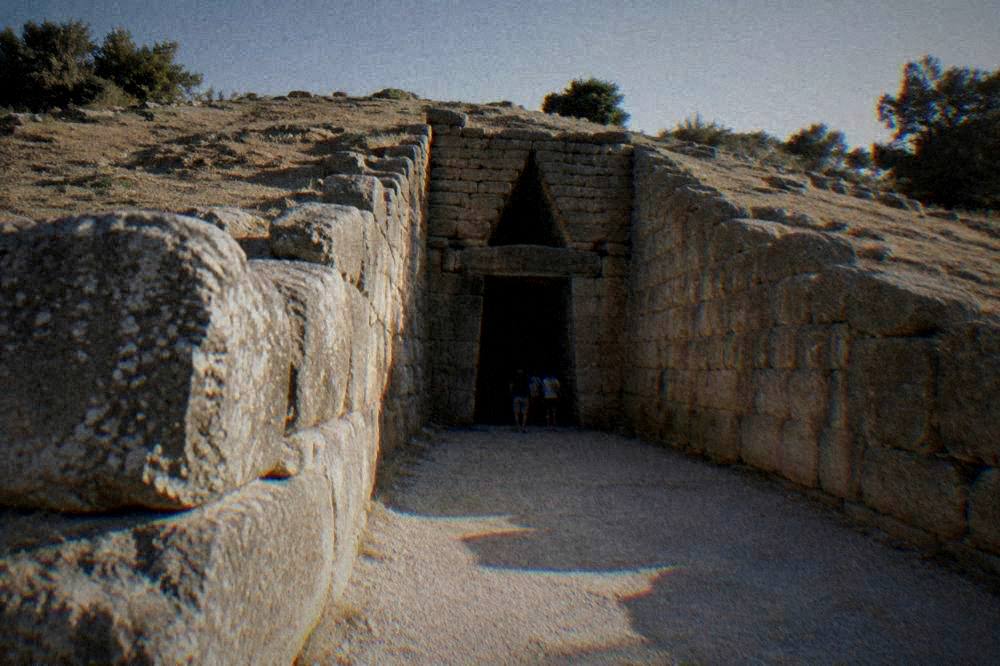
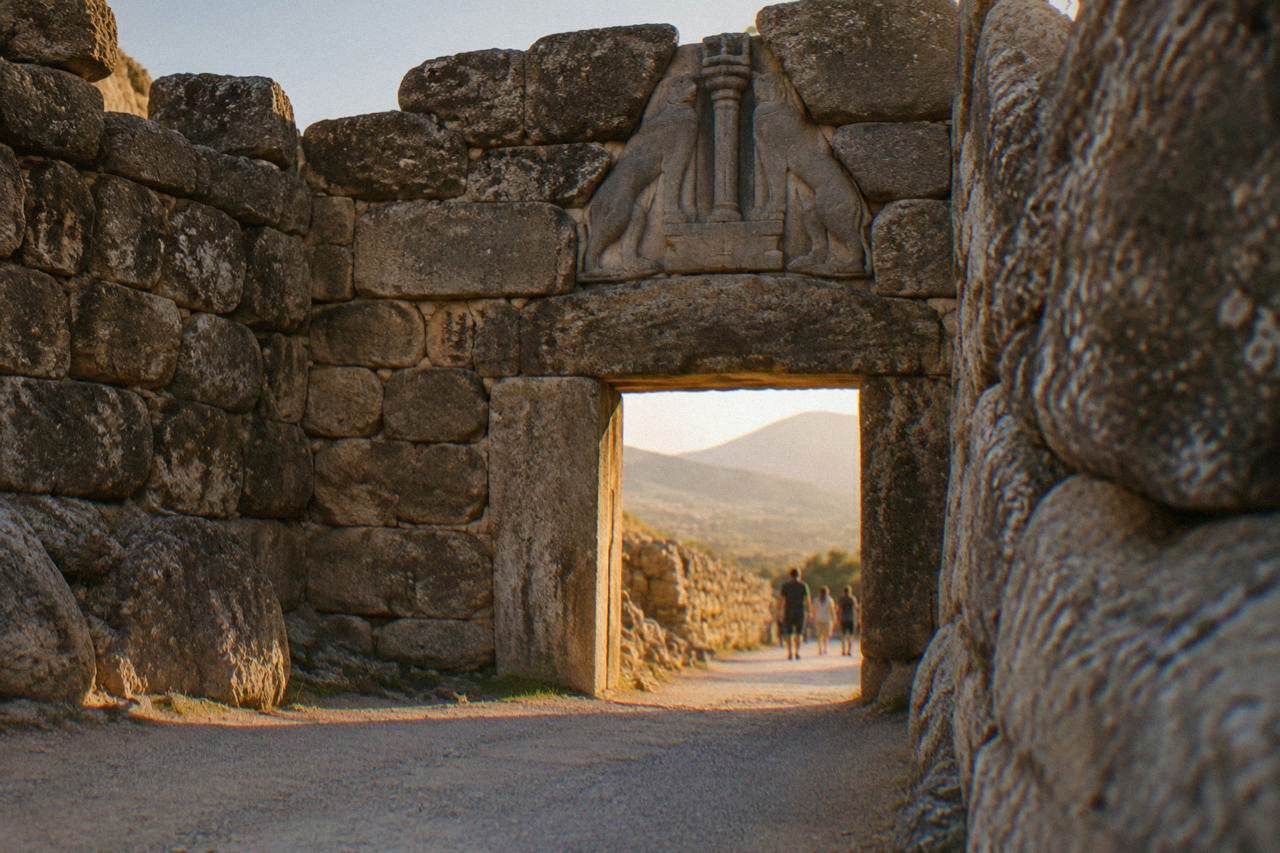
The name travels far beyond archaeology. The citadel is permanently attached to Agamemnon, the Homeric commander, and to the cycle of stories that surrounds the house of Atreus, even though the guide pages stop short of connecting any single artefact to any named king. What the stones themselves show is a heavily fortified acropolis with a main entrance, the Lion Gate, capped by a relief of two facing lions, plus burial circles, chamber tombs cut into the hillside, and the great beehive tomb known as the Treasury of Atreus, which stands a short walk from the citadel walls and is included on the same ticket.
The modern visitor experience divides into three parts: the citadel circuit itself, which involves a steady uphill walk on rocky paths; the on-site archaeological museum, which holds finds from the excavations; and the Treasury of Atreus outside the walls. The Ministry of Culture's visiting page for Mycenae states that the 20 euro full ticket and 10 euro reduced ticket cover all three, so nothing extra is payable at the museum door.
For background on how the surrounding region fits into Greek history after independence, the history of Nafplio explains why the first capital of the modern Greek state grew up in this plain, and the Argolid road trip itinerary shows how Mycenae slots into a wider loop with Epidaurus, Tiryns and Nemea.
How Much Are Mycenae Tickets And What Are The 2026 Opening Hours?
A Mycenae ticket costs 20 euro full and 10 euro reduced in 2026, per the Ministry of Culture's own visiting page, and the reduced ticket is sold only from 1 October to 31 May. The same ticket includes the citadel, the site museum and the Treasury of Atreus. From 2 May 2026 the site opens 08:00 to 20:00, with shorter hours in September, October and the winter season.
The detailed 2026 schedule follows the standard state-site calendar. Winter hours are 08:30 to 15:30. April runs 08:00 to 19:00. From 2 May the site stays open to 20:00. In September the closing time steps down twice, first to 19:30 (1 to 15 September), then to 19:00 (16 to 30 September). October steps down again to 18:30 and then 18:00. The site is closed on 1 January, 25 March, 1 May, Easter Sunday, and 25 and 26 December, and opens 12:00 to 17:00 on Good Friday.
| Period (2026) | Opening hours |
|---|---|
| Winter season | 08:30 to 15:30 |
| April | 08:00 to 19:00 |
| From 2 May | 08:00 to 20:00 |
| 1 to 15 September | 08:00 to 19:30 |
| 16 to 30 September | 08:00 to 19:00 |
| 1 to 15 October | 08:00 to 18:30 |
| 16 to 31 October | 08:00 to 18:00 |
The older 12 euro figures that still circulate on many pages are out of date: Mycenae, like Palamidi and Epidaurus, is priced at 20 euro full and 10 euro reduced in 2026. Free admission applies at Greek state sites on 6 March, 18 April, 18 May, the last weekend of September, the first and third Sunday of each month from November to March, and 28 October. Those free days apply to Mycenae as well.
| Free-admission day | Notes |
|---|---|
| 6 March | Melina Mercouri Day, all state sites |
| 18 April | International Day for Monuments and Sites |
| 18 May | International Museums Day |
| Last weekend of September | European Heritage Days |
| 1st and 3rd Sundays, November to March | Winter free Sundays |
| 28 October | National holiday free admission |
How Do You Get From Nafplio To Mycenae Without A Car?
Mycenae is about 25 km and 32 minutes by road from Syntagma Square in Nafplio, computed over free-flow routing. By public transport, the reported KTEL Argolida fare from Nafplio is 3.50 euro one way, but direct services are sparse and often run via Fichti, so the bus demands careful timetable checking. A guided tour, a taxi quote agreed in advance or a rental car are the alternatives.
The drive is the straightforward option: north out of the Argolic Gulf plain on the road toward Argos and Fichti. Free-flow routing puts the citadel car park about 32 minutes from central Nafplio, and the return leg is the same road. There is no train anywhere in this part of the Peloponnese, and no rail-and-bus combination exists, so the choice is car, bus, tour or private transfer.
The bus figure comes with caveats. The 3.50 euro one-way fare to Mycenae is reported from local KTEL Argolida schedule coverage, and the same reporting notes that direct departures are limited, with some journeys requiring a change or a via-Fichti routing. Confirm the current timetable on the operator's own pages before committing a morning to it. The same reported fare sheet lists 3.50 euro to Epidaurus, 2.20 euro to Tolo and 2.20 euro to Argos and Tiryns, useful if you are planning a car-free week based in Nafplio.
For travellers who would rather not manage timetables in Greek, a booked day tour solves the transport question entirely, and the pairing with Epidaurus is the standard itinerary. The Mycenae and Epidaurus tours roundup compares the main options departing from Nafplio.
What Do You Actually See Inside The Mycenae Citadel?
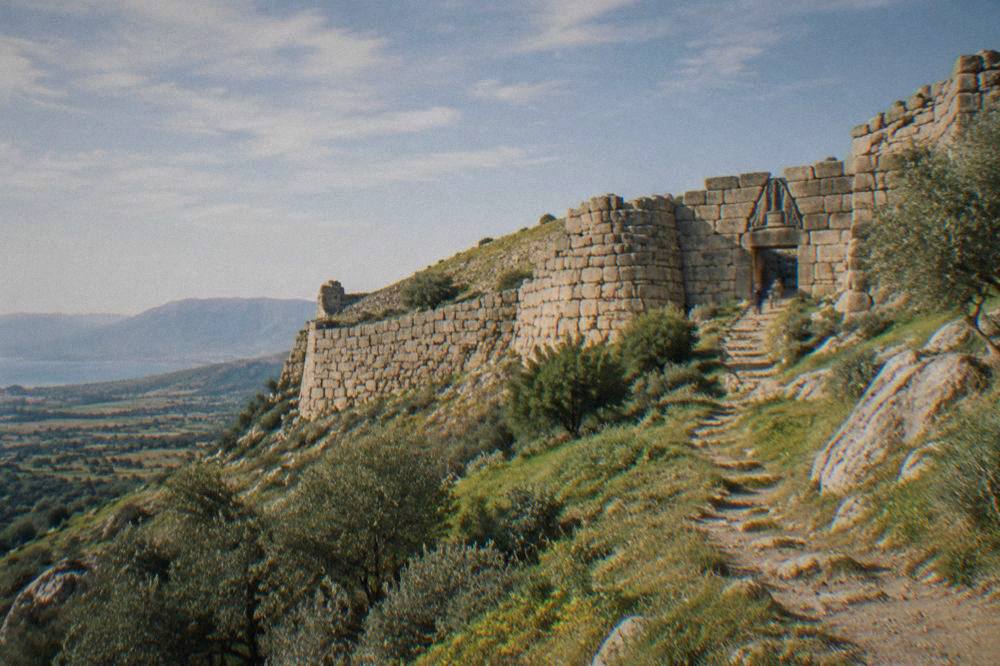
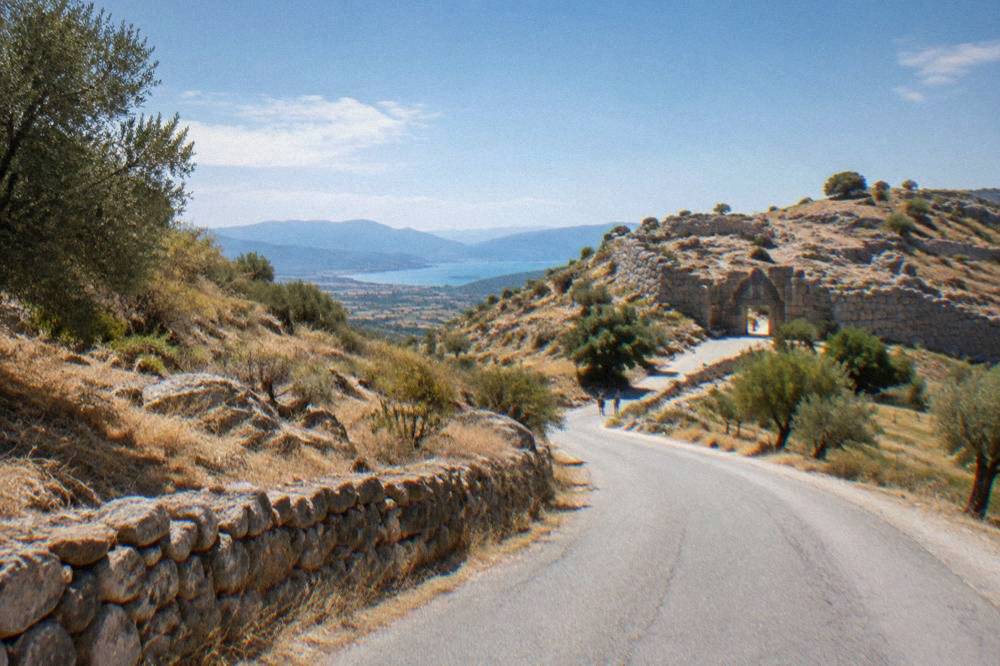
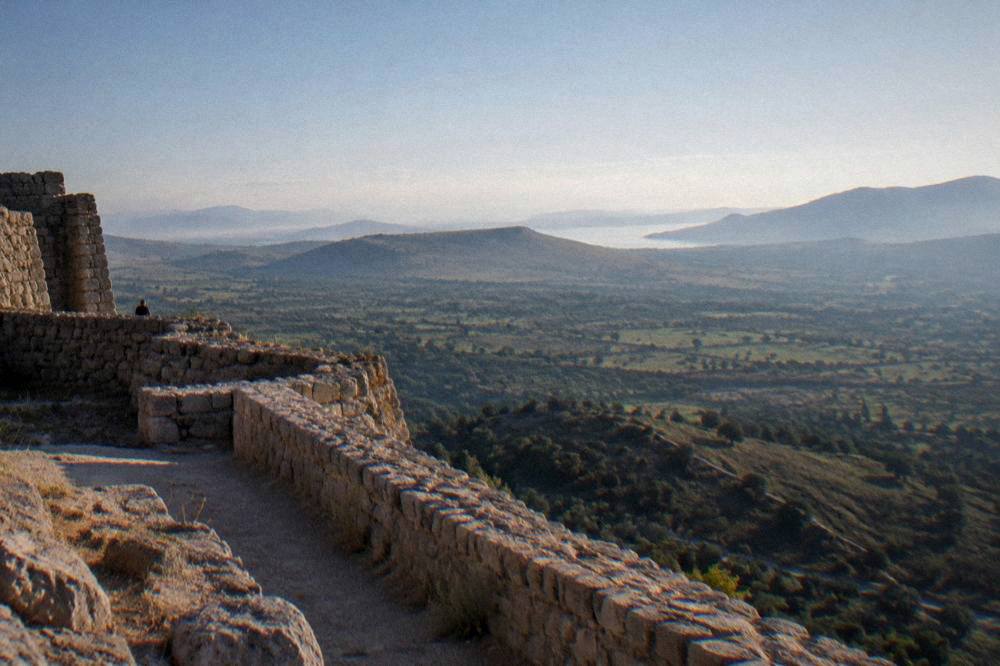
The citadel circuit takes in the Lion Gate, the fortified walls, the palace area at the top of the hill, and views across the Argolid plain, and the same ticket adds the on-site museum and the Treasury of Atreus beehive tomb outside the walls. The Ministry of Culture's page confirms all three components on one 2026 admission. The walk is uphill on uneven stone, so sturdy shoes matter more than at Epidaurus.
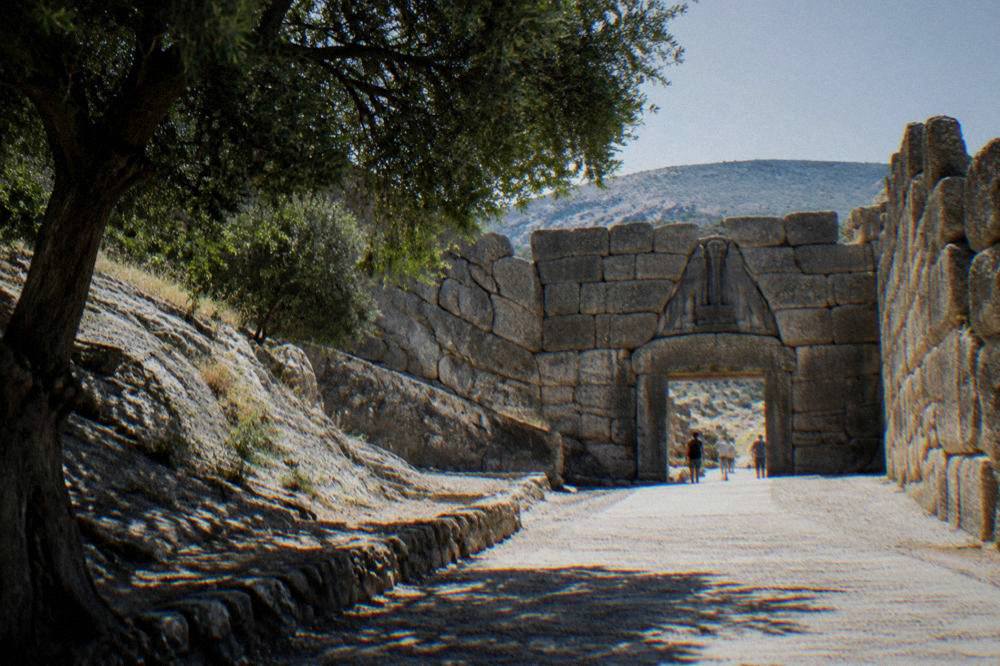
The Lion Gate is the moment the site announces itself: a massive doorway with a relieved lintel stone carrying two facing lions, the emblem reproduced on every poster of Mycenae. Passing through it starts the climb through the gate passage and up through the remains of grave circles and building foundations toward the palace terrace. The site's managers do not publish an official circuit duration, so plan by geography instead: citadel first, museum second, Treasury of Atreus third, since the museum sits near the entrance and the Treasury is a separate stop down the road.
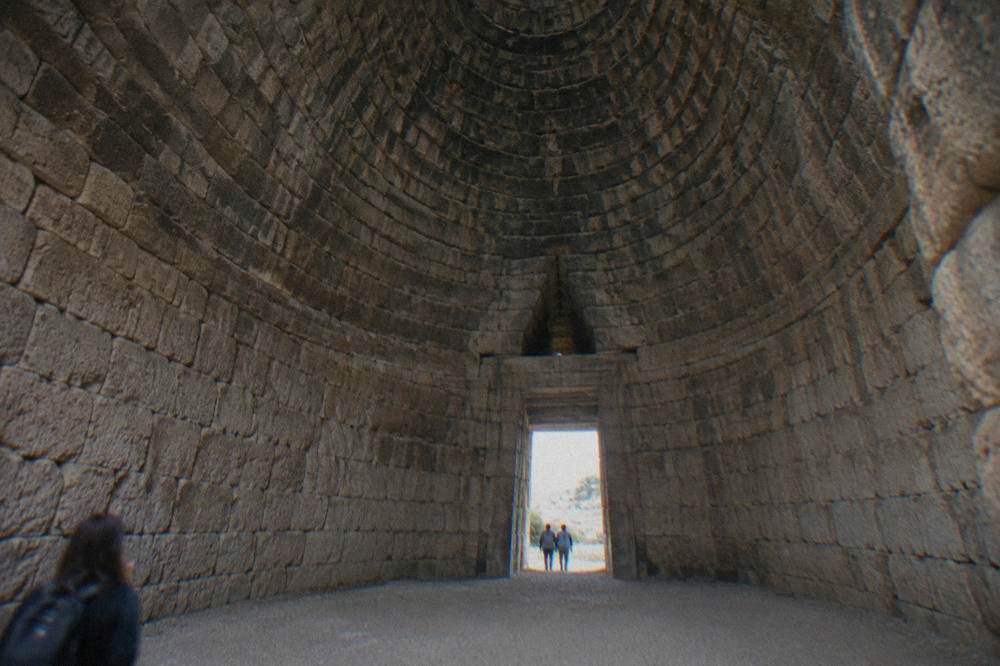
The Treasury of Atreus is the largest of the chamber tombs and the one included on the standard ticket. It is a corbelled stone dome entered through a long passage, and the Ministry's listing treats it as an equal component of the visit rather than an optional extra. The museum holds the excavation finds from the site and gives context that the bare ruins cannot.
Practical notes worth repeating: there is very little shade on the citadel slope, summer afternoons are hot by any measure (the HNMS Argos station, 1980 to 2010, records July mean daily highs of 34.0 C at the inland station about 10 km north-west of Nafplio), and water should be carried from Nafplio. An early start aligns with the 08:00 opening and avoids the midday heat on exposed stone.
Mycenae Or Epidaurus: Which Site Should You Prioritise From Nafplio?
Both sites cost 20 euro full and 10 euro reduced in 2026 and both are UNESCO inscribed (Mycenae with Tiryns in 1999, Epidaurus in 1988), so the choice comes down to what you want from the day: Mycenae is the atmospheric hilltop citadel with the museum and the beehive tomb, while Epidaurus is the monumental theatre with its sanctuary and museum on one flat ticket. Drive time separates them by about 41 minutes from Nafplio to the theatre versus 32 to Mycenae.
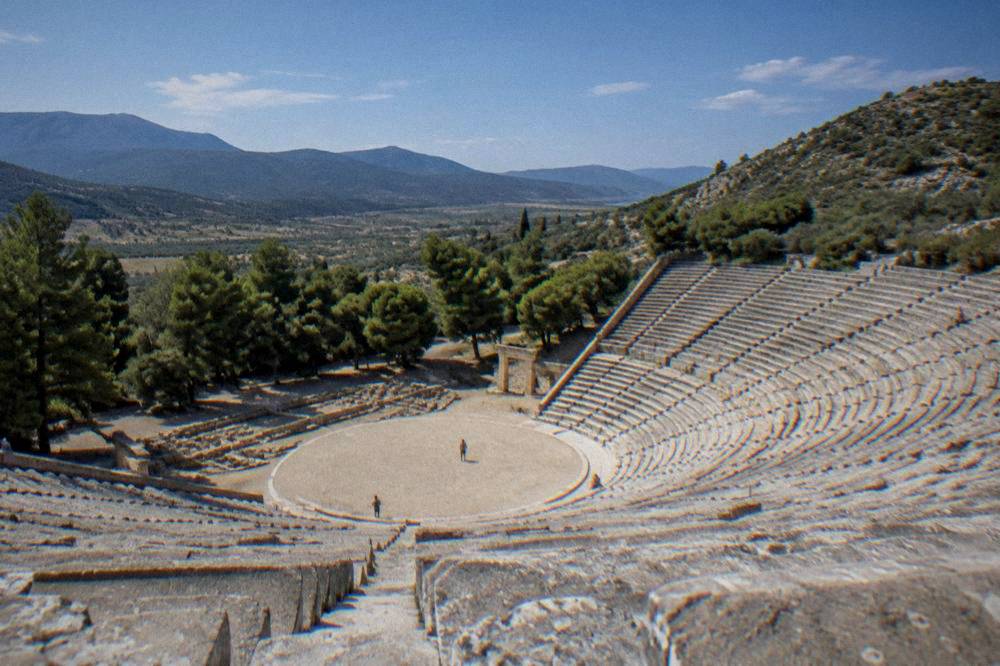
Editorially, Mycenae rewards visitors who come for the setting and the story: the walls, the gate, the tombs and the panorama over the plain justify the climb and half a day. Epidaurus rewards visitors who come for a single overwhelming structure, the theatre, plus an easy flat circuit around the sanctuary of Asklepios. If ancient drama matters to you, Epidaurus wins; if fortified citadels and burial architecture matter more, Mycenae does. Families with small children often find Epidaurus's flat site easier than Mycenae's rocky ascent, a judgement based on the terrain alone. The full index of guides sits on Nafplio Travel Guide.
The fuller comparison, including the free-events angle and the festival question, sits in the site's dedicated answer page: which is better, Mycenae or Epidaurus. The one-day pairing question is covered in the section below.
Can You Visit Mycenae And Epidaurus In One Day From Nafplio?
Yes, and it is the standard pairing: Mycenae is about 32 minutes by road from Syntagma Square and the Epidaurus theatre about 41 minutes, with roughly an hour of road between the two sites, and from 2 May 2026 both keep 08:00 to 20:00 summer hours. Two 20 euro tickets are needed, since no combined Mycenae and Epidaurus ticket is listed. A car, a private driver or a booked tour makes the day comfortable.
The arithmetic works in every season that matters. Opening at 08:00 at Mycenae, spending the morning on the citadel, museum and Treasury of Atreus, driving to Epidaurus after lunch, and touring the theatre and sanctuary in the afternoon fits easily inside the summer closing times. In winter, when both sites close in mid-afternoon (Mycenae 15:30, Epidaurus 17:00), the same pairing compresses into a tight but feasible morning-first plan, and the Epidaurus winter schedule shifts to 08:00 to 18:00 from 1 March 2026.
| Journey | Approximate drive time from Syntagma Square | Approximate distance |
|---|---|---|
| Nafplio to Mycenae | 32 minutes | 25 km |
| Nafplio to Tiryns | 9 minutes | 5 km |
| Nafplio to Epidaurus theatre | 41 minutes | 28 km |
| Nafplio to Argos | 18 minutes | 14.5 km |
| Nafplio to Ancient Nemea | 46 minutes | 38 km |
One planning note: Tiryns sits 9 minutes from Nafplio on the road toward Mycenae, so the plain's second UNESCO component adds itself almost for free to a driving day, though no Tiryns admission price is published on the Ministry's pages, so check the current price on the ticket page before booking your day around it. The dedicated answer on visiting Mycenae and Epidaurus in one day works through the timing in detail.
What Else Is Within Reach Of Mycenae On The Same Day?
Tiryns is the natural add-on at 9 minutes from Nafplio on the Mycenae road, Argos sits 18 minutes out with a 10 euro combined agora-and-theatre ticket, and Ancient Nemea is 46 minutes away, while Ancient Corinth and the Corinth Canal push the loop to 61 and 72 minutes respectively.
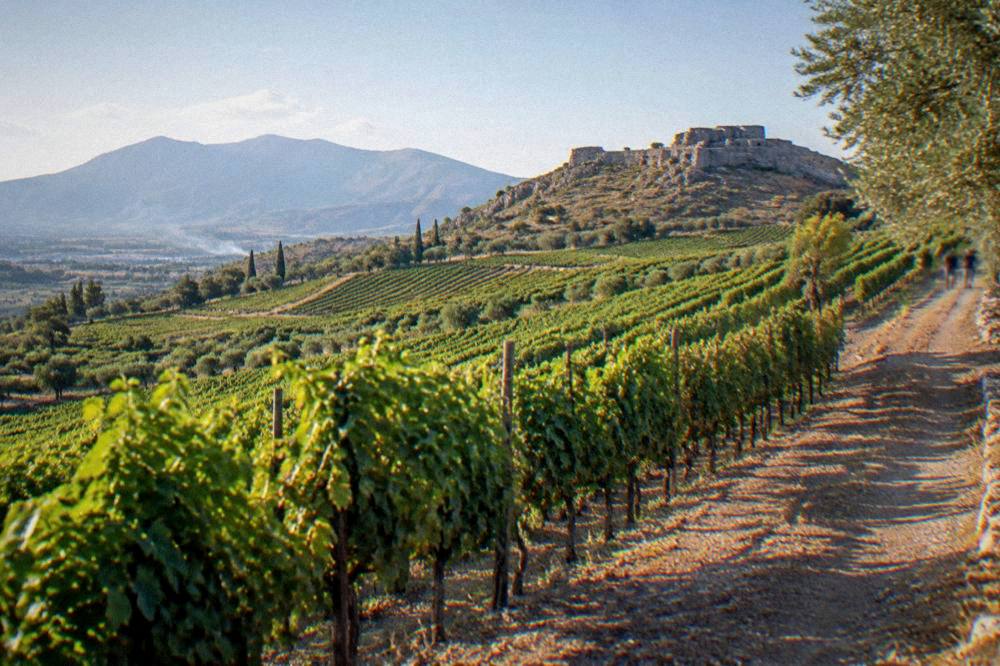
The Argolid packs an unusual number of stops into a short radius, and the drive times computed from Syntagma Square make the geometry plain. A realistic one-day loop runs Nafplio, Tiryns, Mycenae and back, with lunch in the plain; a longer day adds Argos (18 minutes, its ancient agora and theatre covered by one 10 euro full and 5 euro reduced ticket) or pushes south-east to Epidaurus. Ambitious drivers can chain Nemea's vineyard country (46 minutes to Ancient Nemea, 49 to Nemea town) onto a Mycenae morning.
| Nearby stop | Drive from Syntagma Square | Admission status |
|---|---|---|
| Tiryns | about 9 minutes | No published price; check the ticket page |
| Argos agora and theatre | about 18 minutes | 10 euro full, 5 euro reduced, one ticket |
| Epidaurus theatre and sanctuary | about 41 minutes | 20 euro full, 10 euro reduced |
| Palaia Epidavros | about 47 minutes | Separate site details on site |
| Ancient Nemea | about 46 minutes | No published price; check the ticket page |
| Ancient Corinth | about 61 minutes | No published price; check the ticket page |
The three days in Nafplio itinerary sequences these stops into a workable long weekend, and the dedicated pages for Epidaurus, Tiryns, Nemea and Ancient Corinth each go deeper on their own site.
For travellers who only want Mycenae itself, without the Epidaurus leg, a focused private option exists as well, and it is worth weighing against the combined itineraries above.
When Is The Best Time Of Day And Year To Visit Mycenae?
Morning is the practical answer: the site opens 08:00 in the summer season, and the citadel slope is exposed stone with little shade, while the HNMS Argos station, 1980 to 2010, records mean July daily highs of 34.0 C at the inland station. June is the month with the least rain in the climate table (8.9 mm), and the November total of 82.5 mm is the year's highest, so late spring and early autumn balance heat and dryness best.
The climate table, from the Argos station about 10 km north-west of Nafplio, shows how the year divides. Rainfall falls to 8.9 mm in June, 9.1 mm in July and 13.0 mm in August, then climbs through 44.3 mm in October to 82.5 mm in November. Temperatures tell the same story in reverse: mean daily highs run 31.4 C in June and 34.0 C in July against 14.6 C in January. The numbers describe an inland station, and the coastal strip in Nafplio can differ slightly, but the direction of the advice holds.
| Month | Mean daily high (C) | Mean daily low (C) | Rainfall (mm) |
|---|---|---|---|
| April | 21.3 | 6.7 | 33.7 |
| May | 26.5 | 10.5 | 18.7 |
| June | 31.4 | 14.0 | 8.9 |
| July | 34.0 | 16.7 | 9.1 |
| August | 33.7 | 16.8 | 13.0 |
| September | 29.7 | 14.2 | 20.3 |
| October | 24.7 | 11.5 | 44.3 |
All figures are HNMS Argos station, 1980 to 2010. Crowding is a separate question with no published data, so no crowd claim is made here; what the hours table does show is that an 08:00 start in high season buys the longest possible window and the coolest part of the day on the hill. For a wider seasonal picture of the region, the site's Nafplio weather guide covers the full year.
Should You Visit Mycenae On A Tour Or On Your Own?
Independent visiting suits drivers who want control of timing: the site is 32 minutes from Nafplio, one 20 euro ticket covers everything, and the signage and museum carry the story. A booked tour suits visitors without a car, anyone pairing Mycenae with Epidaurus on one ticketless-transport day, and anyone who wants the narrative delivered rather than read, and the tour options range from shared group day trips to private tours with entrance tickets included.
The decisive factors are transport and appetite for context. With a rental car, the self-guided day is simple: park at the site, buy the 20 euro ticket, walk the circuit. The Nafplio car rental guide covers the driving side, and the getting around Nafplio guide covers the local alternatives. Without a car, the reported bus fare of 3.50 euro is cheap but sparse in direct departures, which is where the tours earn their price: they bundle the driving, the pacing and usually the Epidaurus pairing into one booking, with entrance tickets included on some private options.
For visitors based in Athens rather than Nafplio, the same citadel appears on full-day Argolis trips that call at the Corinth Canal, Mycenae and Epidaurus, and the site's Nafplio day trip from Athens guide explains that routing. Nafplio-based travellers choosing the related Nafplion: Mycenae-Epidaurus tour can check current availability and pricing on the operator's live listing before committing.
Common Questions About Mycenae
How much does Mycenae cost in 2026?
The Ministry of Culture's visiting page lists a 2026 full ticket of 20 euro and a reduced ticket of 10 euro, with the reduced ticket sold only from 1 October to 31 May. The ticket includes the citadel, the site museum and the Treasury of Atreus.
How far is Mycenae from Nafplio?
Mycenae is about 25 km and 32 minutes by road from Syntagma Square in Nafplio, computed over free-flow routing. Tiryns sits on the way, about 9 minutes from Nafplio.
Is Mycenae a UNESCO World Heritage Site?
Yes. The "Archaeological Sites of Mycenae and Tiryns" were inscribed on the UNESCO World Heritage List in 1999. The Sanctuary of Asklepios at Epidaurus was inscribed separately in 1988.
Can you visit Mycenae and Epidaurus in one day from Nafplio?
Yes. Mycenae is about 32 minutes from Nafplio and the Epidaurus theatre about 41 minutes, and from 2 May 2026 both sites open 08:00 to 20:00. Two separate 20 euro tickets are needed, as no combined ticket is listed.
Is there a bus from Nafplio to Mycenae?
A KTEL Argolida service is reported at 3.50 euro one way, but direct departures are sparse and some journeys run via Fichti. Confirm the current timetable on the operator's pages before planning around it.
What are Mycenae's opening hours?
From 2 May 2026 the site opens 08:00 to 20:00. Hours step down through September and October to winter hours of 08:30 to 15:30. The site is closed on 1 January, 25 March, 1 May, Easter Sunday and 25 and 26 December.
The site's position, one short drive up the plain from Nafplio, makes it the anchor of any Argolid itinerary, and the pairing pages for Epidaurus and the Argolid road trip carry the planning from here.