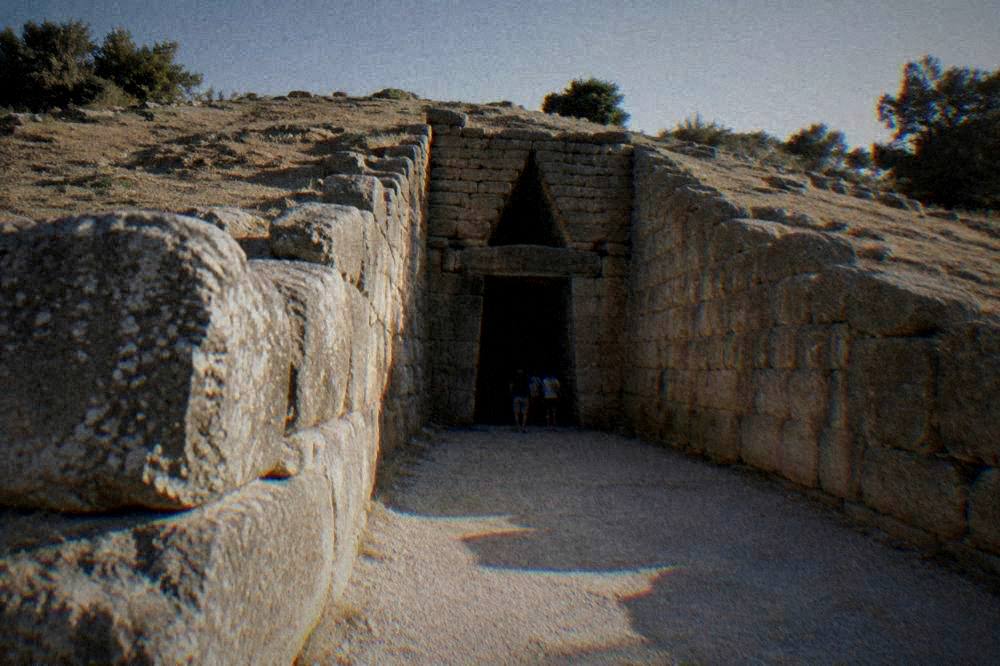
Tiryns: The Cyclopean Walls Five Minutes From Nafplio
Tiryns is the Mycenaean citadel closest to Nafplio, about 9 minutes by road from Syntagma Square, with Cyclopean walls so large that ancient writers credited them to giants. Here is what the official sources say about visiting it.
Short answer
Tiryns lies about 5 km and 9 minutes by road from Nafplio in the Argolid, Peloponnese. It shares the UNESCO World Heritage listing 'Archaeological Sites of Mycenae and Tiryns' with Mycenae, and no ticket price is confirmed: check the ticket page before booking.
Tiryns is the closest of the great Mycenaean citadels to Nafplio, the small coastal town in the Argolid on the Peloponnese of mainland Greece: about 5 km and 9 minutes by road from Syntagma Square, on the flat ground between the town and the city of Argos. Where Mycenae sits on its hill, Tiryns stands low beside the road, and its walls, fitted from limestone blocks far larger than a person, are the reason the site is on the UNESCO World Heritage List. The listing is shared: "Archaeological Sites of Mycenae and Tiryns", inscribed in 1999. This guide sets out what the official sources say about the citadel, how to reach it from Nafplio, and how to fold it into a day that also takes in Mycenae or Epidaurus, with the practical details the Nafplio Travel Guide desk reports from primary pages.
Where Is Tiryns And How Far Is It From Nafplio?
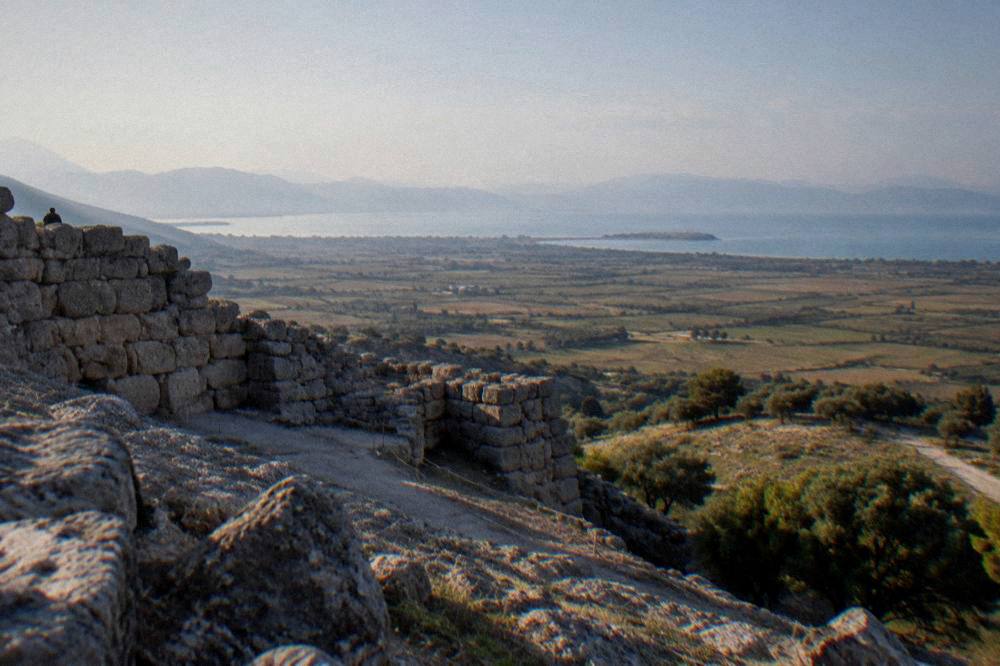
Tiryns stands about 5 km by road south-east of central Nafplio, roughly a 9 minute drive from Syntagma Square, on the flat coastal plain of the Argolic Gulf between Nafplio and Argos. Argos itself is the next major stop further on, Mycenae lies beyond it, and the theatre of Epidaurus lies farther still, so Tiryns is the nearest of the major Mycenaean sites to the town.
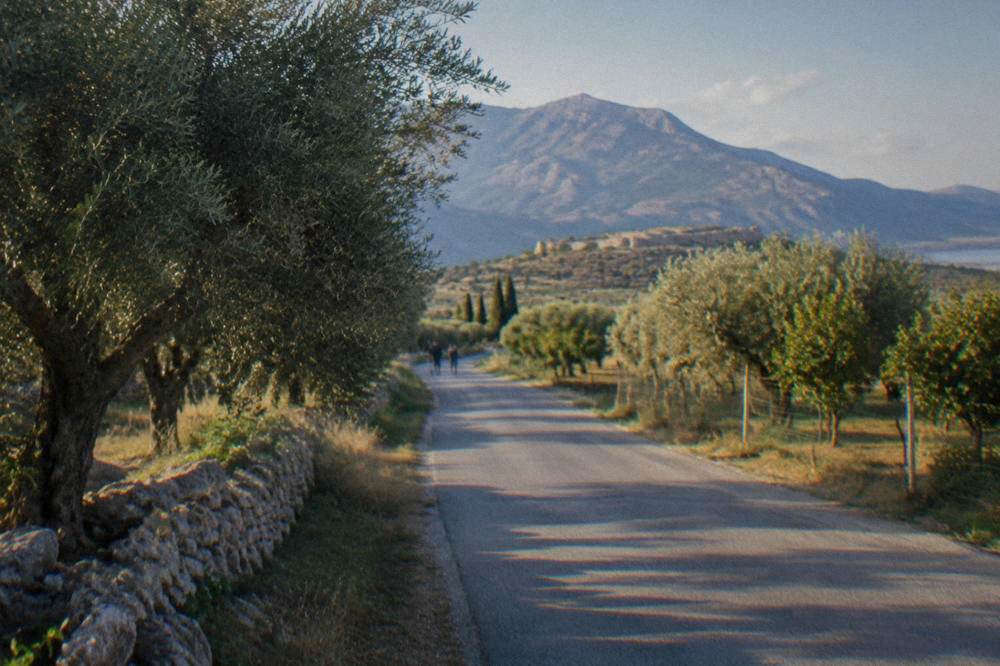
That short distance is the whole appeal of the place. Nafplio sits in the middle of an extraordinary cluster of ancient sites, and Tiryns is the one you can reach almost without planning: no mountain road, no long approach, just a short run out of the town on the way towards Argos. The plain around it has grown up with orchards and roads, and the citadel now stands beside a working village street rather than in open country, which surprises readers who picture a remote ruin. The walls rise directly from that flat ground, and their sheer bulk is the first thing any account of the site mentions.
For orientation, the other near neighbours run like this from Syntagma Square:
| Destination | Distance by road | Drive time (free-flow) |
|---|---|---|
| Tiryns | about 5 km | about 9 minutes |
| Argos | about 15 km | about 18 minutes |
| Mycenae | about 25 km | about 32 minutes |
| Epidaurus theatre | about 28 km | about 41 minutes |
| Palaia Epidavros | about 37 km | about 47 minutes |
| Tolo | about 11 km | about 17 minutes |
These are computed free-flow driving times; allow more in summer traffic and at school-run hours. For a fuller plan around them, see the Argolid road trip itinerary.
What Will You See At The Tiryns Citadel?
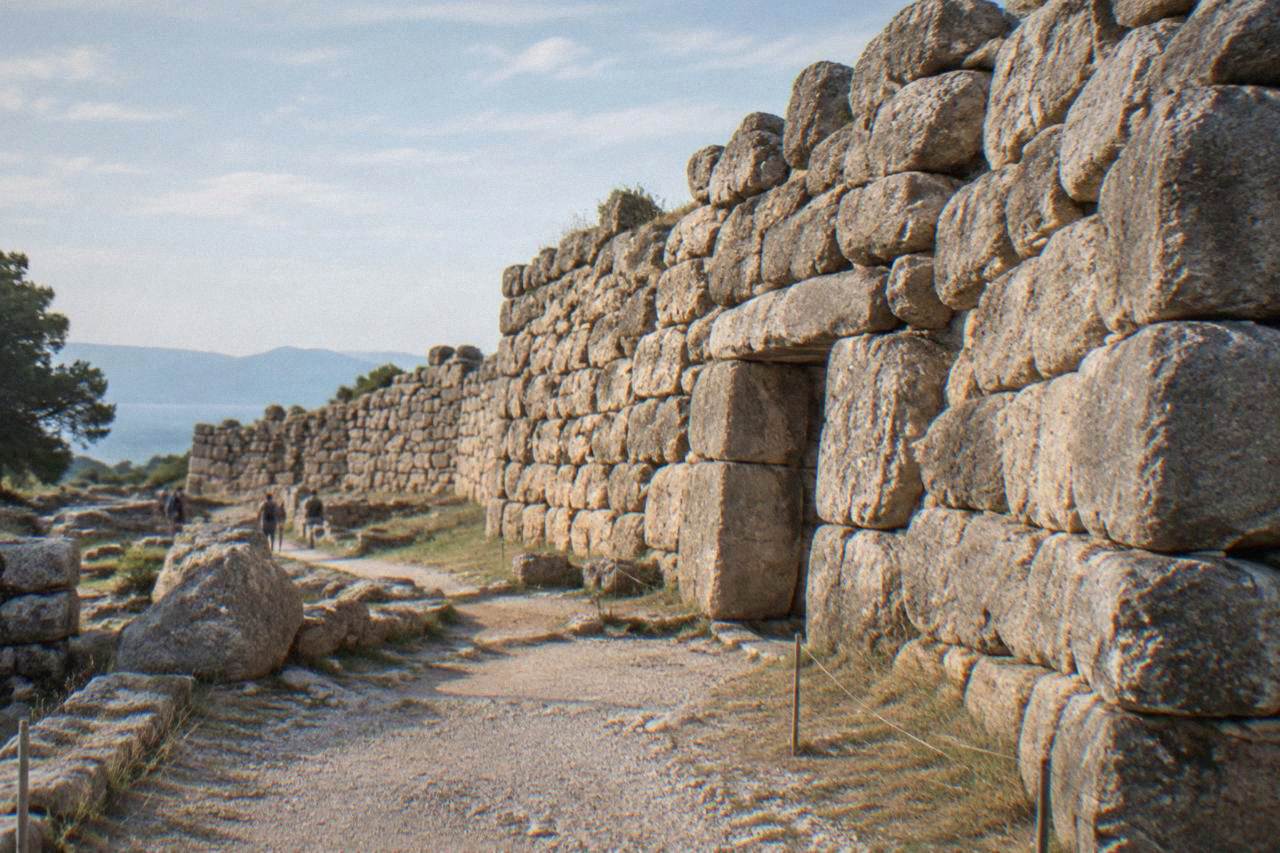
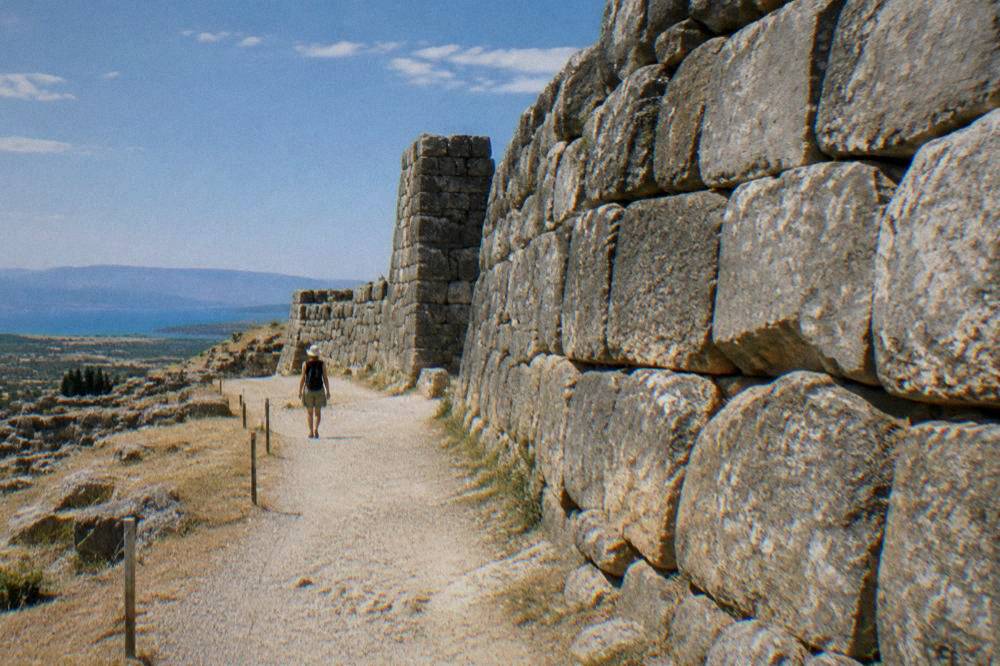
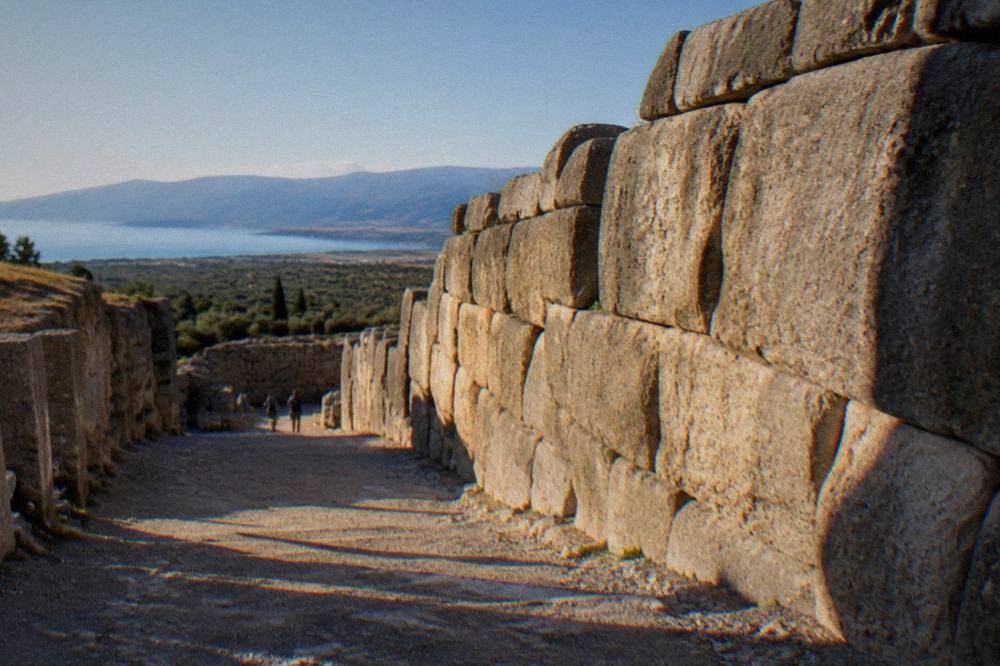
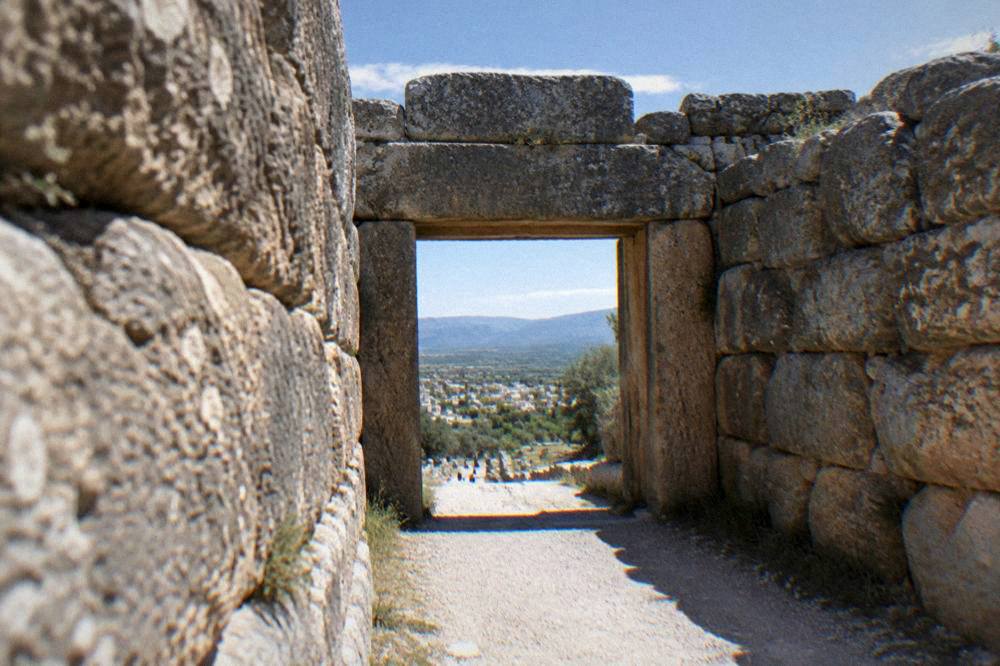
The draw at Tiryns is the circuit of Cyclopean walls, built of enormous unwrought limestone blocks fitted without mortar, enclosing the remains of a palace with a propylon, a great court and a gallery that runs inside the wall itself. The site shares its UNESCO World Heritage listing with Mycenae, inscribed in 1999 as "Archaeological Sites of Mycenae and Tiryns", and the citadel belongs to the same Mycenaean civilisation that built the Lion Gate and the Treasury of Atreus.
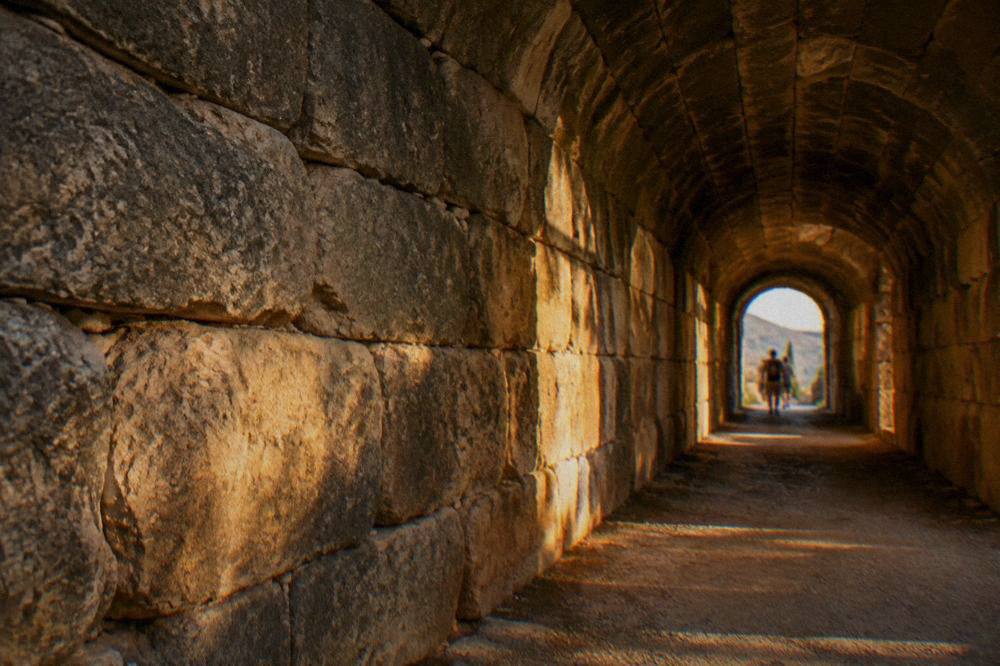
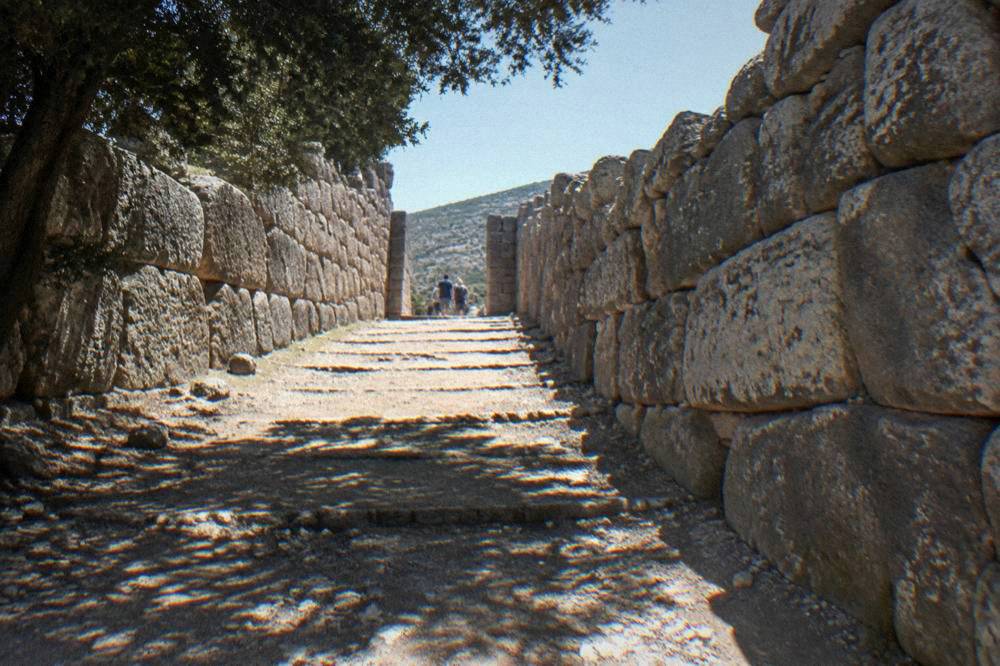
The word "Cyclopean" is ancient commentary in itself: later Greeks assumed only the giant Cyclopes could have moved blocks of that size, and the term has stuck as the technical name for this kind of masonry. At Tiryns the walls are at their most impressive in the lower courses of the main ramp and in the long vaulted gallery on the southern side, a corbelled passage through the thickness of the fortification that is one of the most photographed spots in the Argolid. The site is compact: a visit means a walk up the ramped approach, through the successive gates, across the palace terrace, and around the wall circuit, with views back towards the sea and the hills behind Argos.
Keep expectations calibrated. Tiryns is a ruin of foundations and walls, not of standing rooms: the palace plan is readable, the walls are monumental, but the experience is raw archaeology rather than a reconstructed monument. Readers who want the fuller museum-and-monument combination usually pair it with Mycenae, where the ticket in 2026 is 20 euro full and 10 euro reduced and covers the site, the museum and the Treasury of Atreus, per the Ministry of Culture's own visiting page. A guided day trip that covers Mycenae and Epidaurus with tickets and transport handled is the related trip this site features for the Argolid: Check availability on the operator's live listing.
How Do You Get To Tiryns From Nafplio Without A Car?
Driving is the simplest way, about 9 minutes from Syntagma Square, but a public bus also serves the direction: the local KTEL Argolida network runs from Nafplio towards Argos past Tiryns for a reported fare of about 2.20 euro one way, with departures reported at roughly half-hour intervals on weekdays. The bus option is reported by local sources and schedules change, so confirm times on the KTEL Argolida site before you set out.
The bus station in Nafplio sits at Siggrou 6-8, on the edge of the Old Town, and the Argos service is the frequent spine of the local network. The practical catch is the stop: Tiryns is a request stop on a through route rather than a terminus, so ask the driver where to alight and check the return timetable before you walk off, because a wrong gap between buses can stretch a short visit into a long wait on a village street. In summer the heat on the exposed plain is real: the HNMS Argos station table, 1980 to 2010, shows a July mean daily high of 34.0 C, so carry water whatever the transport.
A taxi or a private transfer is the third option; fares are quoted as negotiated prices, so agree the figure and the wait time with the driver before setting off. Many readers instead fold Tiryns into a guided day, since the major Argolid tours run along this same corridor. One budget option that covers the wider Argolis, including Mycenae and Nafplio time, is below.
How Long Does A Visit To Tiryns Take?
Plan on about an hour at the site itself, allowing time for the ramped approach, the palace terrace and a full loop of the walls, plus the 9 minute drive each way from Nafplio. Tiryns rewards a slow look at the masonry rather than a long itinerary: the circuit is short, shade is limited, and the neighbouring village offers little in the way of facilities, so time your water and sun protection accordingly.
Because the site is small, the honest advice is that Tiryns is an add-on, not a destination in itself. A sensible shape is an early start, an hour among the walls, and then onward to Argos or Mycenae while the morning is still cool. The state-site hours that apply across the network give the rhythm: winter openings of 08:30 to 15:30, stretching to 08:00 to 20:00 from 2 May, with progressive reductions through September and October. Confirm opening days for Tiryns on the official page before travelling, since small sites can follow reduced schedules.
Can You Combine Tiryns With Mycenae And Epidaurus In One Day?
Yes, and the drive times make it straightforward: from Nafplio, Tiryns is about 9 minutes, Mycenae about 32, and the theatre of Epidaurus about 41, so all three sit within a single morning's driving radius. Mycenae and Epidaurus each charge 20 euro full and 10 euro reduced in 2026 per the Ministry of Culture's pages, and both follow the state opening schedule, with Epidaurus opening 08:00 to 17:00 in winter and 08:00 to 18:00 from 1 March 2026.
The classic order runs Tiryns first, while the light is low and the site is quiet, then Mycenae for the Lion Gate, the grave circle and the museum, then the long run to Epidaurus for the theatre and sanctuary in the afternoon. The reverse order works in high summer, when the Epidaurus theatre's shade is kinder early and Mycenae's hill is punishing at midday; the HNMS Argos station table, 1980 to 2010, puts the July mean daily high at 34.0 C and August at 33.7 C, and both sites are largely unshaded. Whichever direction you choose, buy nothing on trust at the gate: the two 20 euro tickets above are the confirmed 2026 figures, and the reduced ticket is valid only from 1 October to 31 May.
| Site | 2026 admission | Drive from Nafplio | Notes |
|---|---|---|---|
| Tiryns | confirm on the ticket page | about 9 minutes | shares the UNESCO listing with Mycenae |
| Mycenae | 20 euro full, 10 euro reduced | about 32 minutes | ticket includes site, museum and Treasury of Atreus |
| Epidaurus | 20 euro full, 10 euro reduced | about 41 minutes | ticket includes theatre, sanctuary and museum |
Guided versions of this pairing exist for readers who prefer not to drive. A focused Mycenae and Epidaurus day trip is the featured option on this page:
For readers weighing the two headline sites against each other, the Mycenae or Epidaurus comparison on this site breaks the choice down; the short version is that Mycenae gives drama and gold, Epidaurus gives architecture and acoustics, and Tiryns gives the walls. If the question is whether both fit in one day, the answer sits in the table above: they do, with room for Tiryns on the way out.
Why Is Tiryns A UNESCO World Heritage Site?
Tiryns is inscribed, together with Mycenae, on the UNESCO World Heritage List as "Archaeological Sites of Mycenae and Tiryns", added in 1999, for its Mycenaean architecture and its record of a civilisation that shaped the eastern Mediterranean world. Epidaurus carries its own separate listing, the Sanctuary of Asklepios at Epidaurus, inscribed in 1988, so a single day out of Nafplio can take in two World Heritage inscriptions.
The shared listing makes a specific point: the two citadels are read as a pair, two faces of the same Mycenaean centres that dominated the region in the Late Bronze Age. At Tiryns that record lives in the fortification technique and the palace layout, the ramped entry sequence and the galleries, which illustrate how these centres were planned and defended. Readers who want the full background should also look at the history of Nafplio and the wider things to do in Nafplio overview: the same plain carries Mycenaean citadels, the ancient theatre of Argos and the later medieval town, all within half an hour of each other.
When Is The Best Time Of Day To Visit Tiryns?
Early morning is the sound choice: Tiryns is an exposed site with limited shade on a flat plain, and the HNMS Argos station normals, 1980 to 2010, show mean daily highs of 31.4 C in June, 34.0 C in July and 33.7 C in August. The same table shows the trade-off for winter visits, with mean daily lows of 3.0 C in January and 2.9 C in February, and November carries the year's heaviest monthly rainfall at 82.5 mm.
Spring and autumn split the difference nicely: April averages a 21.3 C high with 33.7 mm of rain across the month, October 24.7 C with 44.3 mm. All figures are from the HNMS Argos station record, 1980 to 2010, taken at an inland station about 10 km north-west of the town, so the waterfront in Nafplio can read slightly milder. Pair the timing with the state hours: from 2 May 2026 the big sites open 08:00 to 20:00, which makes an early-evening circuit possible in a way the winter 08:30 to 15:30 schedule does not.
| Month | Mean daily high (C) | Mean daily low (C) | Rainfall (mm) |
|---|---|---|---|
| April | 21.3 | 6.7 | 33.7 |
| May | 26.5 | 10.5 | 18.7 |
| June | 31.4 | 14.0 | 8.9 |
| July | 34.0 | 16.7 | 9.1 |
| October | 24.7 | 11.5 | 44.3 |
| November | 19.2 | 7.7 | 82.5 |
How Does Tiryns Fit Into A Wider Argolid Day Trip?
Tiryns works best as the first or last stop of a loop: it sits directly on the Nafplio to Argos corridor, with Argos about 18 minutes on, so it slots naturally before a run to Mycenae (about 32 minutes) or as a stop on a longer route towards Ancient Nemea (about 46 minutes) and the Corinth Canal (about 72 minutes). Every figure here is a computed free-flow drive time from Syntagma Square.
A full-day loop that many readers build runs Nafplio, Tiryns, Argos, Mycenae, and back, which is comfortable in daylight at any season. Push further and the day stretches: Ancient Nemea at about 46 minutes opens the wine country option, and the Corinth Canal at about 72 minutes makes a dramatic finish on the way back towards Athens, with the canal open to shipping. Beach time is a real alternative on the same map: Tolo is about 17 minutes from Nafplio for a swim after a hot morning among the walls.
| Stop on the loop | Drive from Syntagma Square | Role in the day |
|---|---|---|
| Tiryns | about 9 minutes | first stop, walls in morning light |
| Argos | about 18 minutes | agora and theatre, 10 euro ticket |
| Mycenae | about 32 minutes | main site, museum, Treasury of Atreus |
| Tolo | about 17 minutes | afternoon swim stop |
| Ancient Nemea | about 46 minutes | wine-country extension |
Guided multi-stop versions exist, including a premium tour that adds the Corinth Canal to the Mycenae and Nafplio route, useful for readers leaving for Athens at the end of a stay.
Is Tiryns Worth The Stop Compared With Mycenae?
As an editorial judgement, yes, because Tiryns offers something Mycenae does not: walls you can stand inside of, at close range, ten minutes from your hotel, and a site you can absorb in an hour. Mycenae remains the headline, with its gate, its museum and its ticket that covers three monuments, but Tiryns shows the engineering of the same civilisation in a purer form, and its UNESCO inscription is the same one.
The reasons are practical as much as aesthetic. Tiryns costs almost no travel time from Nafplio, so the decision is low-stakes: if the site opens and the weather holds, an hour there is an hour well spent; if schedules slip, skip it and drive on to Argos. Readers basing themselves in town for two or three days, and weighing the two days in Nafplio plan, will find Tiryns slots into the second morning without disturbing anything else. For a first visit with only one day, see the one day in Nafplio guide, which prioritises the town itself and defers the citadels.
Common Questions About Visiting Tiryns From Nafplio
How far is Tiryns from Nafplio?
Tiryns lies about 5 km by road from Syntagma Square in Nafplio, roughly a 9 minute drive on the route towards Argos, which is itself about 18 minutes further on.
How much does it cost to get into Tiryns?
No admission price for Tiryns is confirmed on the official pages. Check the current price on the ticket page before booking; note that Greek state sites open free on 6 March, 18 April, 18 May, the last weekend of September, the first and third Sundays from November to March, and 28 October.
Can you reach Tiryns by bus from Nafplio?
Yes, as reported by local sources: the KTEL Argolida service towards Argos passes the Tiryns direction for a reported 2.20 euro one way, with frequent weekday departures. Confirm stop locations and return times with the operator before you go.
Can you visit Tiryns, Mycenae and Epidaurus in one day?
Yes. The drive times from Nafplio are about 9 minutes to Tiryns, about 32 to Mycenae and about 41 to the theatre of Epidaurus, and Mycenae and Epidaurus both charge 20 euro full and 10 euro reduced in 2026, following the standard state opening hours.
Is Tiryns a UNESCO World Heritage Site?
Yes, jointly: the inscription is "Archaeological Sites of Mycenae and Tiryns", added in 1999. Epidaurus carries a separate inscription, the Sanctuary of Asklepios at Epidaurus, from 1988.
How long should you spend at Tiryns?
About an hour covers the ramp, the palace terrace and the wall circuit, including the gallery inside the southern wall. The site is exposed, so carry water, especially from June to August when the HNMS Argos station normals show mean daily highs above 31°C.
Tiryns will never compete with Mycenae for drama or Epidaurus for scale, and it does not need to: it is the citadel you can visit before breakfast, the one whose walls explain in a single glance what Mycenaean engineering meant, and the easiest UNESCO-listed stop on the whole Argolid map from Nafplio.