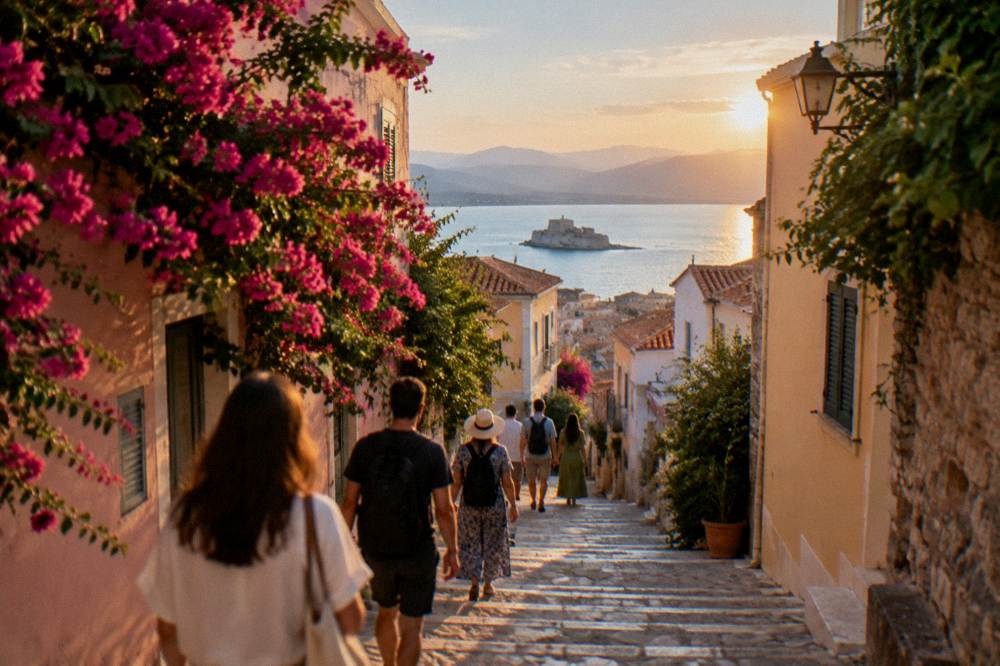
Kolokotronis: The Statue, The Park And The Old Fighter's Story
Nafplio, the first capital of modern Greece from 1827 to 1834, keeps its revolutionary memory in stone and bronze all over the Old Town, and the Kolokotronis statue and the park around it are part of that layer. This page sets out what the statue commemorates, what the sources say about the man, and how to plan a visit around it.
Short answer
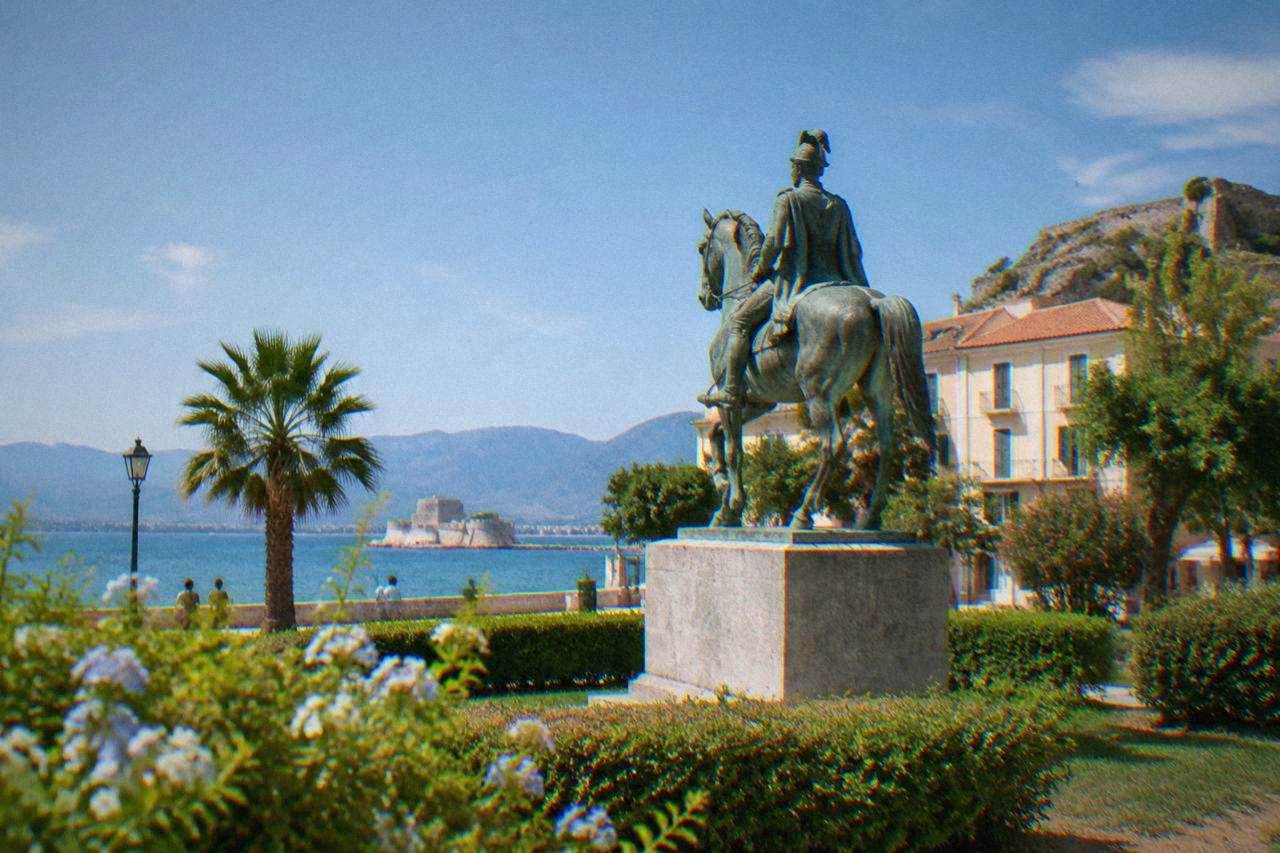
The Kolokotronis statue stands in a small park in Nafplio and honours the best-known Greek commander of the War of Independence, a man whose story crossed paths with Nafplio at the Vouleftiko, where he was tried, and with the fortress of Palamidi, taken by the Greeks in 1822. The park is free to walk through at any time.
Nafplio, a coastal town of about 14,500 residents on the Argolic Gulf in the Argolid, keeps its revolutionary past in plain sight. Palamidi Fortress watches from 216 m above the Old Town, Akronafplia lines the ridge above the harbour, and between them the lanes around Syntagma Square carry the story of a town that served as the capital of Greece from 1827 to 1834. Into that setting steps the Kolokotronis statue, a bronze standing in its own small park, named for the commander whose name is inseparable from the Greek War of Independence.
The statue is a landmark rather than a ticketed sight. You walk to it, you look at it, and you read the town around it. This page from the Nafplio Travel Guide editorial desk explains what the sources say about Kolokotronis and Nafplio, what the park offers, and how to fold it into a day that also takes in Palamidi Fortress, the harbour and the museums.
What Does The Kolokotronis Statue In Nafplio Commemorate?
The Kolokotronis statue in Nafplio commemorates the best-known Greek commander of the War of Independence, the conflict that ended Ottoman rule and led to the modern Greek state with Nafplio as its capital from 1827 to 1834. It is a public monument in a small park, free to visit at any hour, and it belongs to the same memorial layer as the Lion of Bavaria and the War of Independence sites across the Old Town.
The monument is one of several in a town that was, for seven years, the seat of the new Greek government. Kapodistrias, the first head of state, arrived in January 1828 and governed from Nafplio until he was assassinated in September 1831 outside the Church of Agios Spyridon. The government then passed to the young monarchy, and King Otto arrived in February 1833 before the capital moved to Athens in December 1834.
A statue to a revolutionary commander sits naturally in that landscape. The park around it works as a pause between heavier sights: Palamidi above, the harbour below, Syntagma Square a short stroll away. For the sequence that strings the whole centre together, the Nafplio walking tour route pages on this site list the monuments in order.
Who Was Kolokotronis And Why Does Nafplio Claim Him?
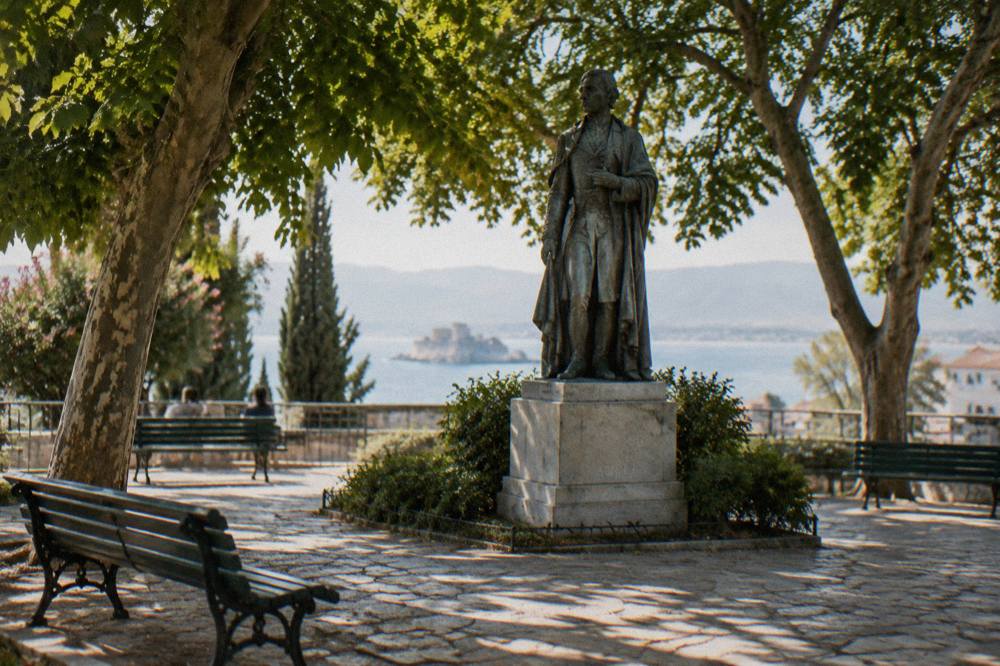
Kolokotronis was the foremost Greek military commander of the War of Independence, and Nafplio claims him because his life intersected with the town at its most political moment: reported sources state he was tried in the Vouleftiko, the building on Syntagma Square that had housed the first Greek parliament from 1825. The connection between the man and the town is judicial and political, not only memorial.
The Vouleftiko, a former mosque remodeled by the architect Theodoros Vallianos, served later uses as a school and a prison, and it was there, according to reported histories, that Kolokotronis and Plapoutas faced trial. The building still stands on Syntagma Square and is one of the town's central monuments, covered in detail on the first parliament of Greece page.
That episode belongs to the turbulent politics of the revolutionary years, when civil conflict divided the Greek leadership before the state consolidated at Nafplio. The fuller background is on the history of Nafplio page, which traces the Venetian periods from 1389 and 1686 to 1715, the Ottoman intervals, and the Greek capture of Palamidi in 1822.
For visitors, the point is that the statue is not decorative. It marks a man whose fortunes rose and fell with the revolution, in the town where the revolution's government sat. The Old Town around the park holds the rest of that story in its buildings.
How Does The Statue Fit A Walking Route Through Nafplio?
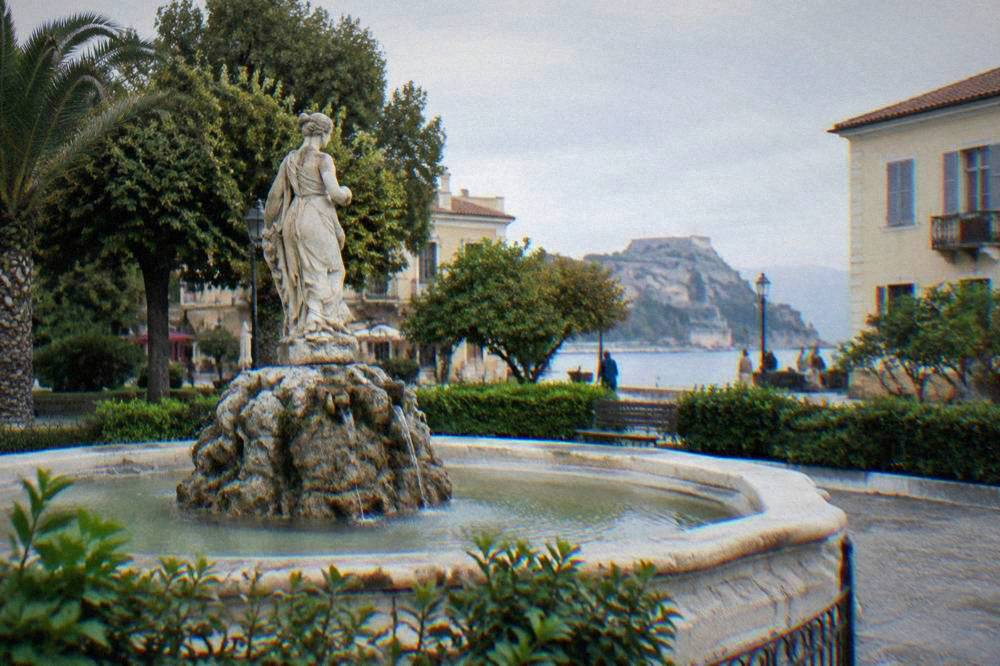
The Kolokotronis statue sits inside the walkable core of Nafplio, where Syntagma Square, the harbour, the Archaeological Museum and the Land Gate cluster within the Old Town, and the real climb is reserved for Palamidi, reached by a stairway of about 850 steps, not the legendary 999. A route that pairs the statue with the square, the waterfront and one fortress is the standard shape of a day here.
A sensible loop starts at Syntagma Square, takes in the Vouleftiko and the Archaeological Museum of Nafplio, passes the statue in its park, and continues to the harbour front and the Land Gate. From there the options split: the Arvanitia side of Akronafplia, or the Palamidi stairway for the view from 216 m above the town.
| Stop | What it is | Admission 2026 |
|---|---|---|
| Kolokotronis statue and park | Public monument and green space | Free |
| Syntagma Square and Vouleftiko | Central square, first parliament building | Free to see outside |
| Archaeological Museum of Nafplio | Museum in the Venetian arsenal | 10 EUR full, 5 EUR reduced |
| Bourtzi | Fortified islet in the harbour | 7 EUR full, 5 EUR reduced, boat extra |
| Palamidi Fortress | Venetian fortress above the town | 20 EUR full, 10 EUR reduced |
For travellers who want a guide over the trails rather than the lanes, a guided hike is the featured option on this page. The Hiking Tour in Nafplio covers the paths and castles around the town, and Check availability on the operator's live listing before you go.
The tours above all start or pass through Nafplio and suit different plans: a hike around the castles, a ticketed visit to Mycenae, and a premium guided day from Athens that stops at the Corinth Canal. Whichever you choose, the statue park costs nothing and fits any free hour.
What Can You See Around The Kolokotronis Park In Nafplio?
Within easy reach of the Kolokotronis park in central Nafplio stand the Archaeological Museum of Nafplio, the Peloponnesian Folklore Foundation museum, the War Museum, the Church of Agios Spyridon where Kapodistrias was assassinated in September 1831, and the harbour islet of Bourtzi, open to visitors by boat. The park sits at the junction of the memorial quarter and the working harbour town.
Each of these sights carries a piece of the same century. The Archaeological Museum, open 08:30 to 15:30 all year and closed every Tuesday, holds finds from across the Argolid, including the great Mycenaean centres. The Church of Agios Spyridon keeps the spot where the first head of state was shot on his way to service. The folklore and war museums cover the later Greek story.
The harbour adds Bourtzi, begun in June 1471 to designs by Antonio Gambello, and later leased in the early 1930s as a 14-room hotel and restaurant, a use the islet's own history page records. The boat out is the only way in, and the boat fare is set by the operator, so confirm it at the pier.
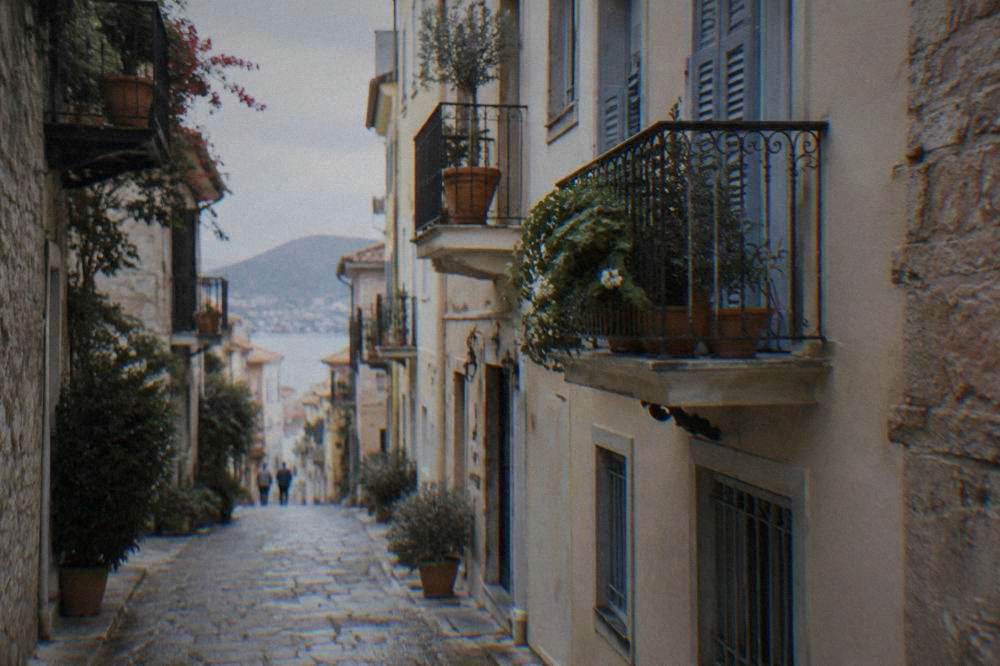
For the longer version of the same walk, the two days in Nafplio itinerary gives a second day for Epidaurus and Mycenae. Couples planning something slower will find the angles on the romantic Nafplio page.
How Much Do The Sights Near The Statue Cost In 2026?
The Kolokotronis park itself is free, and the 2026 state-site prices around it are 20 euro full and 10 euro reduced at Palamidi Fortress, Mycenae and Epidaurus, 10 and 5 euro at the Archaeological Museum of Nafplio and at the Argos agora and theatre, 7 and 5 euro at Bourtzi, and 5 and 3 euro at Asini, per the Ministry of Culture's visiting pages. The reduced ticket at the big three is sold only from 1 October to 31 May.
Older guides still quote 8 or 10 euro for Palamidi and 12 euro for Mycenae, which is out of date. The 2026 figures above are the ones to plan on, and they apply to the sites typically paired with a town day.
| Site | Full 2026 | Reduced 2026 | Notes |
|---|---|---|---|
| Kolokotronis statue and park | Free | Free | Open public space |
| Palamidi Fortress | 20 EUR | 10 EUR | Reduced 1 Oct to 31 May only |
| Mycenae site and museum | 20 EUR | 10 EUR | Includes Treasury of Atreus |
| Epidaurus theatre and sanctuary | 20 EUR | 10 EUR | Includes museum |
| Archaeological Museum of Nafplio | 10 EUR | 5 EUR | Closed Tuesdays |
| Bourtzi | 7 EUR | 5 EUR | Boat fare separate, confirm at pier |
| Argos agora and theatre | 10 EUR | 5 EUR | One ticket for both |
| Asini | 5 EUR | 3 EUR | Short drive from Tolo |
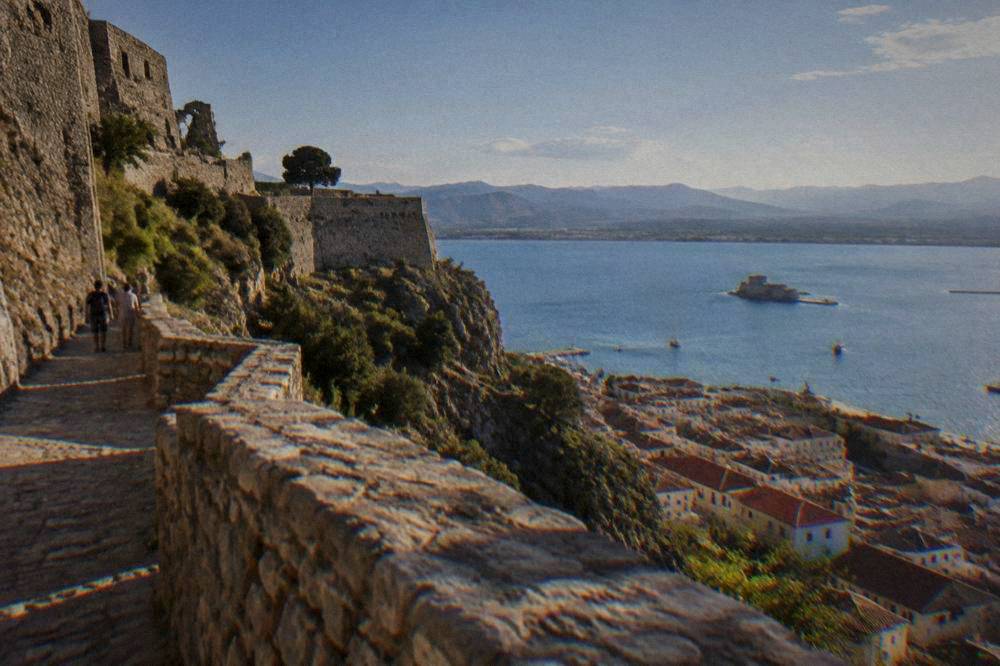
The state sites also run free-admission days: 6 March, 18 April, 18 May, the last weekend of September, every first and third Sunday from 1 November to 31 March, and 28 October. Those days can crowd the big sites, but the statue park and the other free monuments simply stay as they are.
When Are The Nearby Sites Open Around The Kolokotronis Park?
State-site hours in Nafplio for 2026 run 08:30 to 15:30 in winter, 08:00 to 19:00 in April, 08:00 to 20:00 from 2 May, then step down through September and October to 08:00 to 18:00 by late October, while the Archaeological Museum of Nafplio keeps 08:30 to 15:30 all year and closes every Tuesday, and Bourtzi runs a separate seasonal clock.
| Period | Palamidi and Mycenae | Epidaurus | Bourtzi |
|---|---|---|---|
| Winter (Nov to Mar) | 08:30 to 15:30 | 08:00 to 17:00 | Nov to Dec 09:00 to 17:00 |
| April | 08:00 to 19:00 | 08:00 to 18:00 from 1 Mar | 09:00 to 18:00 |
| From 2 May | 08:00 to 20:00 | as Palamidi | May 09:00 to 18:00 |
| July to August | 08:00 to 20:00 | 08:00 to 20:00 | 09:00 to 21:00 |
| September | 08:00 to 19:30 (1 to 15 Sep), 08:00 to 19:00 (16 to 30 Sep) | as Palamidi | 09:00 to 20:00 |
| October | 08:00 to 18:30 (1 to 15 Oct), 08:00 to 18:00 (16 to 31 Oct) | as Palamidi | Weekdays 09:00 to 17:00, weekends 09:00 to 18:00 |
Closures to note: Palamidi, Mycenae and Epidaurus close on 1 January, 25 March, 1 May, Easter Sunday and 25 to 26 December; the Archaeological Museum adds every Tuesday; Bourtzi closes 1 January, Easter Sunday and 25 December. The statue park, being a public space, has none of these.
How Does Kolokotronis Connect To Palamidi And The 1822 Story?
Palamidi Fortress, fortified by the Venetians between 1686 and 1715 to plans by the engineers Giaxich and Lasalle, was taken by the Ottomans in 1715 and liberated by the Greeks in 1822 in a night assault led by Staikos Staikopoulos, and that capture opened the military chapter of the revolution in the Argolid that commanders like Kolokotronis personify. The fortress and the statue tell the same story from two ends.
The night of 29 to 30 November 1822, when Staikopoulos led his men up into the fortress, is the moment Nafplio's revolutionary history turns on. Once Palamidi fell, the Ottoman garrison's position below became untenable, and the town passed to the Greeks, setting the stage for its choice as capital in 1827.
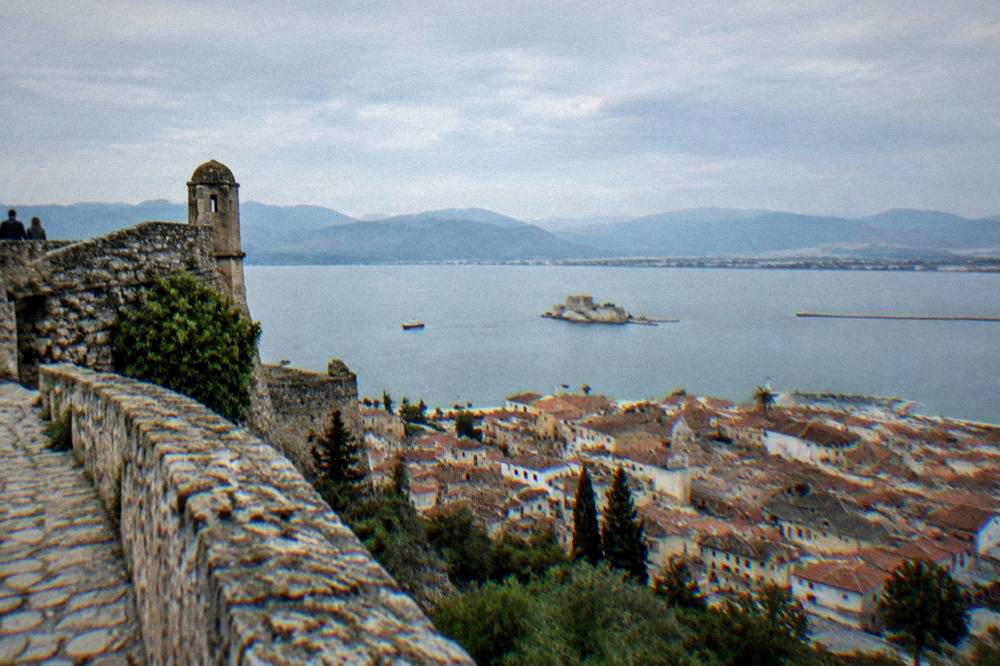
Kapodistrias arrived in January 1828 to govern a state whose politics were raw, and the reported trials in the Vouleftiko belong to that atmosphere. Walking from the statue to the Vouleftiko to the Palamidi stairway traces the arc from commander to court to fortress in under a day. The Akronafplia citadel, with polygonal walls from at least the end of the 4th century BC and a Frankish period from about 1210 to 1389, adds the deeper past under the same walk.
For a fuller plan through all of it, the things to do in Nafplio round-up lists the free and ticketed sights together.
What Are The Best Day Trips To Pair With The Statue Visit?
The closest day trips from Syntagma Square in Nafplio are Tiryns at about 9 minutes by road, Tolo at about 17 minutes, Argos at about 18 minutes and Asini at about 17 minutes, with Mycenae about 32 minutes out and the Epidaurus theatre about 41 minutes, so a morning with the statue and the Old Town leaves an afternoon for at least one archaeological site.
| Day trip | Drive time from Syntagma Square |
|---|---|
| Tiryns | about 9 minutes |
| Tolo | about 17 minutes |
| Asini | about 17 minutes |
| Lerna | about 20 minutes |
| Argos | about 18 minutes |
| Mycenae | about 32 minutes |
| Epidaurus theatre | about 41 minutes |
| Ancient Nemea | about 46 minutes |
| Ancient Corinth | about 61 minutes |
| Corinth Canal | about 72 minutes |
Mycenae with Tiryns, and Epidaurus on its own, are UNESCO World Heritage inscriptions, listed in 1999 and 1988 respectively. The Mycenae and Argos pages carry the details for each.
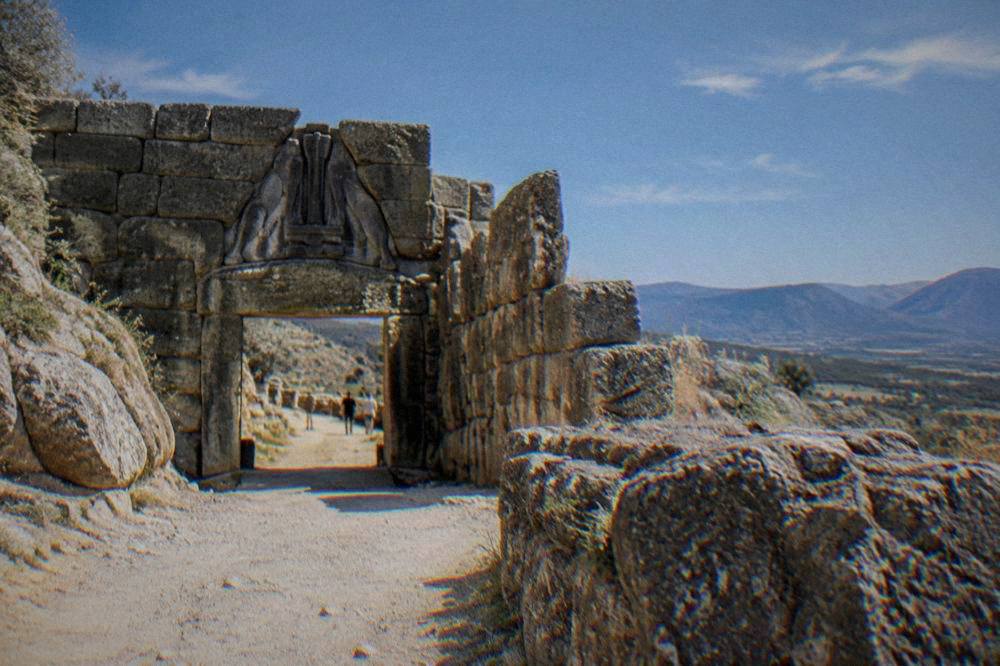
Guided versions of these trips save the driving and the parking question. The options below cover a Mycenae entry with audio commentary and a premium guided circuit that includes the Corinth Canal, which is open to shipping.
For independent travel, the reported KTEL fares from Nafplio are about 2.20 euro to Tolo and to Argos or Tiryns and about 3.50 euro to Mycenae and to Epidaurus, with the Mycenae and Epidaurus services sparse, so confirm times before you go.
What Should You Know About Parking, Weather And Timing?
Parking in the Nafplio Old Town is largely closed to visitors, and the free lots reported on the Akti Miaouli waterfront are the usual option, a short walk from the centre, while the climate label to plan around is the HNMS Argos station, 1980 to 2010, an inland record about 10 km north-west that shows July means of 34.0 C for the daily high and January means of 3.0 C for the overnight low.
Morning is the practical slot for the paid sights in summer, both for the heat and for the 08:00 openings. The statue park itself is a shade stop, useful in the middle of the day when the fortress stairway is at its most exposed. For the full picture on where to leave a car, see parking in Nafplio.
| Month | Mean daily high | Mean daily low | Rainfall |
|---|---|---|---|
| January | 14.6 C | 3.0 C | 66.5 mm |
| April | 21.3 C | 6.7 C | 33.7 mm |
| July | 34.0 C | 16.7 C | 9.1 mm |
| October | 24.7 C | 11.5 C | 44.3 mm |
Figures are HNMS Argos station, 1980 to 2010. For eating around the park, the where to eat in Nafplio guide covers the tavernas of the Old Town and Psaromachalas.
The premium circuit above is built for travellers based in Athens who want Nafplio, Mycenae and the Corinth Canal in one guided day, and it pairs naturally with a self-guided hour at the statue and the Old Town before the group moves on.
Common Questions About The Kolokotronis Statue In Nafplio
Is the Kolokotronis statue in Nafplio free to visit?
Yes. The statue and the park around it are a public open space with no ticket, no hours and no closures, unlike the state sites around it.
Who was Kolokotronis and what is his link to Nafplio?
He was the foremost Greek commander of the War of Independence. His documented link to Nafplio is political and judicial: reported histories state he was tried in the Vouleftiko, the former mosque on Syntagma Square that had housed the first Greek parliament from 1825.
How far is the Kolokotronis statue from Syntagma Square and Palamidi?
The statue park sits within the Old Town core, whose square, harbour and museums cluster together. Palamidi stands 216 m above the town and is reached by a stairway of about 850 steps, not the legendary 999.
Can you combine the statue with Bourtzi and the Archaeological Museum in one day?
Yes. The Archaeological Museum is open 08:30 to 15:30 all year except Tuesdays, and Bourtzi is open to visitors by boat with a 7 euro full and 5 euro reduced ticket in 2026. The boat fare is set at the pier, so confirm it there.
Are there free admission days for the paid sights near the statue?
Yes. Greek state sites, including Palamidi, Mycenae, Epidaurus and Bourtzi, are free on 6 March, 18 April, 18 May, the last weekend of September, every first and third Sunday from 1 November to 31 March, and 28 October.
What is the best guided tour that includes the area around the statue?
The featured option on this page is the Hiking Tour in Nafplio, which covers the castles and paths above the town with a guide. Day trips to Mycenae and Epidaurus also pass through or start from the same centre.