Parking In Nafplio: Free Lots, Paid Streets And Old Town Rules
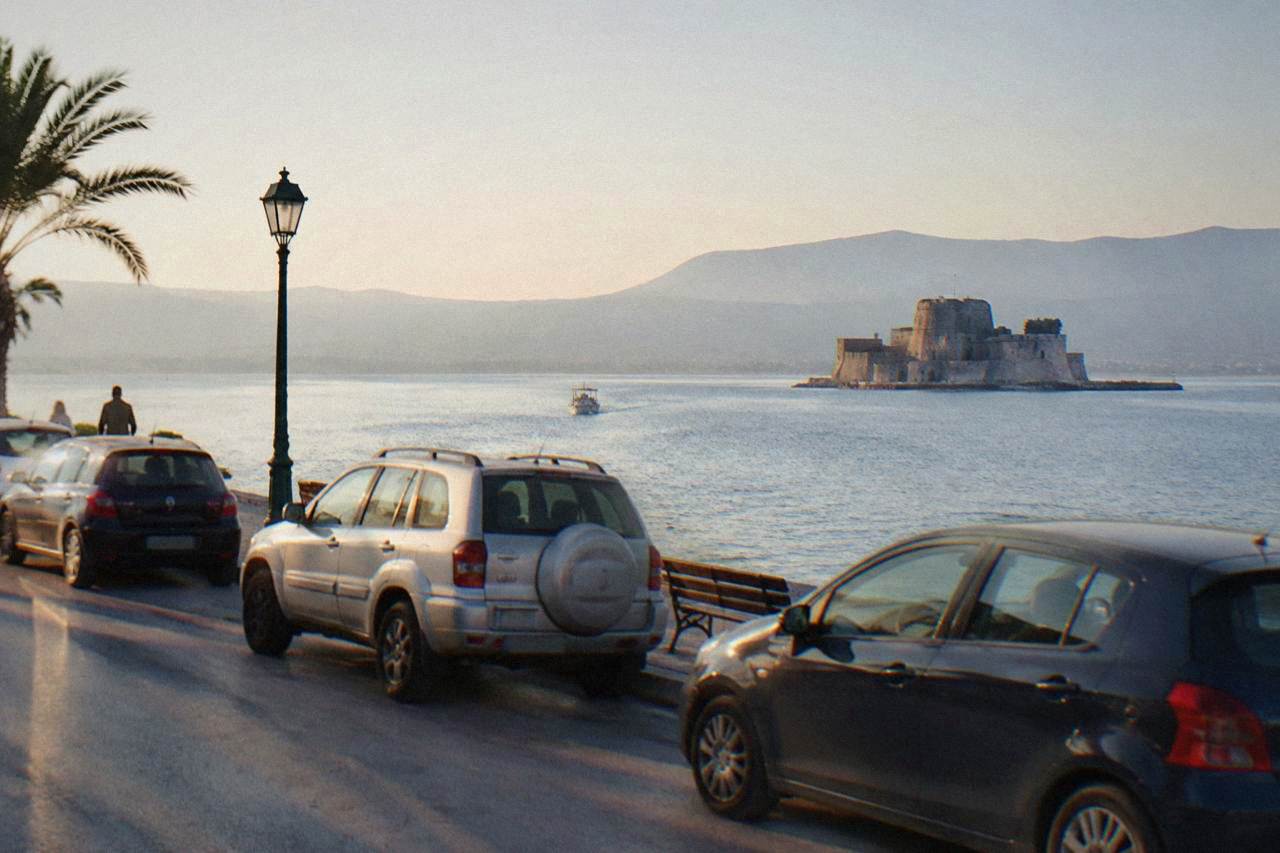
Nafplio's Old Town is largely closed to visitor parking, and the free public lots that make the town work sit on the Akti Miaouli waterfront a short walk from Syntagma Square. This guide sets out the rules as the municipality and local sources report them, the paid street zones on the periphery, and what all of it means for a car-based trip through the Argolid.
Short answer
Parking meter rates may change, so confirm the current tariff at the machine before leaving the car.
Nafplio, a coastal town of about 14,500 residents on the Argolic Gulf in the Argolid, was built for feet, not cars, and its parking rules reflect that. The Old Town, the peninsula of Akronafplia and the lanes around Syntagma Square are largely closed to visitor parking under resident permit schemes, while the free public lots that carry day-trippers sit on the Akti Miaouli waterfront. Per the local guide site cityofnafplio.net, which reports the municipality's arrangements, the Old Town is largely restricted to resident permits and visitors use the waterfront lots, with paid blue-line zones and time limits on the periphery. This page sets out those rules, what they mean for reaching the main sights, and how parking fits into a wider Argolid trip. The Nafplio Travel Guide desk also covers getting around Nafplio without a car and car rental in Nafplio for the fuller picture.
Where Can You Park In Nafplio For Free?
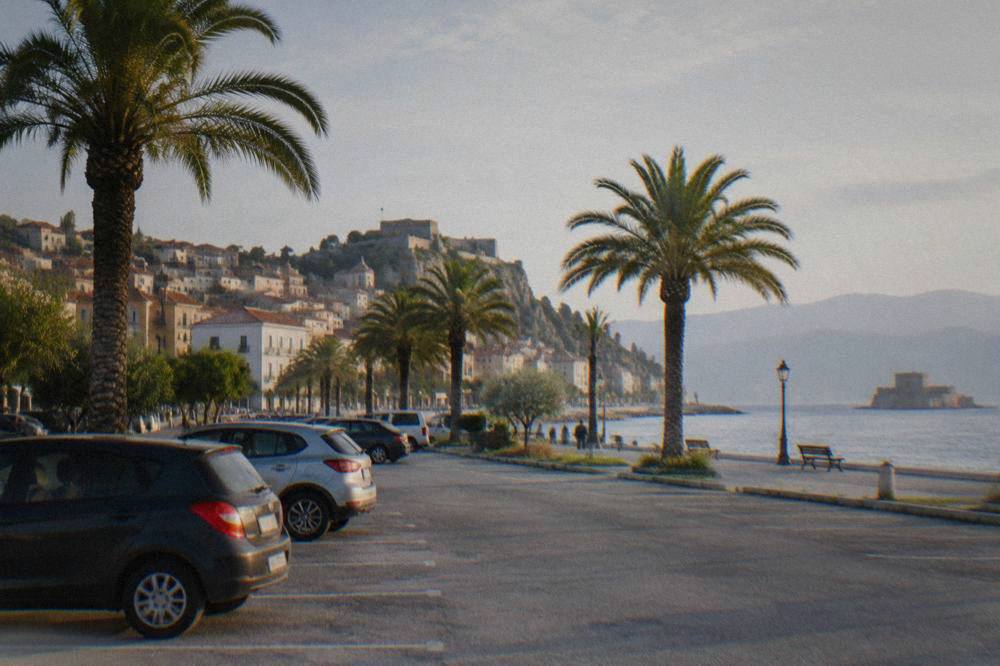
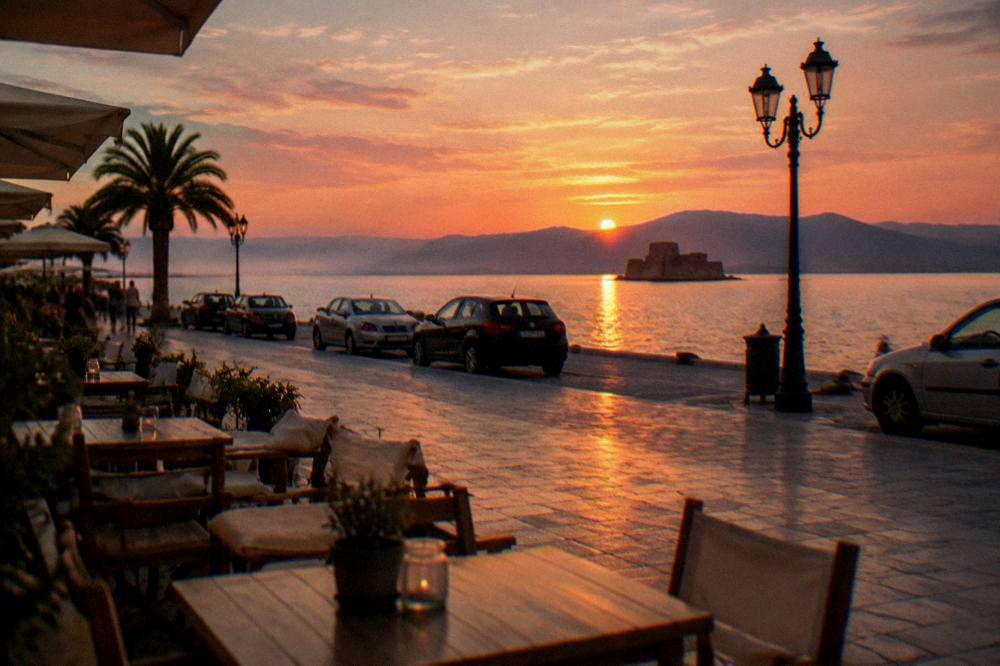
The main free visitor parking in Nafplio sits on the Akti Miaouli waterfront, in public lots between the harbour road and the sea, within a short walk of the Old Town and Syntagma Square. Per cityofnafplio.net, which reports the municipal arrangements, these lots are free and fill early in peak season, and other free or peripheral spots exist towards Arvanitia. No tariff applies in these lots, though enforcement in the paid zones around them is strict, so confirm signage at the kerb.
The waterfront arrangement is the single most useful parking fact in the town. Akti Miaouli is the road that runs along the harbour, and the lots along it are the main option the municipality gives drivers who are staying outside the Old Town or visiting for the day. From there, everything that matters is on foot: the harbour, the lanes of the Old Town, the boats to Bourtzi and the climb to Palamidi all begin within the same small stretch of coast.
Two practical cautions follow from the same sources. First, the free lots fill early in peak season, so a late-morning arrival in July can mean circling. The best time to visit Nafplio guide covers the seasonal rhythm in more detail, and the shoulder months lighten the pressure on parking as much as on the pavements.
A sensible pattern, reported consistently in local guidance, is to park once on the waterfront and treat the car as parked for the day. Every sight inside the town, from Syntagma Square to the Arvanitia side, is reached on foot from Akti Miaouli, and the day trips out to Mycenae, Epidaurus and the Argolid sites start from the same spot when you do move the car.
Why Is The Old Town Closed To Visitor Parking?
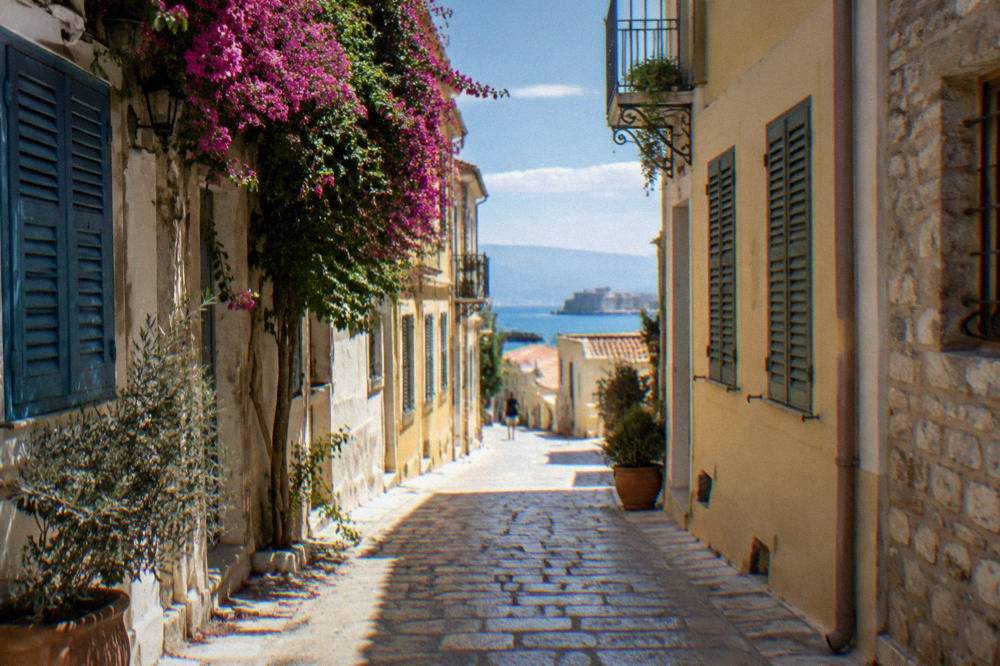
The Old Town of Nafplio is largely closed to visitor parking because its lanes operate under resident permit schemes, with green and white permit zones reserved for locals, per cityofnafplio.net's report on the municipal rules. Visitors are prohibited from parking in those zones, and paid blue-line zones with time limits exist on the periphery, where enforcement is strict. This is the rule that shapes every arrival: the Old Town is not a place to look for a space, it is a place you walk into.
The restriction is not an anti-visitor gesture; it is geometry. The Old Town preserves a street plan from the town's Venetian and Ottoman periods, when Nafplio was a walled port, and its lanes were never drawn for cars. The municipality's answer is to wall them off with permits and push visitor parking to the waterfront and the peripheral streets. The result is that the historic core stays quiet, and the walk from the Akti Miaouli lots into Syntagma Square is part of the visit rather than an inconvenience.
The paid side of the system needs one honest caveat. Check the current price on the machine before leaving the car, and treat any figure printed on an older blog with suspicion. Enforcement is reported as strict, which is the stronger reason to prefer the free lots.
If the Old Town is closed to cars, the natural response is to see it with someone who knows the lanes. The Secrets of Nafplio private walking tour is this site's featured walk for exactly that reason, and its operator's listing carries the current price and availability. The History of Nafplio is dense for a town this size, from the capital years of 1827 to 1834 to the assassination of Kapodistrias in September 1831 outside the Church of Agios Spyridon, and the history guide covers it in full for readers who want the background before a walk.
Is It Better To Visit Nafplio Without A Car?
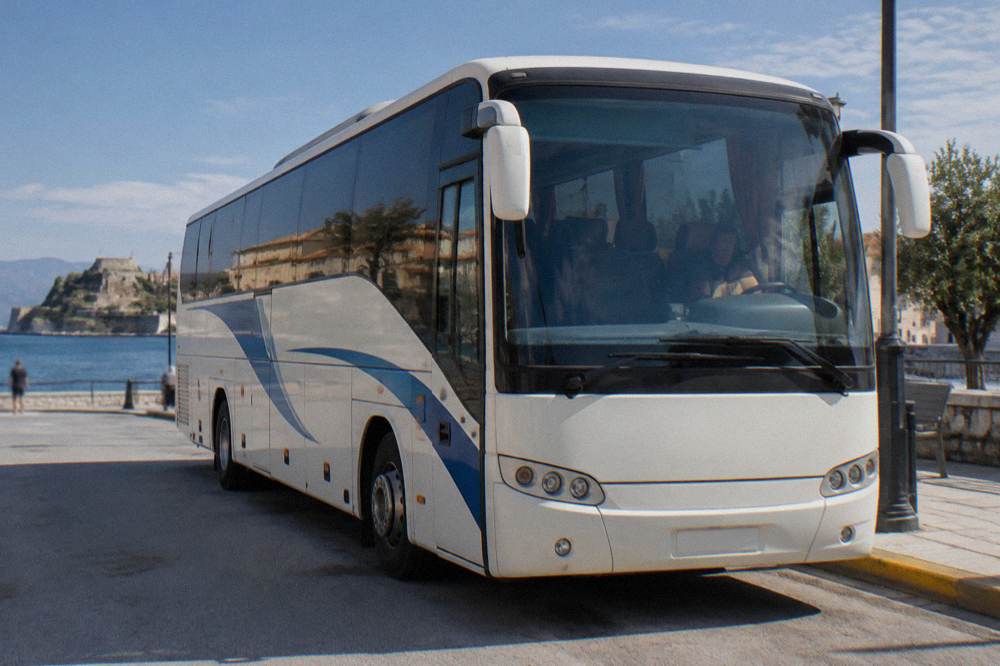
A car is a liability inside Nafplio and an asset outside it: within the town, parking rules push every visitor toward the waterfront lots and walking, while the Argolid's main sights, from Mycenae at about 32 minutes by road to Ancient Corinth at about 61 minutes, have no rail alternative, because no passenger train serves Nafplio in 2026. The practical answer is to arrive by bus or car, park once, and drive only on day trips.
The bus case is stronger than many visitors expect. The reported KTEL coach fare from Athens (Kifissos terminal) to Nafplio is about 15.70 euro one way, with a journey of roughly two hours and ten minutes, and the Athens to Nafplio bus guide covers the detail. From Athens airport there is no direct service; the reported route is the X93 express bus to Kifissos and then the KTEL coach. The train question has a short answer: there is no passenger rail, older guides notwithstanding.
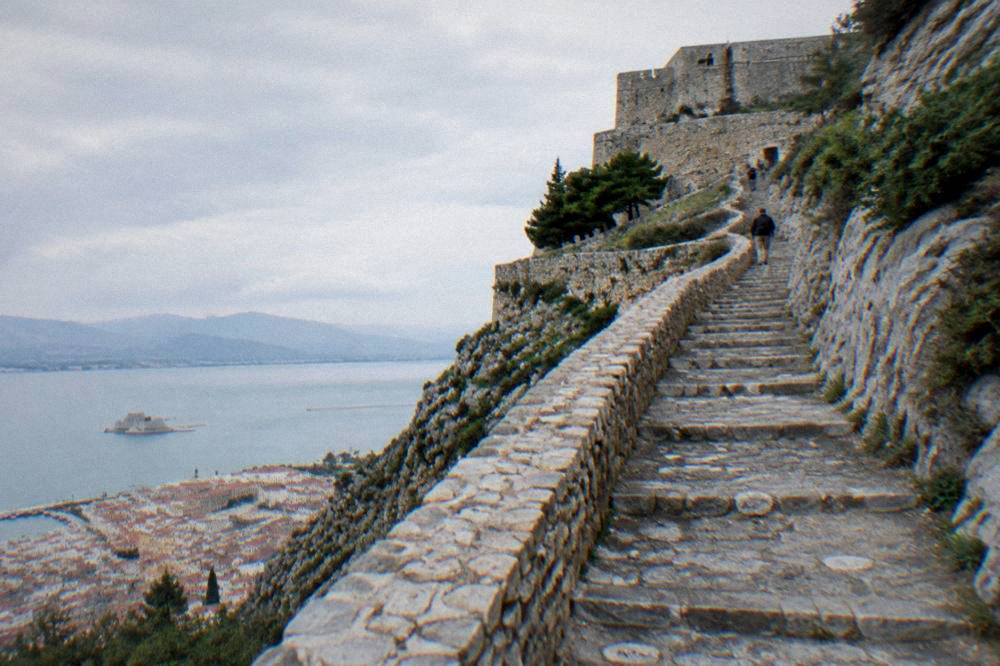
Inside the town, the car earns nothing. The Old Town, the harbour and Syntagma Square sit against one another, Bourtzi is reached by boat, and Palamidi is reached on foot via a stairway of about 850 steps, not the legendary 999 that folklore claims. Local KTEL buses also cover the near reaches on reported fares of about 2.20 euro to Tolo, Argos and Tiryns and about 3.50 euro to Mycenae and Epidaurus, though services to the two archaeological sites are sparse and worth confirming before you rely on them.
A walk-first visit is also the cheapest one. The state sites of Nafplio observe a fixed set of free-admission days each year, and a parking-plus-walking day can be built around them:
| Free-admission day | What it marks |
|---|---|
| 6 March | Melina Mercouri Day |
| 18 April | International Day for Monuments and Sites |
| 18 May | International Museum Day |
| Last weekend of September | European Heritage Days |
| First and third Sundays, November to March | Winter free Sundays |
| 28 October | Ochi Day |
These dates, published on the Ministry of Culture's site pages for Palamidi, Bourtzi and Mycenae, apply across the state archaeological sites and museums, including the Archaeological Museum of Nafplio, which is otherwise 10 euro full and 5 euro reduced and closed every Tuesday.
How Far Are The Day Trips From Nafplio Parking?
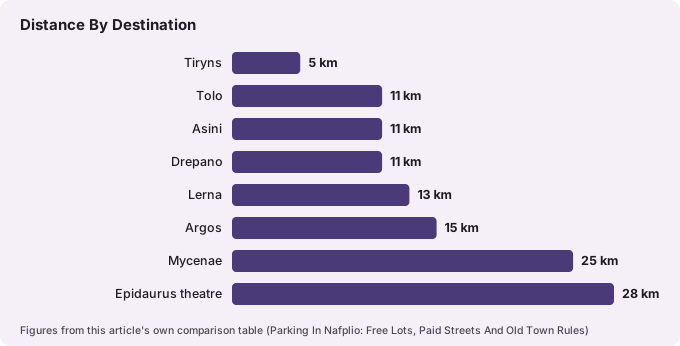
From Syntagma Square, the Argolid's day trips are all short drives: Tiryns about 9 minutes and 5 km, Argos about 18 minutes and 15 km, Tolo about 17 minutes and 11 km, and Mycenae about 32 minutes by road, all computed over standard routing. Epidaurus theatre is about 41 minutes, Ancient Nemea about 46 and Ancient Corinth about 61, which is why the waterfront lots work as a base: park once, walk the town, drive out on single-purpose loops.
The computed drive times and distances from Syntagma Square:
| Destination | Drive time | Distance |
|---|---|---|
| Tiryns | about 9 minutes | 5 km |
| Tolo | about 17 minutes | 11 km |
| Asini | about 17 minutes | 11 km |
| Drepano | about 16 minutes | 11 km |
| Lerna | about 20 minutes | 13 km |
| Argos | about 18 minutes | 15 km |
| Mycenae | about 32 minutes | 25 km |
| Epidaurus theatre | about 41 minutes | 28 km |
| Palaia Epidavros | about 47 minutes | 37 km |
| Ancient Nemea | about 46 minutes | 38 km |
| Nemea town | about 49 minutes | 46 km |
| Ancient Corinth | about 61 minutes | 57.1 km |
| Corinth Canal | about 72 minutes | 68.9 km |
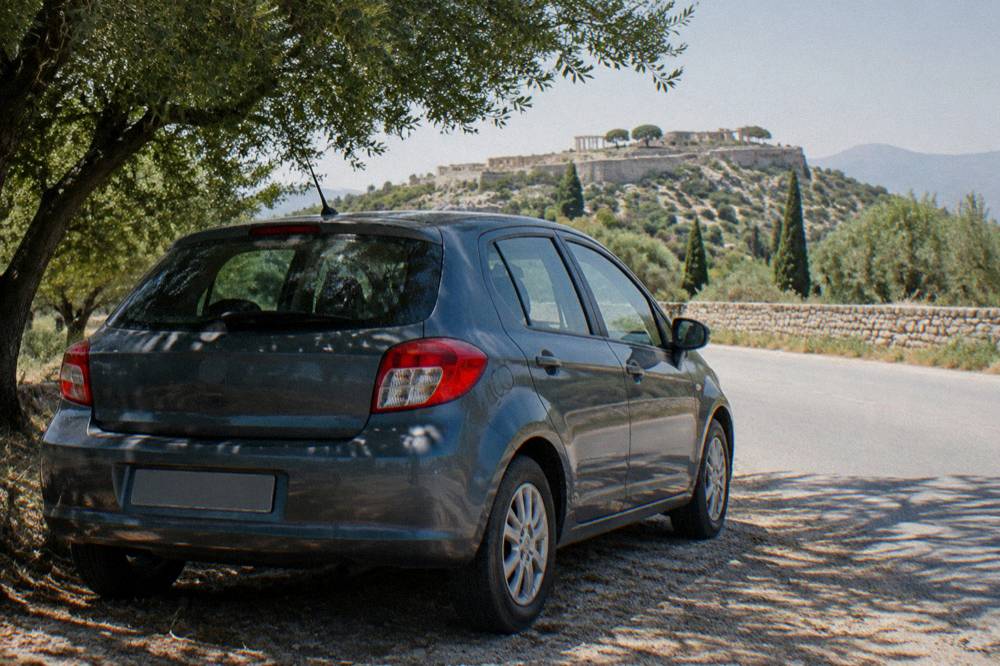
Two of these destinations carry UNESCO status: the Archaeological Sites of Mycenae and Tiryns, inscribed in 1999, and the Sanctuary of Asklepios at Epidaurus, inscribed in 1988. Mycenae's 2026 ticket is 20 euro full and 10 euro reduced, covering the site, the museum and the Treasury of Atreus, and Epidaurus charges the same 20 and 10 for the theatre, sanctuary and museum together. The Tiryns price is not among the figures this site can state, so check the current price on the ticket page before booking anything around it.
For travellers who would rather not drive these loops at all, guided options exist from Nafplio itself. The Epidaurus entry ticket with optional audio guide, available via Check availability, is one way to lock the theatre and sanctuary in advance, and the wider day trips from Nafplio guide compares the routes.
What Do The Parking Rules Mean For Palamidi And Arvanitia?
Palamidi Fortress, standing 216 m above the Old Town, is reached from inside the town on foot, so the waterfront lots serve it, while the Arvanitia side sits beyond the Old Town along the paved coastal path of about 1 km that runs from the harbour lighthouse to Arvanitia square. Neither sight involves driving into the restricted core: Palamidi is a climb from town, and Arvanitia is a walk around the base of Akronafplia on the promenade.
The Palamidi climb is the town's signature effort. The stairway from the town side up to the fortress is usually counted at 857 carved steps, about 850 in round terms, and older guides that repeat the legendary 999 are out of date. The fortress itself was built by the Venetians between 1711 and 1714, taken by the Ottomans in 1715 and liberated by the Greeks in November 1822. Its 2026 ticket is 20 euro full and 10 euro reduced, with the reduced fare sold only from 1 October to 31 May, per the Ministry of Culture's visiting page.
Arvanitia works differently. The promenade around the Akronafplia peninsula is a paved path of about 1 km, per cityofnafplio.net, and Arvanitia Beach below it is a Blue Flag pebble beach organised in summer with showers, changing rooms and sunbed rental. Parking towards Arvanitia is reported as another free or peripheral option, but rockfall stabilisation works have been noted on the path in recent years, so confirm locally that the full circuit is open before planning a loop walk. The Palamidi Fortress guide and the Akronafplia guide carry the sight detail; this page's point is simpler: none of it needs a car once the car is parked.
The fortress hours follow the state-site calendar, which is worth having beside the parking plan:
| Period (Palamidi, 2026) | Hours |
|---|---|
| Winter season | 08:30 to 15:30 |
| April | 08:00 to 19:00 |
| From 2 May | 08:00 to 20:00 |
| 1 to 15 September | 08:00 to 19:30 |
| 16 to 30 September | 08:00 to 19:00 |
| 1 to 15 October | 08:00 to 18:30 |
| 16 to 31 October | 08:00 to 18:00 |
Closed days are 1 January, 25 March, 1 May, Easter Sunday and 25 and 26 December, with Good Friday hours of 12:00 to 17:00. An early start on the stairs pairs naturally with an early claim on a waterfront space.
What Does Parking Cost Compared To Sightseeing In Nafplio?
The free waterfront lots make parking itself a zero-cost line in a Nafplio budget, which matters because the sightseeing adds up: Palamidi at 20 euro, Bourtzi at 7 euro, the Archaeological Museum at 10 euro and a Mycenae day trip at another 20 euro per adult in 2026 tickets, per the Ministry of Culture's pages. The comparison is the point: in the one Greek town where the main lots are reported free, the spend shifts entirely to what the sites charge.
The ticket picture across the state sites within easy reach of the waterfront lots:
| Site | Full ticket | Reduced ticket |
|---|---|---|
| Palamidi Fortress | 20 euro | 10 euro |
| Bourtzi | 7 euro | 5 euro |
| Archaeological Museum of Nafplio | 10 euro | 5 euro |
| Mycenae (site, museum, Treasury of Atreus) | 20 euro | 10 euro |
| Epidaurus (theatre, sanctuary, museum) | 20 euro | 10 euro |
| Argos Ancient Agora and Ancient Theatre | 10 euro | 5 euro |
| Asini | 5 euro | 3 euro |
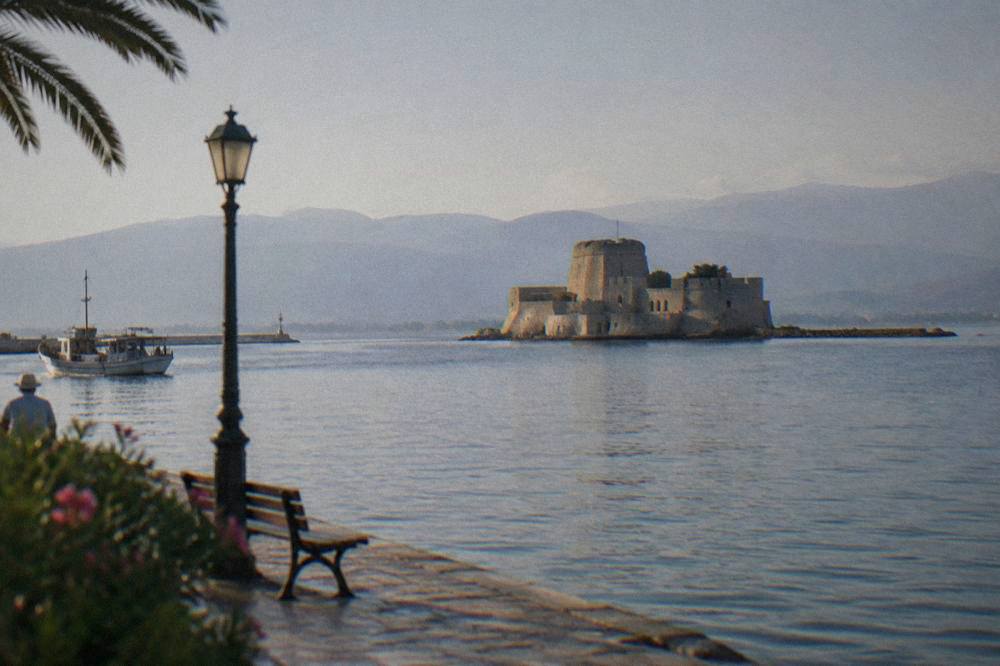
Two footnotes to that table. Bourtzi is open to visitors, reached by boat from the harbour for a separate fee that the official pages do not print, so confirm the boat price at the jetty. And the reduced tickets at the big three, Palamidi, Mycenae and Epidaurus, are sold only from 1 October to 31 May; from 1 June to 30 September only the full 20 euro ticket applies.
Beyond the sites, the paid activities slot into the same walkable radius. A cooking class such as Savor Nafplio, bookable via Check availability, runs in the town itself, as does the food and taverna scene covered in the where to eat in Nafplio guide. None of it requires moving the car, which is the quiet argument for the waterfront-park-once routine: the day's costs become tickets and food, not fuel and meters.
When Is Nafplio Parking Under The Greatest Strain?
The pressure on Nafplio's free lots follows the climate and the calendar: July and August bring the year's highest mean daily highs on the station record, 34.0 and 33.7 C at the HNMS Argos station, 1980 to 2010, alongside low rainfall of 9.1 and 13.0 mm, and the same months carry the summer holiday season. October, at a mean high of 24.7 C and 6.9 rain days, is the calmer shoulder alternative.
The climate record, the only one this site prints, reads as follows for the months that matter to a parking plan:
| Month | Mean daily high | Mean daily low | Rainfall |
|---|---|---|---|
| May | 26.5 C | 10.5 C | 18.7 mm |
| June | 31.4 C | 14.0 C | 8.9 mm |
| July | 34.0 C | 16.7 C | 9.1 mm |
| August | 33.7 C | 16.8 C | 13.0 mm |
| September | 29.7 C | 14.2 C | 20.3 mm |
| October | 24.7 C | 11.5 C | 44.3 mm |
November, at 82.5 mm of rain on the same station record, is a rainier month than any in the table, which is one reason the winter half-year is both easier for parking and quieter for the town overall; the Nafplio in winter guide and the weather guide carry the full picture. The trade is simple: fewer cars and free Sundays at the sites from November to March, against shorter site hours, with the state sites running 08:30 to 15:30 through winter.
The practical reading of the free-lots-fill-early report is time-of-day based rather than statistical: treat midday in the hot months as the pinch point, and treat an evening arrival, when the sites have closed but the waterfront tavernas are open, as the easy one. A two-day Nafplio itinerary spreads the same sights across two mornings and dodges the pinch entirely.
Common Questions About Parking In Nafplio
Is there free parking in Nafplio?
Yes, per cityofnafplio.net's report on the municipal arrangements: free public lots sit on the Akti Miaouli waterfront within a short walk of the Old Town, and they are the main visitor option. They fill early in peak season, so arrive early or late in the day in July and August.
Can you park in the Old Town of Nafplio?
Largely no. The Old Town operates resident permit zones, reported as green and white permit areas closed to visitors, with paid blue-line zones and time limits on the periphery where enforcement is strict. Visitors park on the waterfront and walk in.
What does paid parking cost in Nafplio?
Check the current price on the machine before leaving the car.
Do you need a car in Nafplio?
Not inside the town: the Old Town, Syntagma Square, Bourtzi's boat jetty and the Palamidi stairway are all reached on foot from the waterfront lots. A car earns its keep on the day trips, with Mycenae about 32 minutes and Epidaurus theatre about 41 minutes by road from Syntagma Square. No passenger train serves Nafplio in 2026.
Where do you park for Palamidi Fortress?
The waterfront lots on Akti Miaouli serve Palamidi, since the fortress is climbed from the town side on a stairway of about 850 steps, usually counted at 857 and often misstated as 999. The 2026 ticket is 20 euro full and 10 euro reduced, the reduced fare sold only from 1 October to 31 May.
Is parking in Nafplio difficult?
It is difficult only in the hot middle of the day in high season, when the free waterfront lots are reported to fill. The Pronia side and streets toward Arvanitia add peripheral options, and the where to stay in Nafplio guide helps travellers pick a base that reduces the need to move the car at all.