Olympia From Nafplio: A Long Day For The Birthplace Of The Games
Ancient Olympia sits about 173 km by road from Syntagma Square in Nafplio, which makes it the longest of the town's day trips by car and a trip that rewards an early start.
Short answer
The site's admission price and hours are not covered here, so confirm them on the official ticket page before you set out.
Nafplio, the small coastal town in the Argolid on the Peloponnese's east coast, sits closer to Mycenae, Epidaurus and Tiryns than almost any other base in Greece, but Ancient Olympia lies at the far western edge of the peninsula, about 173 km by road from Syntagma Square. That distance defines the whole trip. A day at Olympia from Nafplio is possible, and plenty of travellers do it, but it is a genuinely long day of driving for a single site, and this page sets out what the sources actually support so the decision can be made with real numbers rather than optimism.
The Nafplio Travel Guide treats Olympia as one of the farther excursions from the town, alongside Mystras and Monemvasia, and the planning logic is the same for all three: the drive is the trip. What follows covers the drive itself, what Olympia contains, how the day is best structured, and what the closer alternatives look like for anyone who reads the drive times and decides against them.
How Far Is Olympia From Nafplio?
Ancient Olympia lies about 186 minutes and 173 km by road from Syntagma Square in Nafplio, computed over free-flow routing, which means roughly six hours of driving there and back before a single ruin is seen. There is no train and no direct bus between the two towns, so the trip runs on a hired or private car, or on an organised excursion. The figure is a free-flow estimate, not a timetable, and summer traffic can stretch it.
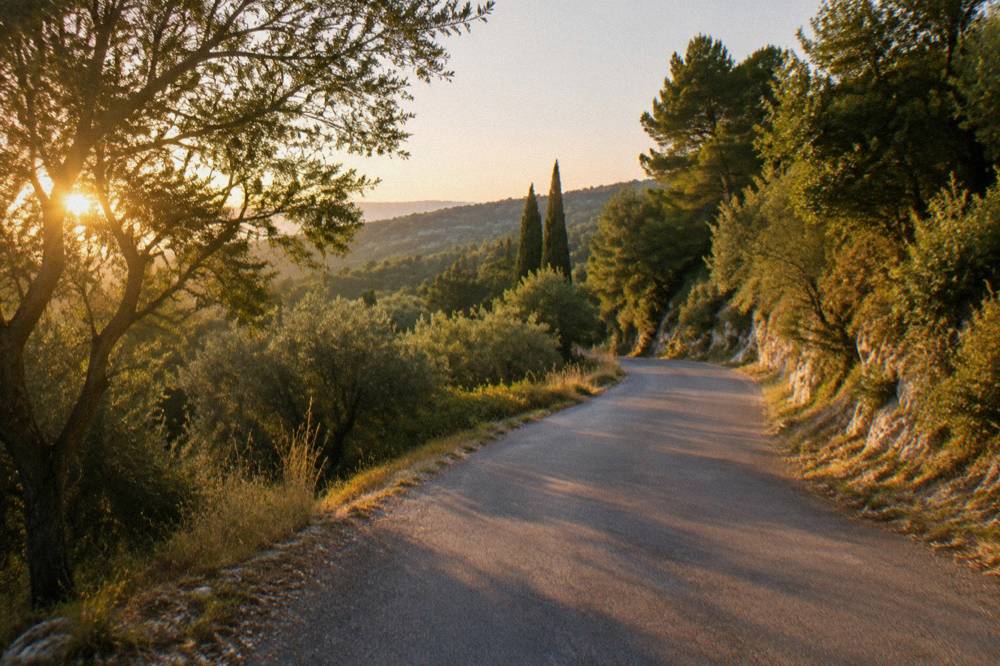
That drive time comes from routing computed over the road network, and it deserves to be taken literally. Six hours behind the wheel is a working day in itself. The route runs west across the northern Peloponnese, past the wider region's hills and river valleys, and the final approach drops into the Alpheus valley where the sanctuary sits. Fuel, food and comfort stops add time that no routing engine counts.
The comparison with Nafplio's other day trips makes the point sharper than any adjective could. The table below shows free-flow drive times from Syntagma Square to the destinations this site covers, and Olympia sits at the bottom of it by a wide margin.
| Destination | Drive time from Nafplio | Distance by road |
|---|---|---|
| Tiryns | about 9 minutes | 8.3 km |
| Argos | about 18 minutes | 14.5 km |
| Tolo | about 17 minutes | 11.4 km |
| Mycenae | about 32 minutes | 25.4 km |
| Epidaurus theatre | about 41 minutes | 27.7 km |
| Nemea town | about 49 minutes | 46 km |
| Ancient Corinth | about 61 minutes | 57 km |
| Mystras | about 124 minutes | 128.4 km |
| Ancient Olympia | about 186 minutes | 172.7 km |
| Monemvasia | about 219 minutes | 208.2 km |
Only Monemvasia is farther. Anyone whose holiday base is Nafplio and whose priority is the archaeology of the Argolid should notice that Mycenae, Tiryns, Argos and Epidaurus together involve less driving than Olympia alone, and Mycenae and Epidaurus are UNESCO World Heritage sites reachable in under an hour. Olympia's own World Heritage inscription is the other one in the Peloponnese, and that status is part of why the long drive stays on so many itineraries.
Is Olympia Worth The Drive From Nafplio?
Olympia earns its long day on substance rather than convenience: it is the sanctuary where the ancient Games were held, a UNESCO World Heritage site, and the one place on a Nafplio-based itinerary where the classical Peloponnese's western half can be seen in a single stop. The honest counterweight is arithmetic, since about 186 minutes each way buys one site, and the same hours spent nearer Nafplio cover several.
The case for going is straightforward. The sanctuary of Olympia, with its temple remains, its stadium and its museum, is one of the most significant archaeological sites in Greece, and for a traveller staying in the Peloponnese it is usually the westernmost highlight within range. The games held here gave the modern Olympics their name and their four-year cycle, and the site's ruins and museum together tell that story in place rather than in a display case somewhere else. For a first-time visitor with a full week in Nafplio and a car, one long day west is a reasonable use of one of those days.
The case against is equally plain. Six hours of driving compresses the visit itself, because a sensible return before dark caps the time on site. Two drivers make the day easier; one driver doing both legs does not. Families with small children, anyone who dislikes mountain roads, and travellers on a short stay of two or three nights in Nafplio will usually be better served by the closer cluster. The two days in Nafplio plan spends its second day on Argolid sites precisely because the drive times there are forgiving.
For anyone who wants a guided day but not a self-driven six-hour round trip, there are bookable options that depart from Nafplio and handle the driving and the commentary.
The featured option, a full-day guided tour through Mycenae and Nafplio, covers ground this site can vouch for; Check availability on the operator's live listing if a guided Argolid day appeals more than a solo drive west.
How Do You Get From Nafplio To Olympia Without A Car?
Without a car, Olympia from Nafplio means an organised excursion or a roundabout public-transport journey, because there is no direct Nafplio-to-Olympia bus route and no rail link at all, with no passenger train serving Nafplio in 2026. The practical answer for a car-free traveller is a tour with transport included, or a decision to substitute a nearer site.
The transport picture in the region has hard edges. Nafplio's bus links, run by KTEL Argolida, reliably serve the near Argolid: reported fares include about 2.20 euro to Tolo and Argos and about 3.50 euro to Mycenae and Epidaurus, though the Mycenae and Epidaurus services are sparse and should be confirmed before relying on them. Athens is reachable by KTEL from the Kifissos terminal for a reported 15.70 euro one way in about 2 hours 10 minutes. None of that reaches Olympia directly.
A car-free traveller set on Olympia should either book an excursion that states its transport clearly on the operator's live listing, or reframe the day around the sites the buses do serve.
It is also the answer for anyone who lands in the section above feeling deflated: the region around Nafplio is dense with world-class sites that need no car and no six-hour drive.
What Do You Actually See At Ancient Olympia?
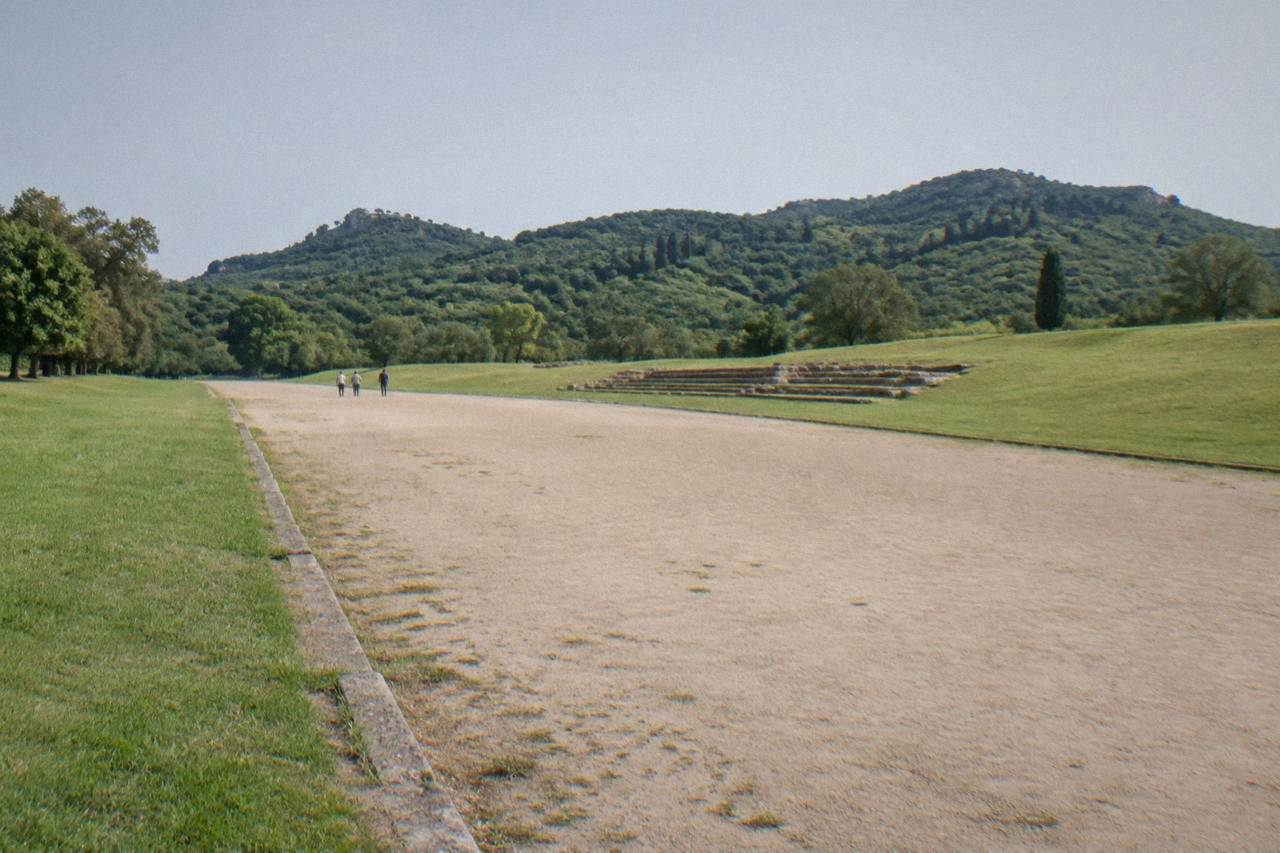
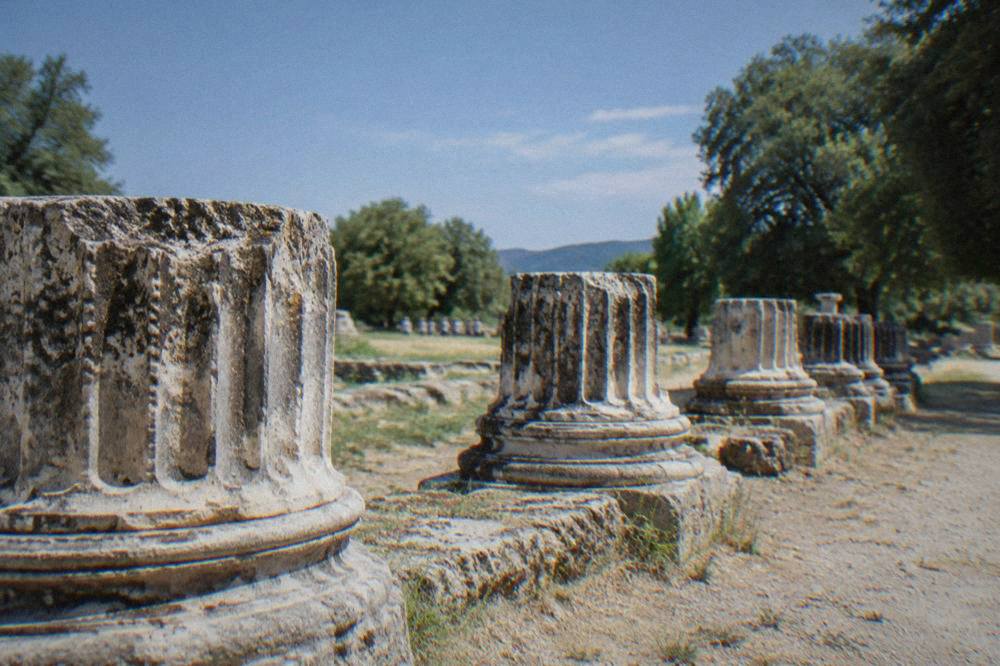
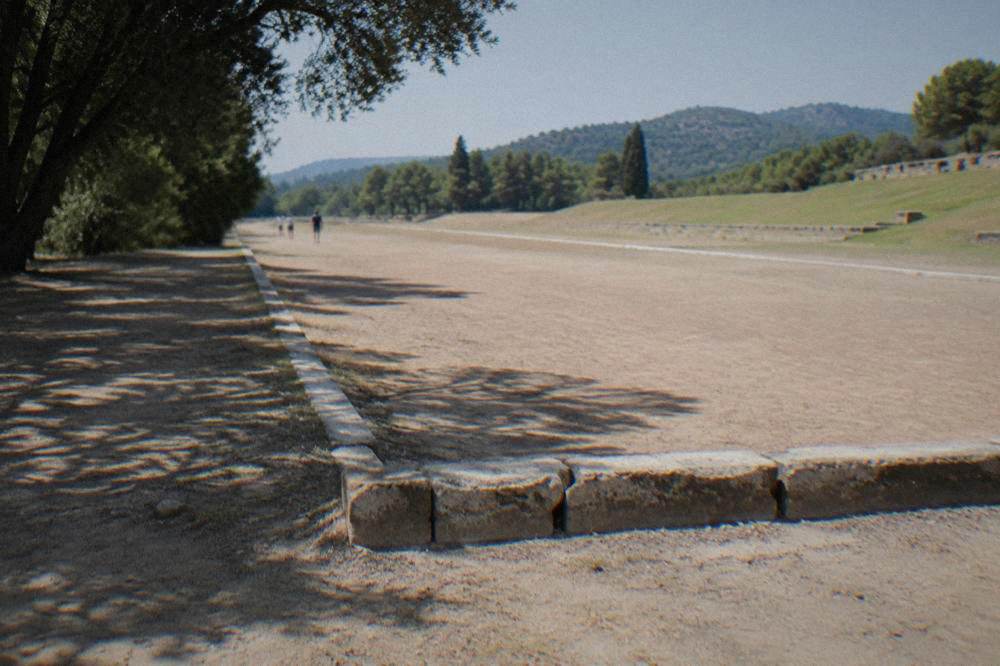
Olympia's archaeological site centres on the sanctuary ruins, including the temple of Zeus and the stadium with its stone starting line, alongside an archaeological museum that holds the site's major finds, and the modern town beside the site provides the practical services of a small tourist settlement. This site's sources verify the site's significance and setting but not its admission price or hours, so those must be confirmed on the official ticket page before travelling.
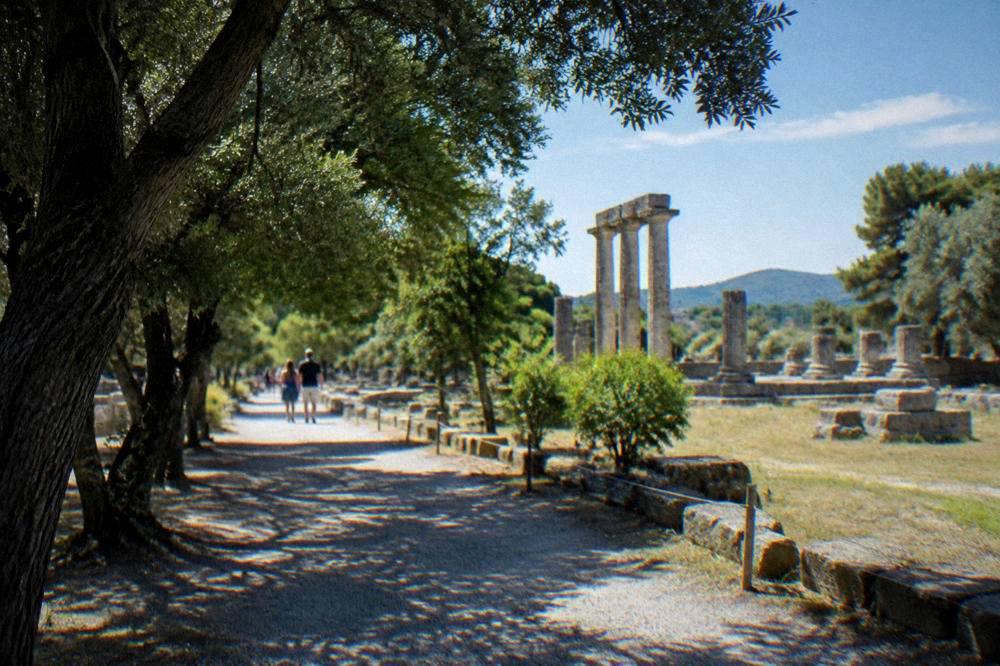
The ancient sanctuary occupied a flattening of ground beside the Alpheus river, enclosed by wooded hills, and the ruins open around that landscape rather than forming a compact monument. The stadium, where the foot races were run, sits at one end of the complex, and the remains of the temples and the auxiliary buildings stretch between it and the Altis, the sacred grove at the sanctuary's heart. The museum beside the site displays the sculpture and artefacts recovered from the excavations and is generally treated as an essential half of the visit rather than an optional extra.
Two honesty notes apply.
What can be said with confidence is the character of the place: a green, riverine site unlike the bare hilltops of Mycenae or the theatre-bowl of Epidaurus, and that contrast is part of what the long drive delivers. A visitor who has already walked the Argolid's stone will find Olympia a different texture entirely.
How Should You Structure The Day Trip To Olympia?
The workable structure is an early morning departure from Nafplio, about 186 minutes of driving west, several hours on the site and in the museum with a meal break in the modern town, and the return leg started in time to finish the mountain roads in daylight, which in practice makes it a dawn-to-dusk day from roughly June to September. A single driver should treat the day as demanding and plan rest stops both ways.
The single most valuable planning decision is the departure time. Leaving Nafplio early keeps the arrival before the midday heat, which matters in a summer month: the HNMS Argos station, 1980 to 2010, records a mean daily high of 34.0 C in July and 33.7 C in August, figures from an inland station about 10 km north-west of Nafplio, and the Olympia lowland in summer is comparably hot. Shaded Olympia is greener than the Argolid sites, but midday walking on any Greek site in July deserves an early start.
The second decision is the shape of the return. Some travellers break the journey back with a stop, and the drive passes within range of several of the Peloponnese's other sights, but adding a second major site to an Olympia day turns a long day into an unreasonable one. The honest framing is that Olympia plus one brief stop is a full day, and Olympia plus Mystras is two days, better planned as an overnight through the western and southern Peloponnese than attempted as a loop.
| Month | Mean daily high (C) | Mean daily low (C) | Rainfall (mm) |
|---|---|---|---|
| May | 26.5 | 10.5 | 18.7 |
| June | 31.4 | 14.0 | 8.9 |
| July | 34.0 | 16.7 | 9.1 |
| August | 33.7 | 16.8 | 13.0 |
| September | 29.7 | 14.2 | 20.3 |
| October | 24.7 | 11.5 | 44.3 |
The table above is the HNMS Argos station record, 1980 to 2010, the nearest official station to Nafplio, and it maps directly onto planning. May, early June, September and October offer the most comfortable driving-and-walking temperatures; July and August demand the early start and a long midday break; and the wetter shoulder months carry more rain days, which on a green site with long walks is a fair trade against heat. Winter trips are possible but the short daylight eats into both ends of a six-hour round trip, and this site's Nafplio in winter and rain planning notes apply.
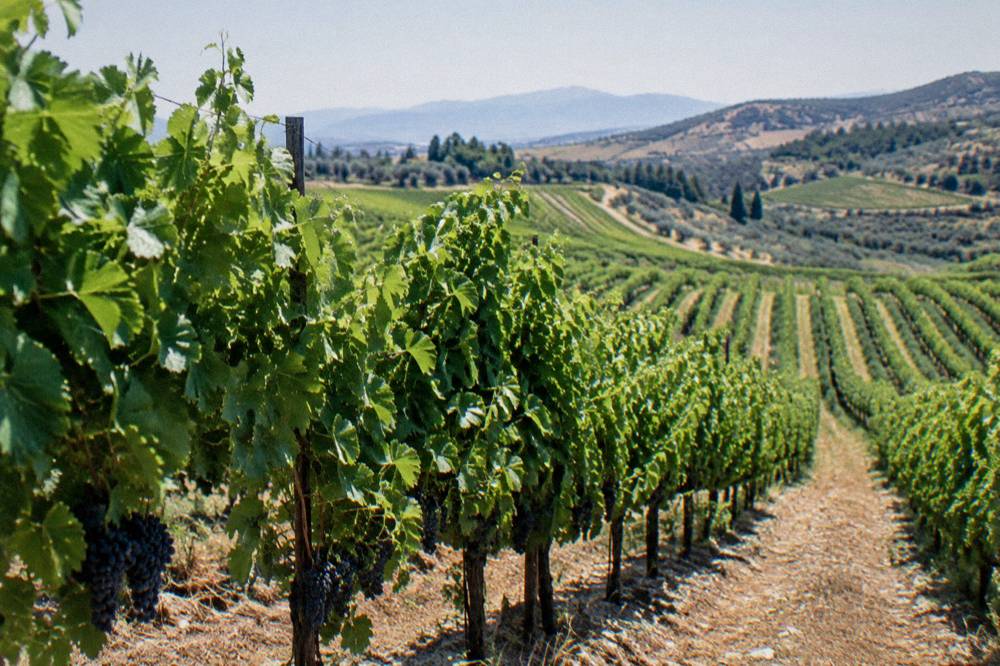
A day built around Nemea's vineyards and the ancient site at Ancient Nemea is a fraction of the driving and a genuinely different reward.
What Are The Best Alternatives If The Drive Is Too Long?
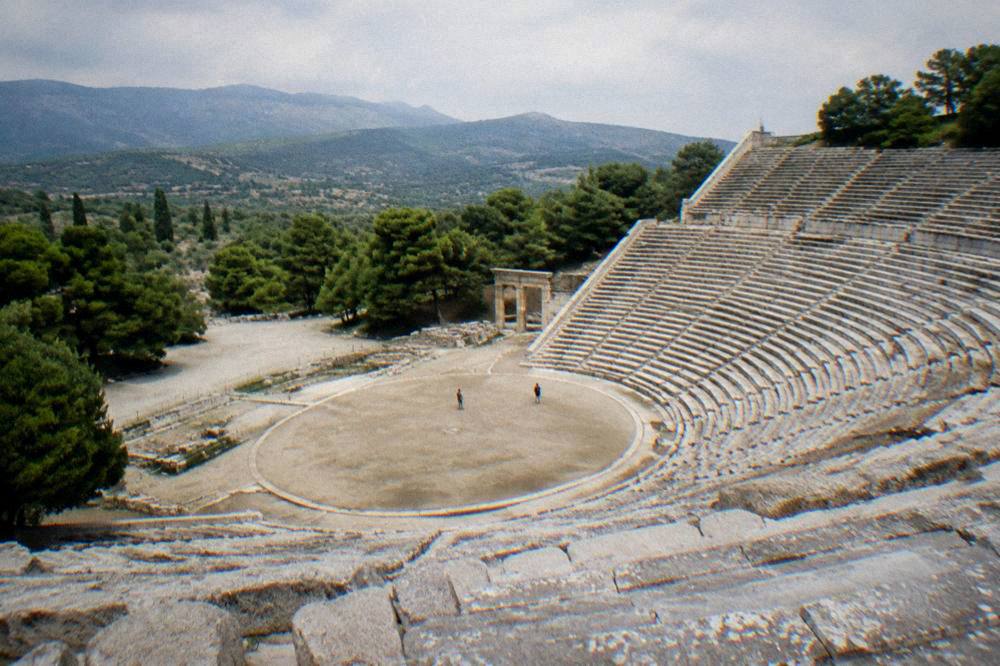
The best alternatives to Olympia from Nafplio are Mycenae and Epidaurus at 32 and 41 minutes by road respectively, both UNESCO World Heritage sites whose full ticket costs 20 euro and the reduced ticket 10 euro, or Ancient Corinth and the Corinth Canal at about 61 and 72 minutes, which pair neatly into a single day with far less driving than Olympia.
The near Argolid is the obvious substitute and it is not a consolation prize. Mycenae's ticket, listed on the Ministry of Culture's own page, covers the site, the museum and the Treasury of Atreus, and Epidaurus's covers the theatre, the sanctuary and the museum, both at 20 euro full and 10 euro reduced, with the reduced ticket sold only from 1 October to 31 May. The question of fitting both into one day is answered on this site's dedicated page, can you visit Mycenae and Epidaurus in one day, and the drive times make the answer generous.
A second alternative runs north. Ancient Corinth and the Corinth Canal together form a day of about 61 to 72 minutes of driving each way, with the canal open to shipping and crossed en route by road, and the two stops complement each other, one ancient city and one engineering landmark.
| Alternative day trip | Drive time from Nafplio | Ticket (full / reduced) |
|---|---|---|
| Mycenae | about 32 minutes | 20 / 10 euro |
| Epidaurus theatre | about 41 minutes | 20 / 10 euro |
| Argos agora and theatre | about 18 minutes | 10 / 5 euro |
| Asini | about 17 minutes | 5 / 3 euro |
A third alternative, for the traveller who wants a long drive but a different destination, is Mystras at about 124 minutes, the Byzantine city in the southern Peloponnese. Whichever substitute is chosen, the same rule holds: check the current price on the ticket page before booking, and treat drive times as free-flow estimates rather than promises.
The guided options above cover the substitute days rather than Olympia itself, because they are the trips this site's roster documents with real, current listings. For a traveller weighing Olympia against a guided Argolid day, the deciding facts are now on the table: the long drive against a short hop to Mycenae, and a single site against several.
Can You Combine Olympia With Anything Else In One Day?
Combining Olympia with another major site in one day from Nafplio is not realistic, since about 186 minutes each way already fills half the day with driving, and the credible combinations are either Olympia alone, or Olympia as part of a two-day western-and-southern loop with an overnight, pairing it with destinations such as Mystras or Monemvasia across two days of driving.
The arithmetic is the whole argument. A single site day with six hours of driving leaves room for lunch and a full site visit and nothing more. Stretching to a second major stop means either cutting the Olympia visit short, which wastes the drive, or driving the return leg late, which on Peloponnese roads is unwise. The two-day version, by contrast, is a genuinely good trip: Olympia on the first day, an overnight in the western or southern Peloponnese, and Mystras at about 124 minutes or Monemvasia at about 219 minutes from Nafplio woven into the second day's route back. Travellers planning that shape of trip should read this site's pages on Mystras and Monemvasia for the individual sites.
For a strictly single-day outing with two stops, the pairings that work are all in the near and mid Argolid: Mycenae with Nafplio's own Old Town, Epidaurus with a coastal return through Tolo, or the Corinth pair described above. Those are the days a Nafplio base was made for.
There is also the Athens-based framing to consider. Many travellers reach the Argolid on a day tour out of Athens that calls at Nafplio, and this site's page on whether Nafplio is a day trip from Athens covers that direction of travel. For anyone whose itinerary starts in Athens, Olympia is commonly visited from the western side of the country on a separate leg, which is one reason this site's roster holds Athens-departing Argolid tours rather than Olympia excursions.
What Should You Know Before You Go To Olympia?
Before setting out, a traveller from Nafplio needs four things confirmed: the site's current admission price and hours, which this site's sources do not carry; a realistic fuel and stop plan for about 186 minutes each way; a weather check against the seasonal norms, since July and August mean daily highs near 34°C at the nearest official station; and an early start fixed the night before, because the return leg rewards finishing in daylight.
Nothing is invented, and the reader is pointed once, plainly, to the official ticket page. Greek state sites elsewhere in this region follow seasonal schedules, with winter hours shorter than summer ones, so the time of year matters as much as the day of the week, and public holidays can close sites entirely.
On the practicalities of the drive: the route crosses the width of the Peloponnese, and a full tank at departure, water in the car, and an agreed mid-morning stop make the day feel different. The emergency number in Greece is 112, and the General Hospital of Nafplio switchboard is +30 2752 361100 for anything before departure. Greece uses the euro and is a Schengen member, so no border formalities figure in the trip.
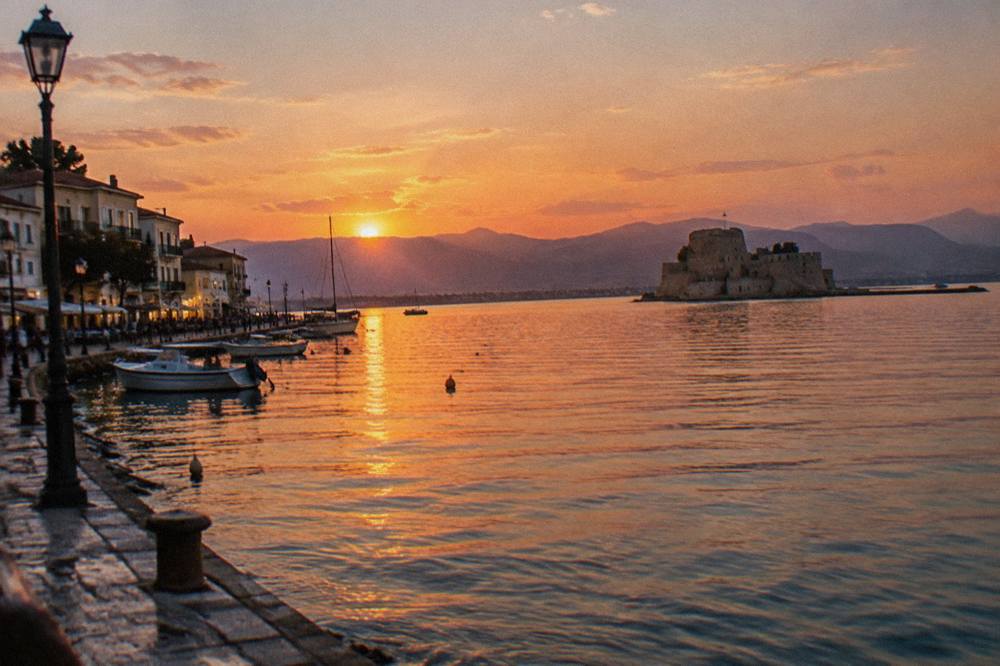
On what to carry: the site itself is a walking landscape of ruins, track and shade, so the usual kit of a hat, closed comfortable shoes and more water than seems reasonable covers it. The museum visit is the natural middle of the day when the heat peaks. And for the evening return, the reward is real: the drive back ends on the Argolic Gulf, and a late arrival in Nafplio's Old Town is one of the nicer ways to finish a long day of Peloponnese driving.
Common Questions About Olympia From Nafplio
How far is Olympia from Nafplio?
About 186 minutes and 173 km by road from Syntagma Square in Nafplio, computed over free-flow routing, which means roughly six hours of driving there and back before time on site.
Is there a bus or train from Nafplio to Olympia?
Without a car, the options are an organised excursion with transport included or a substitute day among the Argolid sites the buses serve.
What does Olympia cost to visit?
Check the current price on the official ticket page before booking or setting out.
Is Olympia worth a day trip from Nafplio?
It can be, for a traveller with a car, a full week and an appetite for the drive: it is the sanctuary of the ancient Games and a UNESCO World Heritage site. The counterweight is that about 186 minutes each way buys one site, while the same hours nearer Nafplio cover Mycenae, Epidaurus and more.
Can you visit Olympia and Mystras in one day from Nafplio?
Not sensibly. Olympia alone is about 186 minutes each way from Nafplio and Mystras about 124 minutes, in different directions; the realistic version is a two-day loop with an overnight in the western or southern Peloponnese.
What is a good alternative to Olympia from Nafplio?
Mycenae and Epidaurus, at about 32 and 41 minutes by road, both UNESCO World Heritage sites with tickets at 20 euro full and 10 euro reduced, or the Ancient Corinth and Corinth Canal pair at about 61 and 72 minutes.
The long drive west is a legitimate day, and for the traveller whose heart is set on the birthplace of the Games, the numbers above make it plannable rather than merely tempting. For everyone else, the Argolid around Nafplio delivers more sites per hour of driving than any direction a car can point from Syntagma Square.