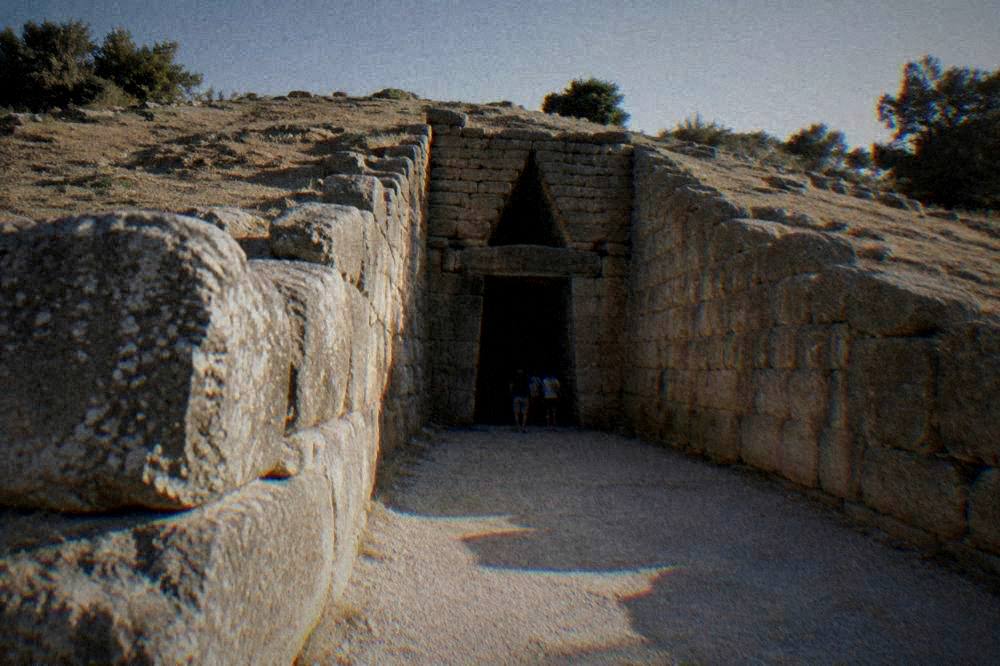
Asini: The Acropolis At Kastraki Beach
Ancient Asini sits on the Kastraki headland about 17 minutes by road from Syntagma Square in Nafplio, a walled acropolis with its own beach and one of the smallest state ticket prices in the Argolid.
Short answer
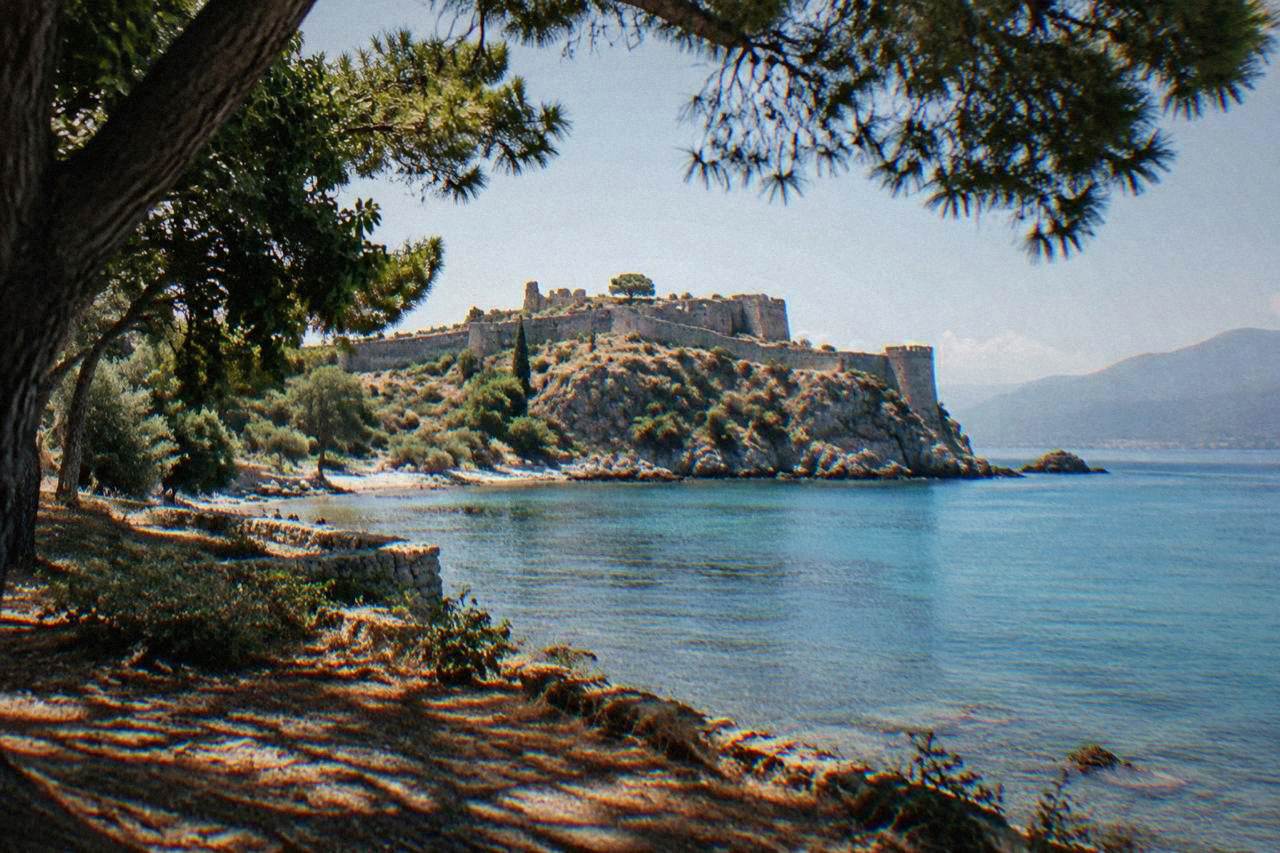
Ancient Asini is about 11 km and 17 minutes by road from Syntagma Square in Nafplio. A ticket costs 5 euro full and 3 euro reduced, the smallest price among the Argolid's state sites, and the site combines a Hellenistic-to-Venetian walled acropolis with the beach at Kastraki below it.
Nafplio, the small coastal town on the Argolic Gulf that served as the capital of Greece from 1827 to 1834, keeps its headline ruins close: Palamidi above the rooftops, Bourtzi in the harbour, Mycenae and Epidaurus within an hour's drive. Ancient Asini is the quiet one. It stands on the Kastraki headland about 11 km and 17 minutes by road from Syntagma Square, a low promontory of cyclopean, Hellenistic and Venetian walls pushing out into the sea toward the island of Romvi, with a swimming beach tucked directly below the fortifications. The Ministry of Culture's visiting page lists the ticket at 5 euro full and 3 euro reduced, the smallest admission price among the Argolid's state archaeological sites. This page lays out what the sources say about the ruins, the beach, the practicalities of getting there and the pairings that make the short drive worthwhile.
What Is Ancient Asini Near Nafplio?
Ancient Asini is the archaeological site on the Kastraki headland at Tolo bay, about 17 minutes and 11 km by road from Syntagma Square in Nafplio, a fortified acropolis occupied from Mycenaean times through the Venetian period, listed by the Ministry of Culture with a 5 euro full ticket and a 3 euro reduced ticket. The headland looks south across the water to the island of Romvi and the longer beaches of the Tolo shore. Homer names Asini in the Iliad's catalogue of the ships that sailed to Troy, which is the site's oldest literary mention, and the town's name survives unchanged in the modern village inland. Excavations led by a Swedish expedition exposed the lower city and the acropolis walls visitors walk today. The site is small by Argolid standards, and that is its appeal: it can be walked in a leisurely circuit and finished with a swim.
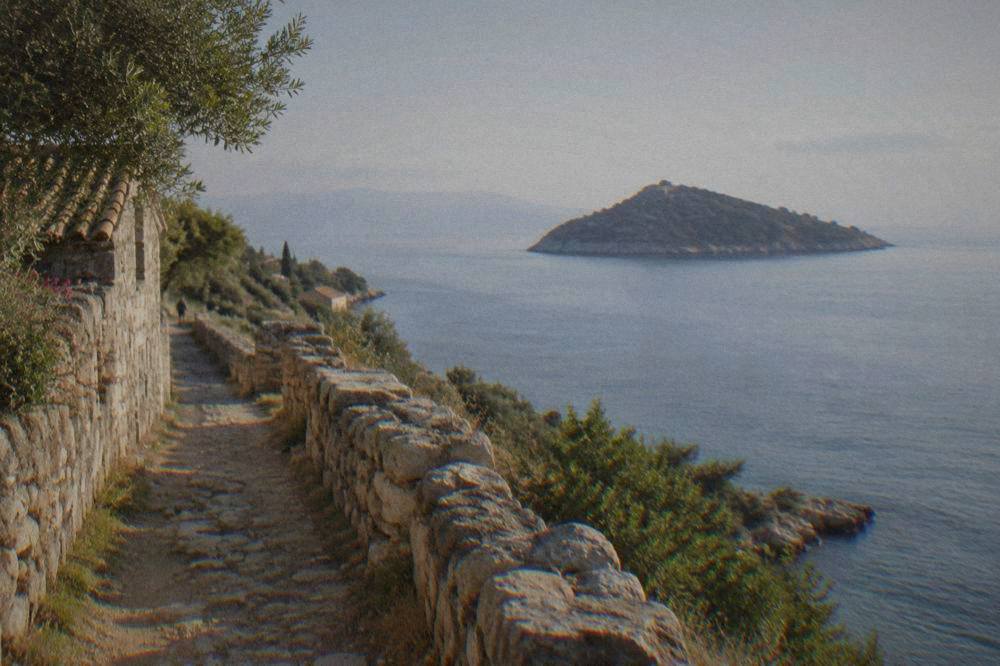
The walls themselves tell the whole history of the Argolid in stone. The earliest stretches on the acropolis are built in the cyclopean style associated with Mycenaean engineering, the same tradition visible at nearby Tiryns and Mycenae, both part of the UNESCO Archaeological Sites of Mycenae and Tiryns inscription of 1999. Later phases added Hellenistic masonry, and the Venetians refortified the headland during their periods of rule in the region, from 1389 to 1540 and again from 1686 to 1715, because the promontory guards the sea approach to the Argolic Gulf. A ruin of a small church stands inside the circuit. The Ministry of Culture's page for the site gives no separate opening-hours schedule beyond the standard winter slot, so confirm the hours on the ticket page before setting out, and check the current price there too.
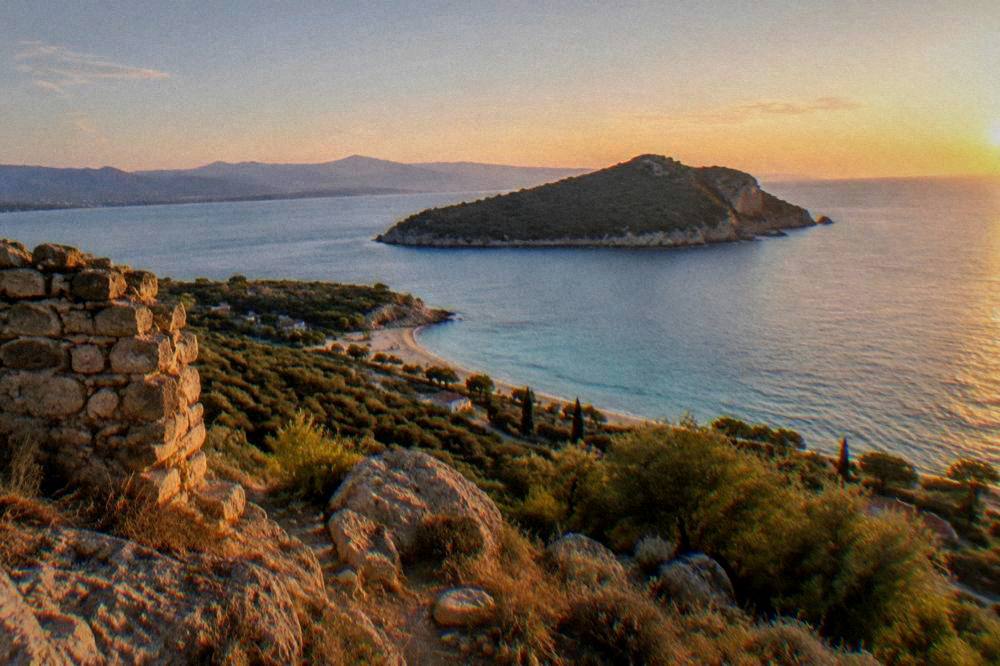
The setting matters as much as the masonry. Kastraki is nearly an island, attached to the mainland by a low neck of land, with water on three sides and the beach of Kastraki, sometimes called the beach below the acropolis, shelving into the bay on the north side. The climb to the top of the headland takes minutes rather than hours, and the reward is a view that runs from the Tolo shoreline to the mouth of the gulf. For context on how this little site fits the bigger picture around the first capital of modern Greece, see the Nafplio overview page.
How Much Does Asini Cost And When Is It Open?
The Ministry of Culture's visiting page lists Asini at 5 euro full and 3 euro reduced, the lowest state-site ticket in the Argolid, with the standard winter opening slot of 08:30 to 15:30 applying outside the summer season, and the same Greek free-admission days as every state site: 6 March, 18 April, 18 May, the last weekend of September, the first and third Sundays from November to March, and 28 October. Those free days are published on the Ministry's pages for Palamidi, Bourtzi and Mycenae and apply across the state network, Asini included. What the Ministry's page does not publish is a detailed summer schedule for this particular site, so treat the winter slot as the floor and confirm locally in peak season. Five euro buys a lot of quiet here, and the comparison with its neighbours is the point of the table below.
| State site in the Argolid | Full ticket 2026 | Reduced ticket 2026 | Notes |
|---|---|---|---|
| Asini | 5 EUR | 3 EUR | Smallest ticket in the list |
| Bourtzi | 7 EUR | 5 EUR | Reached by boat from Nafplio harbour, boat fare not on the official page |
| Argos Ancient Agora and Ancient Theatre | 10 EUR | 5 EUR | One ticket covers both, 08:30 to 15:30 |
| Archaeological Museum of Nafplio | 10 EUR | 5 EUR | 08:30 to 15:30 all year, closed Tuesdays |
| Palamidi Fortress | 20 EUR | 10 EUR | Reduced sold only 1 October to 31 May |
| Mycenae | 20 EUR | 10 EUR | Includes site, museum and Treasury of Atreus |
| Epidaurus | 20 EUR | 10 EUR | Theatre, sanctuary and museum on one ticket |
Two practical notes from the wider ticket rules. First, the reduced ticket at the big three, Palamidi, Mycenae and Epidaurus, is sold only from 1 October to 31 May; in the summer months those sites sell the full ticket alone. Second, the state closure days apply: the major sites close on 1 January, 25 March, 1 May, Easter Sunday and 25 and 26 December, and a small site like Asini can also shut for local reasons, so a quick call or a check at the Nafplio bus station or tourist kiosk saves a wasted trip. There is no printed combined ticket linking Asini with Tiryns or Mycenae on the Ministry's pages, so plan on separate entries. The Palamidi guide covers that site's own step count and hours in detail.
Solo travellers and couples who want the ruins interpreted rather than just walked can pair the day with a guide. A private option that covers the two UNESCO headliners from Nafplio is the Private Tour from Nafplio to Mycenae and Epidaurus, and Check availability shows the operator's live listing. Asini itself has no dedicated guided product in the roster, which suits its scale: the site is read at a glance from the paths.
How Do You Get To Asini From Nafplio?
Asini is about 11 km and 17 minutes by road from Syntagma Square in Nafplio, computed over standard routing in free-flow conditions, and the reported local KTEL bus fare to the Asini and Tolo direction is 2.20 euro one way, with roughly nine departures Monday to Saturday and fewer on Sundays, per local reporting on the October 2026 timetables. There is no train anywhere in this equation: the Peloponnese metre-gauge line has no passenger service, and no railway reaches Nafplio at all in 2026, so the choice is car, taxi, bike, foot or the local bus. The road runs out along the coast through the suburb of Asini village toward Tolo, the nearest sandy beach resort at about the same 17-minute drive. Taxis quote a negotiated price for the run; agree it before setting off.
| Journey from Syntagma Square, Nafplio | Distance | Drive time (free-flow) |
|---|---|---|
| Asini (Kastraki) | 11 km | about 17 minutes |
| Tolo | 11 km | about 17 minutes |
| Lerna | 13 km | about 20 minutes |
| Argos | 15 km | about 18 minutes |
| Tiryns | 8 km | about 12 minutes |
| Mycenae | 25 km | about 32 minutes |
| Epidaurus theatre | 28 km | about 41 minutes |
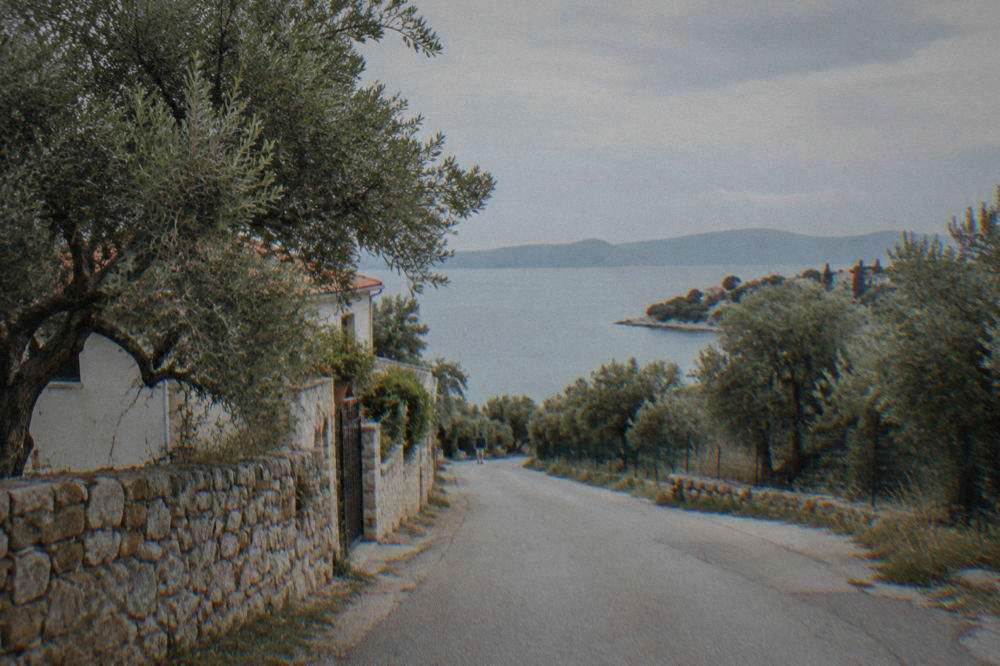
The reported bus detail deserves its attribution spelled out: the 2.20 euro fare and the departure counts come from local reporting on the KTEL Argolida timetables, not from the operator's own site, and timetables change with the seasons, so confirm at the Nafplio bus station on Siggrou Street before committing a morning to it. The same reporting gives Mycenae and Epidaurus at 3.50 euro each but warns those services are sparse, sometimes only one round trip a day. For Asini and Tolo the service is usable. Drivers should note that the Old Town of Nafplio is largely closed to visitor parking, with free public lots on the Akti Miaouli waterfront, so a car-based day works best starting from the port side of town. The getting around Nafplio picture and the Tolo companion page, Tolo: The Beach Resort Next Door, cover the coastal stretch in more detail.
Cycling is a realistic third option. The distance is short, the road is coastal, and a guided cycling product exists in the roster for those who prefer a bike with a plan, Check availability applies to the guided hiking alternative for the same shore. The Arvanitia promenade around Akronafplia, paved and about 1 km long per the local guide site, makes a warm-up walk before the drive out.
What Can You See At The Asini Acropolis?
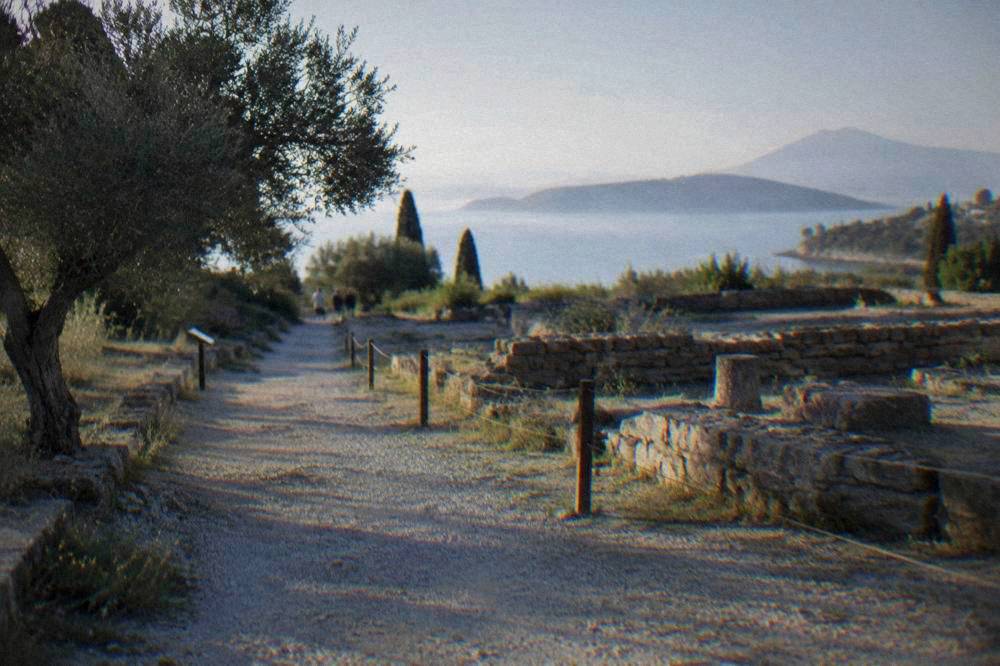
The visitable circuit at Kastraki takes in the Mycenaean-style cyclopean walls of the acropolis, later Hellenistic and Venetian refortifications from the periods of Venetian rule between 1389 and 1540 and 1686 and 1715, a ruined church inside the enclosure, the terraces of the excavated lower city, and the beach of Kastraki shelving into Tolo bay directly below the walls. The Swedish excavations identified occupation stretching back to the Early Helladic period, with the town flourishing in the Mycenaean era before it was destroyed, a fate Asini shared with the palace centres of the region. The site was refortified and reused for thousands of years after, which is why a single circuit shows three or four masonry styles in a few hundred metres.
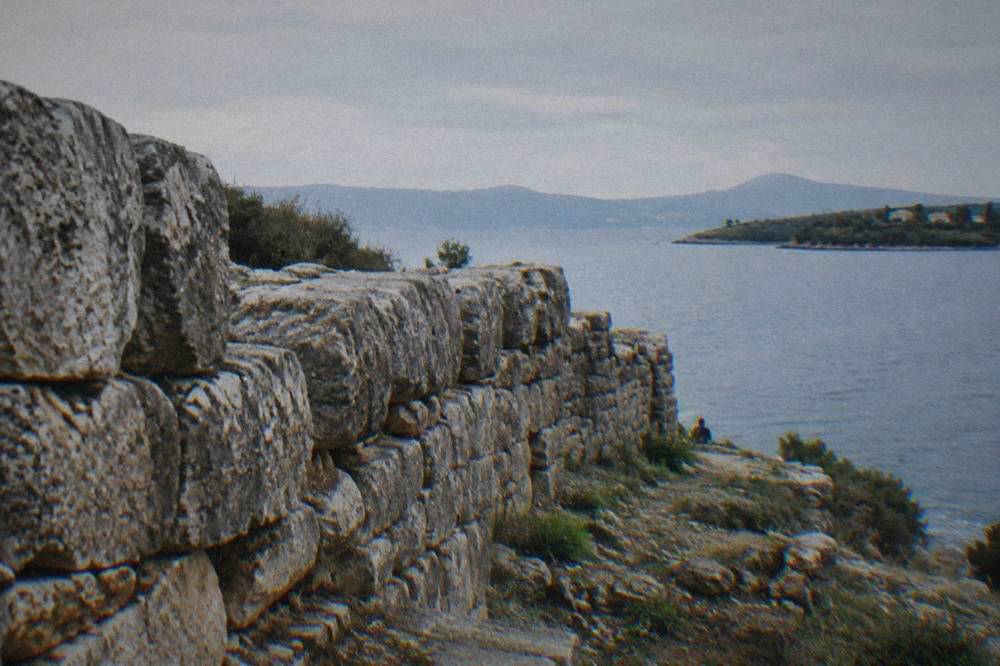
Walk it in this order and the archaeology reads cleanly. Start at the neck of land where the modern path enters, look back at the lower-city terraces the excavation exposed, then climb the south-west flank to the acropolis summit, where the Venetian adjustments to the older walls are easiest to tell apart: the cyclopean blocks are irregular and enormous, the classical and medieval masonry is squared and coursed. From the top, the island of Romvi dominates the view, and on a clear afternoon the eye runs down the gulf toward the coast that leads, by road, to Epidaurus and its theatre. The ruined chapel on the summit is a later layer still. Allow an unhurried hour for the circuit itself, more with the beach.
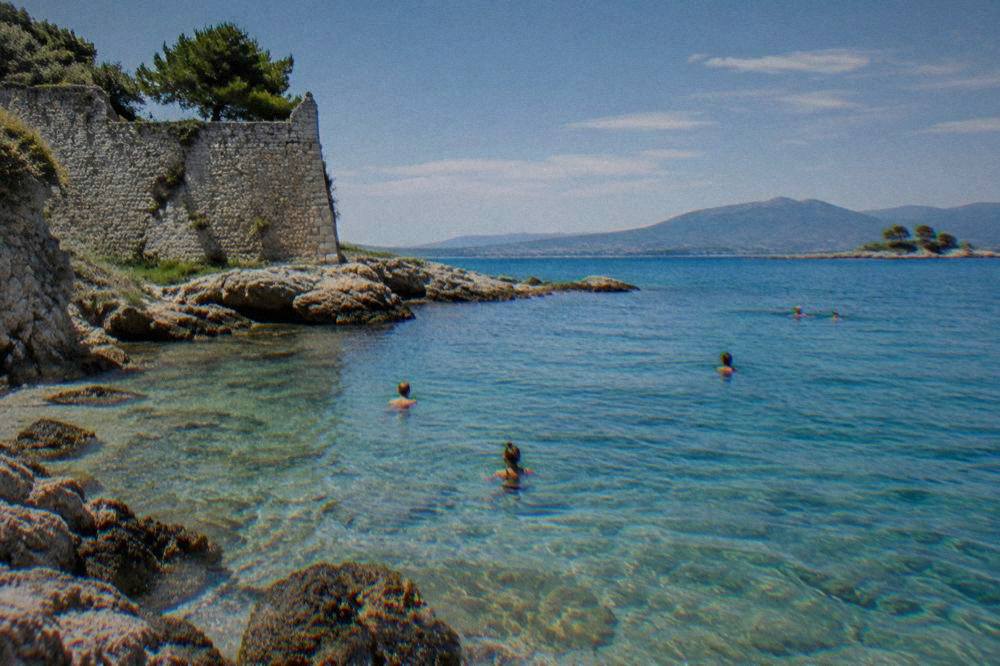
The beach below is the site's unfair advantage. Kastraki is a compact beach at the foot of the headland, swimmable straight off a ruins visit in a way that Mycenae, for all its Lion Gate, can never match. For the fullest beach-day version of the same coastline, the Tolo page linked above covers the resort stretch a few minutes further on. The full index of guides sits on Nafplio Travel Guide.
Which Other Argolid Sites Pair Well With Asini?
The natural pairings are Tolo, 17 minutes away on the same road, for the beach; Tiryns, about 12 minutes back toward Nafplio, for more cyclopean masonry; Lerna, about 20 minutes, for the site of the House of the Tiles; and Argos, about 18 minutes, whose Ancient Agora and Ancient Theatre share a 10 euro full and 5 euro reduced ticket open 08:30 to 15:30. Asini sits at the centre of a tight cluster of half-day sites, none more than half an hour apart by road, which makes it the ideal anchor for a slow morning of archaeology followed by an afternoon on the sand. Mycenae at about 32 minutes and Epidaurus at about 41 minutes stretch the same day into a full one.
| Pairing | Drive from Asini area | Ticket | Best combined plan |
|---|---|---|---|
| Tolo | minutes apart on the same road | no state site | Beach afternoon after the ruins |
| Tiryns | about 10 minutes toward Nafplio | not on the official pages, confirm on site | Morning twin of cyclopean walls |
| Lerna | about 8 minutes inland | confirm locally | Prehistory stop with Mycenae |
| Argos | about 15 minutes | 10 EUR / 5 EUR, 08:30-15:30 | Theatre and agora, then lunch in Nafplio |
| Mycenae | about 20 minutes | 20 EUR / 10 EUR | The full Bronze Age day |
| Epidaurus | about 30 minutes | 20 EUR / 10 EUR | Theatre with the best acoustics in Greece |
Two honesty notes on that table. And drive times between the satellite sites themselves are estimates from the same computed table centred on Syntagma Square, not measured door to door, so read them as free-flow planning figures. The UNESCO context is worth one sentence more: Mycenae and Tiryns share their 1999 inscription, Epidaurus has its own from 1988, and Asini, for all its Homeric mention, sits outside both listings, which is precisely why it is quiet. The Mycenae guide and the Argos guide carry the fuller treatment of each.
Is Asini Worth The Trip From Nafplio?
For a visitor with two or more days in Nafplio, yes: Asini costs 5 euro, takes 17 minutes to reach, combines Bronze Age walls with a swim, and is the one Argolid site where the sea is part of the ticket, while a visitor with a single day should spend it on Palamidi, the Old Town and either Mycenae or Epidaurus instead. That is an editorial judgement built from the sourced facts, the price ladder, the drive times and the site's scale, not a ranking. Asini's case is the combination: nothing else in the region puts cyclopean masonry above a beach you can walk down to in dry shoes and swim from within the hour.
The case against is equally honest. The site is small, unsigned in any depth, and has no museum of its own; the finds from the Swedish excavations are held elsewhere, principally in Swedish museums and in Nafplio's own Archaeological Museum, which costs 10 euro full and 5 euro reduced and closes on Tuesdays. A visitor who wants spectacle, the Lion Gate, the Epidaurus theatre, the 216 m height of Palamidi with its about 850 steps, not the legendary 999, will find Asini modest. A visitor who wants an hour of quiet walls and then the water will find it ideal. Read the museum angle on the Archaeological Museum of Nafplio page.
The half-day shape that works: out from Nafplio mid-morning, an hour on the acropolis, down to Kastraki beach, back through Tolo for the afternoon, and the evening on the Nafplio waterfront. That is a day that uses the short drive three times over.
How Does The Sea Shape A Day At Asini?
The Argolic Gulf is the reason Asini exists where it does: the headland guards the sea lane toward Nafplio's harbour, and the same water that made the acropolis worth fortifying now makes the visit, with Kastraki beach below the walls, the island of Romvi offshore, and the sailing and cruise departures from Nafplio harbour passing the coastline in view of the site. Looking back at Kastraki from the water reverses the visit: the walls read as the sea approached them, which is how every fleet in the site's history first saw Asini.
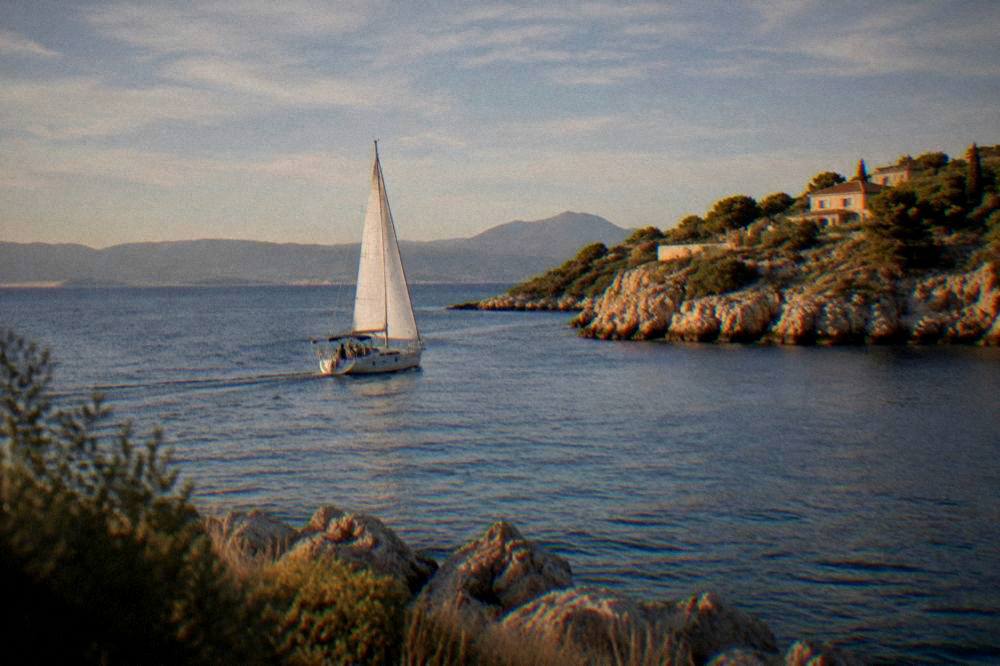
One correction that belongs to the sea chapter: older guides still describe a scheduled ferry from Nafplio or Tolo out to the islands, which is out of date. No scheduled public ferry runs from either port; Hydra and Spetses are reached by seasonal day cruise or from another port. Seasonal day cruises do operate on this coast, and the site's featured pairing for the water half of an Asini day is the Small-Group Sailing Cruise in Nafplio with Food and Drinks, which puts the Kastraki and Romvi shoreline in frame from the deck; Check availability opens the operator's live listing.
Climate planning for the beach half uses the HNMS Argos station, 1980 to 2010, the nearest official record, an inland station about 10 km north-west of the town, so the waterfront can run slightly different.
| Month | Mean daily high (C) | Mean daily low (C) | Rain (mm) | Rain days |
|---|---|---|---|---|
| May | 26.5 | 10.5 | 18.7 | 6.2 |
| June | 31.4 | 14.0 | 8.9 | 3.0 |
| July | 34.0 | 16.7 | 9.1 | 2.1 |
| August | 33.7 | 16.8 | 13.0 | 2.5 |
| September | 29.7 | 14.2 | 20.3 | 5.0 |
| October | 24.7 | 11.5 | 44.3 | 6.9 |
June and July are the dry, warm end of that record; October nearly doubles September's rain days. For a ruins-plus-swim day the late-spring and early-autumn shoulders line up best with the opening hours, which at small state sites can contract outside summer: confirm the current hours on the ticket page before booking anything non-refundable around the visit.
What Should You Know Before You Go To Asini?
Take water and shade, plan the visit outside the midday hours in July and August when the HNMS Argos station, 1980 to 2010, puts the mean daily high at 34.0 C, wear real shoes for the rocky path to the acropolis summit, carry the 5 euro admission in cash in case the small gate has no card reader, and confirm the day's opening hours locally before driving out, since the Ministry's page for Asini publishes no detailed summer schedule. The emergency number in Greece is 112, and the General Hospital of Nafplio switchboard is +30 2752 361100, both worth having saved for any day on this coast.**
The little practicalities that round out an Argolid day: Greece is in the Schengen area and uses the euro; accommodations in Nafplio collect the national climate resilience fee, which is higher from April to October, so expect it on the hotel bill rather than at the site gate; and the free state-site admission days listed above, 6 March, 18 April, 18 May, the last September weekend, the first and third Sundays of November to March and 28 October, turn a 5 euro ticket into a free one if the dates line up. For the fuller packing and timing picture, the Nafplio beaches guide and the main things to do in Nafplio round out the planning.
Common Questions About Asini Near Nafplio
How far is Asini from Nafplio?
About 11 km and 17 minutes by road from Syntagma Square, computed over standard routing in free-flow conditions. The reported local bus fare in the Asini and Tolo direction is 2.20 euro one way, per local reporting on the October 2026 timetables; confirm departures at the Nafplio bus station.
How much does it cost to visit Ancient Asini?
The Ministry of Culture's visiting page lists 5 euro full and 3 euro reduced, the smallest state-site ticket in the Argolid. State free-admission days apply: 6 March, 18 April, 18 May, the last weekend of September, the first and third Sundays from November to March, and 28 October.
Can you swim at Asini?
Yes, Kastraki beach sits directly below the acropolis walls on Tolo bay, so a ruins visit can end in the water.
Is Asini a UNESCO site?
No. The UNESCO inscriptions in the Argolid cover the Archaeological Sites of Mycenae and Tiryns, inscribed in 1999, and the Sanctuary of Asklepios at Epidaurus, inscribed in 1988. Asini, despite its Homeric mention, sits outside both listings.
What are Asini's opening hours?
The Ministry's page for Asini publishes no detailed seasonal schedule beyond the standard winter slot of 08:30 to 15:30 that applies across the state network. Confirm the hours on the ticket page or locally before driving out.
Is Asini worth visiting compared with Mycenae?
They serve different days. Mycenae costs 20 euro full and 10 euro reduced and delivers the Lion Gate, the Treasury of Atreus and a museum; Asini costs 5 euro, takes an unhurried hour, and adds a beach below the walls. With two or more days in Nafplio, both fit.