Is The Peloponnese Worth Visiting?
An editorial answer to whether the Peloponnese is worth visiting, built around Nafplio, its UNESCO sites at Mycenae, Tiryns and Epidaurus, the 2026 ticket prices on the Ministry of Culture's pages and computed drive times.
Nafplio sits on the Argolic Gulf in the Argolid, in the north-east corner of the Peloponnese, and it puts the region's strongest arguments within an hour's drive: Mycenae and Tiryns share one UNESCO World Heritage inscription, Epidaurus holds another, and the first capital of modern Greece sits in the middle of them all. The question of whether the Peloponnese is worth visiting is best answered not with adjectives but with what the Ministry of Culture's own pages list, what the road distances compute to, and what the climate record shows. This page works through each of those, with Nafplio as the measuring point.
Is The Peloponnese Worth Visiting?
Yes, on an editorial reading, because the Peloponnese concentrates a rare amount of checkable substance in a small radius: from Nafplio you reach Mycenae in about 32 minutes by road, the theatre of Epidaurus in about 41, and Tiryns in about 9, and two separate UNESCO World Heritage inscriptions cover those sites. No ferry, no island hopping and no long transfer stand between the town and the region's headline antiquities.
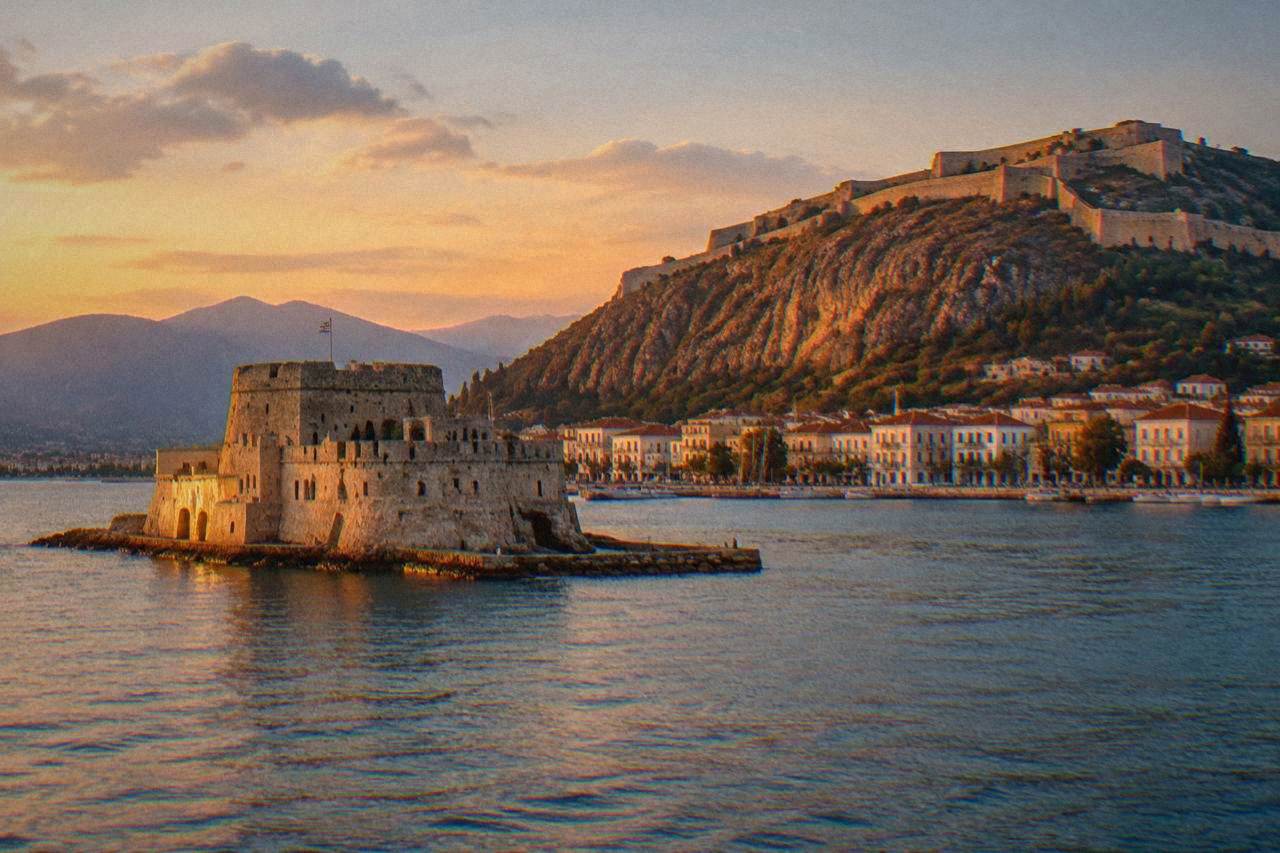
That is the practical case. The region also carries the history of the modern Greek state: Nafplio was the capital of Greece from 1827 to 1834, and the towns and fortresses around it, from Palamidi Fortress at 216 m above the Old Town to the Venetian and Ottoman layers of Argos and Akronafplia, document centuries of rule and revolt.
The honest caveat is transport. There is no passenger rail anywhere in this part of the Peloponnese in 2026, per the national operator's network, so older guides that describe a train are out of date. You arrive by car or by the KTEL coach network, reported at about 2 hours 10 minutes from the Kifissos terminal in Athens, and you move around the region the same way. For a fuller treatment of the town as a destination, see is Nafplio worth visiting; for what the region is known for, see what the Peloponnese is famous for.
What Makes Nafplio A Good Base For The Peloponnese?
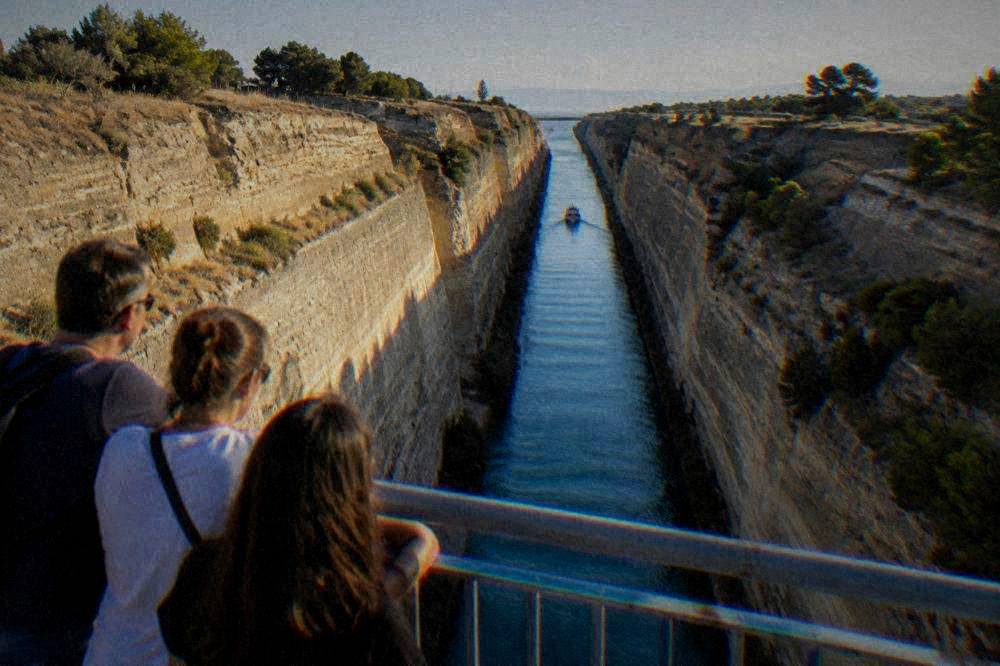
Nafplio works as a base because the drive times from Syntagma Square, computed over road routing in free-flow conditions, stay under an hour for the core Argolid circuit, with Tiryns the closest of all, Argos about 18, Tolo about 17, Mycenae about 32 and the theatre of Epidaurus about 41. Even the outliers are day trips, with Ancient Corinth about 61 minutes, the Corinth Canal about 72 and the wine town of Nemea about 49.
That geometry means one town covers the region's densest cluster of sights. You can sleep in the same place for a week and never repeat a drive. The town itself is small, about 14,500 residents in the 2021 census, with a compact Old Town around Syntagma Square, so evenings do not demand a car.
The base question is answered in more depth on the guide to the Peloponnese from Nafplio, and a longer circuit of the whole peninsula, down to Monemvasia and Mystras, is laid out in the Peloponnese road trip itinerary. The pattern holds across the region: the farther flung rewards exist, but they cost a full day each.
Which Ancient Sites Near Nafplio Justify The Trip?
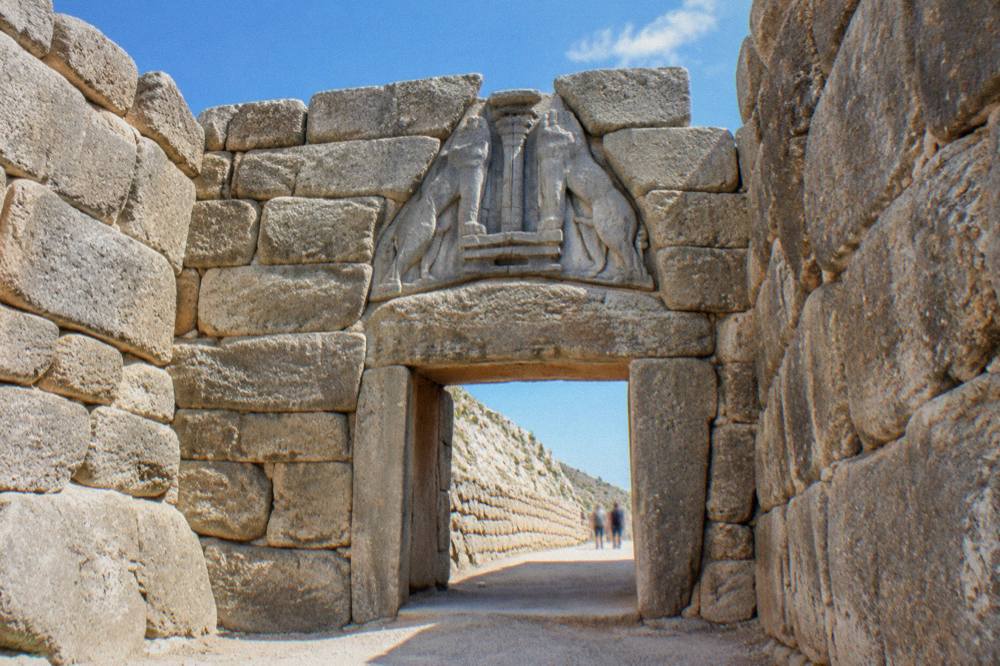
Three state sites carry the archaeological case, and all three carry 2026 tickets on the Ministry of Culture's visiting pages: Mycenae at 20 euro full and 10 euro reduced, Epidaurus at 20 and 10, and Palamidi Fortress in Nafplio itself at 20 and 10. The Mycenae ticket includes the site, the museum and the Treasury of Atreus, and the Epidaurus ticket covers the theatre, the sanctuary and the museum.
Mycenae and Tiryns share the UNESCO inscription "Archaeological Sites of Mycenae and Tiryns", listed in 1999, and the Sanctuary of Asklepios at Epidaurus was inscribed in 1988. Those are the region's two World Heritage designations, and from Nafplio they sit on opposite sides of the town, Mycenae to the north and Epidaurus to the east.
A note on the reduced tickets, because this is where older pages mislead: the 10 euro reduced price at Mycenae, Epidaurus and Palamidi is sold only from 1 October to 31 May, per the Ministry's pages. In summer only the full ticket exists. The sites also share a free-admission calendar, including 6 March, 18 April, 18 May, the last weekend of September and 28 October.
One correction worth a single sentence: the Little Theatre of Ancient Epidaurus is listed by the Ministry as closed to day visits, so the great theatre at the sanctuary is the Epidaurus you visit. The debate between the two headline sites is weighed in which is better, Mycenae or Epidaurus, and Epidaurus on its own merits in is Epidaurus worth visiting.
For travellers who want the flagship site without hiring a car, the private tour option covers the ground: see the private Mycenae tour from Nafplio Check availability.
How Far Are The Peloponnese's Sights From Nafplio?
Drive times from Syntagma Square in Nafplio, computed over road routing in free-flow conditions, put the entire Argolid within an hour: Tiryns nearby, Tolo about 17, Argos about 18, Mycenae about 32, the theatre of Epidaurus about 41 and Ancient Corinth about 61. The wider peninsula stretches the drive: Nemea about 49 minutes, the Corinth Canal about 72, Porto Heli about 98 and Mystras about 124.
The table below is the planning spine of any Peloponnese answer. Times are road driving from the centre of Nafplio and do not include parking or site visits.
| Destination from Nafplio | Drive time (about) |
|---|---|
| Tiryns | 9 minutes |
| Tolo | 17 minutes |
| Argos | 18 minutes |
| Mycenae | 32 minutes |
| Epidaurus theatre | 41 minutes |
| Ancient Nemea | 46 minutes |
| Nemea town | 49 minutes |
| Ancient Corinth | 61 minutes |
| Corinth Canal | 72 minutes |
| Ermioni | 96 minutes |
| Porto Heli | 98 minutes |
| Mystras | 124 minutes |
| Ancient Olympia | 186 minutes |
| Monemvasia | 219 minutes |
Two boundaries shape those numbers. There is no scheduled public ferry from Nafplio or Tolo to Hydra or Spetses, despite what older guides say; the islands are reached on seasonal day cruises or from other ports. And there is no train: per the national operator, the Peloponnese metre-gauge line carries no passenger service in 2026.
What Does The Peloponnese Cost To Visit?
Entry to the headline state sites in 2026 is 20 euro full and 10 euro reduced at Mycenae, Epidaurus and Palamidi, 10 and 5 at the Archaeological Museum of Nafplio and at the Argos agora and theatre, 7 and 5 at Bourtzi, and 5 and 3 at Asini, each per the Ministry of Culture's visiting pages. Greece uses the euro, is a Schengen member, and the emergency number is 112.
The museum in Nafplio keeps hours of 08:30 to 15:30 all year and closes on Tuesdays, a detail that catches out itinerary plans. Winter hours at the big sites shorten to 08:30 to 15:30, while from 2 May 2026 Palamidi and Mycenae run to 20:00.
| Site | 2026 full ticket | Reduced | Notes |
|---|---|---|---|
| Mycenae | 20 euro | 10 euro | Includes site, museum, Treasury of Atreus |
| Epidaurus | 20 euro | 10 euro | Theatre, sanctuary, museum |
| Palamidi Fortress | 20 euro | 10 euro | About 850 steps, not the legendary 999 |
| Bourtzi | 7 euro | 5 euro | Open, reached by boat for a fee |
| Archaeological Museum of Nafplio | 10 euro | 5 euro | Closed Tuesdays, 08:30 to 15:30 |
| Argos agora and theatre | 10 euro | 5 euro | One ticket covers both |
| Asini | 5 euro | 3 euro |
Reduced tickets at the 20 euro sites are sold only from 1 October to 31 May. Prices for Tiryns, Ancient Corinth, Nemea, Mystras, Olympia and Monemvasia are not on the Ministry's pages in a form this site can print, so check the current price on the ticket page before booking. Accommodation adds a national climate resilience fee collected by the property, higher from April to October, and wine tasting at Nemea's wineries is a per-cellar matter to confirm with each producer.
When Should You Visit The Peloponnese Around Nafplio?
The HNMS Argos station record, 1980 to 2010, shows why late spring and early autumn suit the region: May averages a 26.5 C high with 18.7 mm of rain, and October a 24.7 C high with 44.3 mm, while July and August average 34.0 and 33.7 C highs with the year's lowest rain totals at 9.1 and 13.0 mm. Winter days still reach 14.6 C in January, but rain days climb above ten.
Those are station means from about 10 km north-west of town, inland of the waterfront. The practical reading is that summer is dry but hot for the unshaded citadels, and winter is mild but wet, with November the rainiest month in the record at 82.5 mm.
Site hours track the seasons too. The long 20:00 closing from 2 May gives evening access to Palamidi that winter's 15:30 closing does not, and the Epidaurus theatre keeps winter hours of 08:00 to 17:00, extending from 1 March 2026 to 18:00. Summer also brings the Athens Epidaurus Festival's performances in the ancient theatre, reported as mostly Friday and Saturday pairs; the festival's programme is announced annually, so check the current season before planning around it.
Common Questions About The Peloponnese
Is The Peloponnese Worth Visiting?
Editorially, yes: two UNESCO World Heritage inscriptions, Mycenae with Tiryns and Epidaurus, plus the fortified towns and beaches of the Argolid, sit within about an hour of Nafplio. The case rests on sites, prices and hours you can check, not on superlatives.
How Many Days Do You Need For The Peloponnese From Nafplio?
The core Argolid, meaning Nafplio, Mycenae, Epidaurus, Tiryns and a beach at Tolo or Karathona, works in three to four days with a short drive to each: Mycenae about 32 minutes, Epidaurus about 41 and Tiryns about 9. The wider peninsula, including Mystras at about 124 minutes and Monemvasia at about 219, adds a day or two each.
Is The Peloponnese Better Than Crete?
The Peloponnese's argument from Nafplio is compactness: World Heritage antiquities under an hour from one base, on the mainland with no ferry crossing. Crete is an island that rewards a longer, slower stay.
Can You Visit Mycenae And Epidaurus In One Day From Nafplio?
Yes. The two sites are about 32 and 41 minutes by road from Nafplio respectively, and both open on the state schedule, from 08:30 in winter and from 08:00 in the long season. Two 20 euro full tickets cover them in 2026.
Is There A Train Or Ferry To The Peloponnese's Islands From Nafplio?
No passenger train serves the region in 2026, per the national operator's network, and no scheduled public ferry runs from Nafplio or Tolo to Hydra or Spetses. The islands are reached on seasonal day cruises or from other ports.
The Peloponnese earns its trip on evidence, and the Nafplio Travel Guide lays out each piece of that evidence, from ticket pages to computed drive times, so the judgement can be made on facts rather than slogans.