What Is The Peloponnese Famous For?
The Peloponnese is famous for Mycenae and Epidaurus, the fortress town of Nafplio, Venice's castles, Nemea wine and the first capital of modern Greece, all within a short drive of Nafplio.
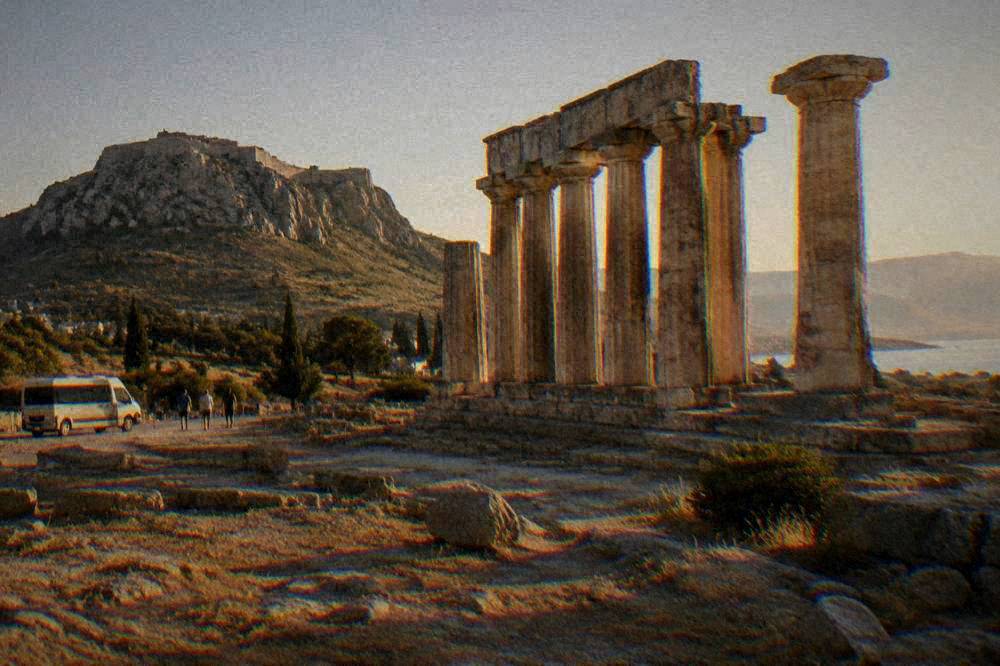
The Peloponnese is famous above all for its archaeology and its fortresses: the Bronze Age citadel of Mycenae, the theatre of Epidaurus, the Venetian castles of Nafplio, and the first capital of modern Greece, all packed into a peninsula you can cross by car in a few hours. Nafplio, a small coastal town of about 14,500 residents in the Argolid, on the Argolic Gulf in the north-east of the region, sits practically in the middle of it. Mycenae is about a 32-minute drive from Syntagma Square, the theatre of Epidaurus about 41 minutes, and Ancient Corinth about 61, which is why the town works so well as a base. Two UNESCO World Heritage listings sit in this one corner of the peninsula alone: the Archaeological Sites of Mycenae and Tiryns, inscribed in 1999, and the Sanctuary of Asklepios at Epidaurus, inscribed in 1988.
This page lays out what the region is actually known for, source by source, from the Ministry of Culture's own site pages for the ancient sites to the HNMS climate record, and how each of those famous things relates to a stay in Nafplio. For the town's own sightseeing list, see things to do in Nafplio, and for the region as a driving destination, the Peloponnese road trip itinerary covers the longer loop.
What Is The Peloponnese Famous For?
The Peloponnese is famous for four things together: the Mycenaean heartland of Mycenae and Tiryns, the Sanctuary of Asklepios at Epidaurus with its ancient theatre, the Venetian-and-Ottoman fortress towns led by Nafplio and Monemvasia, and Nemea's wine country, all set in the region that gave the modern Greek state its first capital, Nafplio, from 1827 to 1834. The Mycenae ticket in 2026 is 20 euro full and 10 euro reduced, per the Ministry of Culture's site page, and covers the citadel, the museum and the Treasury of Atreus. That concentration, a UNESCO site reachable from the harbour by road in both directions, is what the region is built around.
None of this is scattered randomly. The Argolid, the peninsula's north-eastern corner, holds Mycenae, Tiryns, Epidaurus, Argos, Lerna, Asini and Nafplio itself in a rough triangle you can drive around in a morning. Further out sit Ancient Corinth and the Corinth Canal to the north, Nemea's vineyards to the west, and the Byzantine and later monuments of Mystras, Monemvasia and Ancient Olympia on the longer loops. The famous Peloponnese, in short, is a ring of superlatives, and Nafplio is the comfortable place in the middle of the near end of it.
Writers reach for the catalogue because the region resists a single label. It is Mycenaean at Mycenae and Tiryns, classical at Epidaurus, medieval at Mystras and Monemvasia, Venetian at Palamidi and Bourtzi, and modern-Greek at Nafplio's Vouleftiko, where the first Greek parliament met from 1825. For a deeper comparison of the two anchor regions, what is the nicest part of the Peloponnese weighs the Argolid against the Mani and the west.
Mycenae And Epidaurus: The Bronze Age And Classical Headliners
Mycenae is the famous one: a hillside citadel with the Lion Gate, grave circles and the beehive Treasury of Atreus, and in 2026 it costs 20 euro full and 10 euro reduced, with the ticket covering the site, the museum and the Treasury, per the Ministry of Culture's visiting page. Epidaurus, about 41 minutes by car from Syntagma Square, pairs its sanctuary and museum with the theatre celebrated for its acoustics, on the same 20 and 10 euro ticket. The reduced ticket at both, and at Palamidi, is sold only from 1 October to 31 May; from 1 June to 30 September only the full ticket is available.
The two sites stand for different worlds. Mycenae is the Late Bronze Age world of the shaft graves and the cyclopean walls, the civilisation excavated by Schliemann and named a World Heritage site together with Tiryns in 1999. Epidaurus is the classical sanctuary of Asklepios, the god of healing, and its theatre still hosts the Athens Epidaurus Festival's summer performances, which run in weekend pairs rather than nightly.
Hours matter when you plan. In winter the state sites run 08:30 to 15:30; in April 08:00 to 19:00; from 2 May 08:00 to 20:00, with step-downs through September and October. Greek state sites are also free on set days: 6 March, 18 April, 18 May, the last weekend of September, the first and third Sundays of each month from November to March, and 28 October.
A guided day trip suits the two headline sites well, since the drive between them passes through the Argolid's olive and citrus country without a stop worth making on your own. The private tour from Nafplio to Mycenae and Epidaurus is this site's featured pairing; Check availability if a guide-led version appeals. Which of the two sites deserves your time first is weighed in which is better, Mycenae or Epidaurus, and the case for Epidaurus alone is made at is Epidaurus worth visiting.
Nafplio: Fortresses, Bourtzi And The First Capital
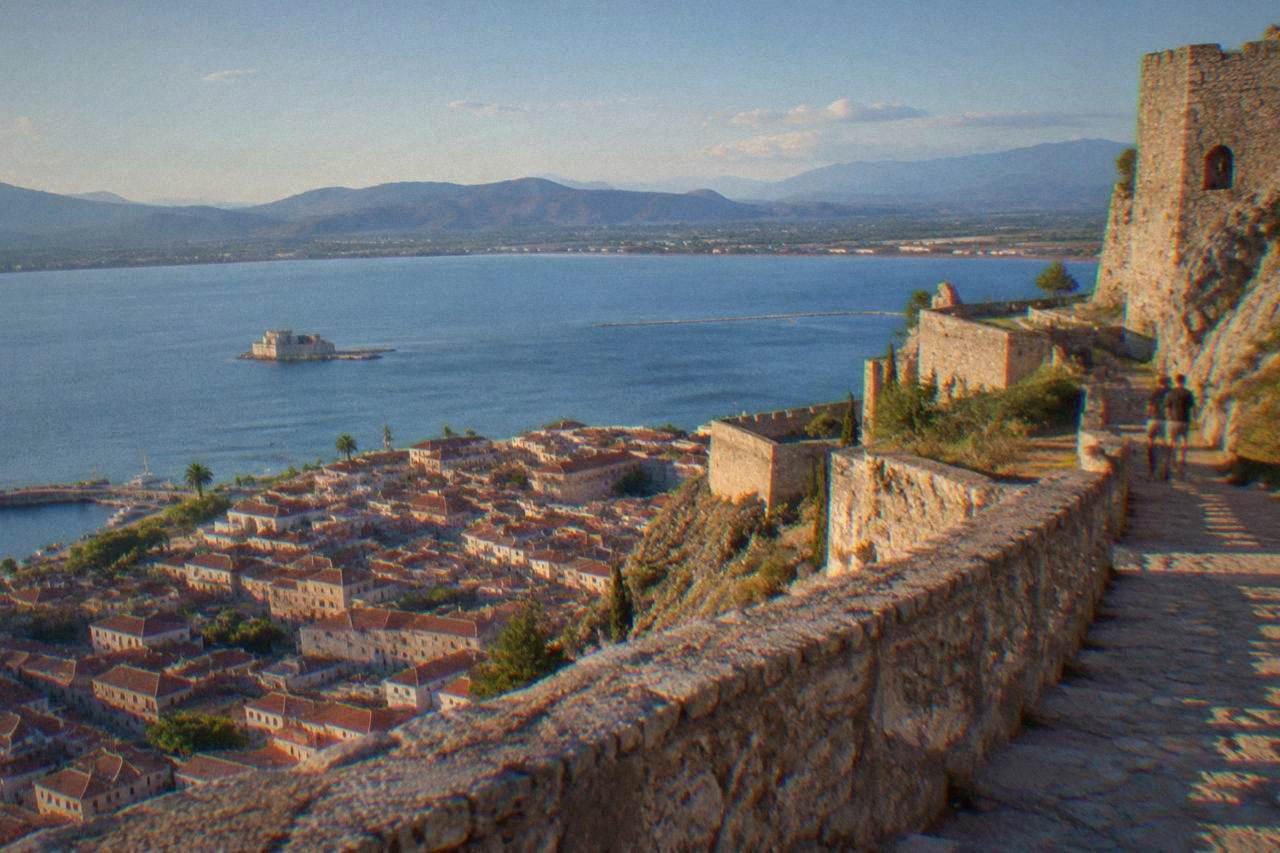
Nafplio is famous as the first capital of modern Greece, from 1827 to 1834, and for three fortifications: Palamidi Fortress, 216 m above the Old Town on a stairway of about 850 steps (not the legendary 999), the old acropolis of Akronafplia above the harbour, and Bourtzi, the small fortified islet in the harbour itself. The Palamidi ticket in 2026 is 20 euro full and 10 euro reduced; Bourtzi, reached by boat from the harbour for a separate fee, is 7 euro full and 5 euro reduced. The Archaeological Museum of Nafplio, in the Venetian arsenal on Syntagma Square, is 10 euro and 5, open 08:30 to 15:30 and closed every Tuesday.
The capital story is the part people misquote. The municipality's own history pages give 1827 to 1834, not the "1829 to 1834" that circulates on older pages. Ioannis Kapodistrias, the first head of state, arrived in January 1828 and governed from the town until his assassination in September 1831 outside the Church of Agios Spyridon, and the capital moved to Athens in 1834. The Vouleftiko, a remodelled mosque on Syntagma Square, housed the first Greek parliament from 1825, and the story is told in full at why was Nafplio the first capital of Greece.
The fortress layer is Venetian and Ottoman. Venice ruled Nafplio twice, from 1389 to 1540 and again from 1686 to 1715, and Palamidi was built 1711 to 1714 before the Ottomans took it in 1715 and the Greeks stormed it on the night of 29-30 November 1822. Bourtzi's construction began in June 1471 under the architect Antonio Gambello. The full fortress story, hours and climbs included, is at Palamidi Fortress.
Venetian Castles, The Corinth Canal And The Famous Coastlines
Beyond Nafplio the Peloponnese is famous for its castles and its edges: the Corinth Canal, cut through the isthmus and open to shipping, the Byzantine ruined city of Mystras, about a 124-minute drive from Nafplio, the rock-bound town of Monemvasia at about 219 minutes, and the Argo-Saronic islands of Hydra and Spetses reached by sea. The canal is about 72 minutes from Syntagma Square and Ancient Corinth about 61, and both sit on the natural route between Athens and the Argolid.**
The coastline is the other famous layer. Nafplio itself has Arvanitia, a Blue Flag pebble beach a short walk along the paved promenade below Akronafplia, and Karathona, the long sandy bay about 3 to 4 km out. The eastern shore runs out through Tolo, about 17 minutes by car, to Porto Heli and Ermioni on the far side. One transport myth needs a single correction: no scheduled ferry runs from Nafplio or Tolo to Hydra and Spetses, and older guides that say so are out of date; the islands are reached by seasonal day cruise or from another port. There is no passenger train to Nafplio either, as is there a train from Athens to Nafplio explains.
The distances below are computed driving times from Syntagma Square in free-flow traffic, and they are the practical reason Nafplio anchors a Peloponnese trip so well.
| Destination | Drive from Nafplio | What it is famous for |
|---|---|---|
| Tiryns | about 9 minutes | Cyclopean walls, UNESCO with Mycenae |
| Argos | about 18 minutes | Ancient agora and theatre, one 10 euro ticket |
| Tolo | about 17 minutes | Sandy beach resort |
| Mycenae | about 32 minutes | Lion Gate, shaft graves, Treasury of Atreus |
| Epidaurus theatre | about 41 minutes | Classical theatre and sanctuary, UNESCO |
| Palaia Epidavros | about 47 minutes | Sunken-city coast, small harbour |
| Ancient Corinth | about 61 minutes | Temple ruins and Roman city |
| Corinth Canal | about 72 minutes | Ship canal through the isthmus |
Nemea Wine, Olives And The Peloponnese Table
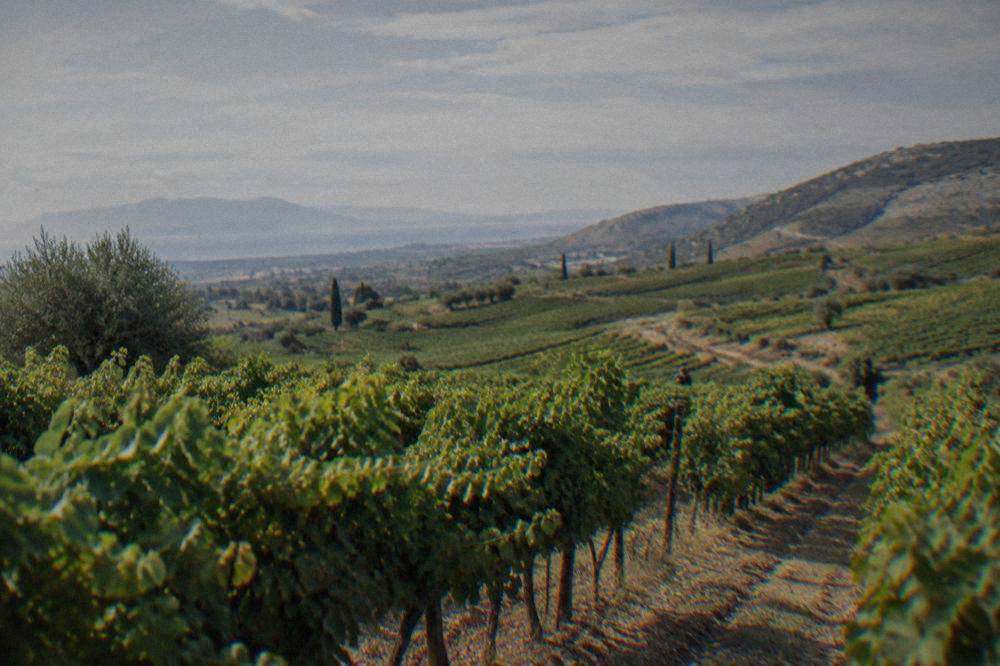
Nemea is the Peloponnese's famous wine region, the home of the Agiorgitiko grape, and it sits about 49 minutes by car from Nafplio for the town and 46 for the ancient site at Ancient Nemea, where the Nemean games were held. The region's wineries open their doors for tastings and, each September, for the Nemea Grand Days, an annual weekend when the wineries pour for visitors; the festival runs annually and its dates shift, so confirm the current year's programme before planning around it.**
Wine is only the loudest note in an agricultural region. The Argolid grows olives and citrus in the plain around Argos, and Nafplio's food scene runs on that produce, a story covered at Nafplio food and where to eat. A cooking class or a food walk in the Old Town is one way to meet the region's table without a car; the Nemea vineyards are the other, longer way.
Wine touring from Nafplio pairs naturally with an archaeology day, since Nemea sits on the route west and the ancient site gives the vineyards a classical frame. The Peloponnese's full driving picture, Nemea included, is mapped in Peloponnese from Nafplio.
When The Peloponnese Is At Its Best
The region is at its most comfortable from late April to mid-June and from mid-September to October, when the HNMS Argos station, 1980 to 2010, shows mean daily highs of 21.3 C in April, 26.5 C in May and 29.7 C in September, against 34.0 C in July, and rainfall of 33.7 mm in April against 82.5 mm in November. The station is inland, about 10 km north-west of Nafplio, so the waterfront often runs a little milder. Those shoulder months also carry the reduced-ticket window at the state sites, which opens on 1 October and runs to 31 May.
Winter is a different, quieter trip, and it is a real one: the mean daily high in January is 14.6 C, with 10.3 rain days in the month. Sites close early, at 15:30, and the first and third Sundays from November to March are free. The full monthly picture, including the rain-day counts, is in Nafplio weather and the seasonal argument is weighed in best time to visit Nafplio.
| Month (HNMS Argos, 1980 to 2010) | Mean high | Mean low | Rainfall |
|---|---|---|---|
| April | 21.3 C | 6.7 C | 33.7 mm |
| May | 26.5 C | 10.5 C | 18.7 mm |
| June | 31.4 C | 14.0 C | 8.9 mm |
| July | 34.0 C | 16.7 C | 9.1 mm |
| September | 29.7 C | 14.2 C | 20.3 mm |
| October | 24.7 C | 11.5 C | 44.3 mm |
Common Questions About The Peloponnese
What Is The Peloponnese Famous For?
The Peloponnese is famous for the Mycenaean citadel of Mycenae, the theatre of Epidaurus, the fortress town of Nafplio as the first capital of modern Greece, the vineyards of Nemea, the Corinth Canal, and the medieval sites of Mystras and Monemvasia.
Is the Peloponnese worth visiting?
The case, with reasons, is laid out at is the Peloponnese worth visiting.
How many UNESCO sites are near Nafplio?
Two listings: the Archaeological Sites of Mycenae and Tiryns, inscribed in 1999, and the Sanctuary of Asklepios at Epidaurus, inscribed in 1988. Mycenae is about 32 minutes by car from Syntagma Square and Tiryns about 9.
What is Nafplio famous for?
Nafplio is famous for Palamidi Fortress, the Bourtzi islet in its harbour, its Old Town around Syntagma Square, and its role as the first capital of modern Greece from 1827 to 1834. The detail is at what is Nafplio famous for.
Can you visit Mycenae and Epidaurus in one day from Nafplio?
Yes: the two sites are about 32 and 41 minutes by car from Nafplio respectively, and shared and private day trips cover both. Opening hours in winter, 08:30 to 15:30, make the pairing tight from November to March.
Whatever draws you to the region, the Mycenaean gates, the theatre, the fortresses or the vines, Nafplio is the town that puts nearly all of it inside a single day's drive, and the Nafplio Travel Guide covers each of those famous things site by site.