What Is The Population Of Nafplio?
Nafplio in the Argolid, Peloponnese, has about 14,500 residents in the town itself and about 32,600 in the wider municipality, per the reported 2021 ELSTAT census figures. Here is what that size means for a visit.
Nafplio sits on the Argolic Gulf in the Argolid, in the north-east Peloponnese of mainland Greece, and it is small: about 14,500 residents live in the town itself, and about 32,600 in the municipality around it, according to the reported figures from the 2021 Greek census carried out by ELSTAT, the national statistics authority. It is a place you can cross from the Land Gate to Arvanitia in well under an hour on foot, yet it carries the weight of having been the first capital of modern Greece, from 1827 to 1834. Population is not usually the first question a trip planner asks, but in Nafplio the answer explains a lot: the scale of the Old Town, the pace of the evenings around Syntagma Square, and why the big sights, from Palamidi Fortress at 216 m above the rooftops to the Bourtzi islet in the harbour, all sit within one compact frame.
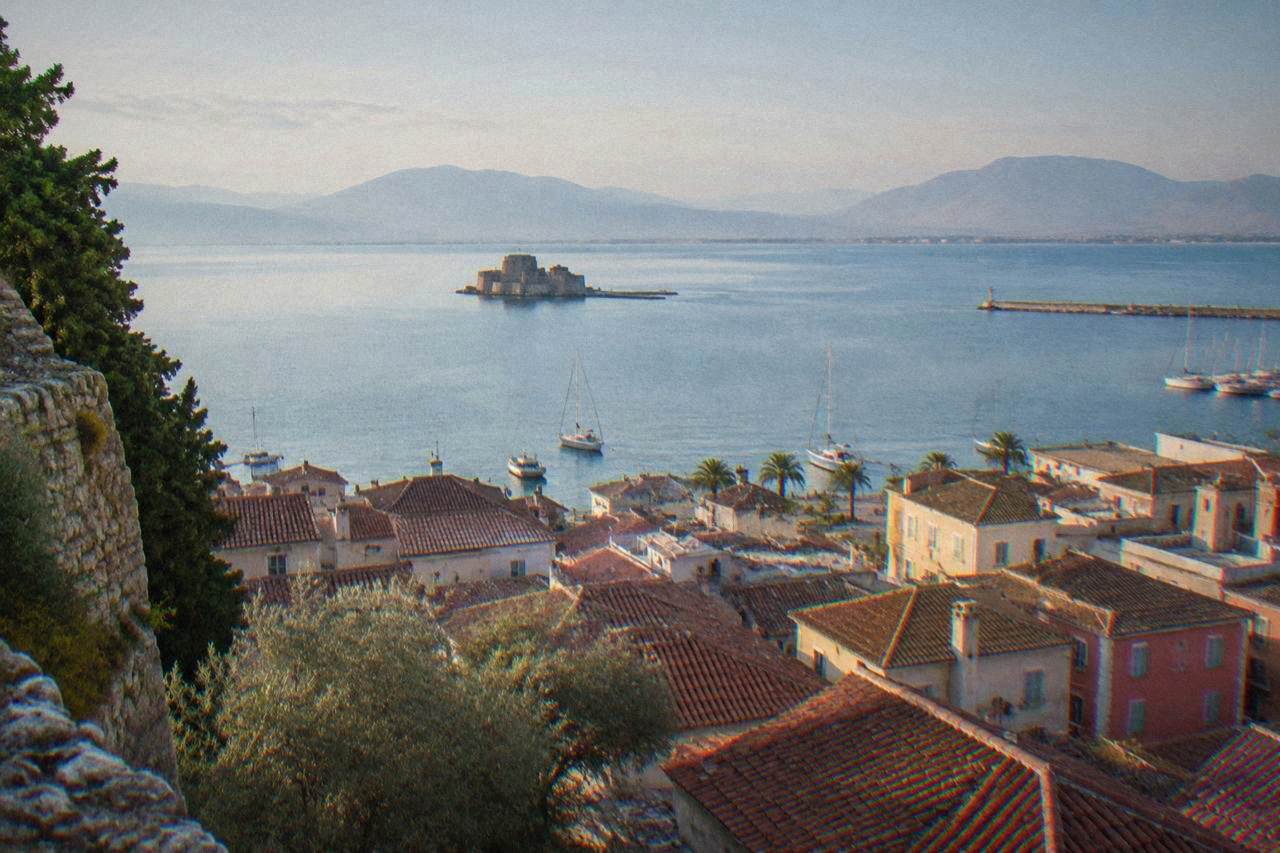
This page lays out the reported census numbers plainly, separates the town from the municipality, and then looks at what a resident population of this size means in practice, from walkability to how the town absorbs summer visitors without becoming a city. The Nafplio Travel Guide covers the town sight by sight elsewhere; here the subject is simply how many people live in it.
What Is The Population Of Nafplio?
The town of Nafplio had 14,532 residents in the 2021 census, a figure reported from ELSTAT, the Greek statistics authority, and the wider Municipality of Nafplio counted about 32,600 people in the same count, so the honest headline is about 14,500 residents in the town and about 32,600 in the municipality. The municipal unit that sits between those two levels was reported at 19,375. Confirm the exact figures on the ELSTAT site before quoting them anywhere official.
Three nested numbers describe the same place, and guides that mix them up are common. The community, which is the built-up town that people mean when they say Nafplio, is the roughly 14,500 figure. The municipal unit, an administrative layer that adds surrounding settlements, was reported at 19,375. The municipality, the largest basket, includes villages and rural areas well beyond the town and reaches about 32,600. The municipality's own English-language page prints a slightly different figure, which is why the safe wording is "about 32,600" rather than a number to the last digit.
| Level (2021 census) | Reported residents | What it covers |
|---|---|---|
| Town (community) of Nafplio | 14,532 | The built-up town, including the Old Town and adjoining neighbourhoods |
| Municipal unit | 19,375 | The town plus surrounding settlements in the same administrative unit |
| Municipality of Nafplio | about 32,600 | The full municipal area, including villages and rural districts |
A useful comparison sits inside the same region: Argos, about 18 minutes' drive away, is the other historic centre of the Argolid and the two towns together anchor the whole plain. Athens, for orientation, is about 141 km away by road.
How Does A Town Of 14,500 Feel On The Ground?
A town of about 14,500 residents, arranged around a peninsula between Palamidi Fortress and the harbour, means everything a visitor needs sits within a walkable core: Syntagma Square at the centre, the Old Town lanes below Akronafplia, the Arvanitia promenade of about 1 km around the headland, and the beach at Karathona a few kilometres further along the coast. No part of the visitor's Nafplio is a commute.
Scale is the quiet argument for staying here rather than day-tripping in. The town is dense but not tall: the Old Town is largely low-rise stone buildings, the waterfront runs along the Argolic Gulf with Bourtzi floating just offshore, and the whole ensemble is backed by the rock of Akronafplia, the old acropolis, crowned in turn by Palamidi. The stairway up to the fortress from the town side is usually counted at 857 carved steps, about 850, not the legendary 999 that folklore claims. There is also a road up for anyone who prefers to save the climb.
The neighbourhoods divide naturally. Psaromachalas, the old fishermen's quarter, climbs the slope west of the harbour. Pronoia spreads east and uphill, and holds the Lion of Bavaria, carved 1840 to 1841 by Christian Heinrich Siegel as a copy of Thorvaldsen's Lion of Lucerne. The waterfront and Syntagma Square anchor the flat centre, where the Archaeological Museum of Nafplio, the Vouleftiko, which housed the first Greek parliament from 1825, and the Church of Agios Spyridon, outside which Governor Ioannis Kapodistrias was assassinated in September 1831, all stand within a few minutes of one another.
For anyone sizing up the town before booking, the practical read is this: a population of this size supports a full town's worth of bakeries, tavernas and evening life around the square, but it does not support big-city infrastructure. There is no train to Nafplio in 2026; the Peloponnese metre-gauge line has no passenger service. Interurban buses of KTEL Argolida connect the town with Athens, reported at 15.70 euro one way and about 2 hours 10 minutes from the Kifissos terminal, and local reported fares of 2.20 euro serve Argos and Tolo with 3.50 euro reported to Mycenae and Epidaurus, though those rural services are sparse; confirm timetables on the operator's site before relying on them.
Walking is where the town's size pays off fastest, and a guided walk is a reasonable way to map it on a first day. The Nafplion City Walking Tour covers the Old Town and the harbour with a Bourtzi boat leg, and it is the featured tour on this page because it matches the subject: a town small enough to explain on foot.
Is Nafplio Too Small For A Multi-Day Stay?
A resident population of about 14,500 supports a stay of two to three days comfortably, because the town itself fills one full day and the surrounding Argolid fills the rest: Mycenae is about 32 minutes away by car, the theatre at Epidaurus about 41, Tiryns about 9, Argos about 18 and Tolo about 17, all computed driving times from Syntagma Square. The town is a base, not just a stop.
The day-trip ring around Nafplio is the reason the small population misleads people. Within an hour's drive sit two UNESCO World Heritage inscriptions: the Archaeological Sites of Mycenae and Tiryns, inscribed in 1999, and the Sanctuary of Asklepios at Epidaurus, inscribed in 1988. Mycenae and Epidaurus each charge 20 euro full and 10 euro reduced in 2026, with the reduced ticket sold only from 1 October to 31 May, per the Ministry of Culture's visiting pages. Nemea's wineries lie about 49 minutes away by road, Ancient Corinth about 61, and the Corinth Canal, open to shipping, about 72.
| Day trip from Syntagma Square | About, by road | Reported KTEL fare where one exists |
|---|---|---|
| Tiryns | 9 minutes | 2.20 euro (Argos/Tiryns service) |
| Argos | 18 minutes | 2.20 euro |
| Tolo | 17 minutes | 2.20 euro |
| Mycenae | 32 minutes | 3.50 euro, sparse service |
| Epidaurus theatre | 41 minutes | 3.50 euro, sparse service |
Driving times are computed free-flow figures and will run longer in summer traffic; bus fares are reported figures from the operator and local reporting, and timetables thin out on Sundays and in winter, so confirm on the KTEL site before committing. Anyone planning the archaeology circuit should also read Can You Visit Mycenae And Epidaurus In One Day? and Is There A Direct Bus From Nafplio To Epidaurus?, since the two questions shape most itineraries built on this town.
Does The Small Population Keep Nafplio Quiet?
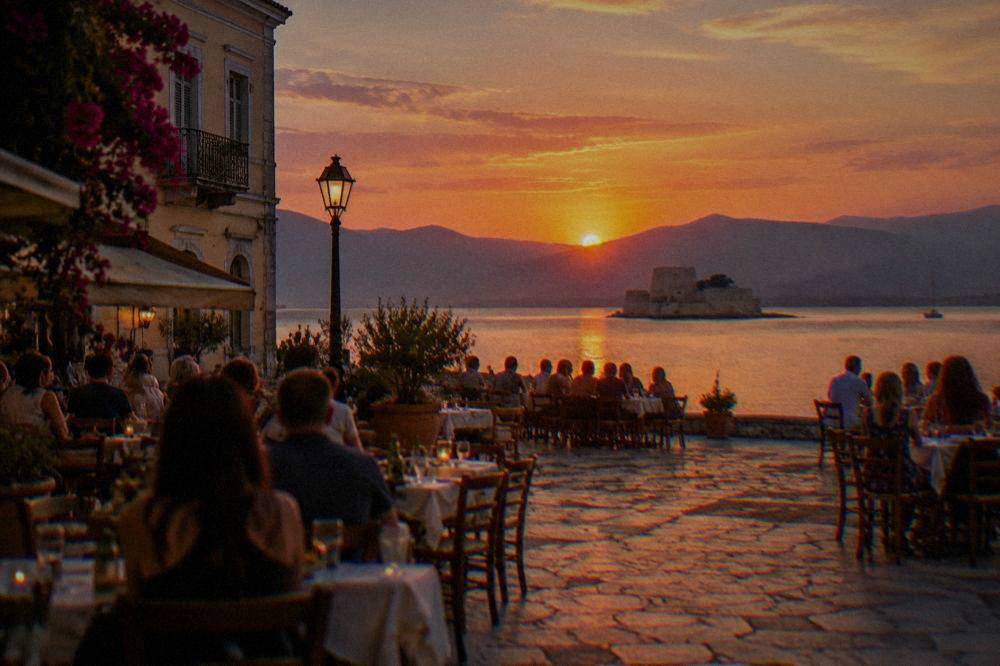
The resident count of about 14,500 does not mean an empty town: Nafplio is a year-round regional centre and a weekend destination for Athenians, and its climate supports a long season, with the HNMS Argos station, 1980 to 2010, recording a July mean daily high of 34.0 C, a January mean high of 14.6 C and only about 9 mm of rain across June and July combined. The quiet months are real, but they are winter quiet, not emptiness.
The climate table explains the town's rhythm. Rainfall at the nearest official station, an inland record about 10 km north-west of the town, runs 82.5 mm in November and 69.7 mm in December against 8.9 mm in June and 9.1 mm in July, with rain days falling from about 12 in December to about 2 in July. Winter days are mild on average, a January mean high of 14.6 C, but evenings drop to a mean low of 3.0 C, and state sites run winter hours of 08:30 to 15:30. The upshot is a town that functions in every month, with short opening hours rather than closures as the winter trade-off. State archaeological sites are free on fixed days, including 6 March, 18 April, 18 May, the last weekend of September and 28 October, plus the first and third Sundays of November to March.
The Old Town's lanes are narrow by design, so a July evening around Syntagma Square feels fuller than the same square in February for reasons of geometry as much as footfall. The honest framing, argued with reasons rather than numbers, is in Is Nafplio Too Touristy?; the related question of how the town compares as a base with the capital is covered in Is Nafplio A Day Trip From Athens?.
How Does Nafplio's Size Compare With Its History?
A town of about 14,500 residents was, for seven years, the capital of all Greece: Nafplio held that role from 1827 to 1834, Governor Ioannis Kapodistrias arrived in January 1828 and was assassinated in September 1831 outside the Church of Agios Spyridon, and the capital moved to Athens in 1834, all per the municipal history sources. The population has never since matched the political weight the town once carried.
That mismatch is the town's defining oddity. The buildings of the capital era survive at walking distance from one another: the Vouleftiko, where the first Greek parliament met from 1825; Government House, built in 1829; Syntagma Square itself, the political centre of the young state. Around them sit the layers of earlier rule, Venetian from 1389 to 1540 and again from 1686 to 1715, Ottoman between those periods, with Palamidi Fortress, built 1711 to 1714, taken by Greek forces under Staikos Staikopoulos on the night of 29 to 30 November 1822, and Bourtzi, whose construction began in June 1471 under the architect Antonio Gambello. The full story is in Why Was Nafplio The First Capital Of Greece?.
For planning purposes, the history and the population point the same way. The sights of the capital era, the fortresses and the museums, including the Archaeological Museum of Nafplio at 10 euro full and 5 euro reduced, open 08:30 to 15:30 year round and closed Tuesdays, are all reachable on foot from the centre, and the town's size is what makes a walking-paced itinerary work. Anyone with a longer window can stretch to the Argolid's wider sights, and the sizing question is answered in How Many Days Do You Need In Nafplio?.
Tours remain the efficient way to spend the hours a small town frees up, whether that is a guided walk of the lanes or a day trip out to the UNESCO sites.
Common Questions About The Population Of Nafplio
What Is The Population Of Nafplio?
About 14,500 residents in the town itself and about 32,600 in the wider municipality, per the reported 2021 ELSTAT census figures, with the municipal unit between them reported at 19,375. Confirm exact figures on the statistics authority's site before citing them.
Is Nafplio A City Or A Town?
By population it is a town: about 14,500 residents in the built-up community. It has a city's history, having served as the capital of Greece from 1827 to 1834, but its scale, street pattern and services are those of a compact town.
Does Nafplio's Population Grow In Summer?
What is observable is that the town's harbour, hotels and tavernas fill in peak season, and the narrow Old Town lanes feel correspondingly fuller in July than in February.
How Big Is The Municipality Of Nafplio Compared With The Town?
The municipality was counted at about 32,600 residents in the reported 2021 census, roughly double the town's 14,532, because it includes villages and rural districts across the local authority area, not just the built-up town by the harbour.
Is Nafplio Big Enough For A Weekend Base?
Yes. The town fills a day on foot, and the surrounding Argolid, with Tiryns about 9 minutes away by road, Mycenae about 32 and Epidaurus about 41, fills the rest of a weekend or longer, all computed from Syntagma Square.