Is Nafplio Safe?
Is Nafplio safe? A calm, sourced answer for travellers to this Peloponnese seaside town: emergency numbers, health care, the Palamidi steps, swimming, driving and everyday precautions.
Nafplio is a small coastal town of about 14,500 residents in the Argolid, on the Argolic Gulf in the north-east Peloponnese of mainland Greece, and the question of safety there has a calm, practical answer. Greece is a Schengen member, the single EU emergency number is 112, and the town has its own general hospital. Nothing in the available official material singles Nafplio out as a high-risk destination; what actually deserves a traveller's attention are ordinary small-town things, from heat on the Palamidi stairway to the surface underfoot in the Old Town's lanes. This page reports what official sources say, flags where the sources go quiet, and skips the invented verdicts.
That silence is itself informative. What is documented is the infrastructure a traveller relies on when something goes wrong: the emergency number, the hospital, the state site rules, and the physical facts of the terrain. The rest of this page works through those one by one, in the order they are likely to matter.
Is Nafplio Safe?
Nafplio is a small, walkable town where the documented safety picture rests on ordinary precautions rather than any specific hazard: the emergency number is 112, the General Hospital of Nafplio switchboard is +30 2752 361100, and no official source flags any district of the town as unsafe. Practical risks come from terrain and heat, not from crime reporting: stone stairways, summer sun on Palamidi Fortress, and driving on regional roads.
The useful framing is to separate what the sources actually say from what travel forums speculate about. The municipality's own site, the Ministry of Culture's monument pages and the hospital's own help page cover the practical infrastructure. None of them publishes a crime figure, a pickpocket map or a list of streets to avoid, and a guide that invents one is guessing. The honest version of "safe" in Nafplio is: know the emergency numbers, know where the hospital is, respect the heat and the stairways, and apply the same care you would in any unfamiliar town.
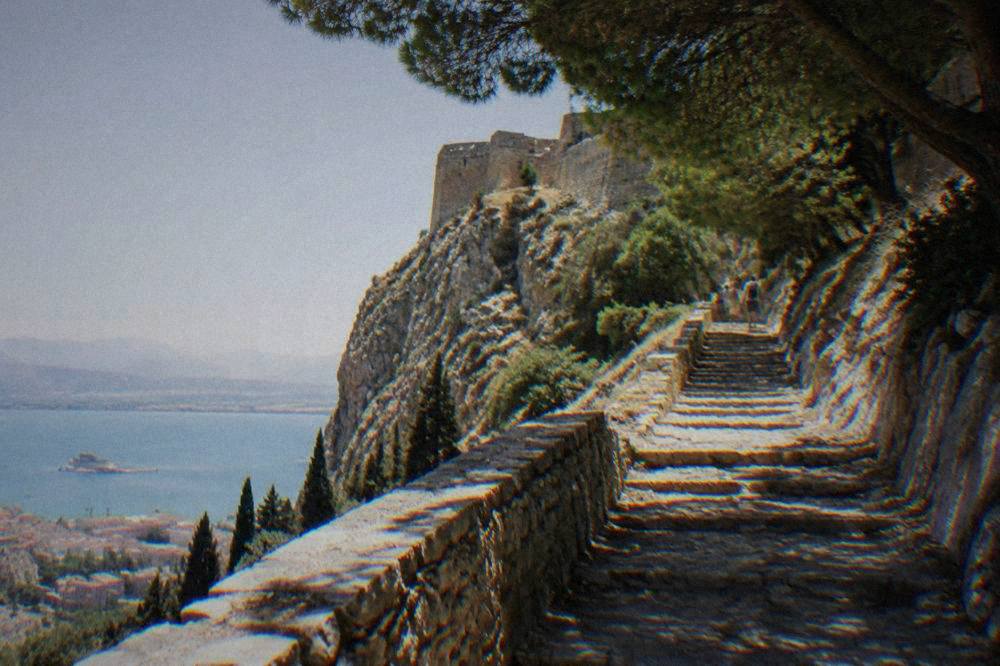
Two things deserve emphasis because they are real and documented rather than speculative. First, Palamidi Fortress stands 216 m above the Old Town and its stairway is usually counted at about 850 steps (857, not the legendary 999): that is a genuine physical effort in summer heat, and it deserves planning, not fear. Second, the climate record shows what summer actually feels like here, and it comes from the nearest official station. The Nafplio Travel Guide covers the town's sights in depth elsewhere; this page stays on the safety question.
What Are The Emergency Numbers And Health Care In Nafplio?
The EU-wide emergency number in Greece is 112, usable from any phone for police, fire and ambulance, and the General Hospital of Nafplio can be reached on switchboard +30 2752 361100, per the hospital's own help page. Greece is a Schengen member, so EU travellers move under normal Schengen rules and others should confirm entry requirements with official government sources before travelling.
The hospital's own English help page lists the switchboard number above; keep it in a phone alongside 112 rather than hunting for it later. For lesser needs, the municipality operates a tourist information kiosk near the port on Bouboulinas Street, reported open on weekdays, and a pharmacy is the normal first stop for minor complaints in any Greek town. Pharmacy rosters and after-hours arrangements change, so confirm locally when you arrive rather than relying on a page printed in advance.
European Health Insurance Card holders are covered for state care under the standard EU arrangements; travellers from outside the EU should arrange their own cover before departure, as with any destination. None of this is Nafplio-specific drama, it is the same baseline that applies across Greece, and that is the point: the town's health infrastructure is ordinary and adequate for a place of its size.
For everyday orientation, a first walk with a local guide is a practical way to learn the layout, the stairways and the street names in the first hours of a stay; the private option below does exactly that, and there is more on the town's structure in the Nafplio walking tour guide.
The same logic applies to the day trips. Driving to Mycenae, about 32 minutes from Syntagma Square, or to the Epidaurus theatre, about 41 minutes, puts you on regional roads where the usual rural-driving care applies, and a shared transfer with a professional driver removes that variable entirely for travellers who prefer not to self-drive.
How Hot Does Nafplio Get, And What Does That Mean For Safety?
The HNMS Argos station, 1980 to 2010, the nearest official station about 10 km north-west and inland, records a mean daily high of 34.0 C in July and 33.7 C in August, with June at 31.4 C, which makes heat the most concrete safety factor in a Nafplio summer. Rain is minimal then, 8.9 mm in June and 9.1 mm in July across about three and two rain days respectively.
Heat safety in Nafplio is mostly scheduling. State archaeological sites run long summer hours: Palamidi is open 08:00 to 20:00 from 2 May, which means the fortress can be climbed early or late rather than at midday. The Ministry of Culture's visiting page lists those hours, and the shade-free stairway up to Palamidi, about 850 steps, is the single place where timing matters most. Carry water, take the climb slowly, and treat the plateau at the top as a place to rest before the return.
The same logic applies to Mycenae and Epidaurus, both 20 euro full and 10 euro reduced in 2026 per the Ministry of Culture's pages, and both on the same long summer schedule. Off the plateau, the Old Town's lanes and the Arvanitia Promenade, a paved coastal path of about 1 km around the base of Akronafplia, offer flatter walking. Seasonal hours at the state sites shrink progressively through September and October, so check the current hours on the ticket page before setting out.
| Month | Mean Daily High (C) | Mean Daily Low (C) | Rain (mm) | Rain Days |
|---|---|---|---|---|
| May | 26.5 | 10.5 | 18.7 | 6.2 |
| June | 31.4 | 14.0 | 8.9 | 3.0 |
| July | 34.0 | 16.7 | 9.1 | 2.1 |
| August | 33.7 | 16.8 | 13.0 | 2.5 |
| September | 29.7 | 14.2 | 20.3 | 5.0 |
Figures are HNMS Argos station, 1980 to 2010, an inland record, so the waterfront can feel slightly different. The take-away is not a warning, it is a plan: early starts, a real pause at midday, and water carried rather than assumed.
Is It Safe To Swim And Walk The Coastal Paths At Nafplio?
Arvanitia Beach holds a Blue Flag and is organised in summer with showers, changing rooms and sunbed rental, per the local guide site's beach listing, and the Arvanitia Promenade is a paved path of about 1 km from the harbour lighthouse to Arvanitia square, so both are managed, mainstream spaces rather than remote ones. Karathona Beach sits about 3 to 4 km from the centre, reached along the same coastal route.
Ordinary sea sense covers the rest. Pebble and rock beaches with a sandy seabed, as Arvanitia is described, reward water shoes, and ladders are part of the setup there. The promenade is paved but coastal, so the usual care with wet surfaces applies. No swimming condition, lifeguard roster or water quality figure beyond the Blue Flag is published in the sources available, so check locally on the day; the flag itself is an award with criteria, not a lifeguard guarantee.
One infrastructure note: the Arvanitia path has had rockfall stabilisation works reported in recent years, so if a section is taped or signed as closed, the sign is the information. That is the pattern for the whole safety question in Nafplio, official signs first, forum lore second. For the wider picture of the town's coast, see the guide to Nafplio beaches.
Is It Safe To Drive And Get Around Nafplio?
Driving in and around Nafplio is ordinary Greek motoring: the Old Town is largely closed to visitor parking, with free public lots reported on the Akti Miaouli waterfront about 5 to 10 minutes' walk from the centre, and the main documented hazards are narrow Old Town lanes on foot and standard regional roads by car. Athens is about 141 km and roughly two hours away by road.
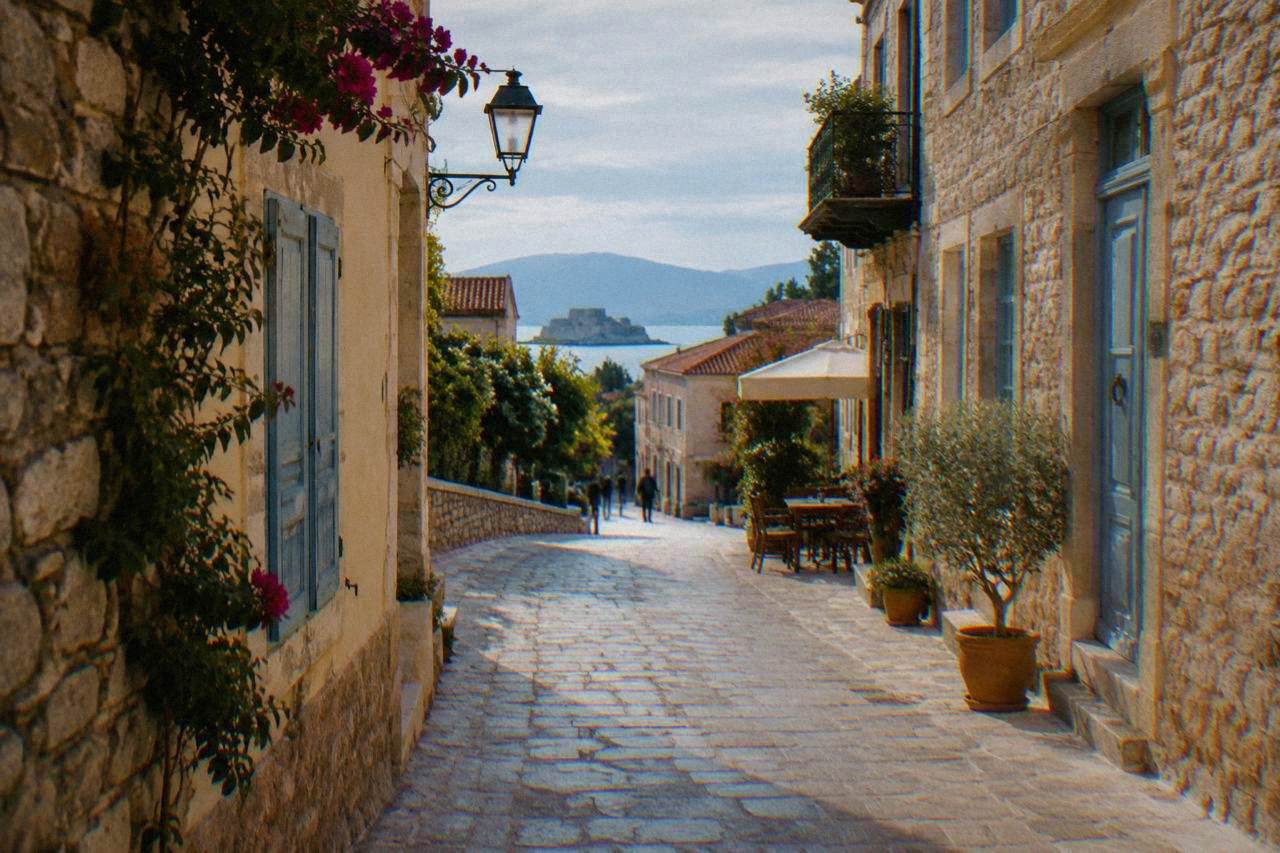
On foot, the real risks are unglamorous: polished stone paving, steps in the lanes below Palamidi and Akronafplia, and vehicles sharing tight streets at the Old Town's edges. None of this needs a warning label, it needs shoes with grip and the ordinary attention a pedestrian gives anywhere Mediterranean. No step-free access claim is made for any sight here, because none is documented; travellers with mobility needs should confirm access directly with each site before visiting.
By car, the day-trip distances from Syntagma Square are computed as: Mycenae about 32 minutes, the Epidaurus theatre about 41, Argos about 18, Tolo about 17 and Ancient Corinth about 61. Toll and parking rates are not in the published sources, so budget them at the ticket booths and machines rather than from a guide page. For travellers who would rather not drive at all, there is no train to Nafplio in 2026, older guides that say otherwise are out of date, and the practical alternatives are the KTEL buses or a booked transfer; the shared Mycenae and Epidaurus option appears in the picks above.
| Journey From Nafplio | Distance (km) | Drive Time (about) |
|---|---|---|
| Tiryns | 8.3 | 12 min |
| Tolo | 11.4 | 17 min |
| Argos | 14.5 | 18 min |
| Mycenae | 25.4 | 32 min |
| Epidaurus theatre | 27.7 | 41 min |
| Ancient Corinth | 57.1 | 61 min |
| Athens | 141 | 2 h 07 min |
Cruise passengers have the easiest version of this question: the port sits next to the Old Town, and the essentials of that arrival are covered in is Nafplio walkable from the cruise port. For everyone else, the general safety answer for town transport is simply that the place is compact; the distances above are the ones that involve real driving.
What Everyday Precautions Make Sense In Nafplio?
The precautions that fit Nafplio are the ordinary ones for any small European tourist town: carry the 112 number, keep the hospital number handy, time the Palamidi climb away from midday in summer, watch footing on stone paving, and confirm access details for any sight that matters to your plans directly with the operator or site. No district of the town is documented as one to avoid.
Money and documents deserve the usual care in crowded spots, which is a statement about crowded places everywhere, not about any specific square in Nafplio. The town's scale helps: the Old Town is compact, the waterfront is continuous, and the kinds of late-night logistics questions travellers ask elsewhere tend to answer themselves here; restaurant opening patterns are covered separately in what time do restaurants open in Nafplio.
For solo and family travellers the same page holds. There is no published safety concern specific to either group, and the Nafplio with kids guide covers the practical side of family visits from a planning angle. Winter visitors face a different equation, milder temperatures and shorter site hours; the winter detail is in Nafplio in winter and rain.
The one thing this page will not do is dress the absence of statistics as a verdict. "Safe" in a documented sense means: functioning emergency services, a hospital, managed beaches, official site rules and honest terrain facts. Nafplio has all five.
Between those picks, the choices are straightforward. A private walk with a local guide grounds you in the town itself on day one, a shared transfer handles the big archaeology without self-driving, and a cooking class keeps an evening anchored indoors around food and company. All three suit a first visit.
Common Questions About Safety In Nafplio
Is Nafplio safe at night?
No official source publishes a night-specific safety assessment for any part of Nafplio, and no district is documented as one to avoid. The practical answer is ordinary town care: the Old Town is compact and lit along the main lanes, the paving is stone and uneven in places, so steady shoes and normal attention cover the evening walk back.
What is the emergency number in Nafplio?
The EU-wide emergency number 112 works across Greece for police, fire and ambulance. For non-emergency medical needs, the General Hospital of Nafplio switchboard is +30 2752 361100, per the hospital's own help page.
Is it safe to climb Palamidi Fortress?
Yes, with planning. The stairway from the town is usually counted at about 850 steps, 857, not the legendary 999, up 216 m of height. In summer the HNMS Argos station record shows mean daily highs of 34.0 C in July and 33.7 C in August, and the fortress opens at 08:00 from 2 May, so an early or late climb avoids the midday heat. Carry water.
Is it safe to swim at Arvanitia and Karathona?
Arvanitia Beach holds a Blue Flag and is organised in summer with facilities including showers and changing rooms, per the local listing, and the seabed is sandy with a pebble shore. Karathona sits about 3 to 4 km from the centre. Check conditions locally on the day; no lifeguard roster is published in the available sources.
Are there areas to avoid in Nafplio?
No. There is no documented list of unsafe districts, no published crime statistic for the town, and no official source flagging any area. Guide pages that name "areas to avoid" are inventing them; apply ordinary precautions everywhere instead.