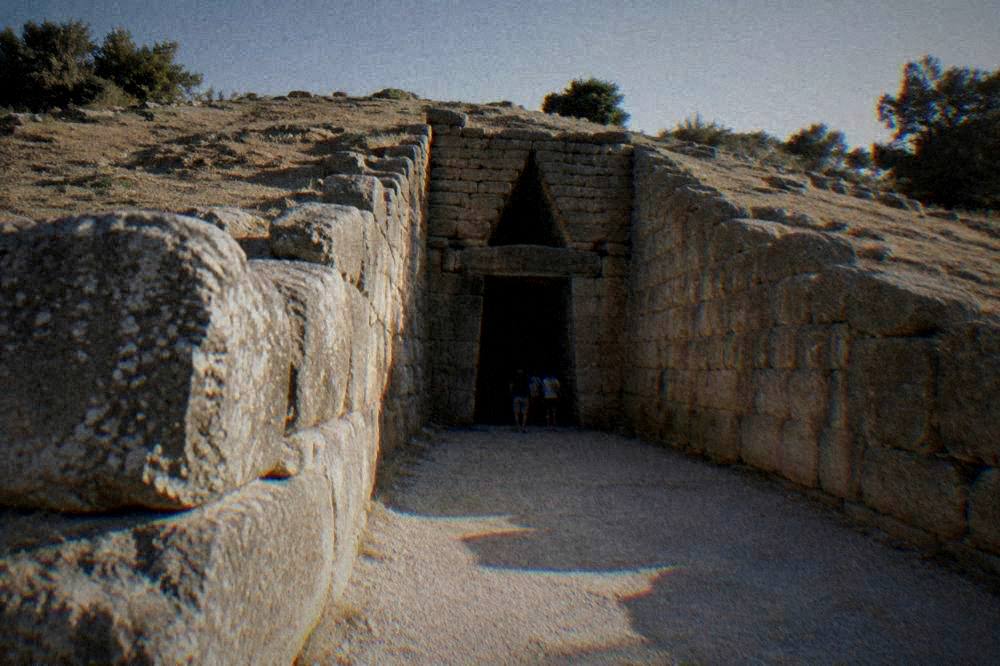
Lerna: The Bronze Age House Of Tiles And The Hydra Myth
About 13 km south of Nafplio, on the flat ground where the Argolic Gulf meets the ancient springs of Lerna, stands one of the least crowded archaeological stops in the Argolid: a Bronze Age settlement whose House of Tiles gave its name to a whole era, beside the lake where Greek myth set the second labour of Heracles.
Short answer
Lerna is about 13 km and 20 minutes by road south of Syntagma Square in Nafplio, close to Argos and Mycenae. The site is known for the Early Bronze Age House of Tiles and for the Hydra myth. Its admission price is not in the published guard lists, so confirm locally before setting out.
About 13 km south of Syntagma Square in Nafplio, on the flat riverside plain where the Argolid opens toward the sea, lies the Lerna archaeological site: a Bronze Age settlement whose principal building, the House of Tiles, was substantial enough that archaeologists named a whole phase of the Early Bronze Age after it. The same ground carries one of the most famous myths in Greek storytelling, the Lernaean Hydra, the many-headed serpent slain by Heracles as his second labour, and the Alcyonian lake that ancient writers called bottomless. Nafplio is the natural base: a mainland coastal town on the Argolic Gulf in the north-east Peloponnese, not an island, and about 141 km by road from Athens, with Mycenae, Epidaurus, Tiryns and Argos all within easy reach of a day's driving.
What Is The Lerna Archaeological Site Near Nafplio?
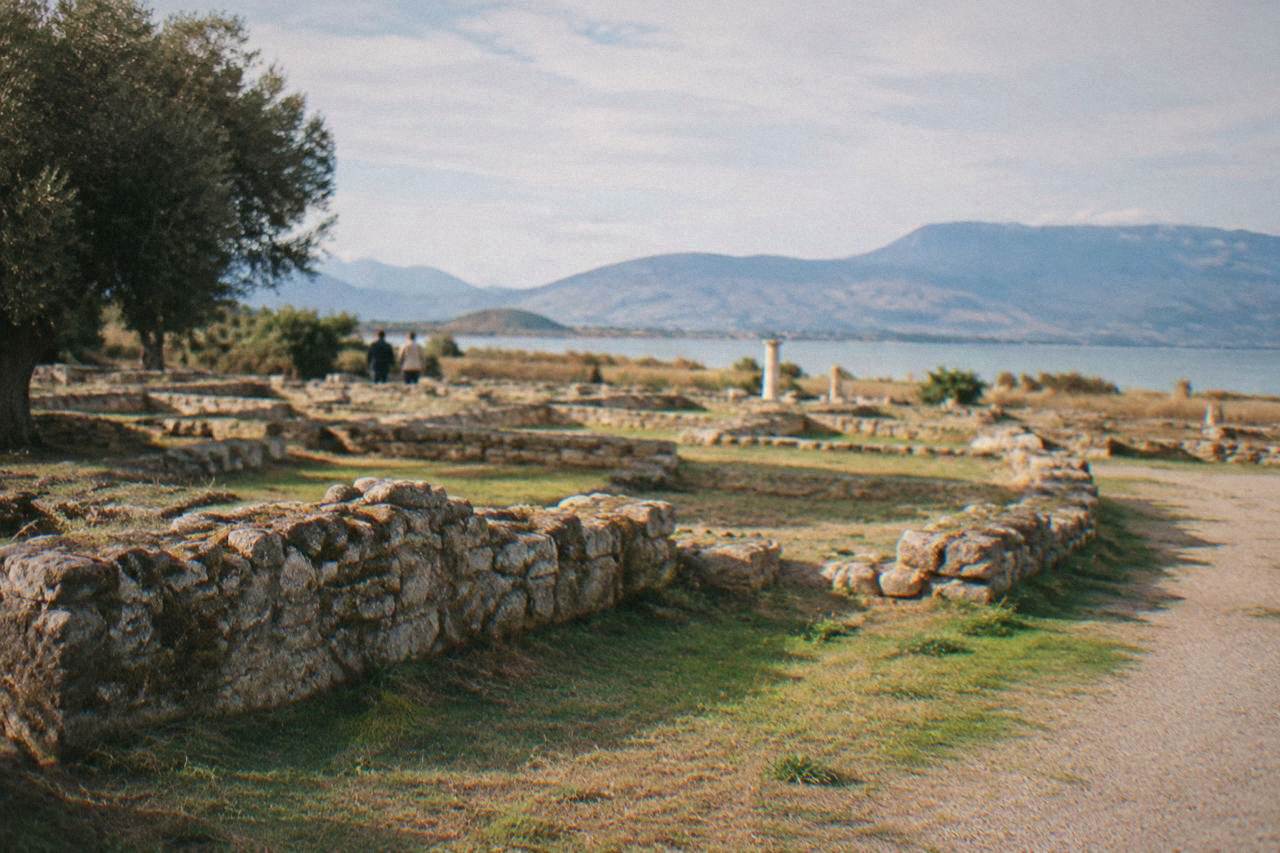
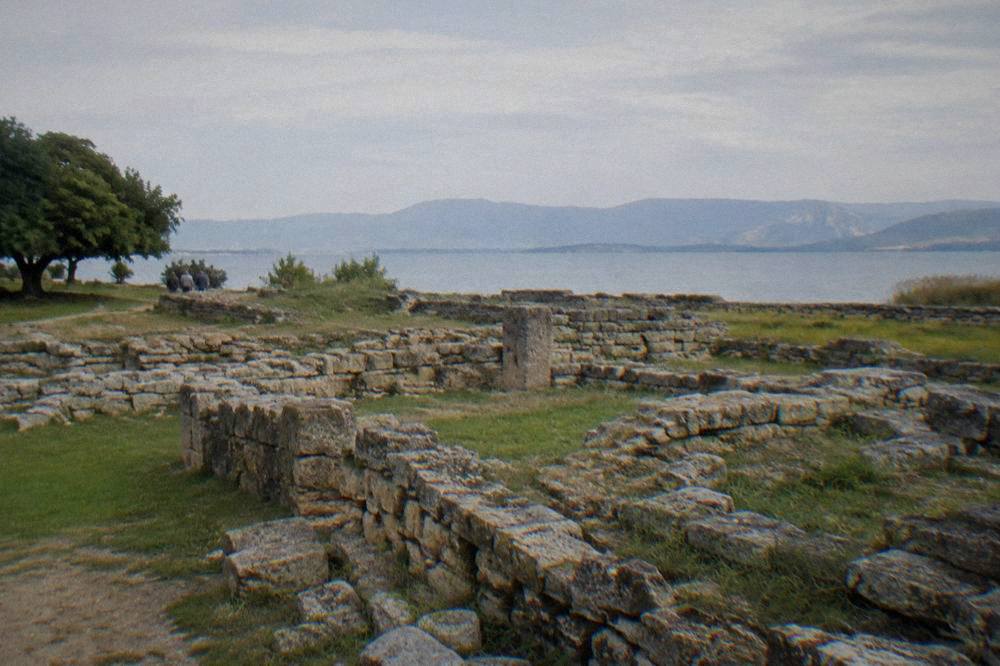
Lerna is a prehistoric settlement site on the Argive plain, about 13 km and 20 minutes by road south of Nafplio, best known for the Early Bronze Age House of Tiles and for the myth of the Lernaean Hydra. The site sits near the village of Myloi, close to the coast of the Argolic Gulf and roughly equidistant between Nafplio and Argos, which is about 18 minutes by road from Syntagma Square. Unlike Palamidi Fortress or Bourtzi in Nafplio itself, Lerna is a low, open, ground-level site: what a visitor walks among is foundations, wall footings and the footprint of a large Early Bronze Age building, not a standing monument.
The settlement matters in the archaeology of Greece because of its building sequence. The House of Tiles, a large two-storey structure of the Early Bronze Age with a roof of fired clay tiles, burned down and was later covered by a mound, an earth tumulus, which accidentally preserved its lower walls for excavators. The building is central enough to the period that its name is used by archaeologists as a label for a phase of the Early Bronze Age in the southern Greek mainland. That is a rare thing for a site with no marble, no theatre and no temple, and it is why Lerna appears in textbooks even though it rarely appears on a first page of search results about the Argolid.
The myth is the other half of the site's fame. In Greek tradition the Lernaean Hydra, a water serpent that grew two heads for each one cut off, lived at the springs of Lerna, and Heracles destroyed it as the second of his twelve labours with the help of his nephew Iolaus, who cauterised each neck. Ancient writers also placed the entrance to the underworld at the nearby Alcyonian lake, through which Dionysus was said to have descended to bring back Semele. None of that is history, and this page does not present it as such; it is the reason the name Lerna travelled far beyond the Argolid long before anyone excavated the House of Tiles.
For trip planning, the practical point is that Lerna works as a short stop on an Argive plain circuit rather than a destination in its own right. The card's drive-time figures, computed over OSM routing in free-flow conditions from Syntagma Square, put Lerna about 20 minutes out, Argos about 18, Tiryns about 9 and Mycenae about 32, so a single morning can comfortably take in several of them. Confirm the site's opening arrangements locally before driving out, because its admission price and hours are not in the published guard lists for this destination.
How Do You Get To Lerna From Nafplio?
By car it is about 13 km and roughly 20 minutes from Syntagma Square in Nafplio to Lerna, on flat, plain-country roads through the Argive plain toward Myloi and the coast, with no mountain switchbacks involved. There is no train to Nafplio or anywhere in the Argolid in 2026, so the realistic options are a hire car, a taxi, or the local KTEL Argolida buses from the Nafplio station on Siggrou Street, which serve Argos frequently. There is no train to Nafplio or anywhere in the Argolid in 2026: the Peloponnese metre-gauge line carries no passenger service, so the realistic options are a hire car, a taxi, or the local KTEL Argolida buses, which run from the Nafplio station on Siggrou Street and serve Argos frequently, at a reported one-way fare of 2.20 euro to Argos or Tiryns. The bus is cheapest; the car is the only way to chain Lerna with several sites in one day.
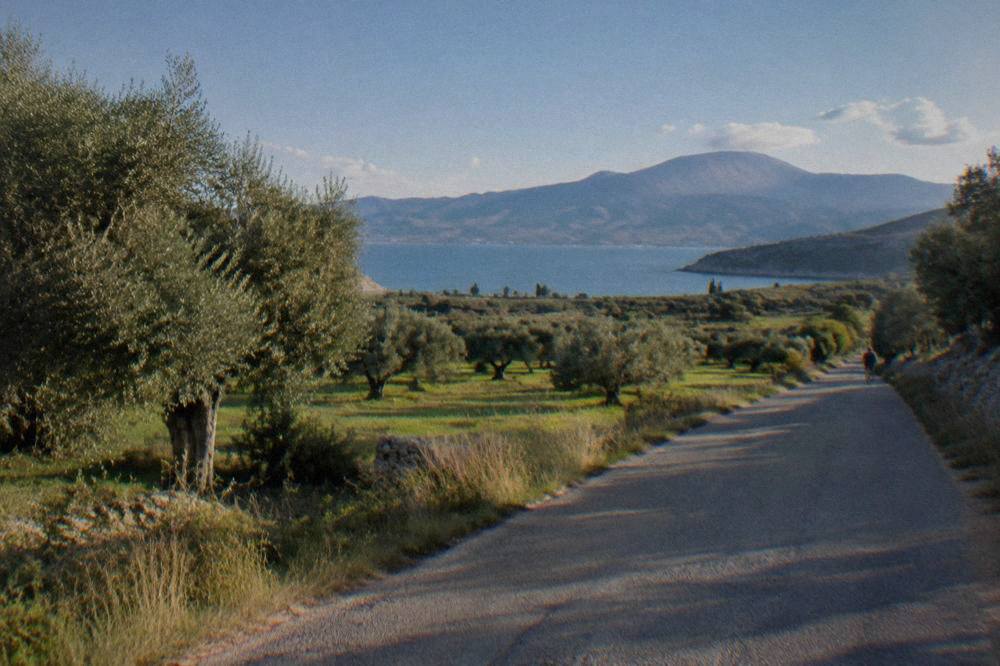
The road itself is easy. Lerna sits on low ground near the mouth of the plain, and the driving is flat, plain-country motoring rather than mountain switchbacks. Free-flow drive times from Syntagma Square, computed over OSM routing, are as follows.
| Destination from Syntagma Square | Distance | Drive time |
|---|---|---|
| Tiryns | 8.3 km | about 9 minutes |
| Argos | 14.5 km | about 18 minutes |
| Lerna | 12.6 km | about 20 minutes |
| Asini | 10.5 km | about 17 minutes |
| Mycenae | 25.4 km | about 32 minutes |
| Epidaurus theatre | 27.7 km | about 41 minutes |
Two corrections to common assumptions belong here. First, no ferry or island leg is involved in any of this: Nafplio is a mainland town on the Argolic Gulf, and the islands of Hydra and Spetses, covered in the Hydra day trip guide, are reached by seasonal day cruise or from another port, since no scheduled public ferry runs from Nafplio or Tolo. Second, if you are relying on buses, the reported KTEL fares and frequencies come from local reporting and the operator's own pages, so confirm times before you commit; the Mycenae and Epidaurus services are reported to be sparse, while Argos and Tiryns are served often.
A practical middle path is to let someone else drive. Half-day and full-day tours from Nafplio to Mycenae and Epidaurus run year-round, and the Mycenae and Epidaurus tours overview lists what each covers; Lerna itself is rarely a scheduled stop, so a self-driven circuit or a taxi round trip suits it best.
What Does A Visit To Lerna Involve?
A visit to Lerna is a short, open-air walk among low excavated foundations on the edge of the plain, with the House of Tiles footprint as the highlight; confirm the admission price and opening hours locally or at the ticket point before you set out. There is no museum on the scale of the Archaeological Museum of Nafplio, whose ticket is 10 euro full and 5 euro reduced, closed Tuesdays, and no fortress climb of the Palamidi kind. Bring water and sun protection in the warmer half of the year, because the plain offers little shade, and allow a modest amount of time, more in the manner of a stop than a half-day.
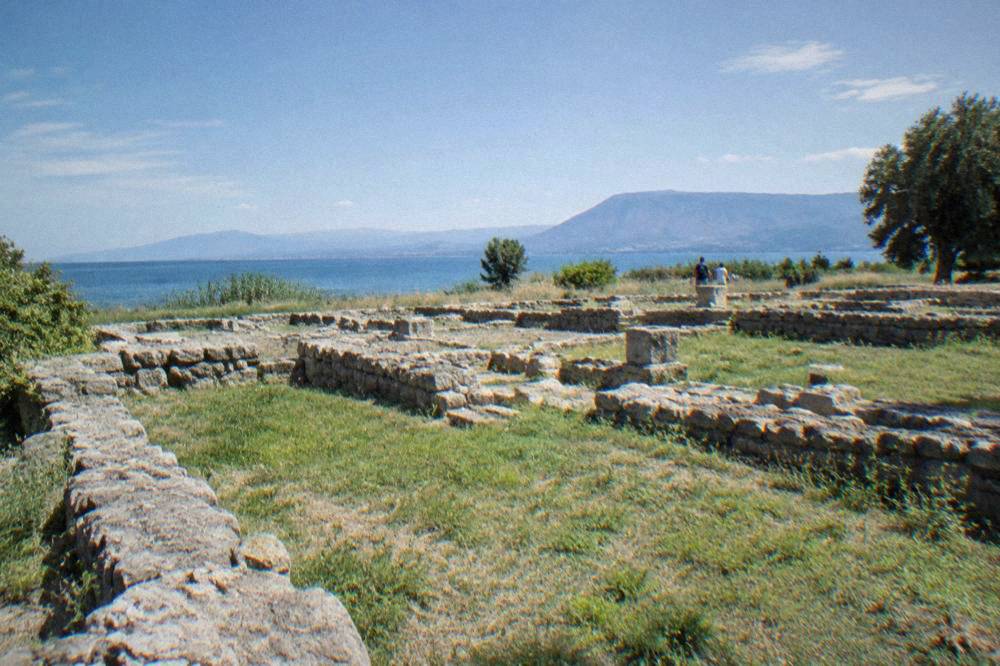
What the ground shows is a settlement sequence. Excavation revealed building levels stacked one above another, with the House of Tiles as the most substantial structure, its name taken from the fired clay tiles found in its collapse. After it burned, later inhabitants raised a mound over it, and that covering is what protected the walls for several thousand years. Walking the site, the reading that rewards preparation is stratigraphic: the same flat acre held dwellings, a fortified phase and finally the tumulus, in layers, which is the ordinary condition of Argive plain archaeology from Tiryns to Argos.
For contrast within the same region, the Argos guide covers a city with an ancient theatre and an agora, and the Tiryns guide covers colossal Cyclopean walls, both within 20 minutes of Nafplio by road. Lerna is quieter than either, and that is its appeal: an unhurried, uncluttered site where the significance is written in the plans on the ground rather than in standing architecture.
The standard pairing is Mycenae, about 32 minutes further by road, whose 2026 ticket is 20 euro full and 10 euro reduced and covers the site, the museum and the Treasury of Atreus; the Mycenae day trip guide has the seasonal hours in full. State sites across Greece, including Mycenae and Epidaurus, open their gates free on fixed days: 6 March, 18 April, 18 May, the last weekend of September, the first and third Sundays from November to March, and 28 October. If Lerna's own entry terms are unclear when you check locally, those free days are a useful planning anchor for the ticketed sites around it.
Why Is The House Of Tiles Famous?
The House of Tiles is famous because its burned and buried remains preserved an entire Early Bronze Age building, and archaeologists adopted its name for a phase of the Early Bronze Age in the southern Greek mainland, which is why a modest site near Nafplio appears in every textbook of Greek prehistory. The building was large for its time, arranged around a recognisable plan, and roofed with fired clay tiles whose collapse helped seal the structure. After the fire, a mound was raised over the ruin, and that mound is what kept the walls intact for the excavators who opened the site generations later.
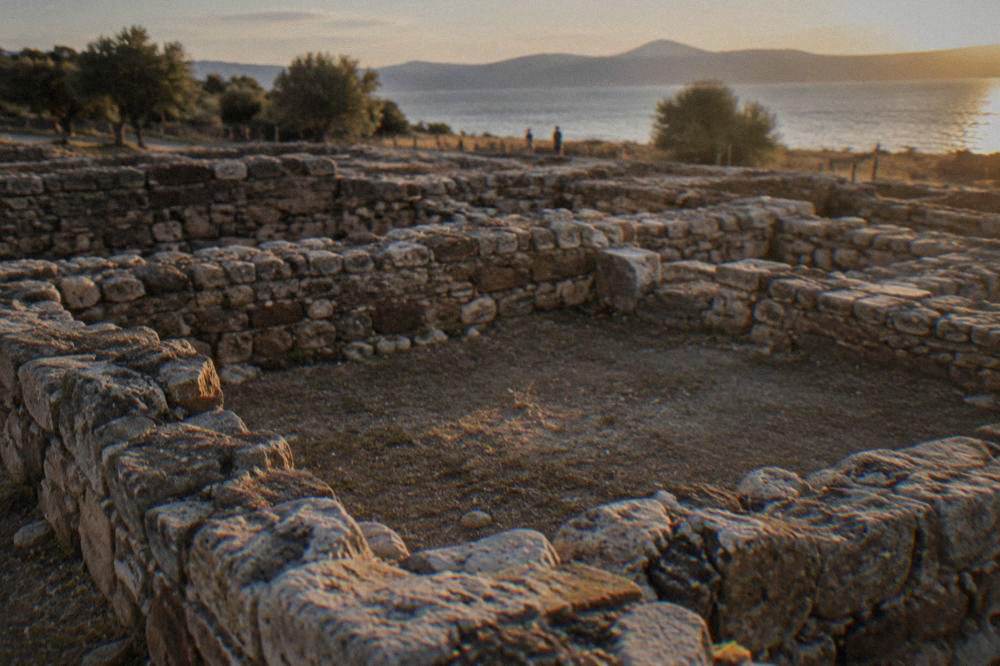
Three things make the building significant beyond its size. First, its roof: tile roofs of that scale are unusual so early, and the fired tiles gave the building its modern name. Second, its layout: the plan suggests organised storage and administration, a hint of the kind of hierarchical settlement that would later culminate in the palaces of Mycenae, the UNESCO-listed citadel inscribed with Tiryns in 1999. Third, its burial under a tumulus: the mound marks a deliberate act, a sealing off of a prominent building, and it is the accident of that sealing that makes Lerna's walls legible where most contemporary sites survive only as scatter.
For a visitor standing at the footprint today, the useful frame is that the House of Tiles is older than, and entirely distinct from, the Mycenaean citadels most day trippers come to the Argolid for. Mycenae's Lion Gate and Tiryns's walls belong to a later Bronze Age world of kings and fortifications; the House of Tiles belongs to the centuries before that, and its importance is architectural and stratigraphic rather than monumental. The nearby excavated material is housed in the Argos museum circuit, whose agora and theatre ticket is 10 euro full and 5 euro reduced, a reasonable companion stop on the same plain.
Where Does The Hydra Myth Fit Into The Site?
The myth places the Lernaean Hydra, the many-headed serpent of Heracles' second labour, at the springs of Lerna, and ancient writers also set an entrance to the underworld at the nearby Alcyonian lake, so the site carries a double mythological weight far beyond its physical size. Heracles, aided by Iolaus, who burned each severed neck so the heads could not regrow, overcame the beast and dipped his arrows in its venom, a detail that drives much of his later story. The labour belongs to myth, not history, but the association stuck to this stretch of water permanently.
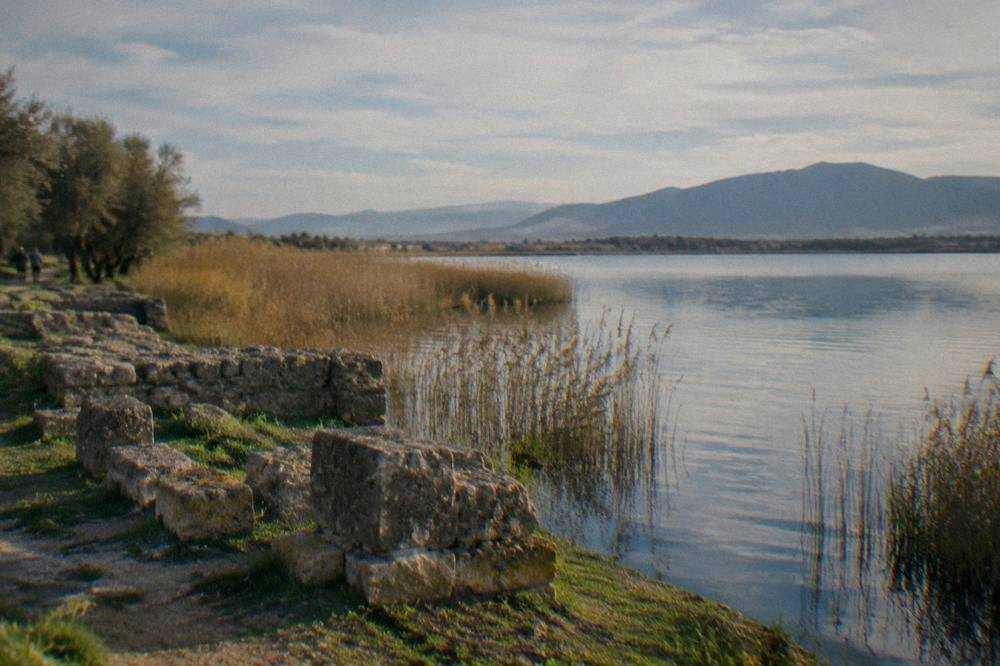
The Hydra story explains why the site's name is better known than the site. Ancient and medieval writers, and every modern retelling of the twelve labours, keep "Lerna" attached to the monster, so the word circulated in languages far from the Argolid while the actual springs silted and the mound sat unremarked. That is a common inversion in Greek travel: the myth outlives the place, and the modern visitor arrives carrying the monster's name with no image of what stands there, which is foundations and plain, not lairs and caves. The wider set of guides lives on Nafplio Travel Guide.
The Alcyonian lake completes the picture. Ancient tradition held that the lake was bottomless and that Dionysus descended through it to fetch Semele from the dead, and the geographer Pausanias recorded that the water was thought to be unhealthy to drink and the descent deadly to attempt. The springs and marshes that fed all this lore are the same water system that made the Argive plain farmable, the plain that later supported Argos, Mycenae and Tiryns, so the myth and the settlement history share one hydrology. Water made the land, the land made the towns, and the water made the monster.
Telling the story on site costs nothing, and pairing it with a walking tour of Nafplio's own mythology-free old streets works well; the Nafplio walking tour guide covers what a guided circuit of the Old Town includes. For the fuller Argive mythological circuit, Mycenae's House of Atreus name carries the cursed-family cycle, and Epidaurus carries the healing cult of Asklepios, both within about 40 minutes by road of Lerna.
How Does Lerna Fit Into An Argolid Day Trip From Nafplio?
Lerna works best as one stop on an Argive plain circuit from Nafplio: Tiryns at about 9 minutes, Argos at about 18, Lerna at about 20 and Mycenae at about 32 minutes by road from Syntagma Square, a loop that can be driven comfortably inside a half day and combined with lunch back in the Old Town. The whole plain is compact by Greek standards, and the driving between sites is flat and simple. The table below sets out the wider day-trip ring from Nafplio, with drive times computed over OSM routing in free-flow conditions.
| Day trip from Syntagma Square | Distance | Drive time | 2026 ticket where published |
|---|---|---|---|
| Tiryns | 8.3 km | about 9 minutes | not in guard lists, confirm locally |
| Argos (agora and theatre) | 14.5 km | about 18 minutes | 10 euro full, 5 euro reduced |
| Lerna | 12.6 km | about 20 minutes | not in guard lists, confirm locally |
| Asini | 10.5 km | about 17 minutes | 5 euro full, 3 euro reduced |
| Mycenae | 25.4 km | about 32 minutes | 20 euro full, 10 euro reduced |
| Epidaurus theatre | 27.7 km | about 41 minutes | 20 euro full, 10 euro reduced |
| Ancient Nemea | 38.3 km | about 46 minutes | not in guard lists, confirm locally |
A sensible order is Tiryns first, then Argos, then Lerna, then Mycenae, finishing either at Mycenae's site and museum or back in Nafplio for the evening. In high summer, reverse it: Mycenae first at opening, from 08:00 in the summer schedule, and Lerna's shadeless plain last, after the heat has passed its HNMS Argos station mean of 34.0 C in July. Winter hours at the state sites run 08:30 to 15:30, so the same circuit needs a prompt start from November to March.
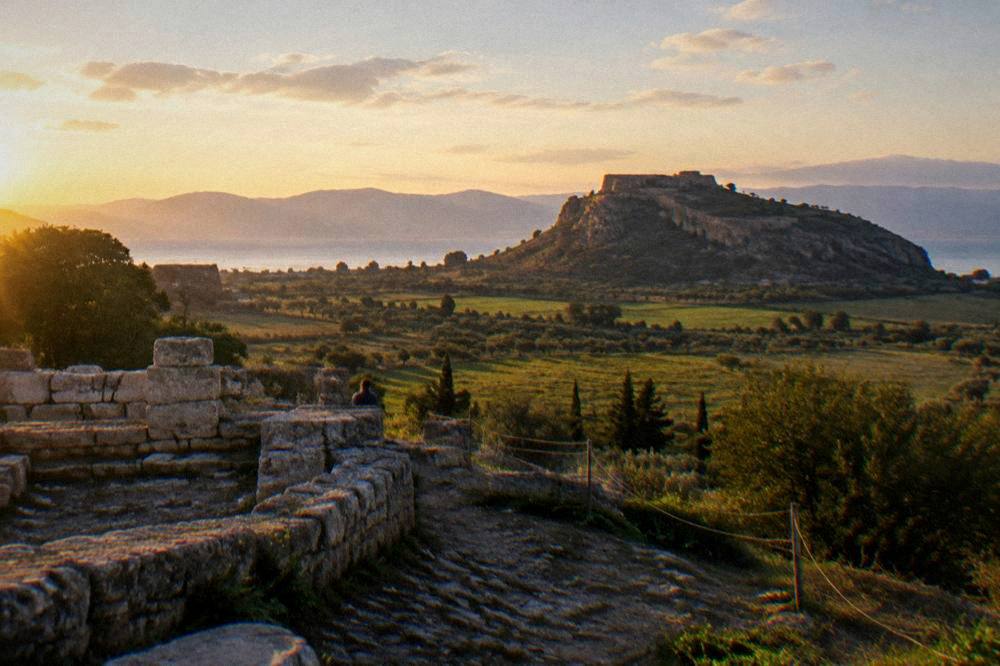
If you would rather not drive, two structured options exist. One is a ticketed entry with audio commentary at Mycenae, which handles the biggest stop of the circuit; the other is a guided day tour that strings several Argive sites together, described in the Nafplio day trip guide for visitors basing themselves in Athens. Neither normally includes Lerna as a scheduled stop, which is precisely why a hire car, covered in the general things to do in Nafplio overview, is the flexible answer for this particular site.
Drivers coming from Athens, about 141 km and roughly two hours by road, can also fold Lerna into an outward or homeward leg, since the plain lies between the Corinth approaches and Nafplio. The Epidaurus guide and the Corinth Canal guide cover the two most common add-ons on that axis, and the canal remains open to shipping.
When Is The Best Time Of Year To Visit Lerna?
The most comfortable months for an open, shadeless plain site like Lerna are April, May, October and into early November, when the HNMS Argos station, 1980 to 2010, records mean daily highs of 21.3 C in April, 26.5 C in May and 24.7 C in October, against 34.0 C in July and 14.6 C in January. The same station record shows rainfall of 8.9 mm in June and 9.1 mm in July against 82.5 mm in November and 69.7 mm in December, so midsummer is dry but hot and late autumn is mild but wetter.
| Month | Mean high C | Mean low C | Rain mm | Rain days |
|---|---|---|---|---|
| Jan | 14.6 | 3.0 | 66.5 | 10.3 |
| Feb | 14.7 | 2.9 | 52.5 | 10.1 |
| Mar | 17.4 | 4.3 | 52.2 | 9.7 |
| Apr | 21.3 | 6.7 | 33.7 | 8.6 |
| May | 26.5 | 10.5 | 18.7 | 6.2 |
| Jun | 31.4 | 14.0 | 8.9 | 3.0 |
| Jul | 34.0 | 16.7 | 9.1 | 2.1 |
| Aug | 33.7 | 16.8 | 13.0 | 2.5 |
| Sep | 29.7 | 14.2 | 20.3 | 5.0 |
| Oct | 24.7 | 11.5 | 44.3 | 6.9 |
| Nov | 19.2 | 7.7 | 82.5 | 9.4 |
| Dec | 15.5 | 4.8 | 69.7 | 12.2 |
That table is a weather-station record, not a sea forecast: the Argos station is inland, about 10 km north-west of Nafplio, so the waterfront can run slightly milder, and no monthly sunshine or sea-temperature figure belongs on this page. For planning purposes the practical readings are these: rain days fall to 2.1 in July and rise to 12.2 in December, and the mean daily low bottoms at 2.9 C in February, which makes a midwinter visit possible but bleak on an exposed plain.
Seasonal hours matter more here than climate. The big ticketed neighbours run a full summer schedule, from 08:00 to 20:00 at the height of it, and a winter schedule of 08:30 to 15:30, with Epidaurus on its own winter hours of 08:00 to 17:00 and from 1 March 2026, 08:00 to 18:00. Lerna's own opening terms should be confirmed locally, but visiting the plain in shoulder season lets you align with the state sites' long days without standing in the July heat.
Should You Combine Lerna With Mycenae And Epidaurus On One Day?
Yes, if you have a car: Lerna, Mycenae and Epidaurus sit within a 41-minute driving radius of Nafplio, with Lerna about 20 minutes, Mycenae about 32 and the Epidaurus theatre about 41 minutes from Syntagma Square, so a single full day covers all three at a reasonable pace. The one caveat is depth: Mycenae alone holds a citadel, a museum and the Treasury of Atreus on one 20-euro ticket, and Epidaurus adds a sanctuary and museum on its own, so a three-site day is a survey rather than a deep visit.
The order that fits the geography is Lerna or Argos first on the plain, Mycenae second, and Epidaurus third, since Epidaurus lies on the separate road east toward the coast at Palaia Epidavros, itself about 47 minutes from Nafplio. Drivers should note the closing schedules: in the height of summer the state sites run to 20:00, but from mid-September the hours step down progressively, and by 16 to 31 October they close at 18:00, so autumn days need earlier starts than July days. Winter compresses everything into 08:30 to 15:30, which effectively forces a choice between Mycenae and Epidaurus on a short December day.
If the driving feels like too much, pick the pair that matters to you. Mycenae with Lerna suits the prehistory-minded, since both sit on the same plain and tell one long settlement story from the House of Tiles to the Lion Gate. Epidaurus with Lerna suits the myth-and-medicine-minded, pairing the Hydra's springs with the sanctuary of Asklepios, both UNESCO-recognised: Epidaurus inscribed in 1988, Mycenae and Tiryns in 1999. Visitors without a car can lean on the tour options, and the one day in Nafplio itinerary shows how a single-base stay absorbs the plain's highlights.
Common Questions About The Lerna Archaeological Site Near Nafplio
How far is Lerna from Nafplio?
Lerna is about 13 km and 20 minutes by road south of Syntagma Square in Nafplio, on the flat Argive plain near Myloi, with Argos about 18 minutes and Mycenae about 32 minutes away on the same circuit.
What is the House of Tiles at Lerna?
It is a large Early Bronze Age building, roofed with fired clay tiles, that burned down and was later sealed under an earth mound, which preserved its walls. Archaeologists use its name for a phase of the Early Bronze Age in the southern Greek mainland, which is why the site is textbook-famous despite its modest remains.
What was the Hydra of Lerna?
In Greek myth the Lernaean Hydra was a many-headed water serpent that grew two heads for every one cut off, slain by Heracles as his second labour with Iolaus cauterising the necks. The myth places it at the springs of Lerna, and ancient writers also located an entrance to the underworld at the nearby Alcyonian lake.
Can you reach Lerna by public transport from Nafplio?
There is no train anywhere in the Argolid in 2026, and no bus timetable or fare for Lerna itself appears in the guard lists, so confirm locally. The reported KTEL Argolida network serves Argos and Tiryns frequently at a reported 2.20 euro one way, and a hire car or taxi is the practical way to reach the site itself.
How much does it cost to visit Lerna?
Lerna's admission price and opening hours are not in the published guard lists for this destination, so confirm locally or at the ticket point before travelling. The neighbouring ticketed sites are priced: Mycenae and Epidaurus at 20 euro full and 10 euro reduced in 2026, Argos at 10 and 5, Asini at 5 and 3.
Is Lerna worth visiting compared with Mycenae?
The two serve different interests. Mycenae offers a citadel, museum and tholos tomb on a 20-euro ticket and stands as the headline site of the plain, while Lerna is a quiet, ground-level walk over far older foundations with a famous myth attached. Prehistory and mythology enthusiasts get the most from Lerna; a hurried first visit to the Argolid is better spent at Mycenae and Epidaurus.